Contact center of the Ukrainian Judiciary 044 207-35-46
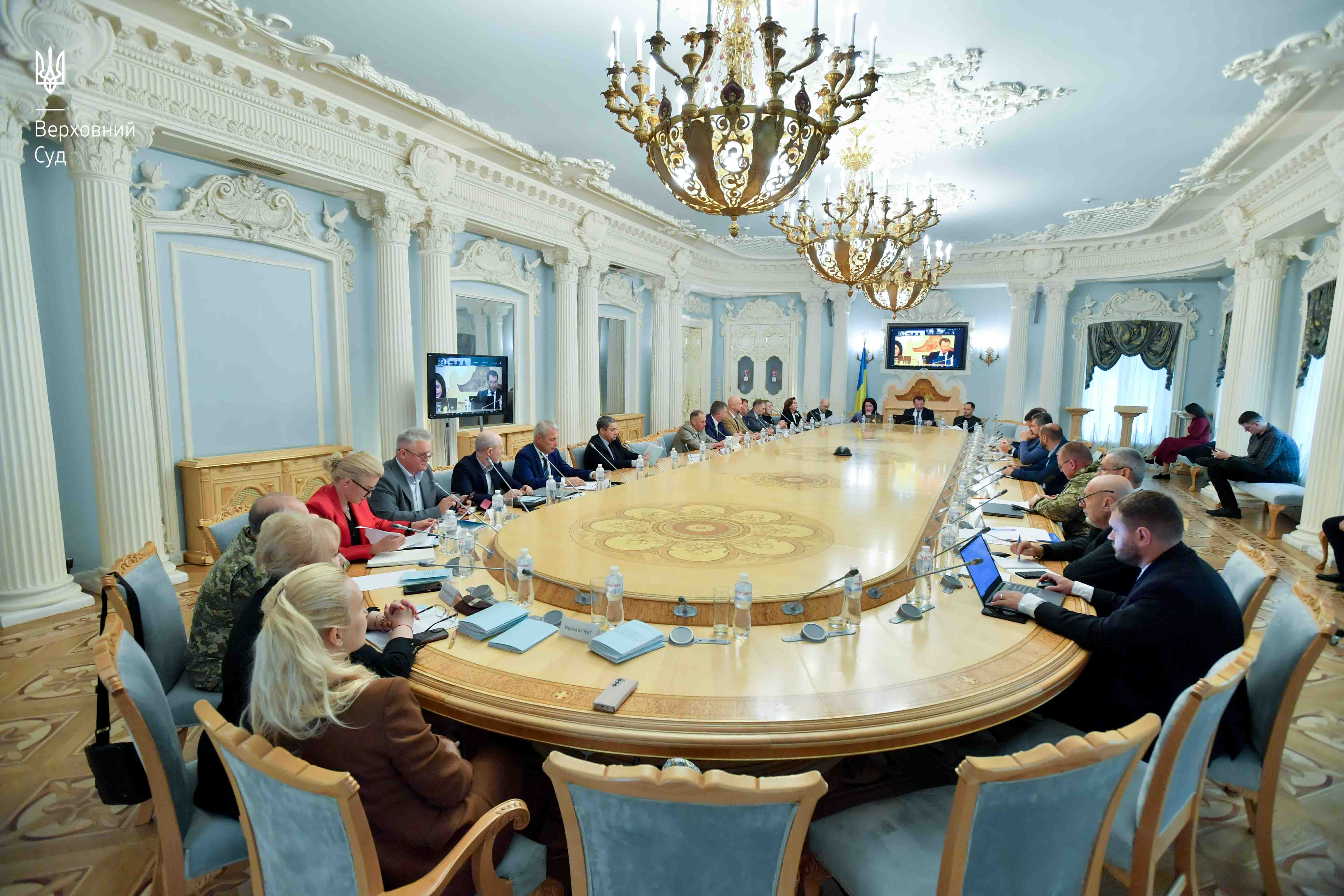
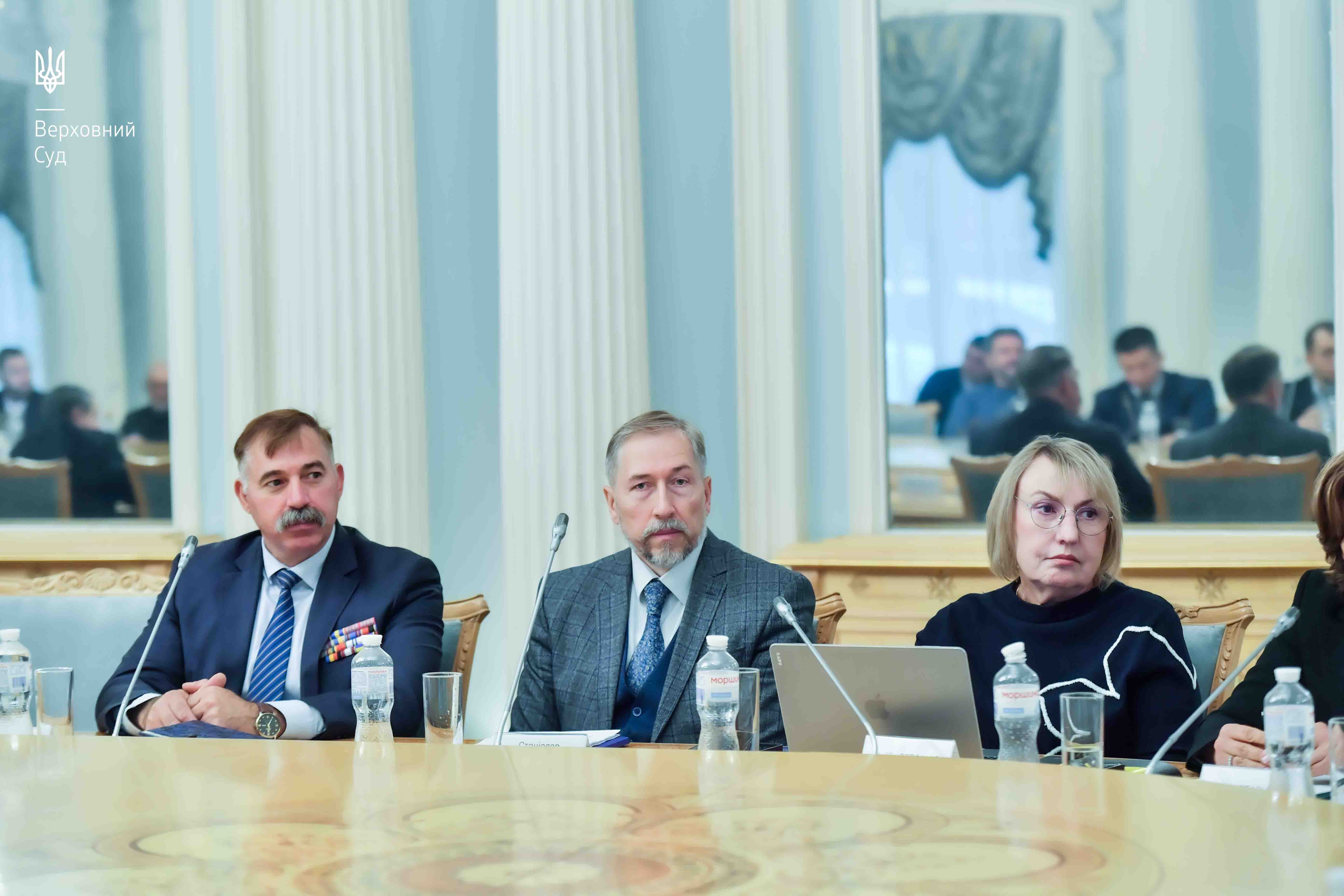
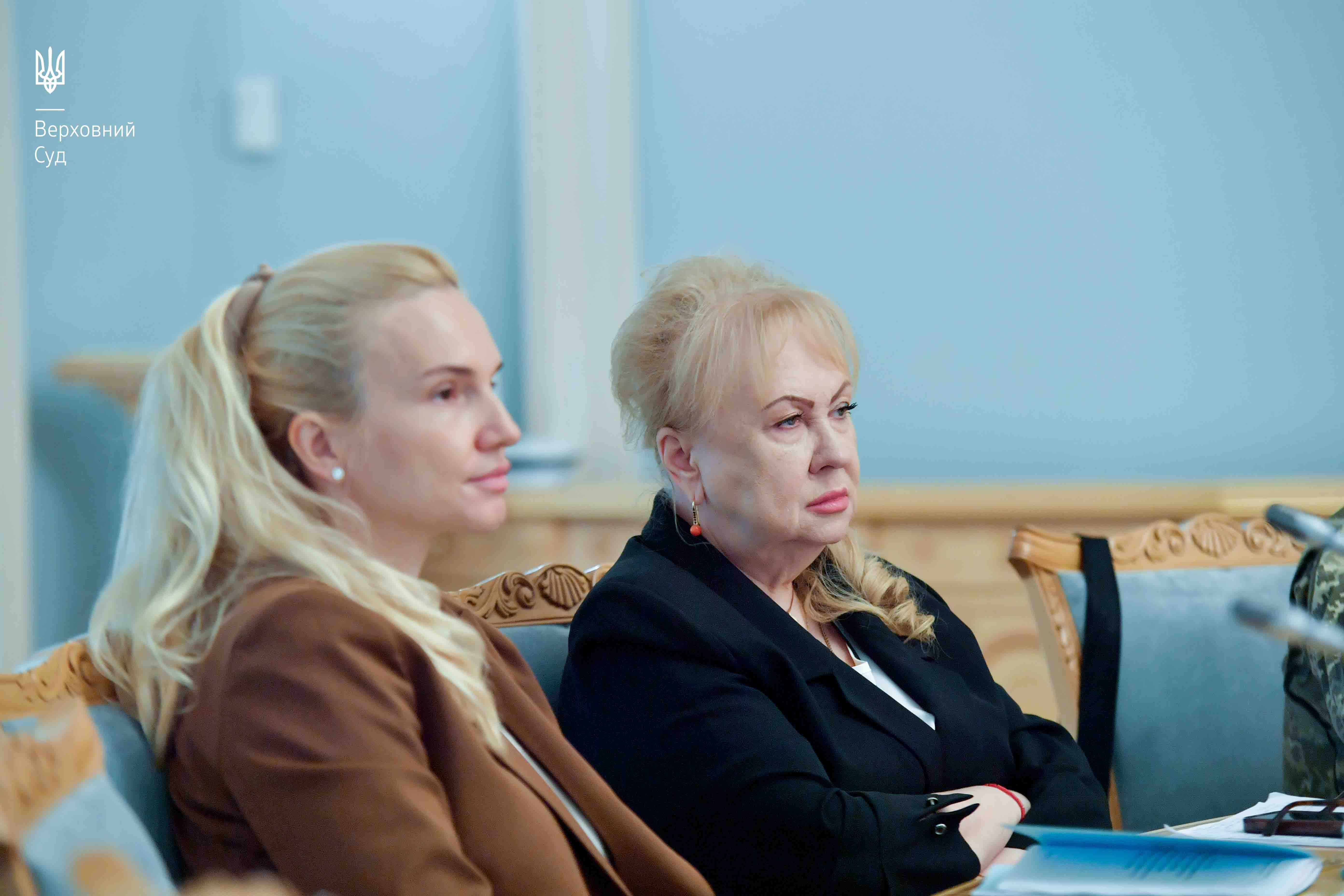
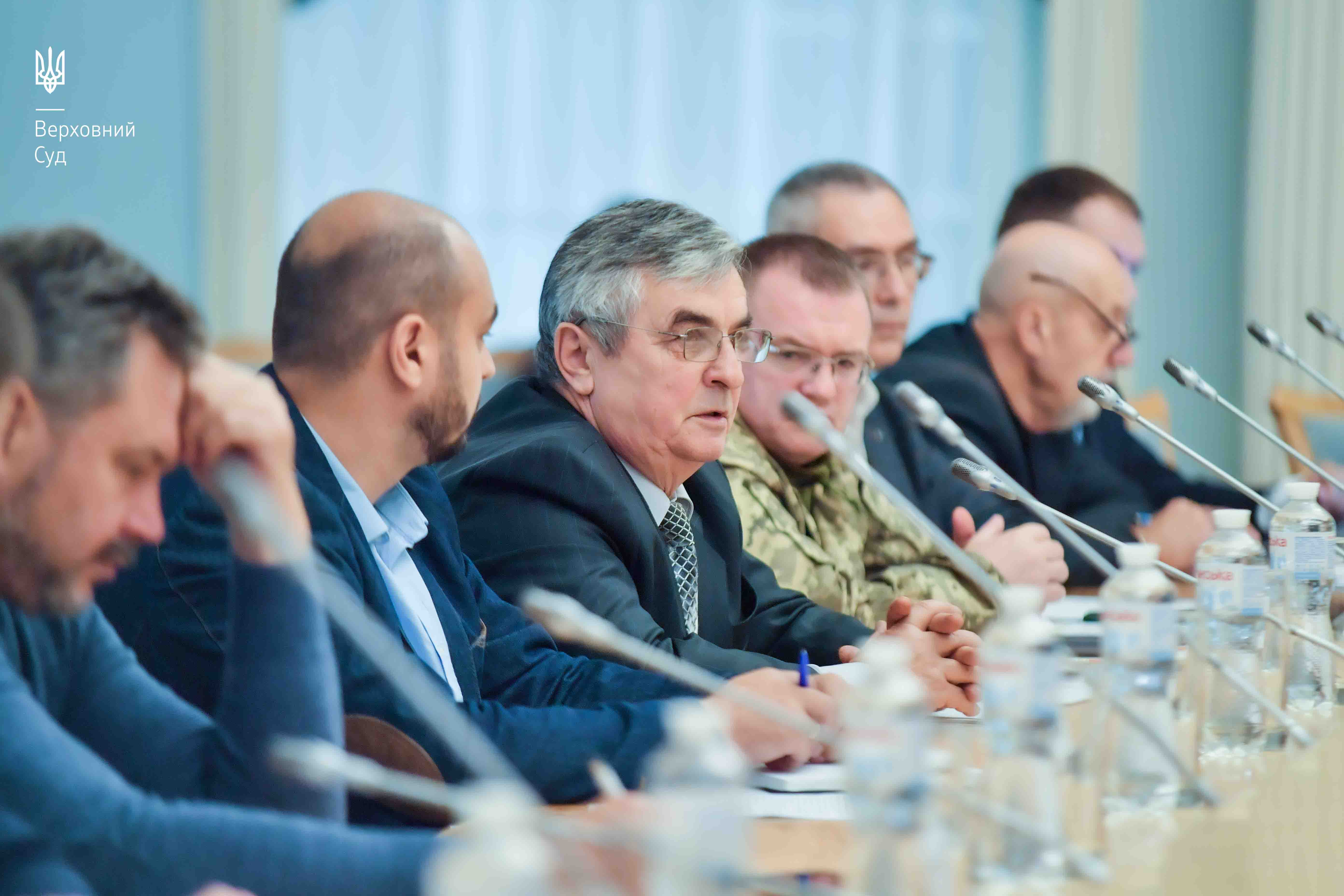
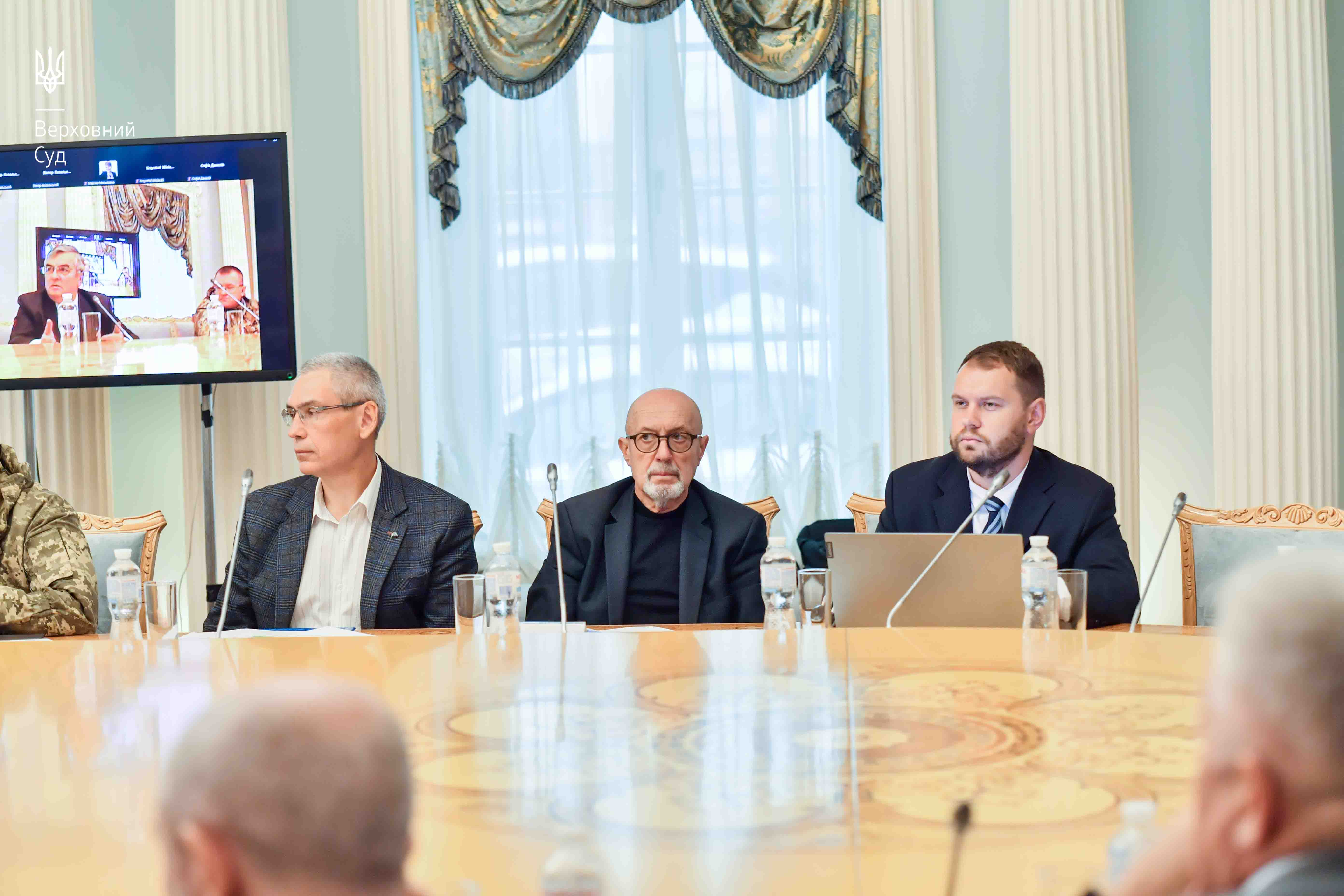
The meeting of the working group of the Scientific Advisory Council at the Supreme Court was dedicated to the analysis and discussion of proposals regarding the preparation of conclusions by the Plenum of the Supreme Court on the draft laws of Ukraine "On Amendments to the Law of Ukraine 'On the Judiciary and the Status of Judges' Concerning the Functioning of Military Courts" (reg. No. 13048 dated February 27, 2025) and "On Amendments to the Law of Ukraine 'On the Judiciary and the Status of Judges' Concerning the Establishment and Organization of Activities of Military Courts" (reg. No. 13048-1 dated March 11, 2025). The event, which lasted over three hours, brought together judges of the Supreme Court, leading Ukrainian scholars in the field of judicial organization, representatives of the Parliament, the Office of the President of Ukraine, practicing lawyers, representatives of the prosecution, the bar, military administration bodies, command, and international experts.
The meeting was opened by Oleh Tkachuk, Judge of the Grand Chamber of the Supreme Court and Scientific Secretary of the Scientific Advisory Council at the Supreme Court, who outlined the key objective of the work: to develop a coordinated position of the Scientific Advisory Council regarding the legislative initiatives before they are submitted for consideration by the Plenum of the Supreme Court. As explained by Oleh Tkachuk, the purpose of both draft laws is to create an effective and efficient mechanism for adjudication in the military sphere, as well as judicial protection of violated rights and legitimate interests of military personnel, by introducing the specialization of the judiciary provided for in Article 125 of the Constitution of Ukraine and restoring the functioning of military courts within the system of courts of general jurisdiction.
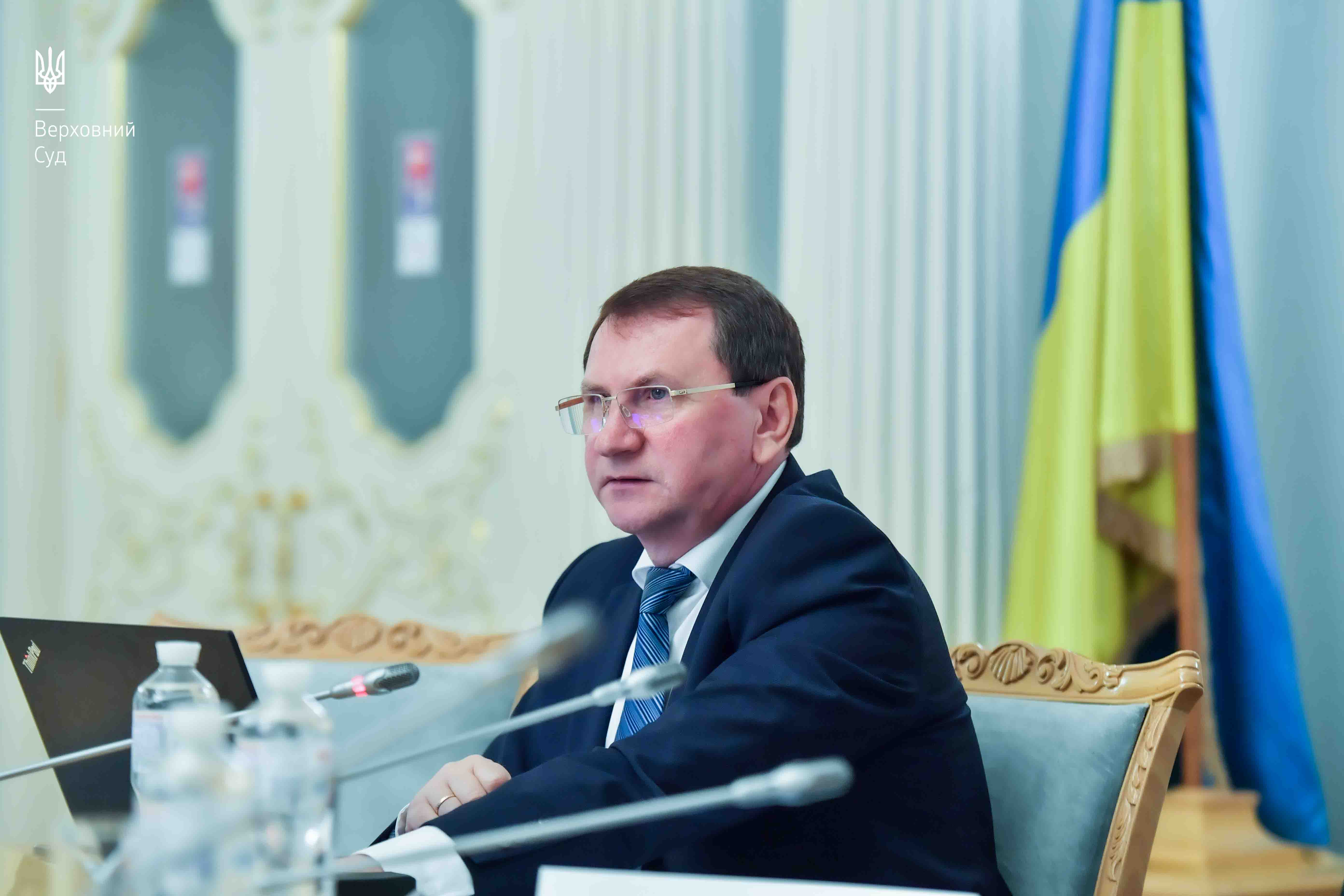
According to him, the Supreme Court's mission in preparing a conclusion on these draft laws is significant. It is important that these legislative initiatives can be implemented in practice and contribute to the genuine protection of the rights and freedoms of military personnel. Justice in the military sphere must cover all aspects to ensure the rule of law and fairness.
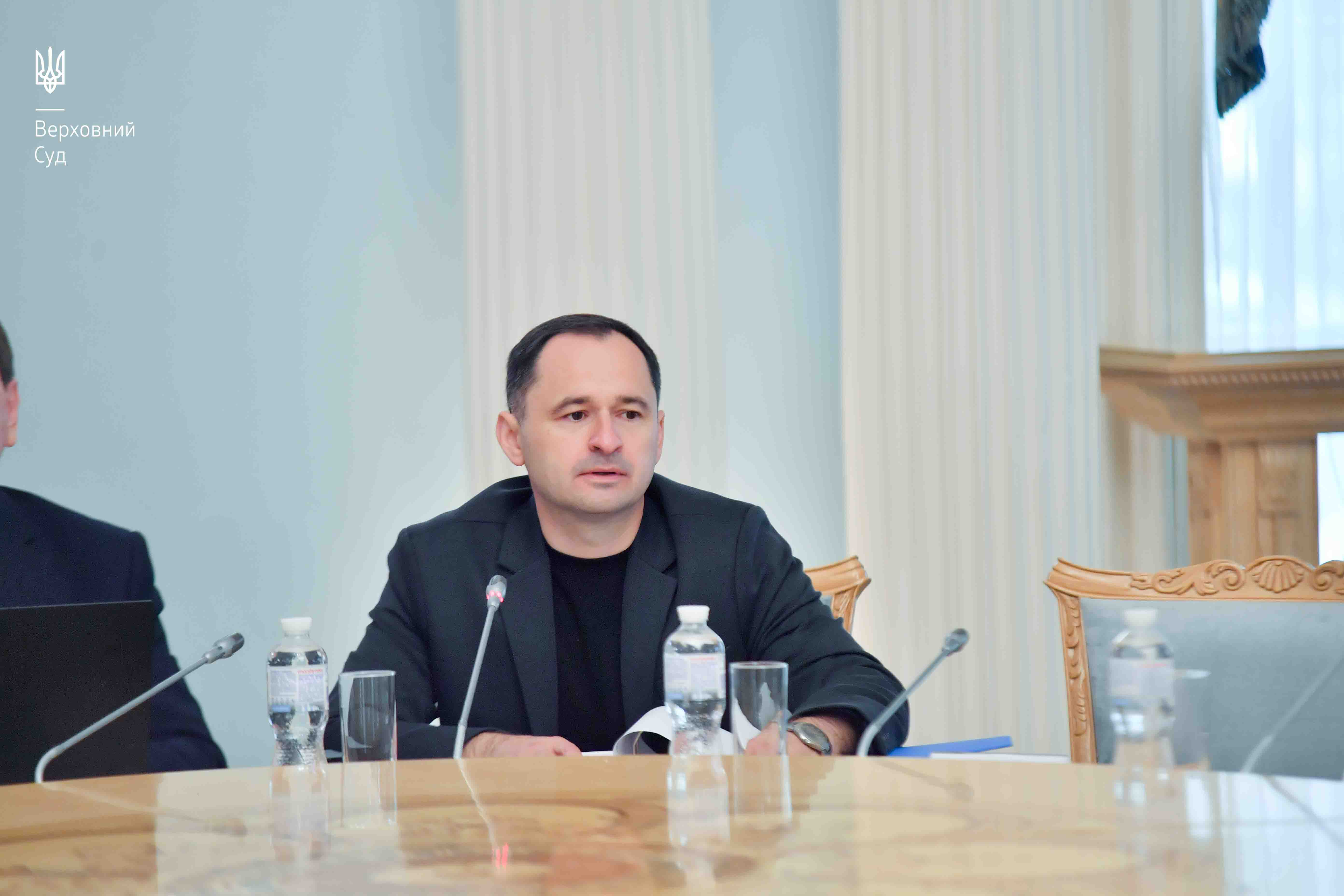
The welcoming remarks and discussion were joined by People's Deputy of Ukraine and initiator of draft law No. 13048-1 Maksym Dyrdin, as well as Viktor Dubovyk, Director General of the Directorate for Legal Policy Issues at the Office of the President of Ukraine. Maksym Dyrdin presented the main provisions of draft laws No. 13048 and No. 13048-1. He focused on the model of a three-tier system of military courts, its structure, and the definition of jurisdiction. Viktor Dubovyk emphasized that, when considering the establishment of a military justice system, it is necessary to take into account both the views of the military themselves and the conclusions of the European Commission for Democracy through Law (Venice Commission), in light of Ukraine's European integration path.
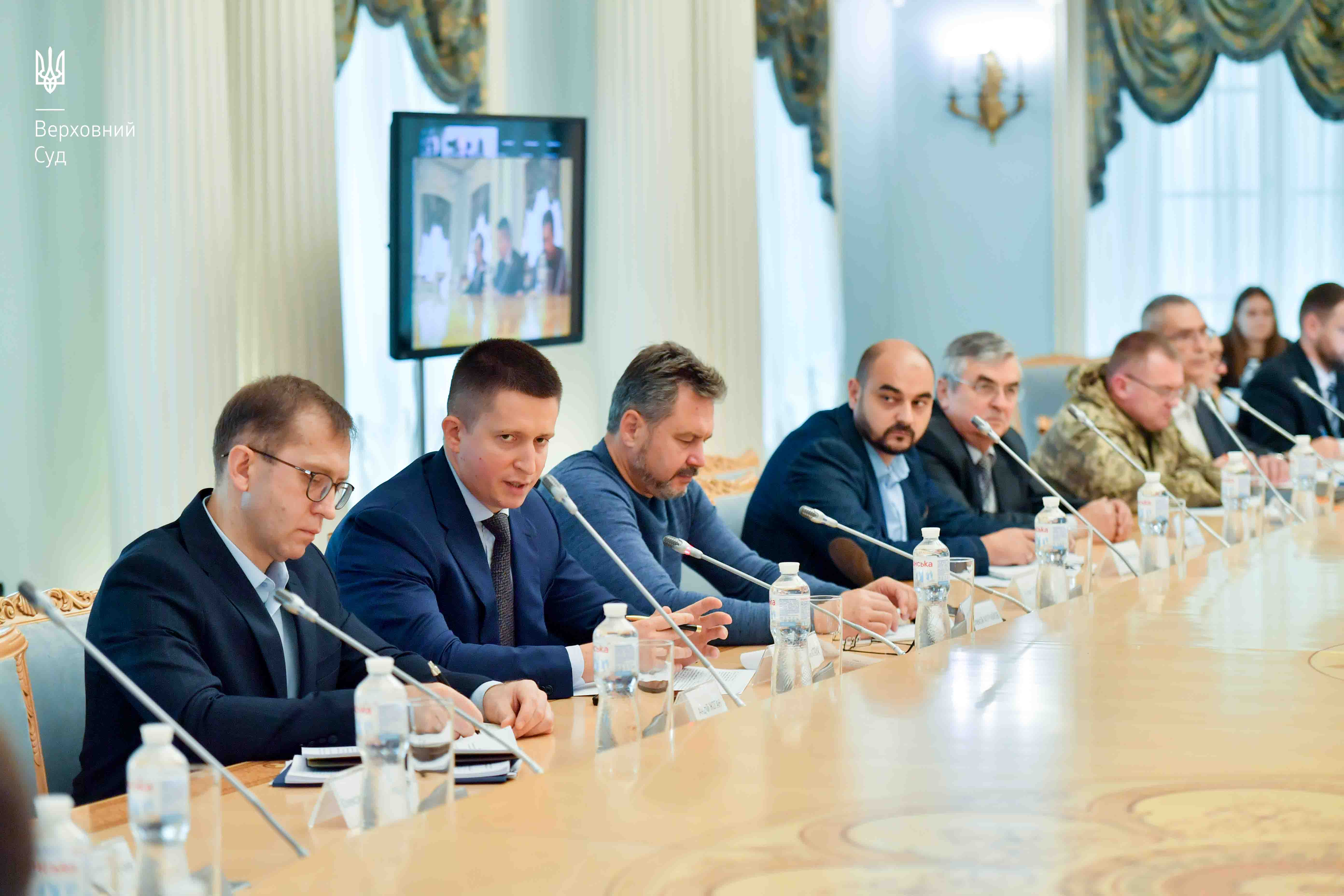
The discussion involved scholars – members of the Scientific and Advisory Council at the Supreme Court Pavlo Bohutskyi and Volodymyr Pashynskyi, who noted that the creation of a full-fledged military justice system is one of the factors ensuring Ukraine’s European choice.
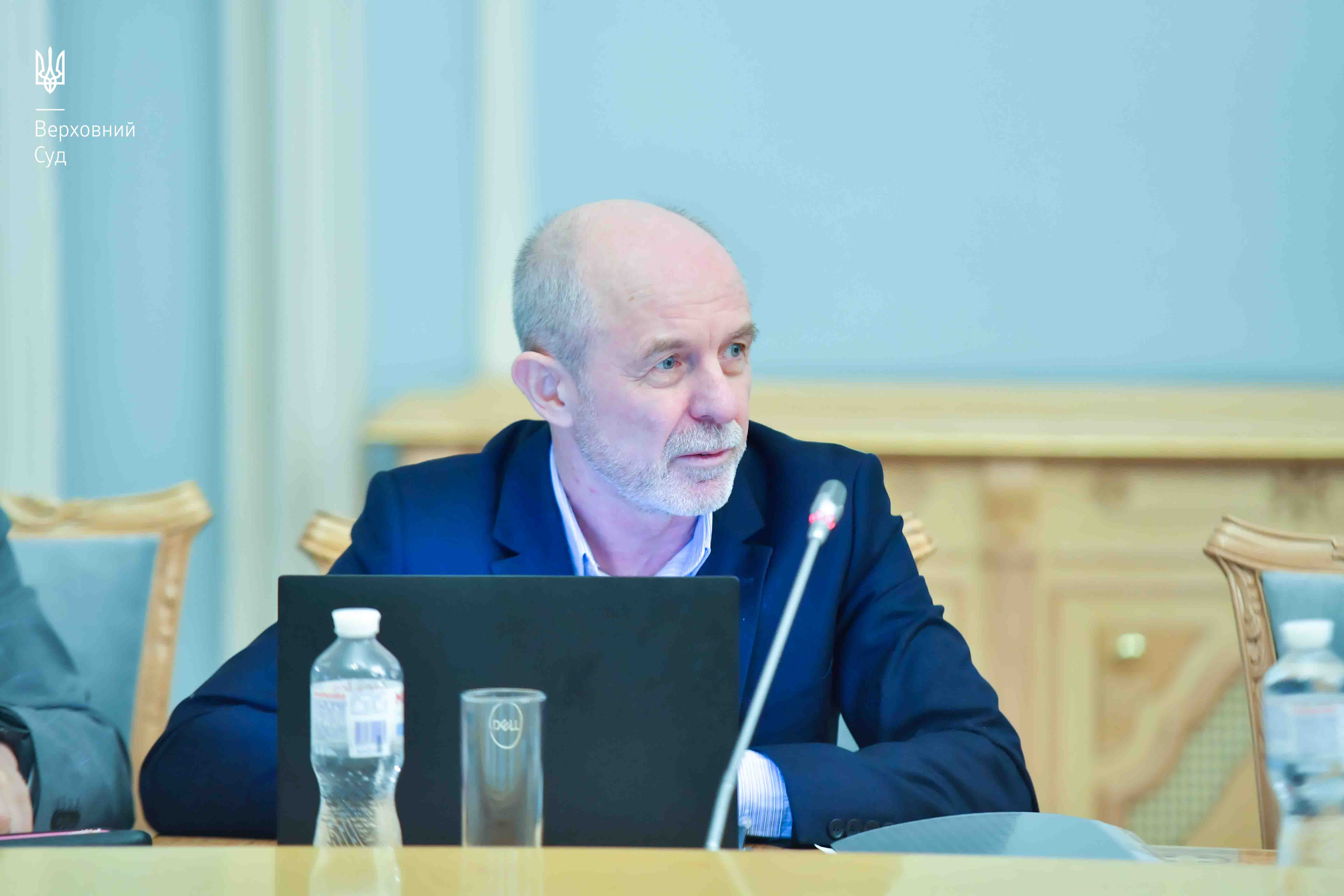
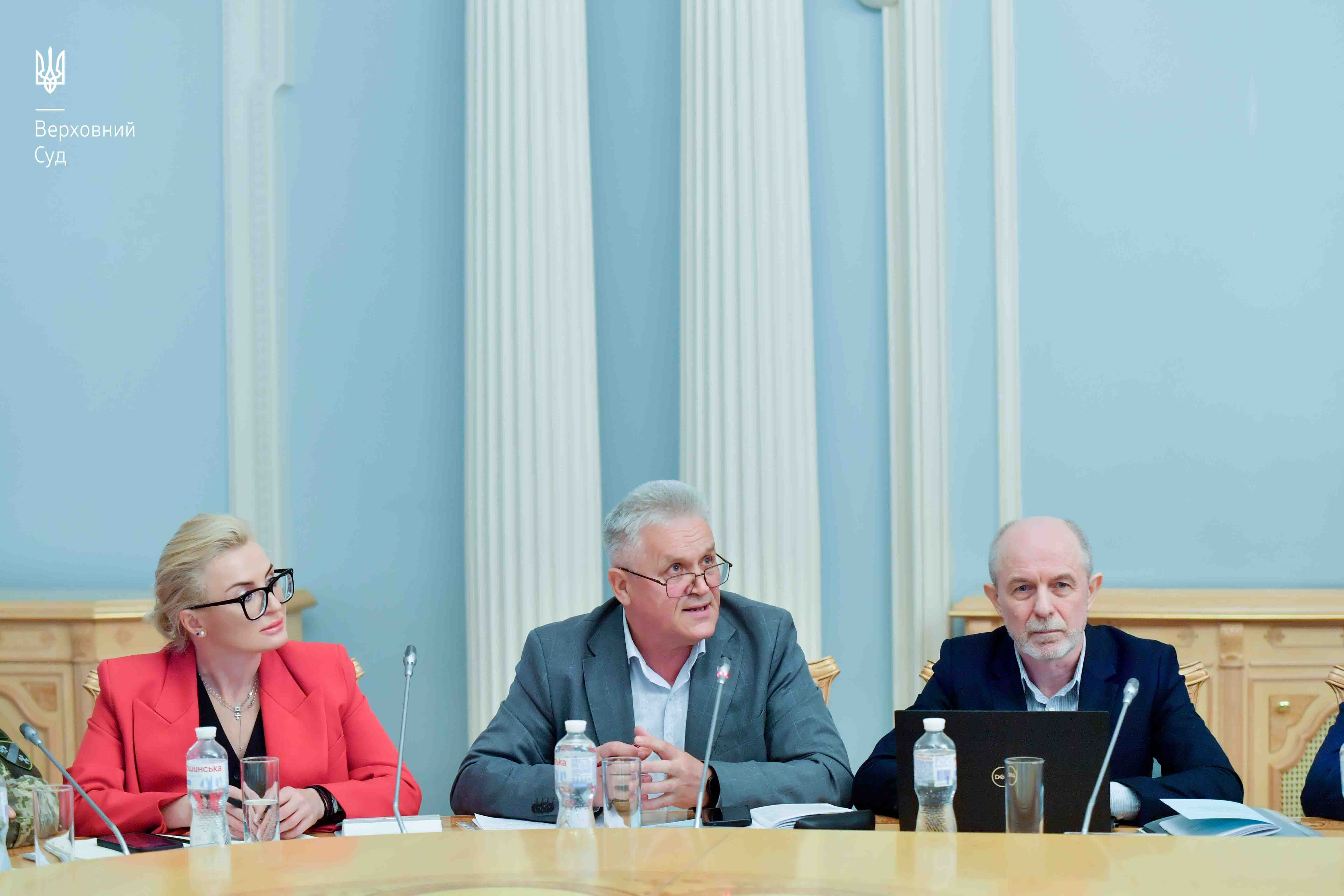
Representatives of the Armed Forces of Ukraine and the Ministry of Defence of Ukraine also shared their views.
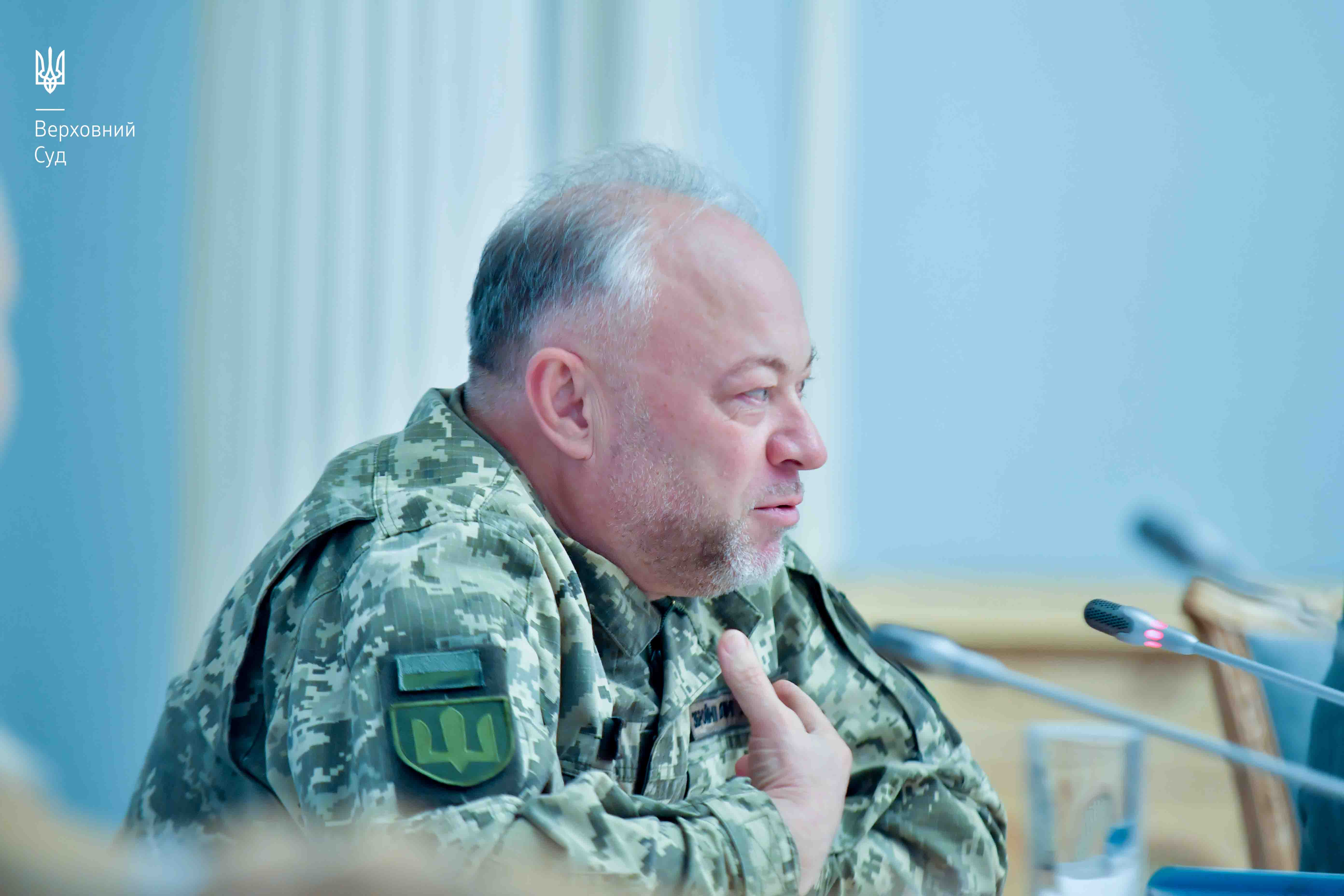
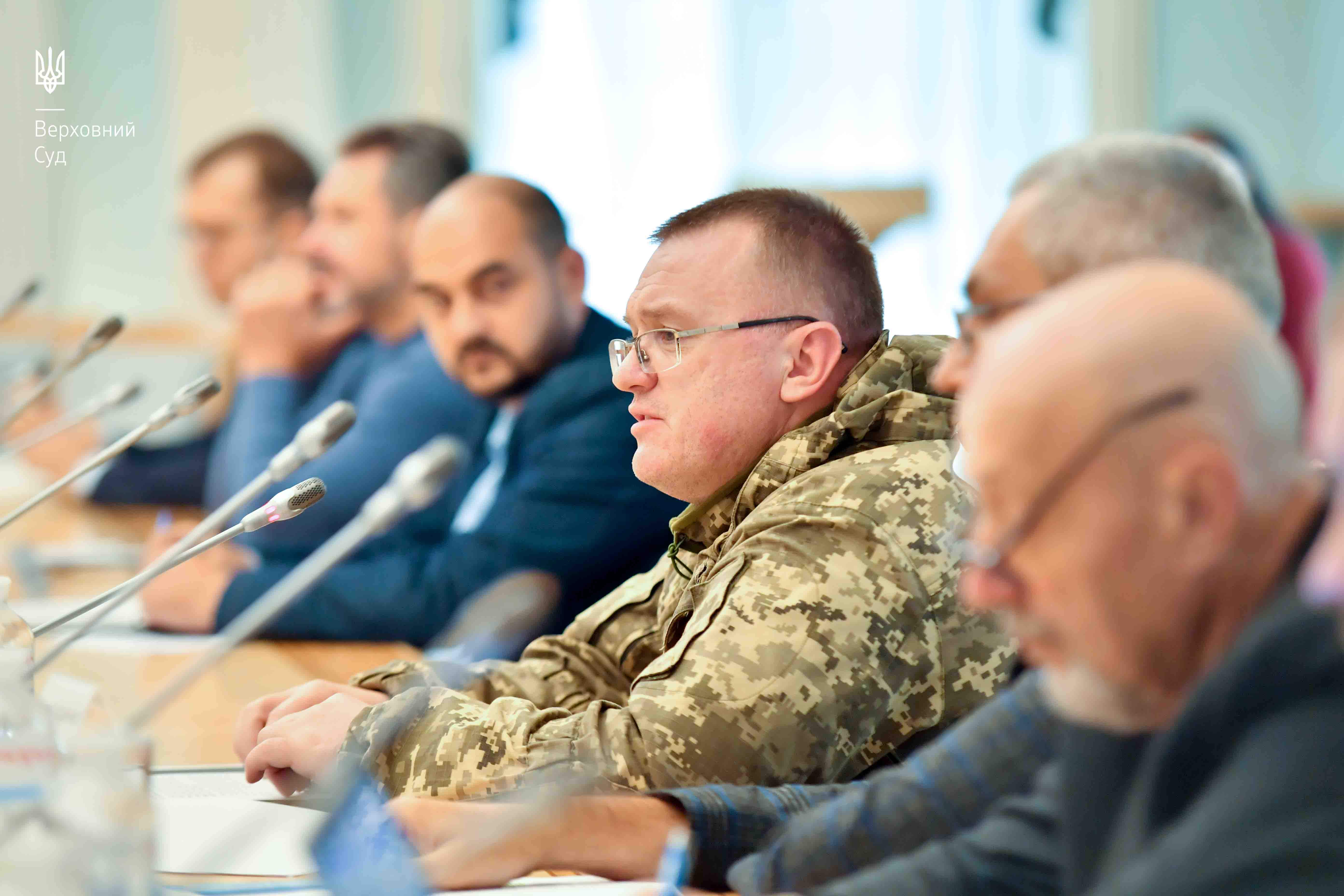
A significant part of the discussion was devoted to the compliance of the proposed models for establishing military courts with the conditions of wartime, the scope of jurisdiction – including issues of social protection for military personnel and their family members – as well as matters of ensuring law and order and justice in the military sphere.
.jpg)
Particular attention was paid to the constitutionality of the proposals and compliance with the principle of judicial independence. Marina Stavniichuk, Head of the Rule of Law Committee of the National Bar Association of Ukraine and member of the Venice Commission (2009–2013), emphasized the need to align the provisions of the draft laws with the guarantees enshrined in Article 126 of the Constitution of Ukraine. She also drew attention to the necessity of adhering to European standards for the selection of judges and to the risks that may arise if the competitive selection procedure is shortened. During the discussion, Deputy Chair of the High Council of Justice Oksana Kvasha, member of the High Qualification Commission of Judges of Ukraine Oleksii Omelian, as well as scholars and judges, stressed the need to avoid conflicts between the norms of the Constitution of Ukraine and the proposed provisions.
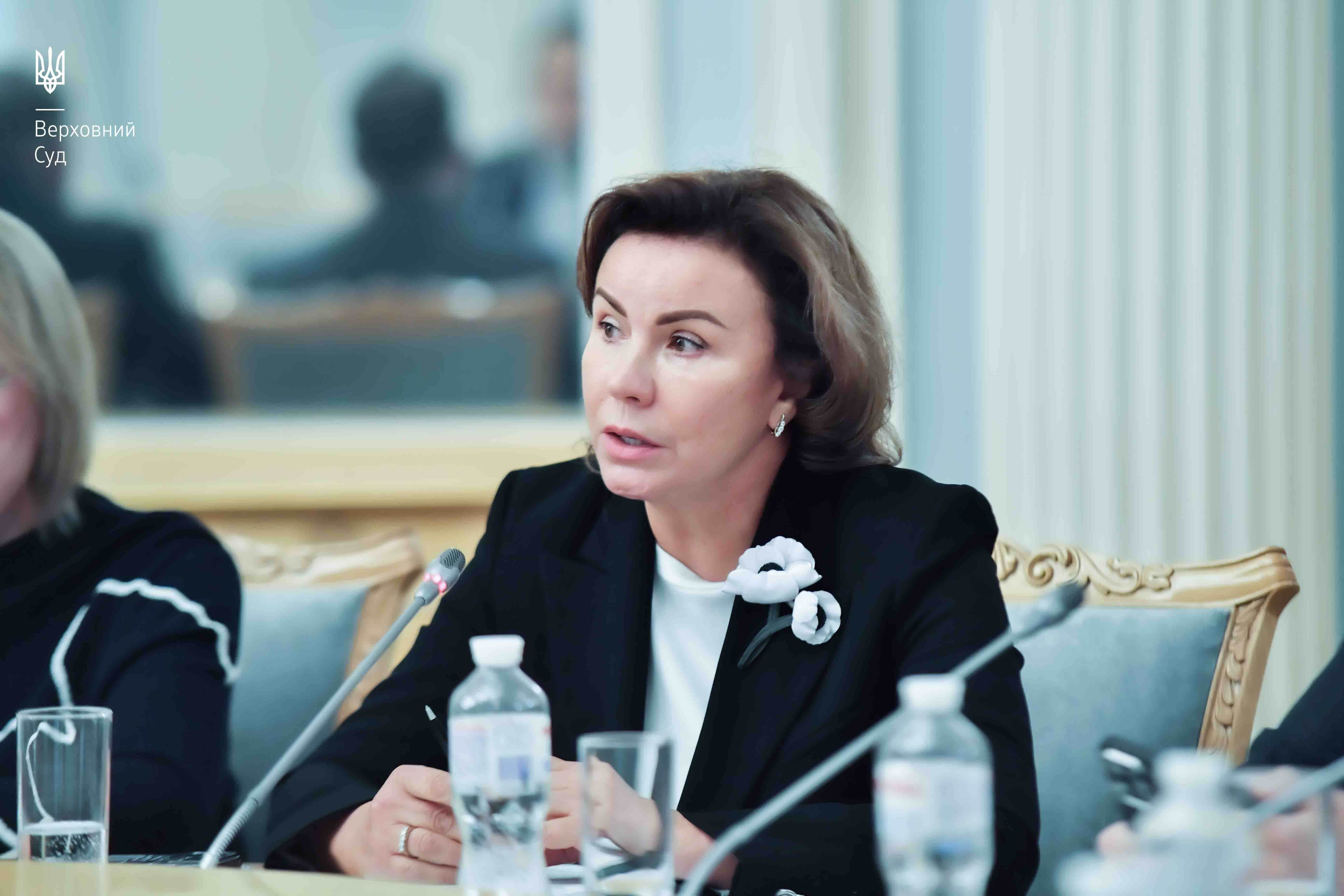
In particular, Oksana Kvasha reported that earlier, in August 2024, the High Council of Justice had provided an advisory opinion on draft law No. 10301 concerning the introduction of judicial specialization for the consideration of military and war crimes in courts. Regarding the creation or restoration of a system of military courts, she noted that the key and urgent issue is the protection of human rights – in particular, the rights of military personnel – taking into account the specific nature of the military sector.
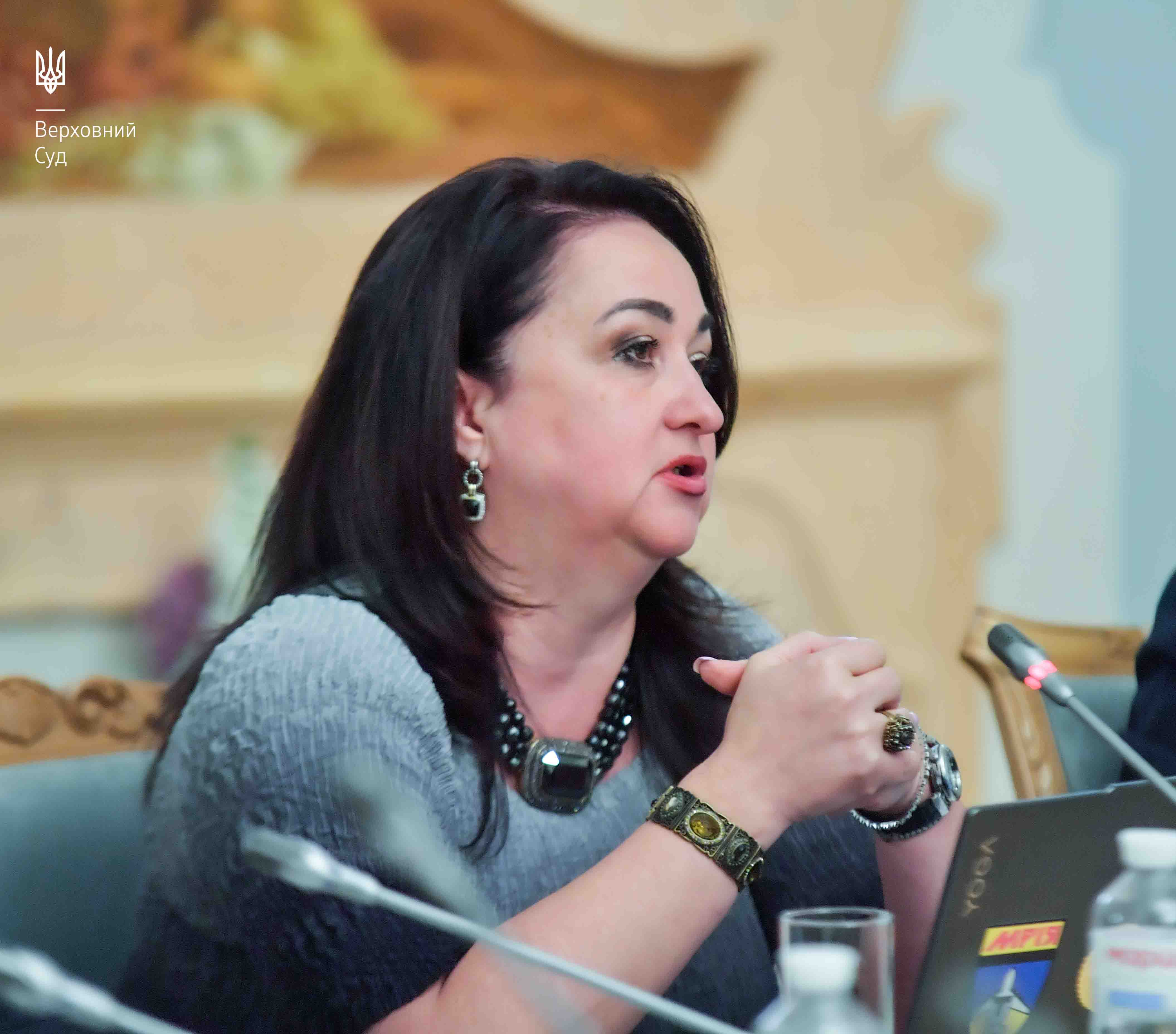
Oleksii Omelian focused on the role of the High Qualification Commission of Judges of Ukraine in the future selection of personnel for military courts and on the prospects for staffing them. Regarding the qualification requirements for candidates for the position of judge in military courts, the speaker emphasized the need to provide in the legislation for the possibility of access to judicial positions for specialists in military law.
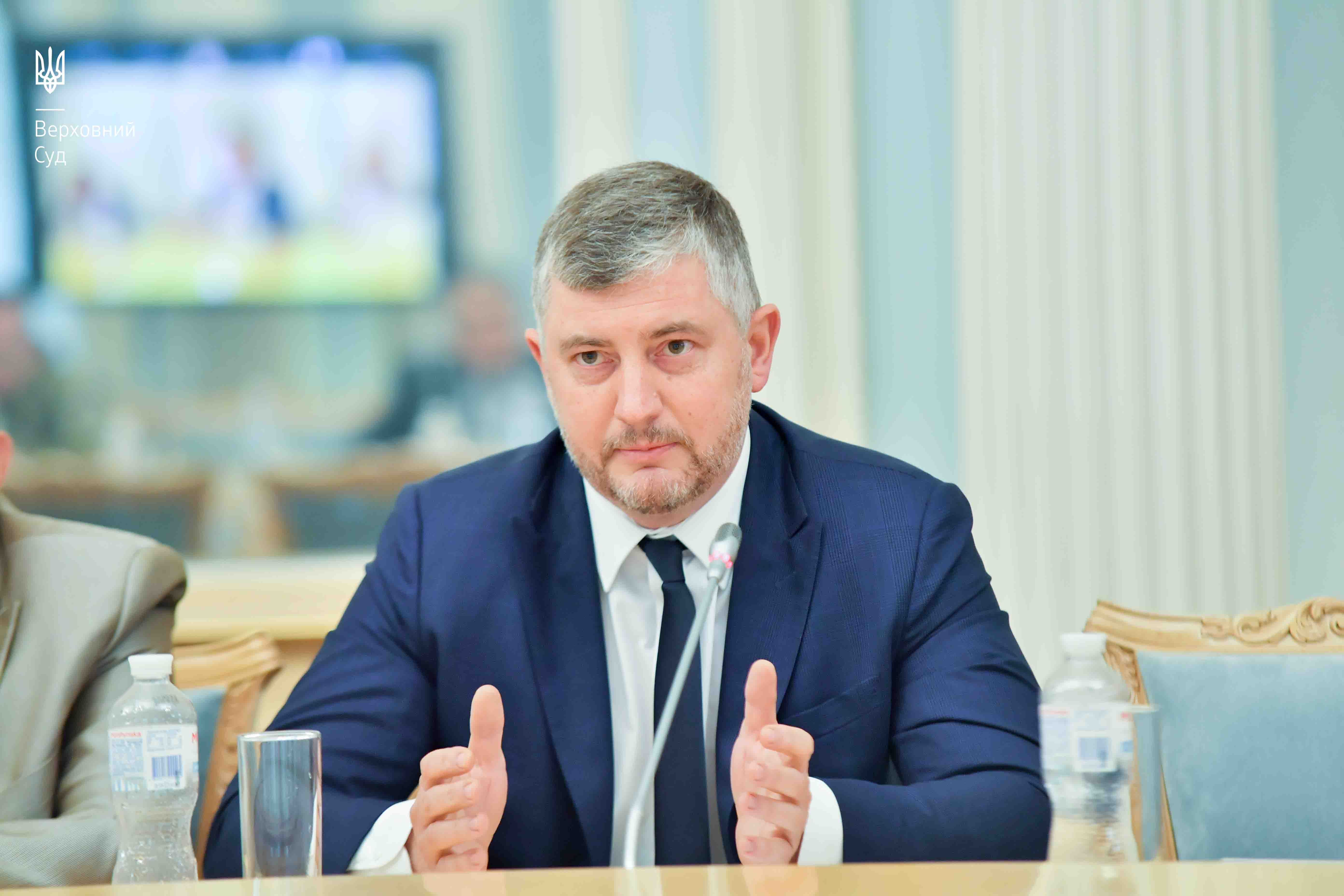
Participants thoroughly examined the issues of organizing the work of military courts as proposed in the draft laws:
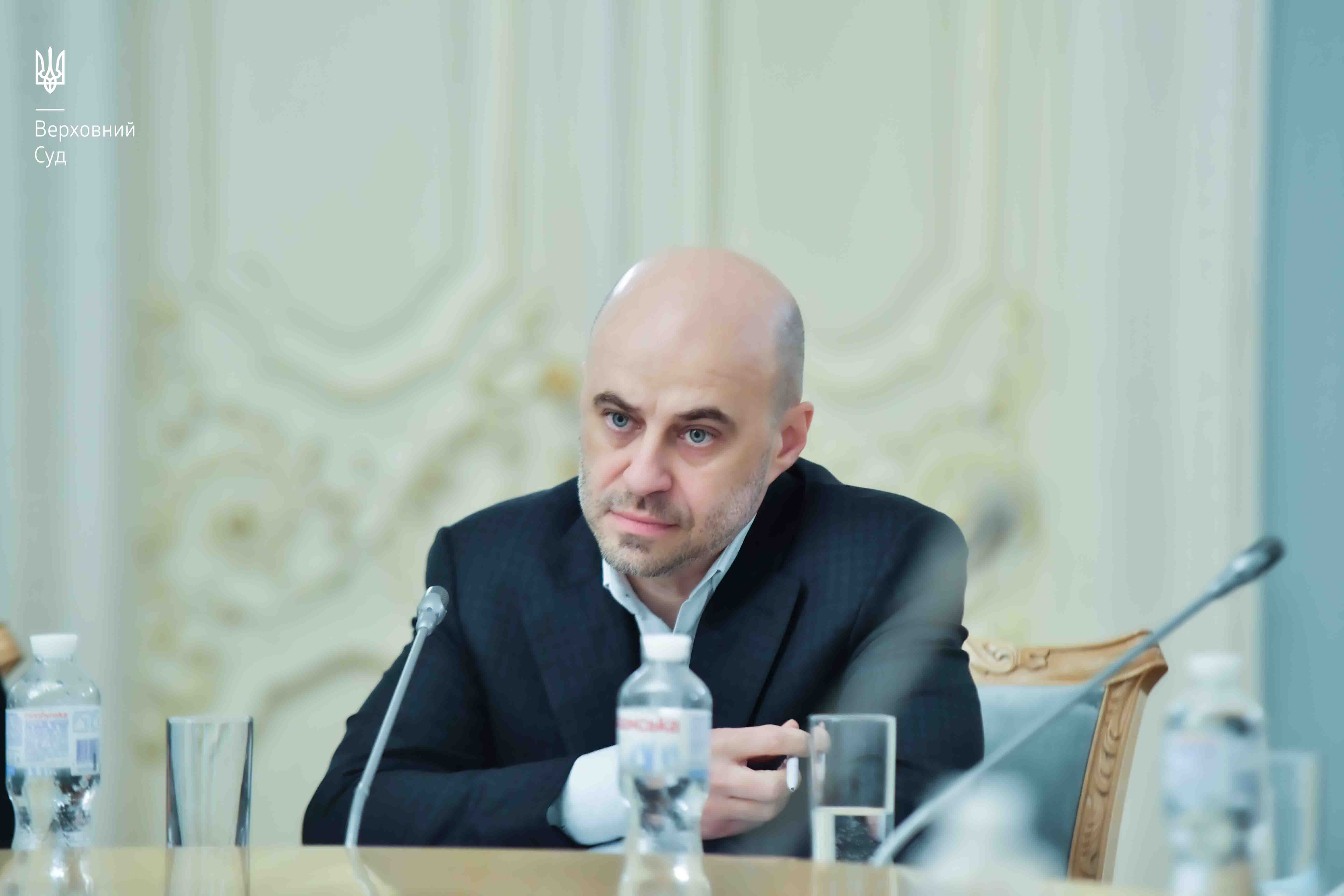
Significant attention was paid to the status of judges, the possibility of establishing a mandatory requirement of officer rank, and the problem of forming a personnel reserve. Head of the State Judicial Administration of Ukraine Maksym Pampura, in his speech, outlined the organizational aspects of creating new courts, emphasizing the realistic possibility of avoiding dependence on military structures in matters of material support.
At the conclusion of the meeting, participants proposed developing joint written recommendations based on the discussion, which would serve as the basis for the conclusion of the Scientific Advisory Council to be submitted to the Plenum of the Supreme Court. Among the key proposals were:
Thus, the meeting of the working group of the Scientific Advisory Council at the Supreme Court, with the participation of invited guests, became an important step toward developing a common position on the functioning of military courts in Ukraine. The participants reached consensus that reform in this area must take place with due regard for constitutional principles, international standards, and the current challenges arising from the ongoing war waged by the Russian Federation against Ukraine.
.jpg)
_03_03.png)