Contact center of the Ukrainian Judiciary 044 207-35-46
Each case concerning the disciplinary liability of judges generates significant public resonance and plays an important role in ensuring the proper formation of the judiciary. At the same time, bringing judges to disciplinary liability must not pose a threat to judicial independence, which is one of the conditions for building a democratic state. The Grand Chamber of the Supreme Court has already developed case law on many aspects related to judicial disciplinary liability. However, questions occasionally arise regarding the assessment of the evolving practice of the High Council of Justice in this area. Addressing these issues is necessary to ensure the unity and stability of legal application.
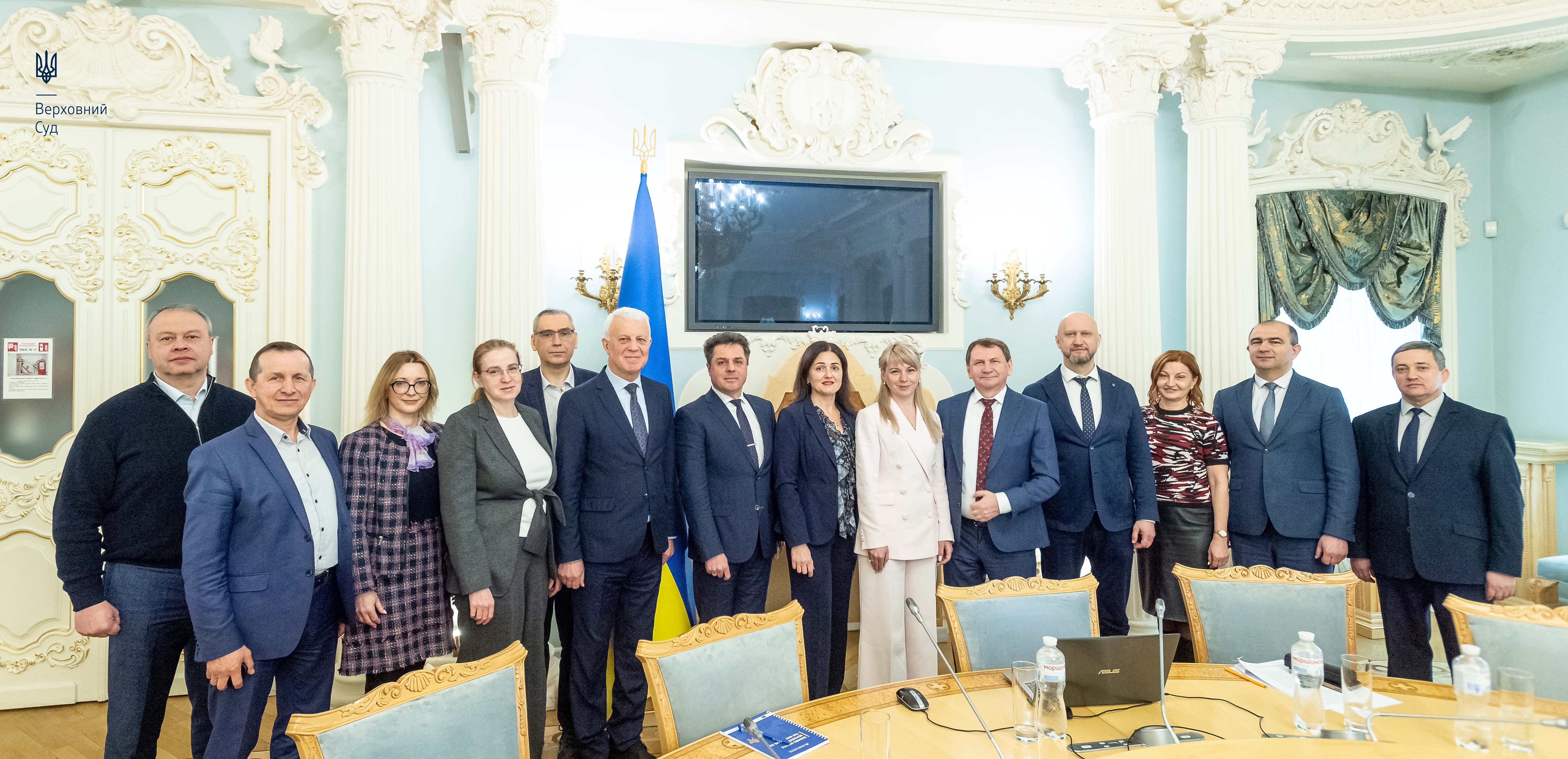
This was emphasized by the Scientific Secretary of the Scientific Advisory Council at the Supreme Court, Judge of the Grand Chamber of the Supreme Court Oleh Tkachuk, during a meeting of the Council attended by scholars in the fields of administrative law and criminal procedure, as well as judges of the Grand Chamber of the Supreme Court. Participants discussed issues related to regulatory frameworks and doctrinal approaches to the admissibility and scope of using materials from criminal proceedings and operational-search activities in disciplinary proceedings against judges.
As noted by the Secretary of the Grand Chamber of the Supreme Court, Serhii Pohribnyi, judges turn to legal doctrine to understand how the science of criminal procedural law and the science of administrative law assess the possibility of using certain types of evidence in cases on bringing judges to disciplinary liability. According to him, on the one hand, it is critically important to ensure the independence of judges and the judiciary as a whole, and on the other hand, to resolve whether a particular individual can continue to perform the highly significant duties of a judge on behalf of the Ukrainian state.
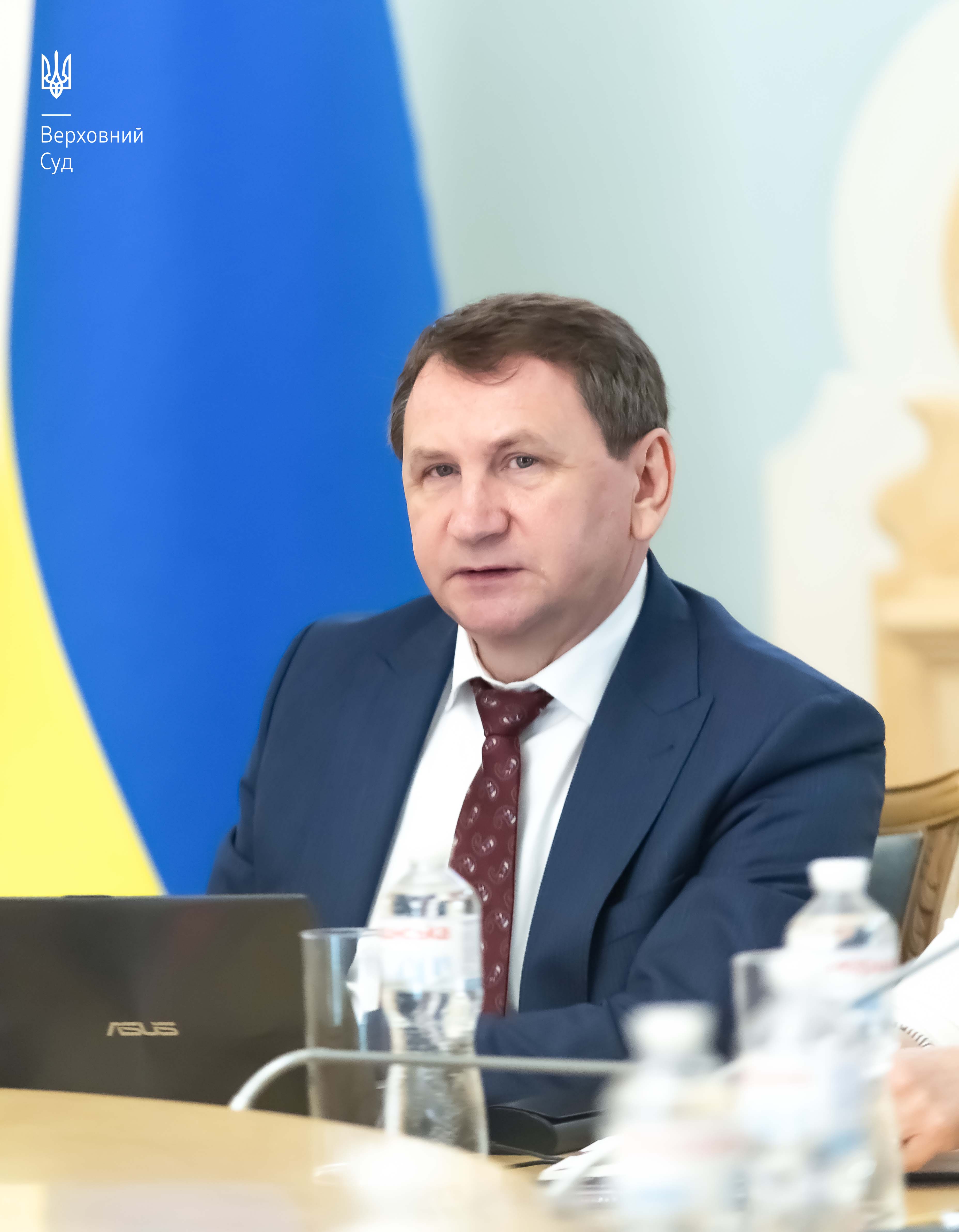
Doctor of Law, Associate Professor Oleksandr Konstantyi focused on the fundamental theoretical approaches that judges should apply when considering disciplinary proceedings, taking into account the provisions enshrined in the codes. Under the Code of Administrative Procedure of Ukraine, evidence in administrative proceedings includes any data on the basis of which the court establishes the presence or absence of circumstances (facts) substantiating the claims and objections of the parties, as well as other circumstances relevant to the proper resolution of the case. At the same time, when a complaint against a decision of the High Council of Justice – adopted following the review of a complaint against a decision of its Disciplinary Chamber – is submitted to the Grand Chamber of the Supreme Court, it must be taken into account that, under Article 266 of the Code of Administrative Procedure of Ukraine, such a complaint is examined under cassation procedure rules established by the Code. Importantly, the Grand Chamber of the Supreme Court cannot restore violated rights of an individual; it may only quash the challenged decision of the High Council of Justice or leave it unchanged.
The scholar added that if there is no verdict in a given criminal proceeding, when assessing evidence the court should be guided by the general provisions of Article 90 of the Code of Administrative Procedure of Ukraine, under which the court evaluates the evidence available in the case based on its inner conviction, formed through direct, comprehensive, full, and objective examination.
Judge of the Grand Chamber of the Supreme Court Olena Hubska raised the issue of the theoretical aspects of the relevance and admissibility of evidence and its sources when considering disciplinary cases, both within proceedings before the High Council of Justice and during the review of such decisions by the Grand Chamber of the Supreme Court.
As emphasized by Doctor of Law, Professor Oksana Khotynska-Nor, disciplinary proceedings are characterized by the principle of autonomy. This distinguishes them from being tied to criminal proceedings. According to the Law of Ukraine “On the High Council of Justice”, she noted, disciplinary proceedings apply different standards of proof than those established in procedural codes: specifically, the standard of clear and convincing evidence applies.
%20(1).jpg)
In this context, Judge of the Grand Chamber of the Supreme Court Lev Kyshakevych focused on the appropriateness of defining the concept of autonomy of disciplinary proceedings and the possibility of using materials and evidence obtained in the course of criminal proceedings within such proceedings.
In the opinion of Doctor of Law, Professor Andrii Boiko, the nature of criminal proceedings and disciplinary proceedings is fundamentally different. This concerns, in particular, approaches to the admissibility of evidence, since the Law of Ukraine “On the High Council of Justice” does not regulate requirements regarding the relevance and admissibility of evidence in disciplinary proceedings. According to Andrii Boiko, if there are no reservations regarding the legality of how evidence was obtained, the disciplinary body considers such evidence admissible. However, if evidence is obtained in a manner prohibited by law, it is clearly inadmissible.
Regarding the possibility of using materials from operational-search activities in disciplinary proceedings, the scholar noted that Article 10 of the Law of Ukraine “On Operational-Search Activities” provides that such materials may be used to inform state authorities about certain events.
Doctor of Law, Professor Iryna Hloviuk pointed out that the content of Part 2 of Article 255 of the Criminal Procedure Code of Ukraine suggests that the use of materials obtained as a result of covert investigative (search) actions for purposes unrelated to criminal proceedings is prohibited. Moreover, Part 3 of Article 254 of the Criminal Procedure Code of Ukraine explicitly stipulates that making copies of protocols of covert investigative (search) actions and their annexes before a decision on their declassification, in accordance with the procedure established by law, is not permitted.
In addition, Article 246 of the Criminal Procedure Code of Ukraine stipulates that covert investigative (search) actions (CISAs) may be conducted exclusively within criminal proceedings concerning serious or particularly serious crimes. “According to the logic of the legislator, the state may resort to one of the most intrusive forms of interference with human rights only when the gravity of the criminal offence and the public interest are strong enough to justify such interference. In other words, restrictions on conducting CISAs exist even within criminal proceedings themselves. Therefore, it is impossible to speak about the use of such materials in other proceedings where CISA are not provided for at all,” shared Iryna Hlovyuk.
Continuing the discussion, PhD in Law, Associate Professor Mykola Pashkovskyi stated that the set of provisions in Chapter 21 of the Criminal Procedure Code of Ukraine represents a logical development of Article 31 of the Constitution of Ukraine, which guarantees everyone the secrecy of correspondence, telephone conversations, telegraph and other communications. Exceptions are permitted only where necessary to prevent a crime or to establish the truth in the course of a criminal investigation, and only if the information cannot be obtained by other means.
He also supported the concept of the autonomy of disciplinary proceedings and added that the Criminal Procedure Code of Ukraine cannot regulate the rules on the admissibility of evidence in disciplinary proceedings. Mykola Pashkovskyi also drew attention to Article 257 of the Criminal Procedure Code of Ukraine, which establishes the impossibility of using the results of covert investigative (search) actions for purposes unrelated to criminal proceedings.
Doctor of Law, Professor Anatolii Berlach also addressed the issue of the autonomy of disciplinary proceedings and the need to develop an algorithm that would allow a court to adopt disciplinary decisions regarding a person who has committed a disciplinary offence while using materials from criminal proceedings. He emphasized that when a court is faced with assessing materials from operational-search activities in disciplinary proceedings, it must pay attention to the quality of such materials and the grounds for conducting the operational-search activities through which this information was obtained.
The meeting of the working group of the Scientific Advisory Council at the Supreme Court was also attended by Doctor of Law, Professor Iryna Sopilko, Doctor of Law, Professor Lesia Vaolevska, Doctor of Law, Professor Zoia Zahynei-Zabolotenko, Doctor of Law, Professor Nataliia Kovalko, Doctor of Law, Professor Serhii Kovalchuk, Doctor of Law, Professor Serhii Fedchyshyn, PhD in Law, Professor Vasyl Shybiko, as well as judges of the Grand Chamber of the Supreme Court: Oleksandr Banasko, Olena Bilokon, Olha Buleiko, Mykola Himon, Anatolii Yemets, Volodymyr Korol, Oleh Kryvenda, Nataliia Martyniuk, Kostiantyn Pilkov, Tetiana Strelets, Olha Stupak, and Vitalii Urkevych.
_03_03.png)