Contact center of the Ukrainian Judiciary 044 207-35-46
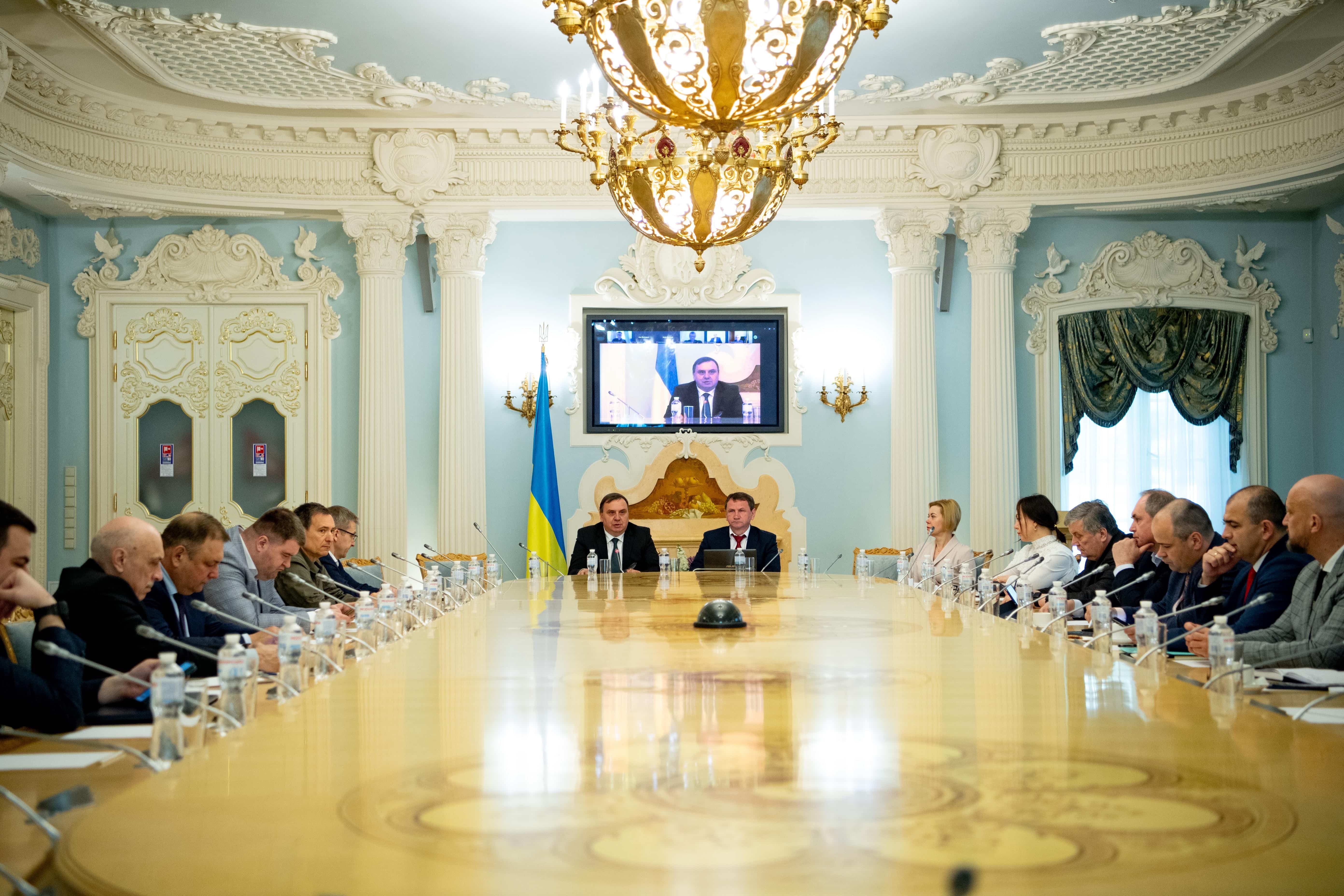
The Supreme Court is hearing proceedings related to challenges against sanctions imposed by the National Security and Defence Council of Ukraine. In this regard, there is a need to discuss certain problematic aspects of law enforcement in this category of cases among scholars and representatives of state authorities.
This was stated by the President of the Supreme Court, Stanislav Kravchenko, during a meeting of the working group of the Scientific Advisory Council at the Supreme Court dedicated to discussing the limits of judicial control over the application of sanctions introduced by the National Security and Defence Council of Ukraine and enacted by Decree of the President of Ukraine.
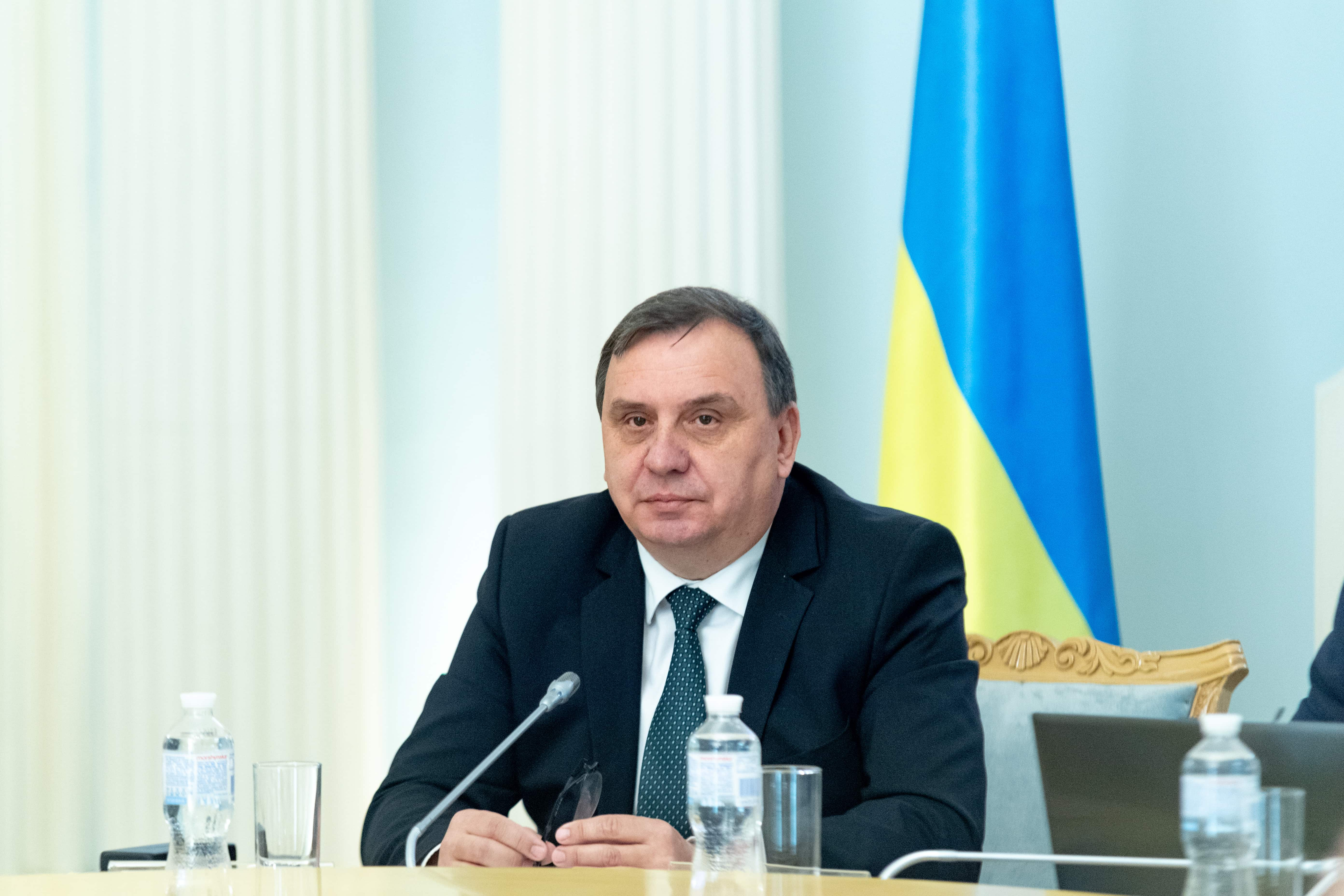
The President of the Supreme Court emphasized the importance of such an advisory body as the Scientific Advisory Council at the Supreme Court and noted that judges quite often send inquiries to scholars, as their conclusions on the interpretation and application of legal norms are necessary for a better and more comprehensive understanding of complex legal issues.
As reported by the Scientific Secretary of the Scientific Advisory Council at the Supreme Court, Judge of the Grand Chamber of the Supreme Court Oleh Tkachuk, as of the end of 2023, the number of sanctions introduced by the National Security and Defence Council of Ukraine and approved by the President of Ukraine stood at approximately 15,000. While hearing cases related to the application of sanctions, judges of the Supreme Court encountered several theoretical issues, the discussion of which will help resolve problematic aspects in practice.
.jpg)
“The Supreme Court, as the highest court in the judicial system of Ukraine, is concerned with the legality, validity, and fairness of court decisions rendered by courts in cases challenging sanctions introduced by the National Security and Defence Council of Ukraine and enacted by Decree of the President of Ukraine. It is for this reason that the judges of the Grand Chamber of the Supreme Court initiated a meeting of the working group of the Scientific Advisory Council in order to discuss issues concerning the limits of judicial control over the adoption and implementation of decisions provided for in Part 2 and paragraph 2 of Part 3 of Article 5 of the Law of Ukraine ‘On Sanctions’, as well as lawful and effective means of judicial protection in the relevant disputes. It is also worth discussing the theoretical and practical aspects of determining the subject matter, object, and range of subjects to whom the scope of this Law applies, and so on. The working group meeting also plans to hold a discussion on the commensurability and proportionality of the imposed sanctions and their correlation with the provisions of Article 1 of the First Protocol to the Convention for the Protection of Human Rights and Fundamental Freedoms, as well as other issues. It is important for us to hear the opinions of representatives of various institutions, organizations, parliamentarians, and scholars on these matters,” noted Oleh Tkachuk.
.jpg)
Fedir Venislavskyi, Head of the Subcommittee on State Security, Defenсe and Defenсe Innovations of the Verkhovna Rada of Ukraine Committee on National Security, Defenсe and Intelligence, and Member of Parliament of Ukraine, drew attention to the fact that there is a very fine line between applying sanctions to persons whose activities threaten Ukraine’s national security, sovereignty, and territorial integrity, and ensuring that the negative consequences of imposing sanctions do not violate the rights of natural persons and business entities whose activities do not threaten national security. “Sanctions should not be a means of unlawful and unfounded influence,” he added. Speaking about the limits of judicial control in the application of sanctions, Fedir Venislavskyi noted that the court must carefully analyze both the grounds for imposing sanctions and the mechanism and timelines for their application. He also stated that the Law of Ukraine “On Sanctions” should contain clear and unambiguous wording regarding the specific list of cases in which sanctions may be applied to Ukrainian citizens. In the opinion of the Member of Parliament, the normative acts regulating the procedure for applying sanctions must be improved taking into account constitutional guarantees and ensuring compliance with the principle of the rule of law.
Judge of the Constitutional Court of Ukraine Halyna Yurovska primarily emphasized that it is now necessary to develop legal positions that will serve as guidelines for judges when considering issues related to the application of sanctions. In particular, she spoke about several constitutional complaints regarding the constitutionality of the provisions of the Law of Ukraine “On Sanctions”. For example, this year the Constitutional Court of Ukraine refused to open constitutional proceedings in a case based on a constitutional complaint filed by the wife of a person included in the sanctions list concerning the constitutionality of paragraph 1-1 of Part 1 of Article 4 of the Law of Ukraine “On Sanctions”. The subject of the right to a constitutional complaint believed that, as a result of the court’s application of the contested provisions of the Law, her right to private property had been violated. However, the Constitutional Court of Ukraine concluded that, in arguing the unconstitutionality of paragraph 1-1 of Part 1 of Article 4 of the Law of Ukraine “On Sanctions”, the complainant had presented her own understanding of its content, which cannot be considered proper substantiation of the claims regarding the inconsistency of the contested provisions of the Law with the Constitution of Ukraine.
Academician of the National Academy of Legal Sciences of Ukraine, Professor of the Department of Civil Law at the Educational and Scientific Institute of Law of Taras Shevchenko National University of Kyiv, Roman Maidanyk, focused on the issues of compulsory foreclosure on state or private property and the legal nature of such foreclosure. He pointed out that the legal basis for foreclosure may be either a norm of international law or a domestic law on confiscation. When resolving questions of the proportionality or disproportionality of imposed sanctions, it is necessary to take into account the conduct of persons associated with supporting armed aggression against Ukraine, as well as the practice of international judicial institutions.
Ruslan Osypenko, representative of the Apparatus of the National Security and Defence Council of Ukraine, spoke about the stages of preparation and adoption of decisions by the National Security and Defence Council of Ukraine. “We are observing an increase in the number of sanctions cases and lawsuits that call into question sanctions policy in general. Therefore, it is necessary to improve the provisions of the Law of Ukraine "On Sanctions" and take measures to prevent the discreditation of sanctions policy and make it more effective. For this purpose, the Law under discussion must undergo changes. It should have clearer and more understandable criteria and provisions,” he noted.
Oleksandr Pavlichenko, Executive Director of the Ukrainian Helsinki Human Rights Union, emphasized that issues related to the application of sanctions should be considered in the context of compliance with the standards of the Convention for the Protection of Human Rights and Fundamental Freedoms. The lack of clarity in the legislation regarding the grounds for applying the sanctions regime requires effective judicial control in order to prevent violations of the Convention’s standards and to protect Ukraine from possible future applications to the European Court of Human Rights. In his opinion, when applying sanctions, the temporal factor must be taken into account, as well as the principles of proportionality, legality, and necessity in a democratic society.
.jpg)
Stanislav Shevchuk, Corresponding Member of the National Academy of Legal Sciences of Ukraine, expressed his views on the grounds, conditions, and mechanism for restricting constitutional rights under martial law, taking into account the legitimate aim. Among other things, he stressed that judicial control cannot be avoided in matters concerning the application of sanctions.
Viktor Smorodynskyi, Associate Professor of the Department of Human Rights and Legal Methodology at the National Law University of Ukraine named after Yaroslav the Wise, pointed out that even under martial law, the principle of the presumption of innocence cannot be restricted. Therefore, in the context of the provision of the Law of Ukraine “On Sanctions” stating that sanctions may be applied to entities engaged in terrorist activity, it must be understood that until a crime is proven by a court decision that has entered into force, there can be no talk of any terrorist activity. Sanctions may be imposed only after the crime has been proven.
Natalia Petrova, Deputy Head of the USAID “New Justice” Program, highlighted problematic aspects of the Law of Ukraine “On Sanctions”, in particular those concerning the understanding of the essence of sanctions and the purpose of their application. She expressed hope that national courts would comprehensively and fairly resolve issues of the validity of sanctions, taking into account the case law of the European Court of Human Rights. Oleh Mykhaliuk, representative of the EU Project “Pravo-Justice”, noted that there is currently a legislative gap, since the Law of Ukraine “On Sanctions” does not clearly define how, for example, the mandatory force of a court decision in a dispute over debt recovery correlates with certain sanctions restrictions and the specifics of bankruptcy procedures and the enforcement of court decisions.
Those present at the working group meeting also raised the issue of the correlation and competition between the norms of the Law of Ukraine “On Sanctions” and certain provisions of the Criminal Code of Ukraine. The latter, in particular, provides for liability for the intentional violation of legislation on the prevention and counteraction to the legalization (laundering) of proceeds from crime and the financing of terrorism (Article 209-1), terrorist act (Article 258), and involvement in the commission of a terrorist act (Article 258-1). At the same time, the Law of Ukraine “On Sanctions” provides for the application of sanctions to entities that carry out terrorist activities or contribute to terrorist activities (Parts 1 and 3 of the Law). The speakers on this issue adhered to the position that if there are signs that Ukrainian citizens have committed a criminal offence, the investigation and bringing to justice must be carried out in accordance with the procedure established by the Criminal Procedure Code of Ukraine, while ensuring all guarantees and procedures provided for by this Code.
In particular, Judge of the Grand Chamber of the Supreme Court Oleh Kryvenda proposed not to leave this issue unattended and to discuss it additionally.
.jpg)
Anton Monaienko, Chief Research Fellow of the Department of Public Law Research at the Scientific Research Institute of Law-Making and Scientific-Legal Expertise of the National Academy of Legal Sciences of Ukraine, added another issue to this list: “If sanctions are applied, for example, to a co-owner of an enterprise – a citizen of the aggressor state, while the other two co-owners of the enterprise are Ukrainian citizens, is it advisable to completely restrict the activities of this enterprise?”. In Anton Monaienko’s opinion, the principle of proportionality should be applied in such situations.
At the end of the meeting, Oleh Tkachuk drew attention to the judgment of the European Court of Human Rights in the case of Al-Dulimi and Montana Management Inc. v. Switzerland (No. 5809/08 of 21 June 2016). In this case, the Court pointed out that where there is a dispute concerning a decision to add a person to a list or to refuse to remove that person from the list, national courts must be able to obtain (if necessary through a procedure that ensures an appropriate level of confidentiality, depending on the circumstances) sufficiently precise information to carry out an adequate review of any substantiated or unsubstantiated claims made by persons on the list that their inclusion on the list is arbitrary. Accordingly, any State Party whose authorities implement the addition of a natural or legal person to a sanctions list without first ensuring, or without being in a position to ensure, that the inclusion on the list is not arbitrary, fails to comply with Article 6 of the Convention (para. 146).
The discussion of the agenda items also involved Member of Parliament of Ukraine Serhii Demchenko, Professor of the Department of Constitutional and Administrative Law at the National Transport University Oleksandr Konstantyi, judges of the Supreme Court in the Administrative Cassation Court Iryna Vasylieva, Iryna Zheltobrukh, and Nataliia Blazhivska, as well as judges of the Grand Chamber of the Supreme Court Oleksandr Banasko and Volodymyr Korol.
.jpg)
.jpg)
_03_03.png)