Contact center of the Ukrainian Judiciary 044 207-35-46
Enforcement of court decisions is one of the key and most problematic issues in Ukraine’s legal system. In particular, according to both scholars and practitioners, in cases of an obligatory (mandatory) nature, no more than 20% of court decisions are enforced. The separation of the sphere of enforcement of court decisions from the powers of the judiciary has not improved the situation regarding the enforcement of court decisions. On the contrary, this problem is currently only worsening and requires urgent discussion, as the non-enforcement of court decisions significantly affects the image and authority of the judiciary as a whole.
.jpg)
This was emphasized by the Scientific Secretary of the Scientific Advisory Council at the Supreme Court, Judge of the Grand Chamber of the Supreme Court Oleh Tkachuk during the meeting of the working group of the members of the Scientific Advisory Council at the Supreme Court (SC SAC), with the participation of Supreme Court judges, representatives of the Verkhovna Rada of Ukraine, the Ministry of Justice of Ukraine, the Office of the Commissioner for the European Court of Human Rights, and the State Judicial Administration of Ukraine.
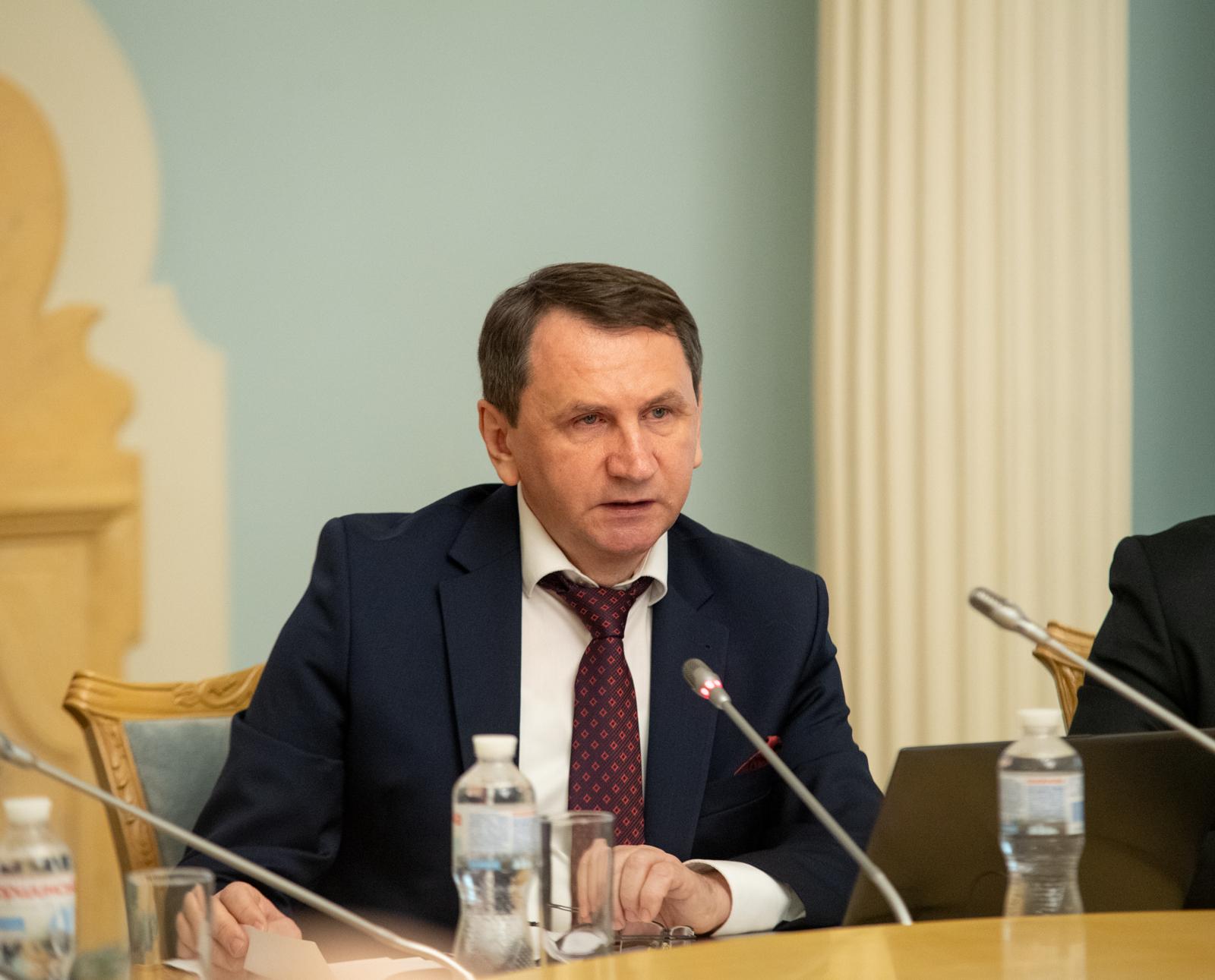
The participants of the meeting discussed the effectiveness of mechanisms for judicial control over the enforcement of decisions of national and international courts, in particular the following issues: judicial control over the enforcement of court decisions of an obligatory nature; changing the method of enforcement of court decisions; legal regulation of judicial control over the enforcement of court decisions; peculiarities of the enforcement of ECtHR decisions, etc.
Thus, the Secretary of the Grand Chamber of the Supreme Court Vitalii Urkevych noted that the problem of enforcement of court decisions lies in two dimensions: the enforcement of decisions of national courts and the enforcement of decisions of the European Court of Human Rights.

Regarding the first aspect – the enforcement of court decisions – the Head of the Grand Chamber of the Supreme Court recalled that it is the SC Grand Chamber that determines the jurisdiction of disputes concerning appeals against decisions, actions, or inaction of a state or private enforcer. According to the position of the SC Grand Chamber, if enforcement proceedings combine several different enforcement documents issued in civil, commercial, or administrative proceedings, one should apply to the administrative court. If it concerns a consolidated enforcement proceeding opened for the enforcement of executive documents within a single jurisdiction, one should apply to the court that issued the executive documents (commercial, civil, or administrative). Vitalii Urkevych also reported that the SC Grand Chamber has developed a number of important legal conclusions regarding the replacement of a party in enforcement proceedings.
In the context of the enforcement of ECtHR decisions, the Secretary of the SC Grand Chamber noted that on February 14, 2024, the Constitutional Court of Ukraine adopted a Decision declaring unconstitutional paragraph 2 of part 2 and part 3 of Article 321 of the Commercial Procedure Code of Ukraine. These provisions made it impossible to file, on the basis of an ECtHR judgment, an application for review of a court decision rendered by a national court after ten years from the date the latter entered into legal force, as well as to restore the ten-year time limit by the court. Therefore, Vitalii Urkevych emphasized that the question now arises of extending this approach to the corresponding provisions of the Civil Procedure Code of Ukraine and the Code of Administrative Procedure of Ukraine. “The resolution of this issue will be entrusted to the Grand Chamber of the Supreme Court as the only body empowered to review court decisions on the basis of ECtHR judgments,” explained Vitalii Urkevych.
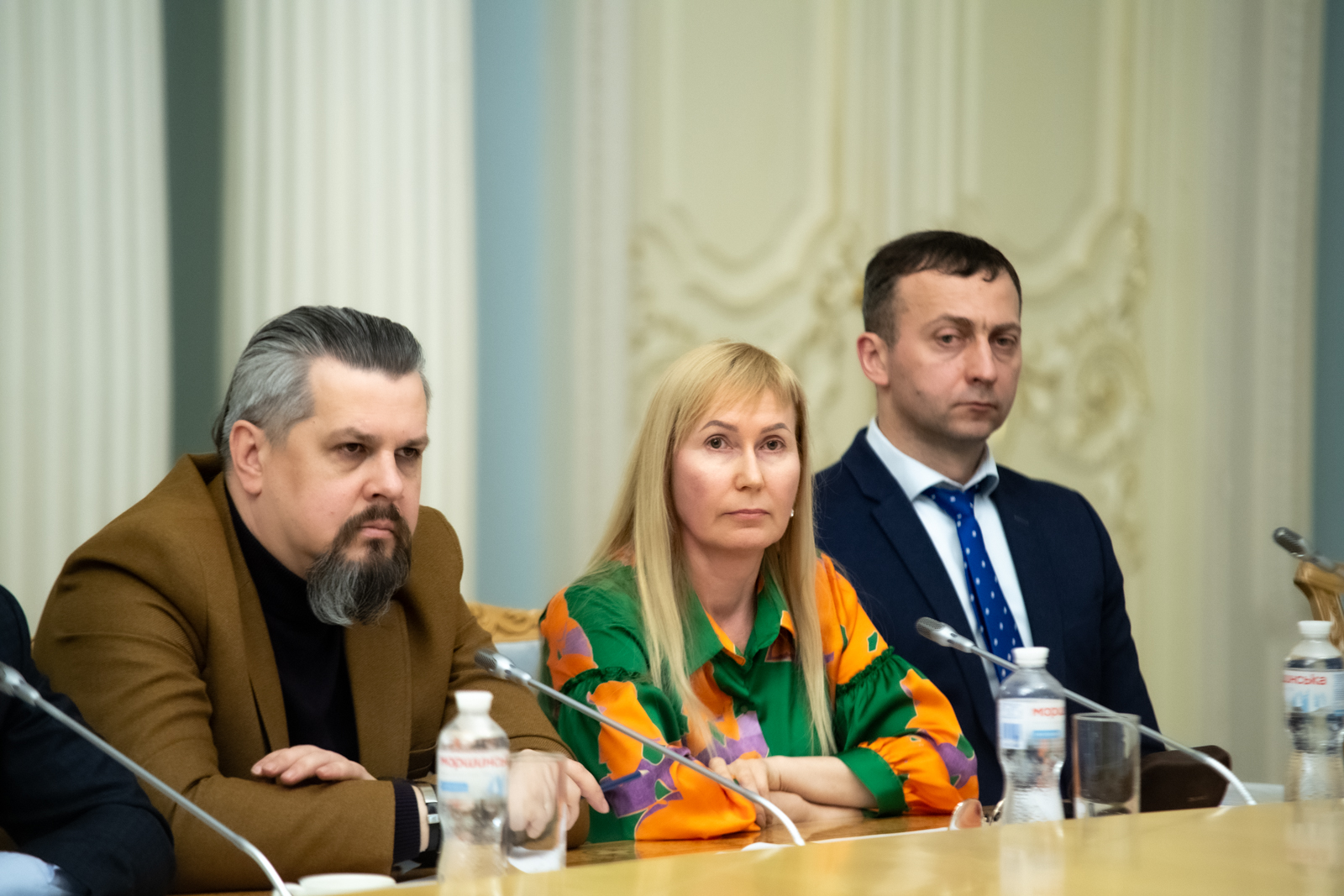
Judicial proceedings are effective only when court decisions are enforced. This thesis was expressed during the discussion by the Secretary of the Judicial Chamber for Cases on the Electoral Process and Referendum, as well as the Protection of Citizens’ Political Rights of the Administrative Cassation Court within the Supreme Court, Zhanna Melnyk-Tomenko. Among other things, she pointed out that the non-enforcement of court decisions of an obligatory nature is mainly caused by the fact that the social guarantees declared by law cannot be realized due to a budget deficit.

Judge of the Grand Chamber of the Supreme Court Serhii Martiev added that in some cases, the reason for non-enforcement of court decisions is also the official negligence of officials. He emphasized that the state of enforcement of court decisions is the image of Ukraine in Europe and throughout the civilized world. The judge proposed that the prosecution authorities summarize statistics on bringing guilty persons to criminal liability for intentional non-enforcement of court decisions. In his opinion, the judicial system should also review its approaches to the application of remedies in court.
Judge of the Supreme Court in the Administrative Cassation Court Andrii Zhuk noted that, in solving the problem of non-enforcement of court decisions, it is necessary to find other mechanisms for enforcing already existing court decisions and to change the approaches to the work of state authorities: if there is an established court practice regarding the application of a certain norm, a state authority cannot apply this norm differently. This will help avoid an excessive number of enforcement proceedings.
SC SAC members shared a scientific perspective on resolving the situation regarding the non-enforcement of court decisions.

In particular, the Chief Research Fellow of the Department of Public Law Research at the Scientific Research Institute of Law-Making and Scientific-Legal Expertise of the National Academy of Legal Sciences of Ukraine, Anton Monaienko, noted that among the ways to solve this problem are considering the advisability of granting the court the power to examine the issue of changing the method of enforcement of a court decision, and equalizing the rights of state and private enforcers.
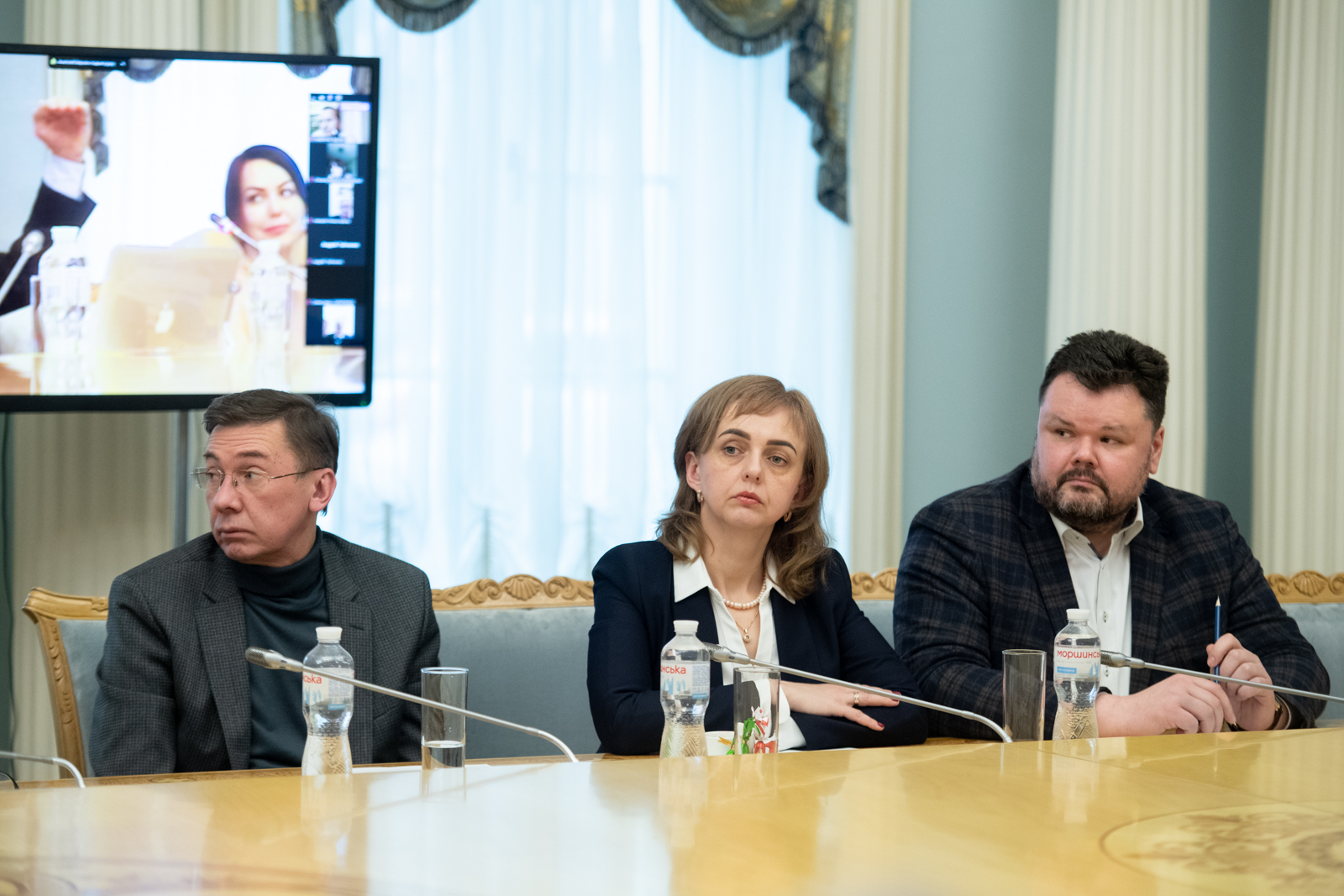
According to the Vice-Rector for Scientific Work of the Kharkiv Institute of Personnel Management Yurii Mytsa, in order to enable the recovery of funds awarded by a court decision from public authorities in favour of private individuals, it is necessary to fully or partially abandon the practice of recovery being carried out by the State Treasury Service solely in accordance with budget classification codes, and to introduce into the legal system of Ukraine the institution of astreinte — a court fine for non-enforcement of a court decision.
Another way to minimize the problem of non-enforcement of court decisions was shared by the Head of the Department of Official and Medical Law at the Educational and Scientific Institute of Law of Taras Shevchenko National University of Kyiv, Anatolii Berlach. In his opinion, it is necessary to consider the formalization of the institution of liability of public servants for the adoption or non-adoption of managerial decisions.
Deputy Director of the V.M. Koretsky Institute of State and Law of the National Academy of Sciences of Ukraine Nataliia Onishchenko emphasized: “If guarantees do not ensure human rights, then they are not guarantees”. In the context of strengthening judicial control over the enforcement of court decisions, she drew attention to the need to establish criteria for distinguishing between the concepts of “control” and “supervision”.
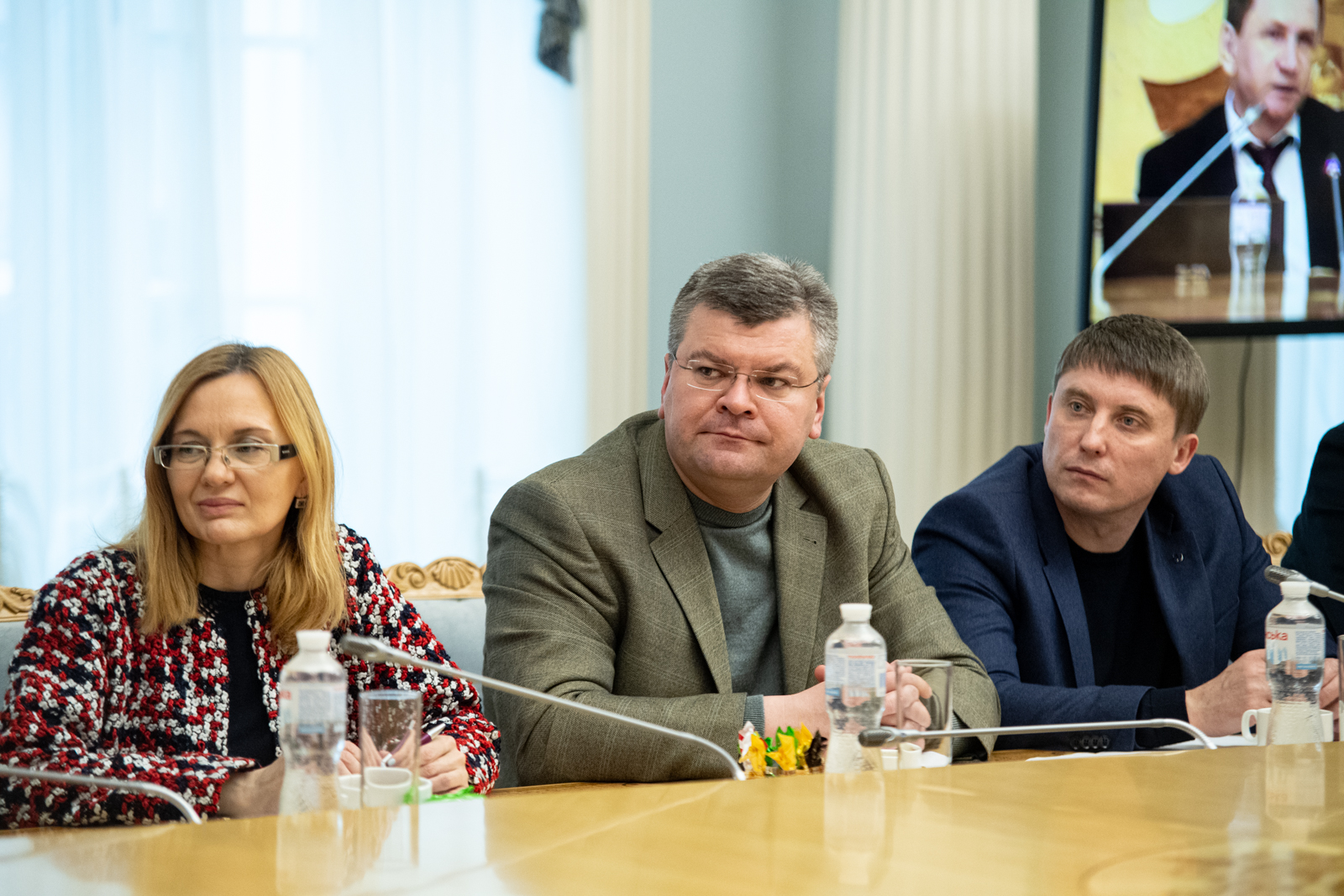
Director of the Scientific Research Institute of Law-Making and Scientific-Legal Expertise of the National Academy of Legal Sciences of Ukraine Oleksii Kot warned that by failing to enforce a court decision, a state body calls into question the reputation of the entire state in the civilized world, since the proper enforcement of court decisions is one of the basic principles of the European Union.
Representatives of the Verkhovna Rada of Ukraine spoke about legislative initiatives aimed at regulating the discussed problem. Deputy Chairman of the Verkhovna Rada Committee on Legal Policy Pavlo Pavlish reported that the Committee is currently working on Draft Law No. 9462, which is aimed at improving the provisions of procedural legislation in terms of strengthening the institute of judicial control over the enforcement of court decisions. Meanwhile, a representative of the Verkhovna Rada Committee on Law Enforcement Oleksandr Bakumov noted that before adopting this draft law, it is also necessary to develop a clear legislative algorithm for the enforcement of court decisions and to grant the court the authority to change the method of enforcement of a court decision in cases where such enforcement is impossible.
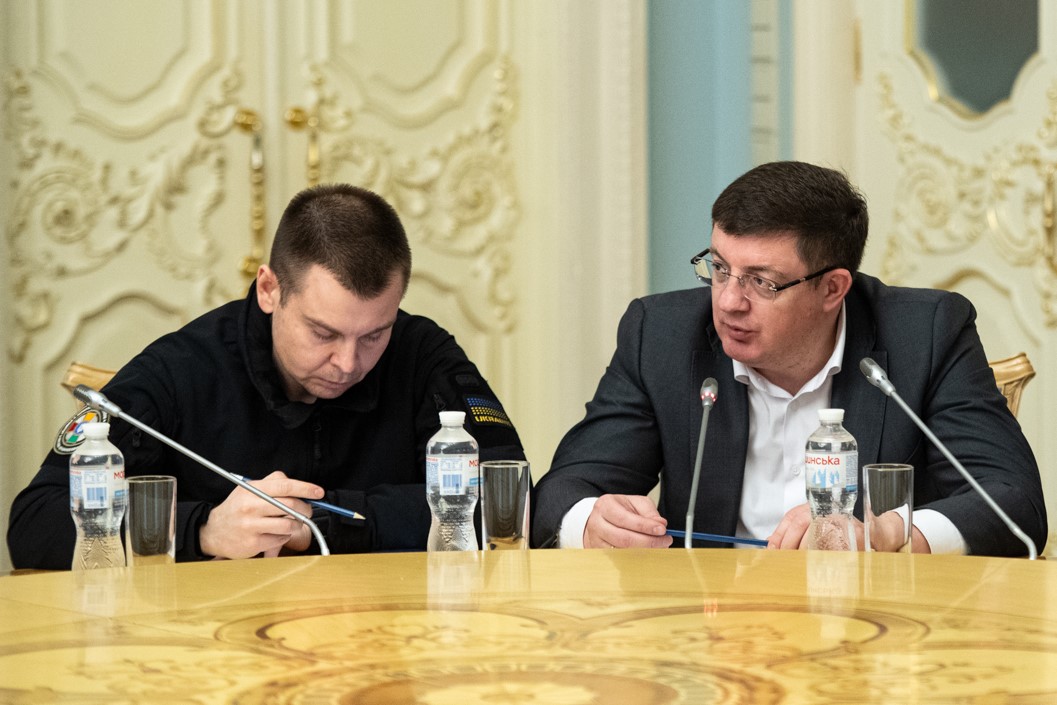
Deputy Head of the Department for Representation of State Interests in Court of the Office of the Prosecutor General Nataliia Vasylenko pointed out, in particular, that it is important to expand the scope of application of the institution of a separate ruling. This institute allows courts, in cases of systemic non-enforcement of court decisions, to oblige state authorities to eliminate the problems that lead to the non-enforcement of court decisions and to encourage them to form the budget in such a way that the enforcement of court decisions can be ensured.

Director of the Directorate for Justice and Criminal Justice of the Ministry of Justice of Ukraine Oleksandr Oliinyk shared the view that the systemic problem of non-enforcement of court decisions, where the debtor is the state, consists of such elements as the lack of budget funds and poorly thought-out social legislation. As Oleksandr Oliinyk reported, in order to solve these difficulties, the Ministry of Justice, in cooperation with executive authorities, the Supreme Court, and Members of Parliament of Ukraine, has developed an Action Plan for the implementation of the National Strategy for resolving the problem of non-enforcement of court decisions in which the debtor is a state body or a state enterprise, institution, or organization, for the period until 2025.

The discussion was also joined by Acting Head of the State Judicial Administration of Ukraine Maksym Pampura, Deputy Minister of Justice of Ukraine for Enforcement Service Andrii Haichenko, Deputy Director of the Department of State Enforcement Service of the Ministry of Justice of Ukraine Ivan Neshchadym, Professor of the Department of International Private Law at the Educational and Scientific Institute of International Relations of Taras Shevchenko National University of Kyiv Oleksandr Biriukov, Judge of the Supreme Court in the Criminal Cassation Court Serhii Fomin, and Judge of the Supreme Court in the Civil Cassation Court Yevhen Synelnykov.
_03_03.png)