Contact center of the Ukrainian Judiciary 044 207-35-46
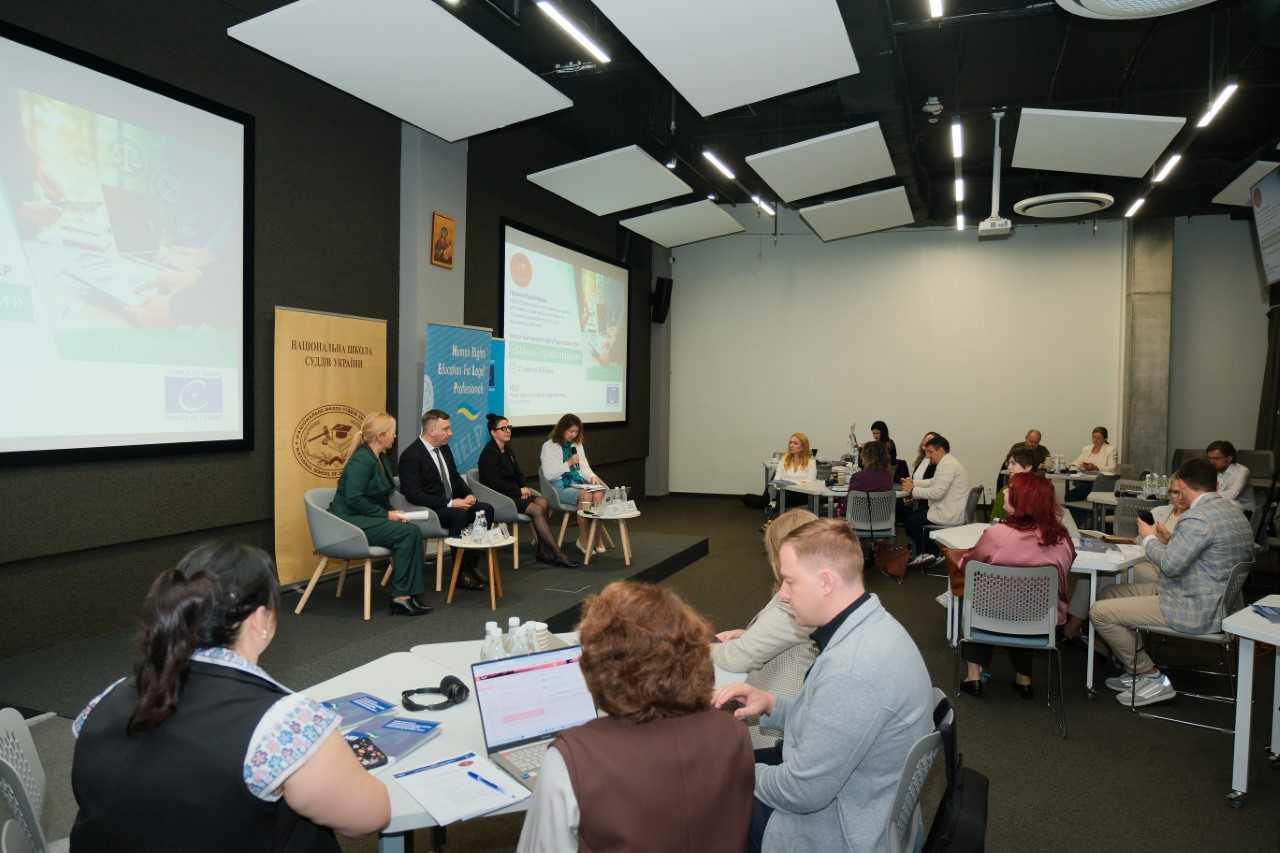
Is a business accountable to individuals and communities if its activities violate human rights, cause environmental harm or pose a threat to their safety? Can company officers be held personally liable for such consequences? These questions were addressed by participants in a multilateral dialogue entitled “Access to Remedies and Responsible Business Conduct in Ukraine’s Recovery”, which was attended by Vitalii Urkevych, Judge of the Grand Chamber of the Supreme Court, and Olena Kibenko, Judge of the Commercial Cassation Court within the Supreme Court.
The event, organised as part of the Council of Europe project “Promoting Ukraine’s Recovery through Responsible Investments”, implemented under the Council of Europe Action Plan for Ukraine “Resilience, Recovery and Reconstruction” 2023–2026 in cooperation with the Erasmus Plus project “Corporate Respect for Human Rights in Conflict-Affected Regions and High-Risk Areas”, was held on 14 September 2026 in Lviv at the Faculty of Law of the Ukrainian Catholic University.
Representatives of the Ministry of Economy and Environment of Ukraine, the Council of Europe, the United Nations Development Programme, the Supreme Court, the Ombudsman’s Office, the OECD National Contact Point, as well as academics and civil society organisations, gathered around the same table. The participants discussed ways to strengthen access to remedies under Ukraine’s National Action Plan on Responsible Business Conduct and to combine judicial and non-judicial grievance and redress mechanisms.
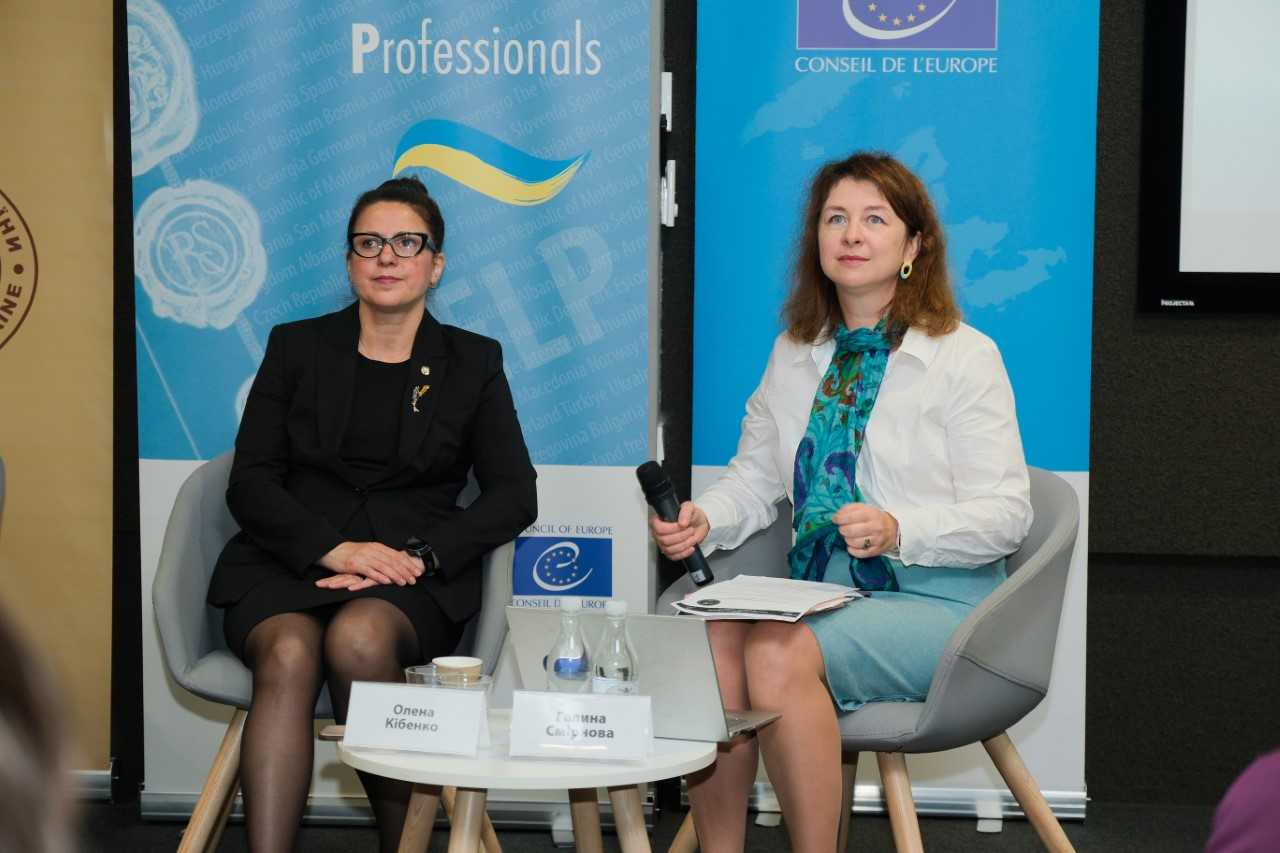
Olena Kibenko, Judge of the Commercial Cassation Court within the Supreme Court, addressed the question of whether company officers owe fiduciary duties solely to the company itself or also directly to employees, creditors, local communities and other persons affected by the company’s activities.
During the drafting of the new Law of Ukraine “On Joint-Stock Companies”, the possibility of establishing such duties towards a broader range of stakeholders was actively discussed. However, following a review of international practice, this approach was abandoned as being too broad and difficult to implement in practice.
Article 89 of the Law of Ukraine “On Joint-Stock Companies” provides that company officers must act in the interests of the company, in good faith and reasonably, and within the scope of their powers. They must contribute to the successful operation of the company for the benefit of all its shareholders. Company officers are required to take the interests of creditors into account in cases expressly provided for by other laws.
Thus, company officers’ fiduciary duties formally run to the company itself, rather than directly to an indeterminate group of employees, consumers, communities or other stakeholders.
This does not, however, mean that company management may disregard human rights, environmental safety or other matters of public interest. If a company’s activities are unlawful, it may face substantial fines, become a defendant in numerous legal proceedings, be required to compensate significant losses, or become the subject of a criminal investigation. Its officers may likewise face the risk of criminal liability.
All of this may cause harm to the company itself. Accordingly, its members or shareholders may bring a derivative action against officers whose decisions or failures to act have resulted in adverse consequences, seeking compensation for the losses caused to the company.
As an example, Olena Kibenko referred to cases involving Boeing. Following aviation accidents and the identification of systemic safety problems, the company faced investigations, fines and numerous claims. Shareholders also brought derivative actions against directors, alleging that they had failed to ensure adequate oversight of aircraft safety.
This example demonstrates that the interests of a company cannot be reduced solely to short-term profit. Ignoring the impact of business activities on people’s lives and health, the environment or local communities may ultimately result in substantial losses for the company itself and liability for its management.
International standards on responsible business conduct, commonly referred to as soft law, do not replace legislation and do not, in themselves, create new grounds for liability. At the same time, they may assist a court in assessing whether an officer acted in good faith and reasonably, whether they had sufficient information, whether they had put in place an adequate system of oversight, and whether they responded appropriately to apparent risks.
According to Vitalii Urkevych, Judge of the Grand Chamber of the Supreme Court, the issue of martial law cannot be overlooked when considering responsible business conduct. The war has affected every sphere of life, while the scale of destruction and the extent of the resulting damage continue to increase every day.
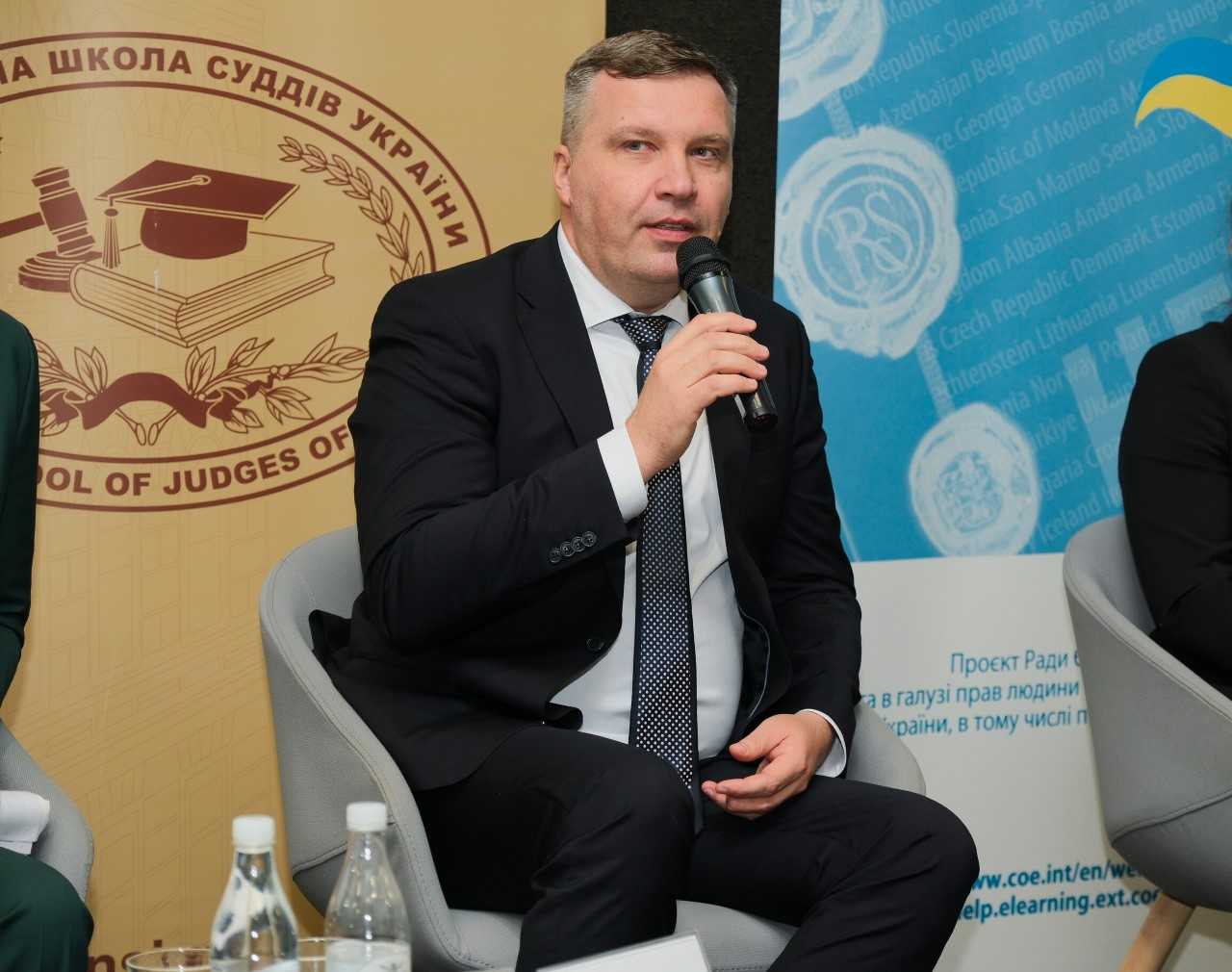
The recovery of war-related damage through national courts presents numerous legal challenges, and Ukraine’s situation is unprecedented: Ukrainian courts are considering such claims while the war is still ongoing, whereas in previous international armed conflicts, comparable proceedings were initiated only after the conflicts had ended. Individuals and businesses are bringing claims against the aggressor state.
The Supreme Court encourages courts of first instance and appellate courts to examine such cases thoroughly, carefully assess the evidence submitted concerning the occurrence and extent of the damage, and provide detailed reasoning for their judgments.
However, one of the most challenging issues remains ensuring that the defendant is properly brought into the proceedings. Courts take steps to notify the aggressor state of the proceedings: they publish notices on the judiciary’s website, send documents to the email addresses of the representative bodies of the Russian Federation, and enter court documents in the Unified State Register of Court Decisions.
Recently, claims have emerged seeking compensation for damage caused by armed aggression, with applicants seeking joint and several liability on the part of the aggressor state and its state-owned companies. In the speaker’s view, there must be sound legal grounds for granting such claims, since under Ukrainian law joint and several liability for damage arises where the damage has been jointly caused by several persons.
“As you know, the International Register of Damage is currently being actively established and populated with claims. All those affected are encouraged to submit claims together with the relevant supporting documents. National court judgments awarding compensation for damage may also be submitted to the Register. The next step should be the work of the Claims Commission, and we expect the Commission to take a favourable view of such judgments of Ukrainian courts,” the judge said.
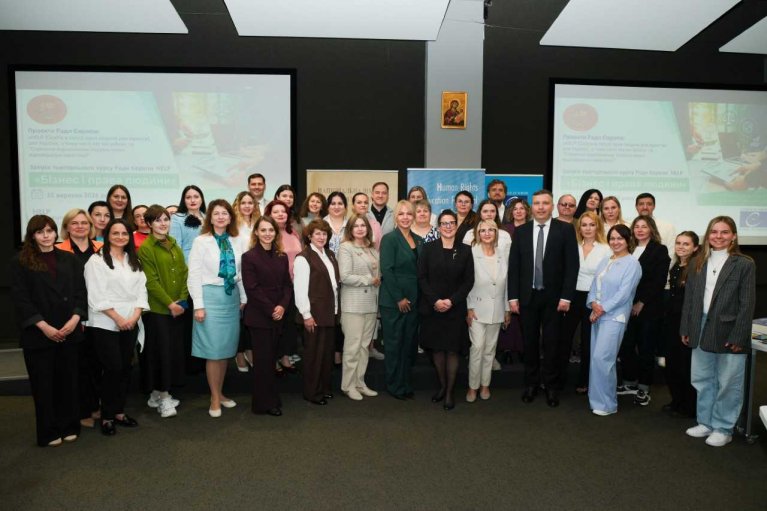
The following day, 15 September, a separate event took place – the launch of the second HELP tutored course in Ukraine, “Business and Human Rights”. The training is being delivered with the support of the Council of Europe project “HELP (Human Rights Education for Legal Professionals) for Ukraine, including during wartime”, Phase II, and the project “Promoting Ukraine’s Recovery through Responsible Investments”, in cooperation with the National School of Judges of Ukraine.
The course became available in Ukrainian only in May 2026. The first tutored course was launched at the same time, with judges making up the majority of participants. Of the 26 participants, 23 successfully completed the course. This result, together with the interest shown by the legal community, demonstrated that the topic is highly relevant and warrants further study.
The second group already comprises 40 participants, including judges, lawyers, representatives of executive authorities and academics. This diverse composition makes it possible to examine business and human rights issues from different professional perspectives and to work together towards practical solutions.
Olena Kibenko and Vitalii Urkevych adapted the course to Ukrainian legislation and judicial practice and became its tutors. The programme covers the State’s duty to protect human rights, business responsibility, judicial and non-judicial remedies, corporate due diligence, and new European Union rules.
The tutored format differs from simply completing an online course independently. Participants not only read the materials and take tests, but also complete practical assignments, take part in webinars and forums, discuss complex issues with colleagues and receive guidance from the tutors.
This format requires more time, but it makes it possible not merely to complete the material quickly for the sake of obtaining a certificate, but to study it carefully, reflect on it, test it against practical scenarios and gain a much deeper understanding of the knowledge acquired.
For reference. The Council of Europe project “HELP (Human Rights Education for Legal Professionals) for Ukraine, including during wartime”, Phase II, aims to enhance the professional skills of legal practitioners, including judges, prosecutors, lawyers and law students, so that they can effectively apply European human rights standards. The project also supports the national adaptation of HELP training courses and their implementation in accordance with the HELP methodology. The HELP platform is designed for legal professionals engaged in protecting human rights who need to have a sound knowledge of European standards and best practices. The platform provides specialised courses in a self-paced learning format (https://help.elearning.ext.coe.int/).
Photos provided by the organisers.
_03_03.png)