Contact center of the Ukrainian Judiciary 044 207-35-46
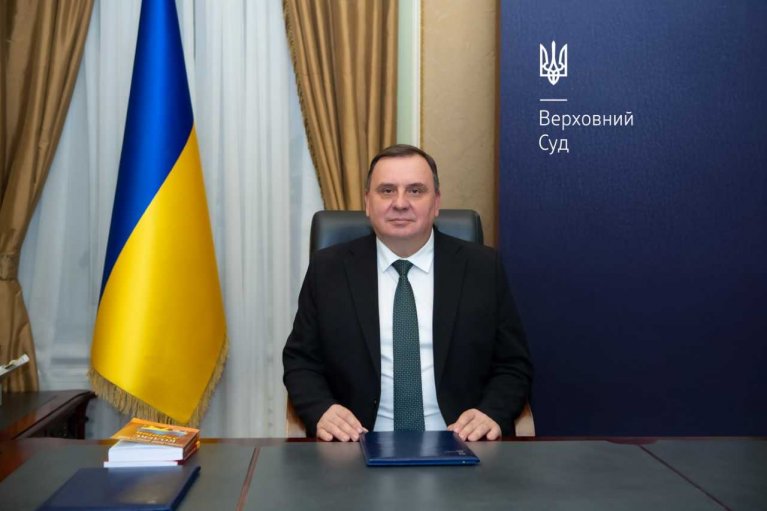
Ukraine has unique experience in developing legal responses to the challenges brought about by war, and it is extremely important not only to develop relevant approaches at the national level, but also to share them with the international legal community. At the same time, even in the context of a full-scale war, the development of law cannot be confined exclusively to issues directly related to armed aggression: legal scholarship and practice must continue to develop in all areas, consistently underpinned by the rule of law and respect for human rights.
This was emphasised by Stanislav Kravchenko, President of the Supreme Court, during the opening of the 10th Kharkiv International Legal Forum, organised by the Yaroslav Mudryi National Law University.
Stanislav Kravchenko noted that, since the Forum was first held in 2017, Ukrainian legal professionals had encountered legal issues whose scale and complexity had been difficult to foresee at the time. The war was already under way, and legal scholars and practitioners were confronted, in particular, with questions concerning the conceptualisation of hybrid warfare, the legal nature of the anti-terrorist operation, the application of civil law provisions to legal relations arising in the context of armed conflict, the protection of the rights of internally displaced persons, and compensation for damage caused.
According to the President of the Supreme Court, the approaches developed during that period proved to be of considerable value following the beginning of the full-scale invasion. Stanislav Kravchenko also highlighted the role of international law. In his view, Ukraine’s experience has demonstrated the need for further improvement of international legal mechanisms for preventing aggression and holding those responsible to account.
“If, at this stage, international law is not always capable of preventing an act of aggression, we must at the very least ensure an effective response to its consequences and work towards making accountability for international crimes a genuine deterrent in the future,” the President of the Supreme Court noted.
A substantial part of the work currently being undertaken by Ukraine’s legal system concerns criminal proceedings relating to the crime of aggression and war crimes. According to the President of the Supreme Court, this raises a broad range of complex issues of both substantive and procedural law for legal scholars and practitioners. These include the specific features of gathering evidence in wartime conditions, the use of evidence obtained from open sources, and the conduct of special judicial proceedings in absentia.
The President of the Supreme Court noted that the impact of the war on the legal system is not confined to criminal jurisdiction. Each branch of judicial jurisdiction faces its own specific challenges.
In civil proceedings, these include, in particular, issues concerning the protection of the rights of internally displaced persons and compensation for damage caused by the war. In this context, the combination of domestic and international legal mechanisms is of particular importance, including the work of the Register of Damage Caused by the Aggression of the Russian Federation against Ukraine.
“It is extremely important that the mechanisms established do not remain a mere formality, but ultimately ensure effective compensation for damage caused by the war,” Stanislav Kravchenko emphasised.
The commercial and administrative jurisdictions likewise face their own complex challenges. In this regard, the President of the Supreme Court identified as particularly important the need to strike a balance between the needs of the State operating in wartime conditions and the necessity of safeguarding the rights and legitimate interests of citizens.
In Stanislav Kravchenko’s view, despite the exceptionally challenging circumstances, the Ukrainian judiciary has demonstrated its capacity to discharge the functions entrusted to it. This is evidenced, in particular, by the volume of cases adjudicated each year by Ukrainian courts across all jurisdictions and areas of specialisation – more than 5.6 million cases.
In this context, Stanislav Kravchenko stressed separately that the judiciary cannot develop without embracing new technologies. At the same time, the deployment of artificial intelligence requires a measured approach: technology should assist people in analysing information and carrying out their professional duties without creating risks to the fairness of judicial proceedings or the quality of judicial decision-making.
The President of the Supreme Court spoke highly of this year’s Forum programme, which covers a broad range of topical issues concerning the development of law, and thanked the academic community for its continued cooperation with the judiciary. He stressed that, for the Supreme Court, engagement with legal scholarship is of particular importance. The Scientific Advisory Council operates under the Supreme Court, and the opinions of its members are taken into account when addressing complex legal issues.
“This is a good example of why legal scholarship cannot be separated from practice. Their interaction is an important component of our shared achievements,” Stanislav Kravchenko concluded.
In closing, the President of the Supreme Court wished the participants of the 10th Kharkiv International Legal Forum productive professional discussions, new ideas and high-quality results.
_03_03.png)