Contact center of the Ukrainian Judiciary 044 207-35-46
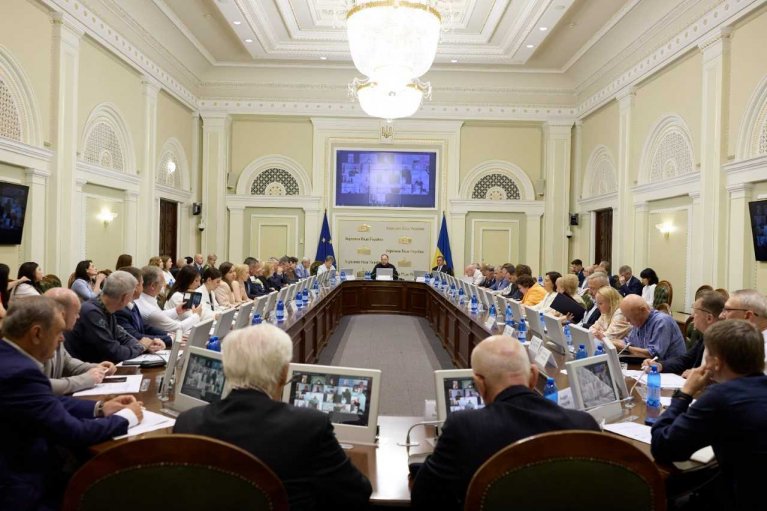
“Ukraine’s Independence: State-Building, Resilience and a European Future” – this was the theme of the round table held on the eve of Ukraine’s Independence Day in the Verkhovna Rada of Ukraine with the participation of People’s Deputies of Ukraine, representatives of the Scientific Advisory Council under the Speaker of the Verkhovna Rada of Ukraine and state authorities, as well as heads of higher education institutions.
In opening the event, the Speaker of the Verkhovna Rada of Ukraine, Ruslan Stefanchuk, emphasised that the history of our state is far longer than 35 years. It is precisely the centuries-old history of Ukrainian state-building that paved the way for the expression of the will of the Ukrainian people on 1 December 1991 and the adoption of the Act of Declaration of Independence of Ukraine on 24 August 1991, after which the daily work of building the modern Ukrainian state began.
Over these 35 years Ukraine has passed through political crises and revolutions and has learned to change power democratically. Today our country is undergoing the most severe trial in its entire modern history, being at war for the very right to be an independent state. And our choice in favour of independence, freedom, democracy and state-building remains unchanged. This is embodied, in particular, in the restoration of historical justice and the preservation of our historical memory, for a state that reclaims its history confidently shapes its future, Ruslan Stefanchuk observed.
“From the centuries-old history of Ukrainian state-building to independence. From independence to constitutional democracy. From constitutional democracy to our European and Euro-Atlantic future. These are the bridges of our state-building. Today Ukraine’s right to a civilisational choice once again has to be defended with arms, because Russia is attempting to destroy not only our territorial integrity but the Ukrainian state itself,” the Speaker of the Verkhovna Rada of Ukraine stressed.
He noted that the strength of a state is measured not only by its ability to withstand war – it is measured by its ability to preserve its democratic institutions even in the most difficult times. Independence is not guaranteed once and for all. It is daily and painstaking work.
The President of the Supreme Court, Stanislav Kravchenko, welcoming the participants of the round table, emphasised that Ukraine’s Independence Day holds special significance for every Ukrainian, for it is not merely a date in the calendar, not merely a legal fact of the proclamation of the state, and not merely Ukraine’s right to be a sovereign state. Independence is the right of the people to determine their own future, to speak their own language, to preserve their history and culture, to elect their authorities, to choose their path and, ultimately, to live as a free people deems right for itself.
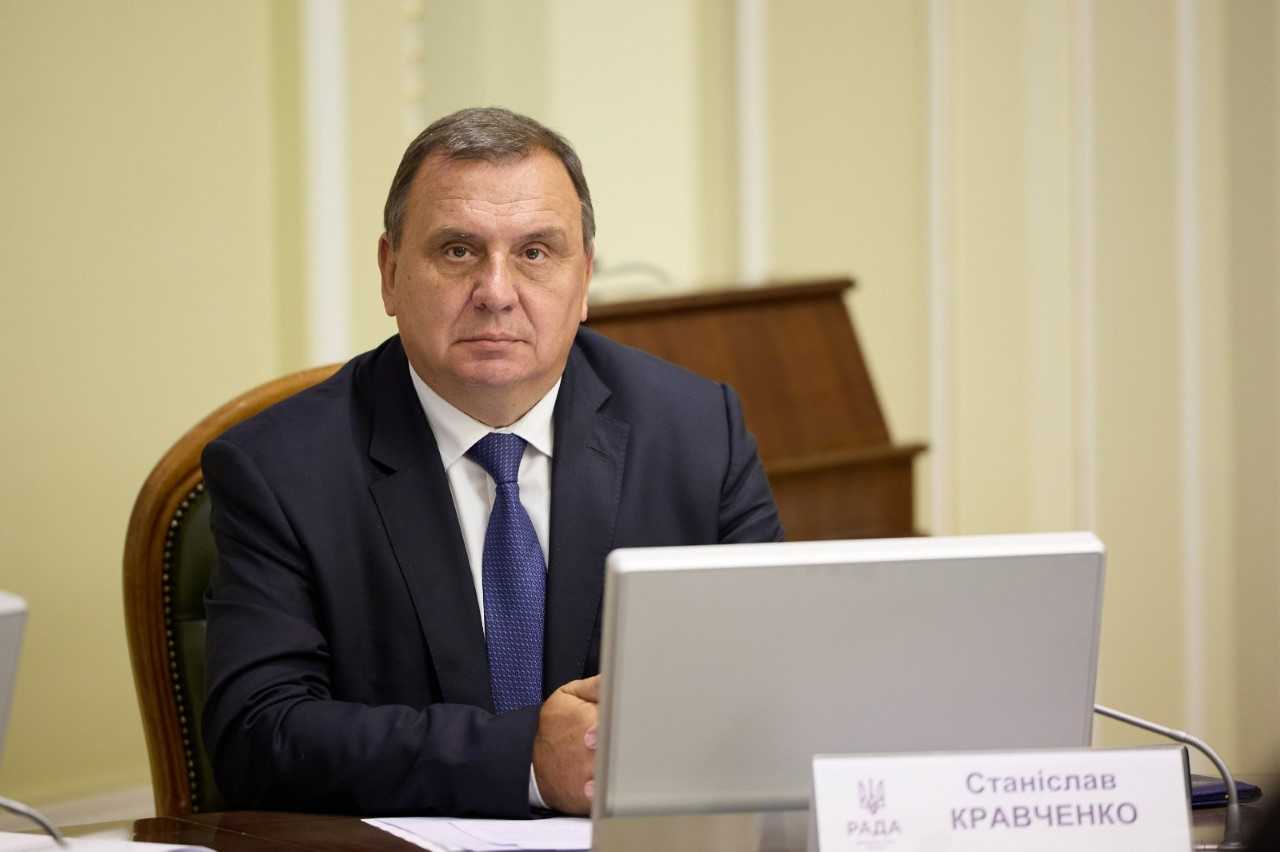
That is precisely why Ukrainian independence has never been merely a political decision. It is the result of the centuries-old aspiration of the Ukrainian people for freedom, self-determination and their own statehood.
Over the course of 35 years, the President of the Supreme Court noted, Ukraine has repeatedly proved that its independence is no accident, but a conscious choice of the Ukrainian people.
“Today we are particularly acutely aware of a simple yet extremely important truth: independence must be affirmed, developed and defended every single day. For the defence of our independence we are grateful first and foremost to the Defence Forces of Ukraine. It is of the utmost importance that state authorities, civil society and each person in their own place make their contribution to victory and to upholding the values we profess,” Stanislav Kravchenko expressed his conviction.
As the President of the Supreme Court summarised, Ukraine is, without doubt, a unique country. It is defending its independence while at the same time not renouncing democratic values, continuing in practice to implement reforms that bring us closer to the great European family.
The participants were also welcomed by the Acting President of the Constitutional Court of Ukraine, Oleksandr Petryshyn. In his view, the day of the restoration of Ukraine’s Independence not only entered the history of our state but also became decisive for the whole of Europe and for the development of globalisation processes. This day has also become a symbol of our strength, unity and unbreakable spirit. According to Oleksandr Petryshyn, the flourishing of Ukraine precisely as a European state presupposes the continuation of the state-building process, the ensuring of resilience in the face of all internal and external challenges, and the unwavering nature of the European integration course.
In his welcoming address the President of the National Academy of Sciences of Ukraine, Anatolii Zahorodnii, noted that a strong state is first and foremost a state in which the law is the foundation of social relations, human rights are guaranteed, and the decisions of state authorities are well-founded, responsible and directed towards the public interest. That is why the involvement of scholars in reflecting on legislative and state-building processes is extremely relevant, creating opportunities to combine practical experience of public administration with fundamental scientific approaches. Scientific research is capable of forming the basis for technological development, innovation, defence capability, digital transformation and the modernisation of public administration.
Also joining the round table was the Acting Secretary of the Grand Chamber of the Supreme Court, Olha Stupak.
_03_03.png)