Contact center of the Ukrainian Judiciary 044 207-35-46

Secretary of the Grand Chamber of the Supreme Court Serhii Pohribnyi, Judge of the Grand Chamber of the Supreme Court Mykola Mazur, Judge of the Supreme Court in the Commercial Cassation Court Olena Kibenko, Judges of the Supreme Court in the Civil Cassation Court Dmytro Hudyma and Pavlo Parkhomenko, as well as Head of the Supreme Court Administration Rasim Babanly, delivered lectures at the Summer School of Professional Development “General Theoretical Jurisprudence and Legal Practice: the Golden Ratio of Interaction”.
The programme of the event covered three thematic areas: the formation of a non-positivist understanding of law, the role of general theoretical topics for legal practice, and the applied significance of legal argumentation and legal writing.
In his welcoming address, Serhii Pohribnyi drew attention to the fact that the notions of “theory” and “practice” are often perceived as opposites, although in reality they are inseparable from one another. He developed this idea through the metaphor of the golden ratio – the point of their harmonious interaction. According to the speaker, just as in architecture the golden ratio combines strength and beauty, so in law it symbolises the moment when a legal norm ceases to be merely valid and becomes just. It is precisely at this point, Serhii Pohribnyi emphasised, that a judge works every day.
Particular attention was paid by the Secretary of the Grand Chamber of the Supreme Court to the significance of a non-positivist understanding of law in the conditions of full-scale war. He noted that for Ukrainian lawyers this is not a purely theoretical concept, but a necessary condition for the ability to distinguish genuine law from its external imitation, which the aggressor state uses to justify occupation, repression and other crimes. In this context, Serhii Pohribnyi described the non-positivist approach as an important component of a lawyer’s professional responsibility and of the defence of the state.
He also emphasised the symbolic nature of holding the Summer School to mark the publication of a new edition of the textbook General Theory of Law. The eleven years that have passed since the previous edition have brought large-scale changes in law and society that required scholarly comprehension.
In conclusion, Serhii Pohribnyi wished the participants of the Summer School to deepen their understanding of the reason for which they chose the legal profession – “for the sake of the law and that single point where a legal prescription and a human being finally look one another in the eye”.
.jpg)
Mykola Mazur focused on the role of judicial practice in legal regulation and the securing of legal certainty. Drawing on examples from criminal and commercial proceedings, he demonstrated that even a formally clear statute cannot foresee the full diversity of life situations, and that the content of its provisions is often given concrete form only in the course of judicial interpretation. It is judicial practice that provides courts and participants in legal relations with guidance as to how the relevant norm should be understood and applied.
As examples the judge cited the case law concerning the understanding of the concepts of “storage” and “penetration” in criminal law, as well as a case on the alteration of price in public-procurement contracts. In his words, the same methods of interpretation may lead different judges to dissimilar conclusions, because they evaluate differently the text of the statute, its purpose, legal traditions, previous practice and the consequences of a particular interpretation. At the same time, it is precisely the position of the Supreme Court that determines the approach by which courts and the participants in the relevant legal relations are to be guided.
Mykola Mazur observed that judicial practice does not occupy an unchanging place in the system of sources of law. Its significance depends on which norm the court is applying – a provision of the Constitution, an international treaty or a statute. In certain cases judicial practice clarifies the content of a legislative norm, while in others it may serve as a ground for non-application of a statute if its provisions are inconsistent with the Constitution or with the Convention for the Protection of Human Rights and Fundamental Freedoms. Consequently, the place of judicial practice in the system of sources of law, in his view, varies according to the particular case.
The judge also emphasised that the possibility of conflicting decisions is natural in a multi-level judicial system, yet the state must possess effective mechanisms for ensuring the uniformity of judicial practice. Using the example of the application of the so-called Savchenko Law (the Law of Ukraine “On Amendments to the Criminal Code of Ukraine concerning the Improvement of the Procedure for Crediting by a Court of the Period of Pre-Trial Detention towards the Term of Punishment”), he showed how different approaches were successively formed by panels of judges, the Joint Chamber and the Grand Chamber of the Supreme Court. At the same time Mykola Mazur noted that a judge may not share an established legal position, yet must take account of the requirement of legal certainty and the need to ensure a uniform approach to the consideration of similar cases.
One of the most complex questions, Mykola Mazur stated, is the choice between the stability of case law and the necessity of changing an approach that the court considers erroneous. He stressed that law is not mathematics, and therefore one and the same complex situation may admit of several well-founded solutions. The task of the judicial system is, while allowing for different professional views, ultimately to form a uniform case law and, so far as possible, to improve it.
Separately the judge raised the problem of the temporal effect of new judicial conclusions. He drew attention to the institution of prospective change of practice – prospective overruling – under which a new approach is in certain cases applied only to future legal relations. In Mykola Mazur’s view, what is dangerous is not the change of case law itself, but its retroactive extension to situations in which the participants in legal relations had reasonably relied on the previous settled approach. Therefore the Supreme Court should in certain cases expressly determine the prospective effect of a new conclusion, so that a change of practice does not undermine legal certainty and legitimate expectations.

Olena Kibenko spoke about the methods and approaches to the interpretation of legal norms and the boundary between judicial restraint and judicial activism. She linked the topicality of this subject, inter alia, to the case of TOV “Ukrkava” v. Ukraine, which had confronted judges with complex questions concerning the limits of permissible judicial interpretation.
Explaining the content of the principal methods of interpretation, Olena Kibenko noted that the starting point is always a literal, or textual, reading of the norm. At the same time even a formally clear provision may require systemic, historical, purposive, constitutional or comparative interpretation if its application conflicts with other norms, leads to an absurd result, or is inconsistent with the Constitution or with the Convention for the Protection of Human Rights and Fundamental Freedoms. Any departure from a purely literal reading of the text of a statutory provision, the speaker observed, is in essence a manifestation of judicial activism.
Judicial activism prevents the tyranny of a parliamentary majority by protecting the Constitution or fundamental values; it adapts and adjusts statutes to changes in society or to real-life situations (for a statute is merely a standard, rather template-like regulation of relations that in practice are far more complex).
Judicial activism does not constitute interference with the will of the legislature, since Parliament can always amend a statute – and in doing so it may either embody the norm created by the court in the course of interpretation or vote for the opposite approach.
Thus the principal problem of judicial activism is not interference with the will of the legislature, but the retrospective effect of a new interpretation, of new legal conclusions of the Supreme Court, and their adverse impact on legal certainty. This problem is assisted by an approach under which the Supreme Court applies a new rule only for the future, that is to relations that arose after the relevant approach was formed. In Ukraine such an approach is not yet widespread.
Using concrete cases as examples, the speaker demonstrated how particular methods of interpretation operate, where the Supreme Court has displayed judicial activism or judicial restraint, and how the Ukrainian legislature has responded to manifestations of judicial activism on the part of the Supreme Court.
The speaker also raised the issue facing the court regarding the sources of origin of the materials used in the process of interpretation. Thus, historical, comparative and other methods may require the analysis of parliamentary documents, explanatory notes, the practice of other states, reports of public authorities, academic publications and other materials. At the same time, it remains debatable whether the court should find such materials itself, guided by the concept that “the court knows the law”, or whether the parties should provide them as evidence. In Olena Kibenko’s view, these very questions require further academic reflection and more thorough study.
Presentation by Olena Kibenko: https://court.gov.ua/storage/portal/supreme/prezent2026/Prezent_Sud_struman_sud_aktuvizm.pdf
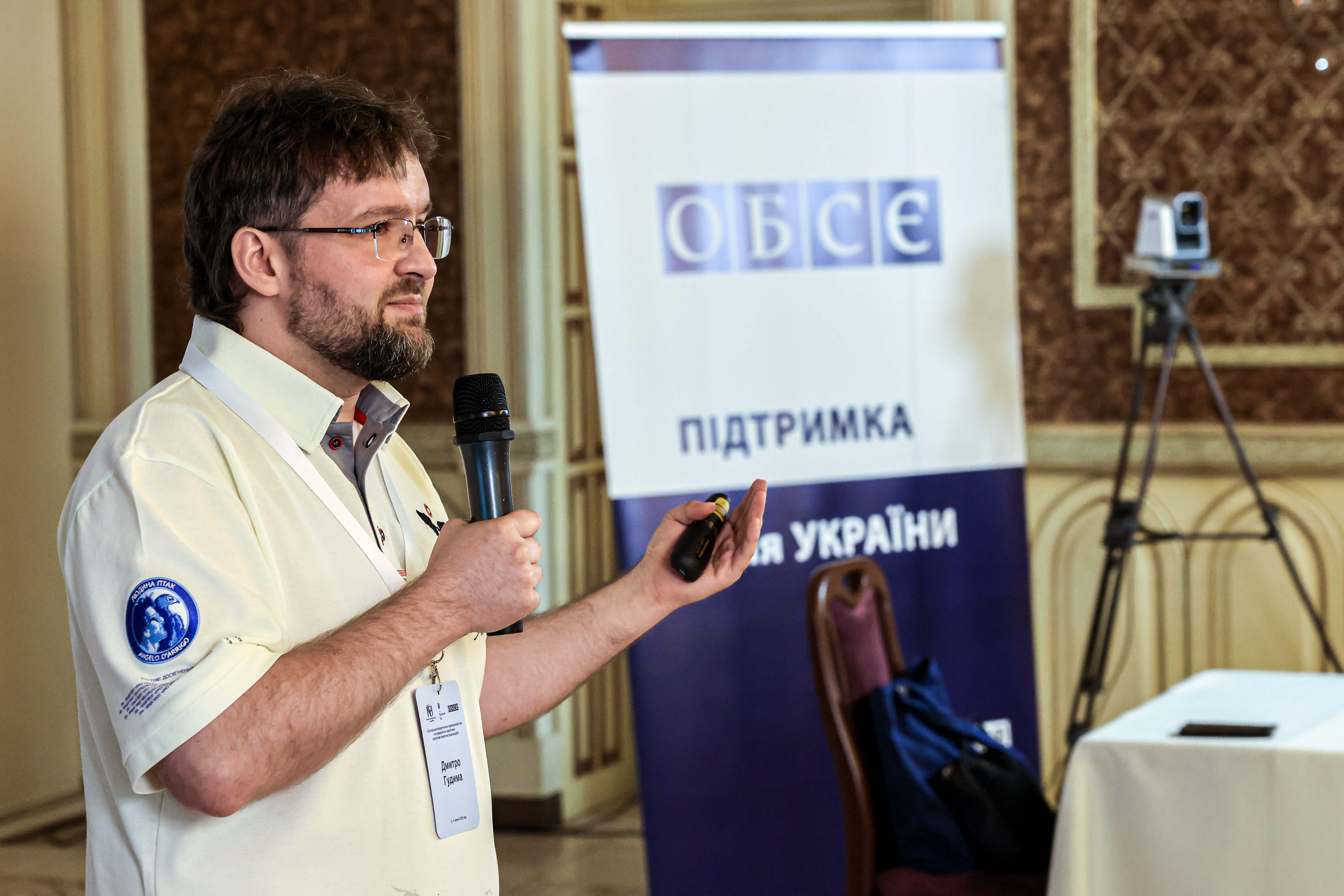
Dmytro Hudyma discussed with the participants of the event the topic “Legal analysis: the connection between practical experience and doctrine, logic and common sense” and, using examples from the practice of the Supreme Court, demonstrated how general theoretical knowledge helps to substantiate judicial decisions.
The lecturer emphasised that experience of working at the Supreme Court demonstrates the practical value of the general theory of law. He gave an example of the formation of the Supreme Court’s approach to determining the similarity of legal relations, explaining that it was precisely by turning to the general theoretical provisions on the structure of legal relations that it became possible to develop the legal position of the Grand Chamber of the Supreme Court (judgment of 12 October 2021 in case No. 233/2021/19). Dmytro Hudyma also drew attention to the role of a judge’s dissenting opinion as an instrument for the development of judicial practice, noting that its reasoning often finds support only after a certain time and may become the basis for future judicial decisions (for example, the content of the dissenting opinion regarding the ruling of the Grand Chamber of the Supreme Court of 8 February 2018 in case No. 357/3258/16-ц was subsequently placed at the foundation of the aforementioned judgment).
A significant part of the lecture was devoted to examples of the use of doctrinal sources in the practice of the Supreme Court. The judge demonstrated how the provisions of the general theory of law help to resolve questions of the classification of types of legal liability and the elements of an offence (judgments of the Administrative Cassation Court of the Supreme Court of 21 December 2018 in case No. 814/2156/16, para. 38; of 19 April 2022 in case No. 816/687/16; of 18 June 2020 in case No. 686/14075/16-а, paras. 17–18), the distinction between normative legal acts and acts of law application (judgments of the Grand Chamber of the Supreme Court of 17 February 2021 in cases Nos. 9901/56/20 and 9901/58/20), types of legal norms (judgment of the Administrative Cassation Court of the Supreme Court of 19 April 2022 in case No. 816/687/16), as well as to substantiate judicial decisions in cases for which there was no established practice. As examples he cited cases concerning the granting of the right to marry to a minor (judgment of the Civil Cassation Court of the Supreme Court of 1 December 2025 in case No. 159/125/24, paras. 48, 54, 65, 68, 69) and the restoration of parental rights after the adoption of a child abroad (judgment of the Civil Cassation Court of the Supreme Court of 13 May 2026 in case No. 753/5734/23), in which the court referred to the scientific and practical commentary to the Family Code of Ukraine.
Further, Dmytro Hudyma examined the issue of the interpretation of legal norms. He spoke about the use of explanatory notes to draft laws as one of the auxiliary tools for ascertaining the legislative intent (judgments of the Grand Chamber of the Supreme Court of 18 September 2019 in case No. 638/17850/17, para. 5.31; of 13 May 2020 in case No. 0640/3835/18 (Пз/9901/52/18), paras. 45–47; ruling of the Grand Chamber of the Supreme Court of 24 December 2020 in case No. 488/2810/19), while at the same time drawing attention to the limited nature of such an approach. As an example of historical interpretation, the judge analysed the judgment of the Grand Chamber of the Supreme Court of 2 July 2019 in case No. 916/3006/17 (para. 36), explaining how the Grand Chamber of the Supreme Court substantiated the interrelation between the provisions of the Law of Ukraine “On Notaries” and the provisions of the Civil Code of Ukraine and took into account the evolution of legislative regulation. He also expressed his views on the practical application of cassation filters and their impact on ensuring the uniformity of case law.
Explaining the significance of theoretical knowledge for law application, the lecturer specifically addressed the issue of the operation of legal norms in time. Using examples from cases concerning the dismissal of a member of the Accounting Chamber upon reaching the age limit, the application of time limits in disciplinary proceedings against judges, and the procedural changes introduced by the Law of Ukraine “On Amendments to Certain Legislative Acts of Ukraine Regarding the Improvement of Mechanisms for Regulating Banking Activity” (judgments of the Grand Chamber of the Supreme Court of 8 September 2021 in case No. 9901/315/20, of 3 November 2021 in case No. 9901/378/20, and of 15 February 2023 in case No. 910/18214/19), he demonstrated the practical importance of the correct distinction between the prospective and retrospective effect of a law. In the same context, Dmytro Hudyma turned to the issues of analogy of statute and analogy of law, emphasising that these instruments may be applied to overcome gaps in legislation provided that they are properly theoretically substantiated (judgment of the Joint Chamber of the Civil Cassation Court of the Supreme Court of 12 June 2023 in case No. 2-7985/2003, paras. 9.3.2–9.3.4).
Considering the interrelationship between doctrine and judicial practice, the judge also drew attention to the role of the principles of law. Using the example of the practice concerning fraudulent transactions, he showed how the principle of good faith is applied to counteract the bad-faith alienation of property by debtors with the aim of avoiding the performance of their obligations (judgments of the Grand Chamber of the Supreme Court of 3 July 2019 in case No. 369/11268/16-ц; of the Civil Cassation Court of the Supreme Court of 24 July 2019 in case No. 405/1820/17; and of 26 March 2025 in case No. 544/1116/22, paras. 27–28, 30, 35). At the same time, Dmytro Hudyma noted that in certain categories of cases it is precisely by turning to the principles of law that it becomes possible to find a legal solution in the absence of direct legislative regulation.
Finally, the judge focused on the role of the principle of reasonableness (common sense) in law application. Using examples of disputes concerning:
the equality of rights of the testator’s creditors (ruling of the Civil Cassation Court of the Supreme Court of 31 March 2025 in case No. 539/362/23), determination of a child’s given name and surname (judgment of the Civil Cassation Court of the Supreme Court of 29 June 2022 in case No. 753/7395/20), calculation of the time limit for acceptance of an inheritance (judgment of the Civil Cassation Court of the Supreme Court of 16 June 2021 in case No. 554/4741/19), determination of income for the recovery of maintenance (judgment of the Civil Cassation Court of the Supreme Court of 25 January 2021 in case No. 758/10761/13-ц), and determination of the good faith of a mortgagee (judgment of the Joint Chamber of the Civil Cassation Court of the Supreme Court of 9 September 2024 in case No. 466/3398/21), he demonstrated how the combination of practical experience and the principle of reasonableness influences legal analysis and contributes to the formation of consistent case law.
Presentation by Dmytro Hudyma: https://court.gov.ua/storage/portal/supreme/prezent2026/Prezent_Jurud_analiz_pusmo.pdf
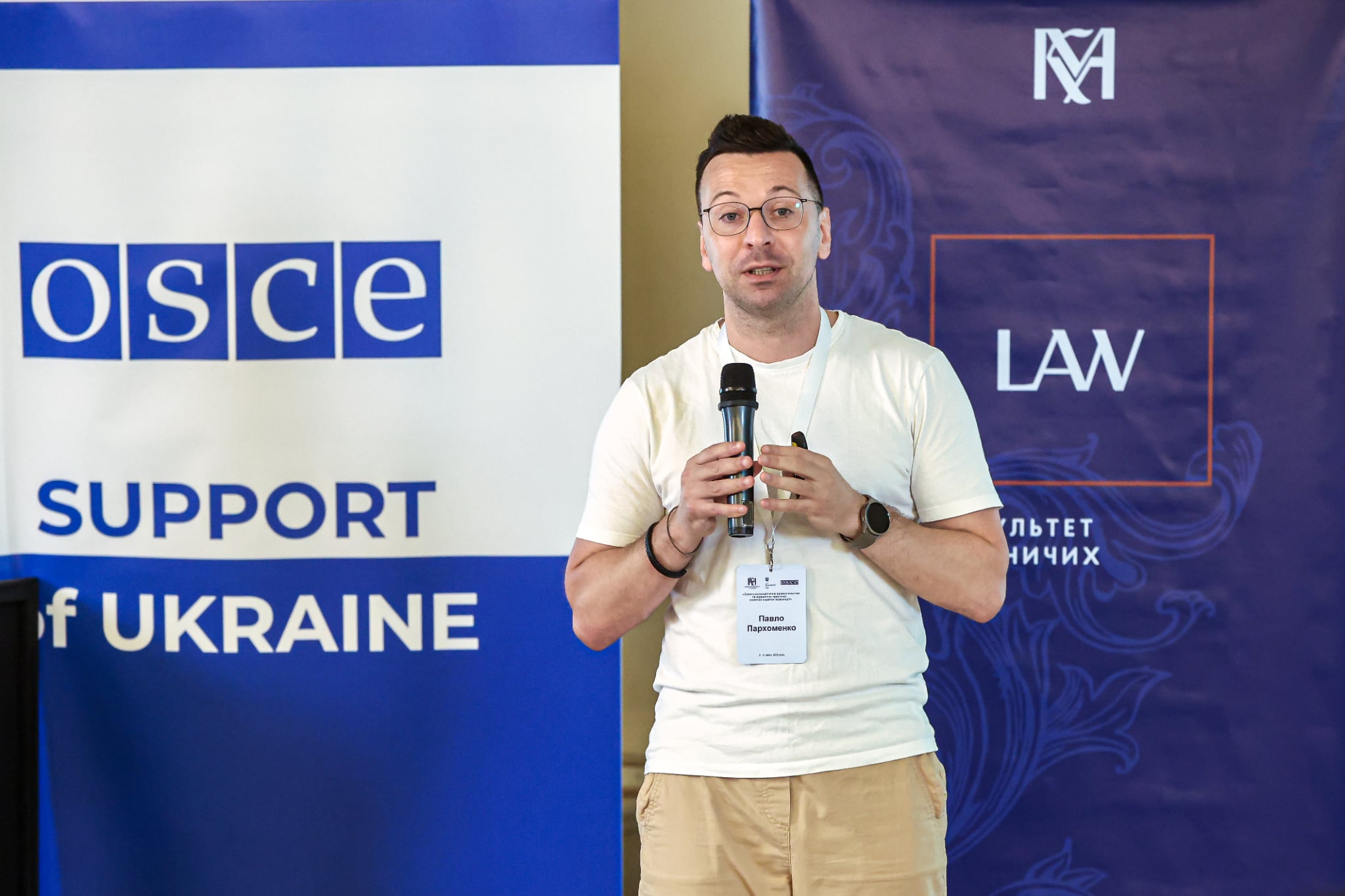
Practical experience in the preparation and reasoning of judicial decisions was shared by Pavlo Parkhomenko while covering the topic “Atypical Approaches in the Argumentation of Judicial Decisions: the Influence of General Legal Theory on National Practice”. He described how his approaches to legal analysis, the structuring of judicial decisions and the use of doctrinal sources in practice had evolved. In the judge’s view, legal theory influences practice in the same way that judicial practice contributes to the development of scholarship, and complex legal ideas should be expressed as simply as possible without loss of their substance.
Pavlo Parkhomenko illustrated the possibilities of applying doctrine with examples drawn from his own practice and from decisions of international courts. In particular, he referred to the separate opinion of a judge of the International Court of Justice in the case Germany v. Italy concerning jurisdictional immunity, in which the legal position was substantiated by reference to the historical development of the relevant concept and to the works of philosophers and scholars. Recourse to doctrinal sources also proved useful in the consideration of a case concerning the unlawful extraction of minerals, because the statute did not contain a sufficient definition of the relevant act, and its interpretation determined whether the elements of a criminal offence were present.
A substantial part of the lecture was devoted by the judge to standards of proof, which for a long time had not been characteristic of the Ukrainian legal tradition. He distinguished the standard of proof beyond reasonable doubt, enshrined in criminal procedure, from the balance of probabilities, which is inherent in adversarial civil procedure. According to Pavlo Parkhomenko, the balance of probabilities involves a comparison of the parties’ evidence and is regarded as satisfied if the establishment of a particular fact is more probable than its absence. Reference was also made to the origin and limits of application of the “fruit of the poisonous tree” doctrine, the independent source doctrine, and the need to exercise caution when transferring approaches from criminal procedure to other forms of judicial proceedings.
In elucidating the methods of legal interpretation, Pavlo Parkhomenko dwelt on the philological, logical, systemic, historical-teleological and teleological approaches, as well as on the possibility of evolutionary interpretation in conditions of changing social relations. He demonstrated the practical significance of the purposive approach by reference to the liability of parents for failure to perform their duties towards children, where a literal distinction between the notions of a “young minor” and a “minor” person could have led to a result that did not correspond to the purpose of the provision. Separately, the judge spoke about the proportionality test, the search for a European consensus and the use of the case law of the European Court of Human Rights, emphasising that references to it must be relevant to the specific right guaranteed by the Convention and to the factual circumstances of the case.
No less important for the quality of a judicial decision, in Pavlo Parkhomenko’s view, are a clear structure, conciseness and plain language. He cautioned against overloading texts with an excessive number of quotations and references behind which the court’s principal reasoning is lost. At the same time, in appropriate cases the reasoning may be strengthened by recourse to philosophical, historical or literary sources. The judge applied such techniques, inter alia, in cases concerning the dismissal of a teaching staff member, the provocation of a crime and the deprivation of parental rights, using them not to embellish the text but to reveal more precisely the substance of the legal problem and the values to which the dispute related.
Presentation by Pavlo Parkhomenko: https://court.gov.ua/storage/portal/supreme/prezent2026/Prezent_Pidhodu_argyment_rishen.pdf
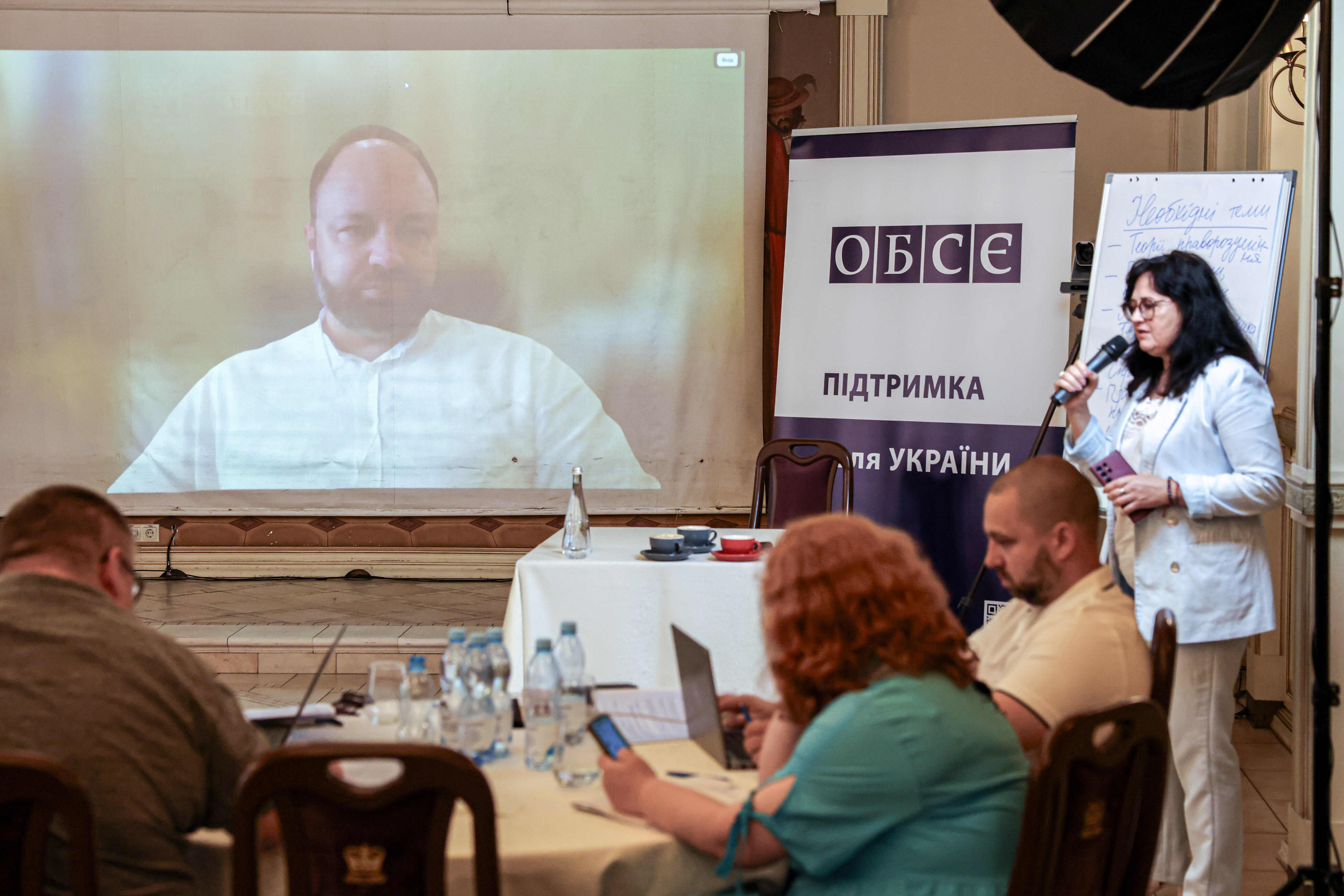
The importance of the interrelationship between theory and judicial practice, as well as the significance of a theoretical foundation for the development of contemporary law application, was elucidated by Rasim Babanly. He noted that the rapid development of judicial practice requires profound scholarly reflection, for without an adequate theoretical basis there is a risk of fragmentation and inconsistency in the application of the law. In his opinion, the effective application of the law is impossible without a constant dialogue between scholarship and practice, which helps not only to refine legal approaches but also to adapt them to contemporary challenges. Particular attention was devoted by the speaker to European integration processes, emphasising that the implementation of European Union law is also founded on the standards of the Council of Europe, the case law of the European Court of Human Rights, the opinions of the Venice Commission and other international instruments that form a comprehensive system of reference points for national law application.
Developing this theme, Rasim Babanly drew attention to the formation of a European consensus in the sphere of law application as an important instrument for the harmonisation of legal systems. He spoke about the interaction between the European Court of Human Rights and the Court of Justice of the European Union, emphasising that such cooperation contributes to the alignment of approaches to the interpretation of human rights and fundamental freedoms. He also mentioned the practice of the Grand Chamber of the European Court of Human Rights of addressing the member States of the Council of Europe concerning legislative regulation and national judicial practice on particular legal issues. In his words, such an approach makes it possible to take account of the legal traditions of the States and to formulate decisions with regard to the broader European legal context, thereby enhancing their legitimacy and acceptability.
Rasim Babanly emphasised the growing role of judicial practice in securing the principle of legal certainty, which in his view is one of the key elements of the rule of law. He observed that following the judicial reform of 2016 the conclusions of the Supreme Court have become an important point of reference for the uniform application of legal norms by the courts and by other subjects of public authority. This contributes to greater predictability of judicial decisions and to public confidence in the judicial system. At the same time the speaker raised a number of debatable issues connected with the nature of the legal conclusions of the Supreme Court, in particular as regards their content, the level of generalisation and the limits of their application in other cases, stressing the need for further scholarly reflection on these aspects.
In conclusion Rasim Babanly turned to the development of mechanisms of advisory interaction between courts, which may become an important instrument for enhancing the quality of law application. He spoke about the use of Protocol No. 16 to the Convention for the Protection of Human Rights and Fundamental Freedoms, which enables supreme courts to request advisory opinions from the European Court of Human Rights. The Supreme Court has already resorted to this mechanism on two occasions. Separately the speaker dwelt on legislative initiatives aimed at introducing an analogous procedure in Ukraine. In his words, this would enable the courts to obtain advisory opinions of the Supreme Court on the interpretation of legal norms more promptly, without awaiting the conclusion of cassation review, and would also contribute to the formation of uniform case law and the securing of legal certainty, which is especially important in the current conditions of development of the legal system.
The Summer School was organised by the National University of Kyiv-Mohyla Academy jointly with the Supreme Court and the OSCE Support Programme for Ukraine.
Photo courtesy of the organisers.
_03_03.png)