Contact center of the Ukrainian Judiciary 044 207-35-46
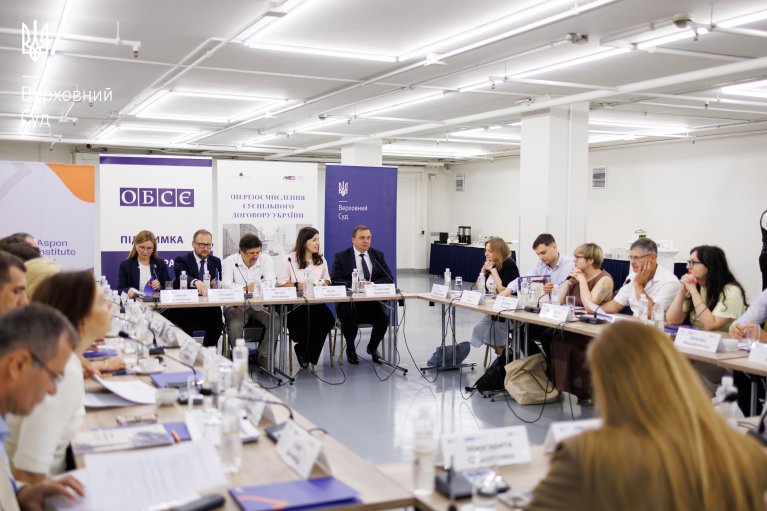
The transformation of the understanding of human rights in wartime, the limits of justice and security amid unprecedented threats, and the balance between the protection of human rights and the need to guarantee national security. These issues were discussed during the dialogue “Human Rights and Justice in Wartime”, organised by the Aspen Institute Kyiv in partnership with the Supreme Court, the OSCE Support Programme for Ukraine within the framework of the project “Social Contract for Ukraine”, and NED (National Endowment for Democracy).
The participants in the conversation included the President of the Supreme Court Stanislav Kravchenko, Supreme Court judges Volodymyr Kravchuk, Nataliia Sakara, Olha Stupak and Oleksandra Yanovska, Judge of the Constitutional Court of Ukraine Vasyl Lemak, the Government Agent before the European Court of Human Rights Marharyta Sokorenko, and representatives of executive authorities, law-enforcement agencies, the legal community, business, the media, academia and civil society. The dialogue was moderated by the Director of Programme Development of the Aspen Institute Kyiv Denys Poltavets and Professor of the Department of International Civil and Commercial Law of the State University of Trade and Economics Mykhailo Shumylo.
Opening the event, the Executive Director of the Aspen Institute Kyiv Yuliia Tychkivska noted that in present-day realities there are no simple answers to questions concerning the maintenance of a balance between the protection of human rights and the ensuring of national security, since the war has destroyed the customary order. Thanking the partners for their assistance in holding the dialogue and for their participation in the discussion, the speaker emphasised that Aspen is a platform for the exchange of different views with a view to achieving mutual understanding, which makes the building of a democratic society possible.
The President of the Supreme Court Stanislav Kravchenko observed that, from the very beginning of the full-scale Russian invasion, Ukraine has continued to seek an answer to the question of how to remain a state governed by the rule of law when the state itself is forced every day to fight for its own existence. In the context of the administration of justice, the challenge of ensuring the security of all participants in judicial proceedings is closely interwoven with the right of access to a court and the right to a fair trial, which cannot be restricted under any circumstances.
.jpg)
For the national judicial system it was clear from the very first months of the full-scale war that even during a period of martial law human rights and freedoms cannot be set aside, and that any restrictions must be reasoned, the President of the Supreme Court emphasised. Therefore both the practice of the Supreme Court and the work of all national courts demonstrate how, amid security threats and the destruction caused by enemy shelling, the administration of justice can still be organised while complying with international standards of judicial proceedings.
According to the head of the project “Improving the Quality of Justice by Strengthening the Role of the Supreme Court in Ensuring Transparent, Accountable and Inclusive Justice” of the OSCE Support Programme for Ukraine, Olha Kravchenko, the Ukrainian experience has shown that national security and human rights are not mutually exclusive values. Certainly, strong, independent and effective institutions are necessary to ensure a balance between these values. In these matters a leading role is played by the judiciary, and in particular by the Supreme Court, which is called upon to ensure the unity of case law and, through its legal positions, to shape standards of the quality of justice. Olha Kravchenko also noted that the questions facing us today cannot be resolved alone, and that it is therefore important to develop partnership cooperation and a culture of dialogue.
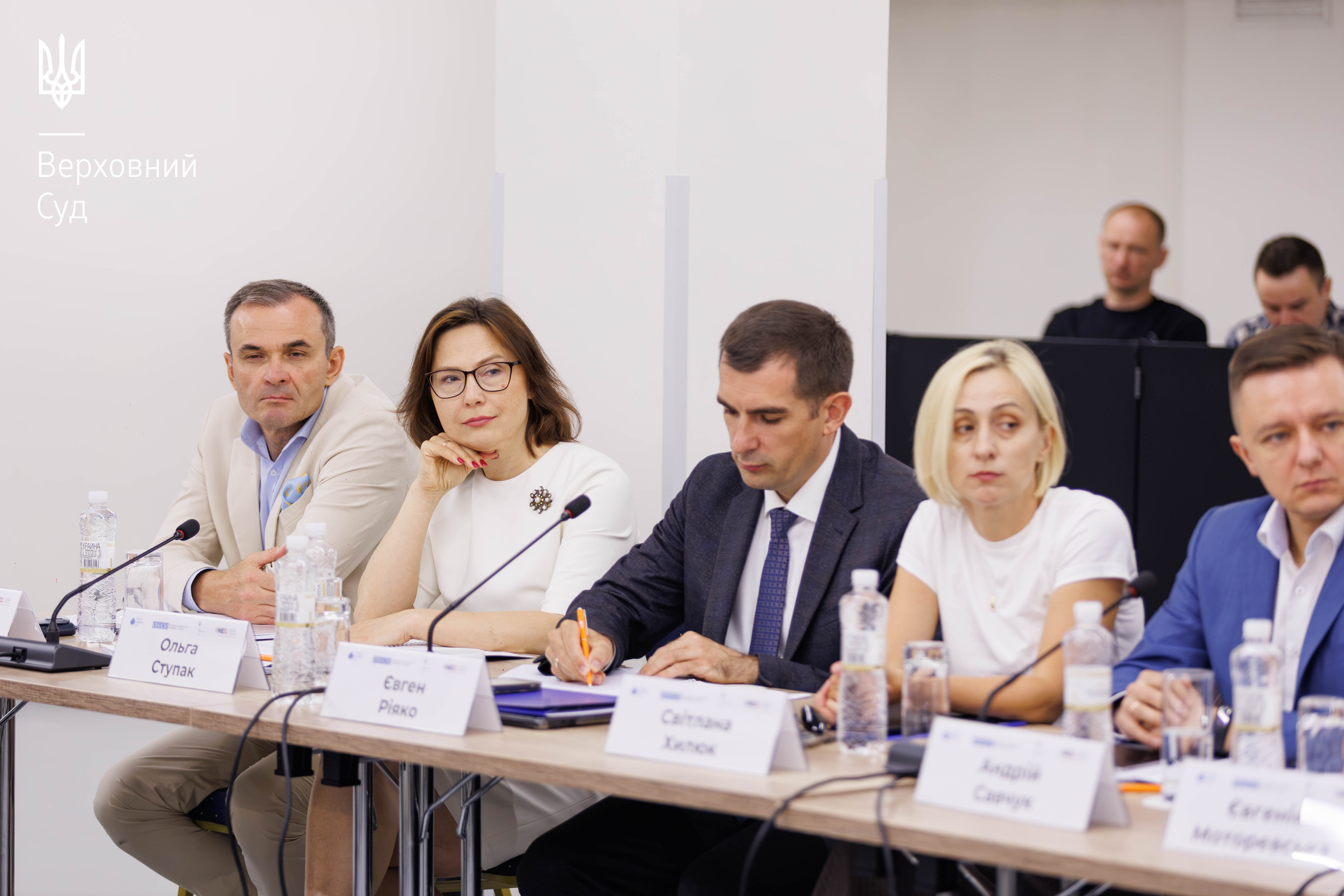
Further discussion centred on the text by the head of the Centre for Human Rights and War Memorialisation of the Kyiv School of Economics, Anton Drobovych, “On the Question of Ukrainian Wartime Democracy: the Transition from Abstract Concord to Existential Solidarity”, and on the Syracuse Principles on the Provisions Relating to Limitations and Derogation from Obligations under the International Covenant on Civil and Political Rights.
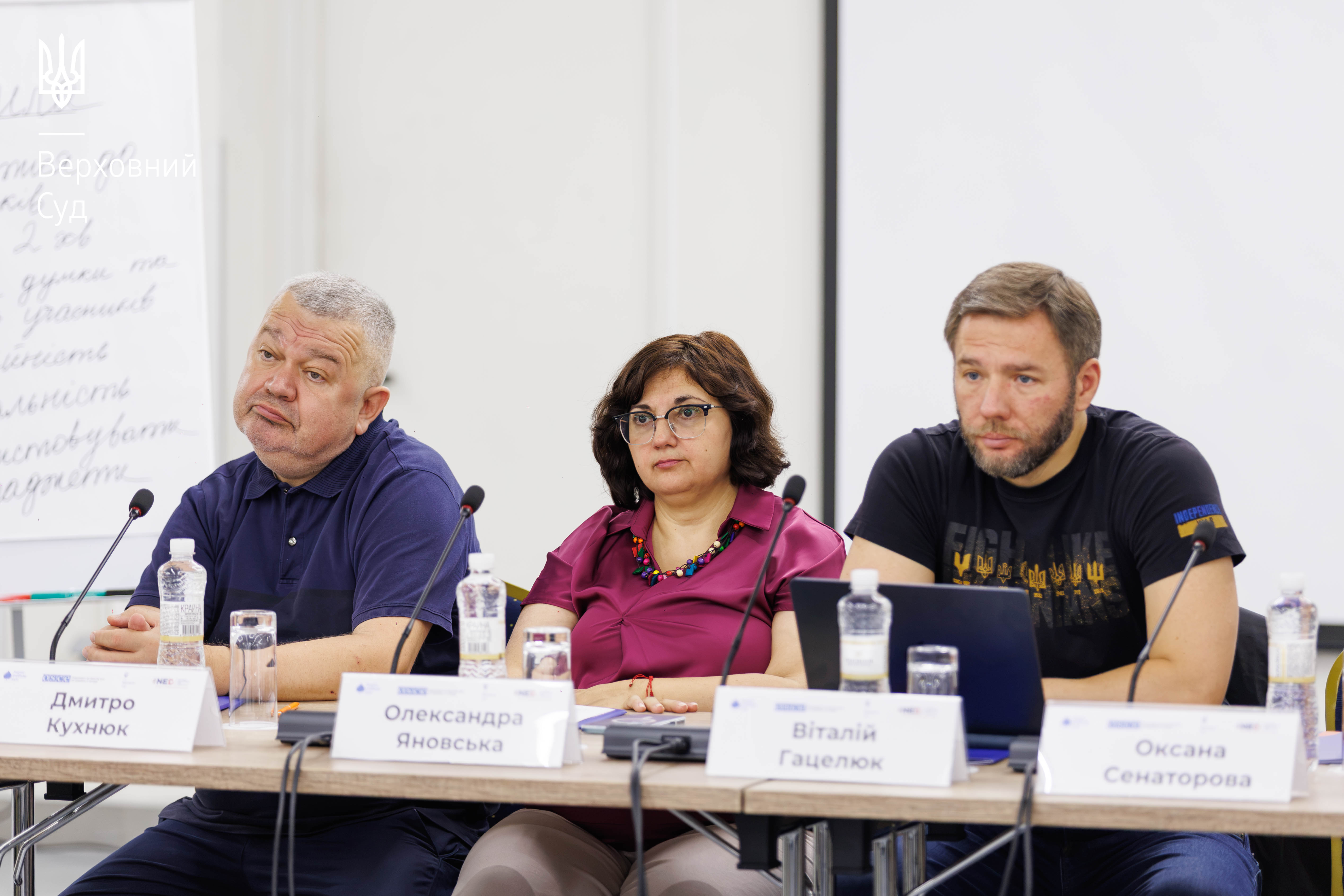
During the dialogue the participants shared their views on:
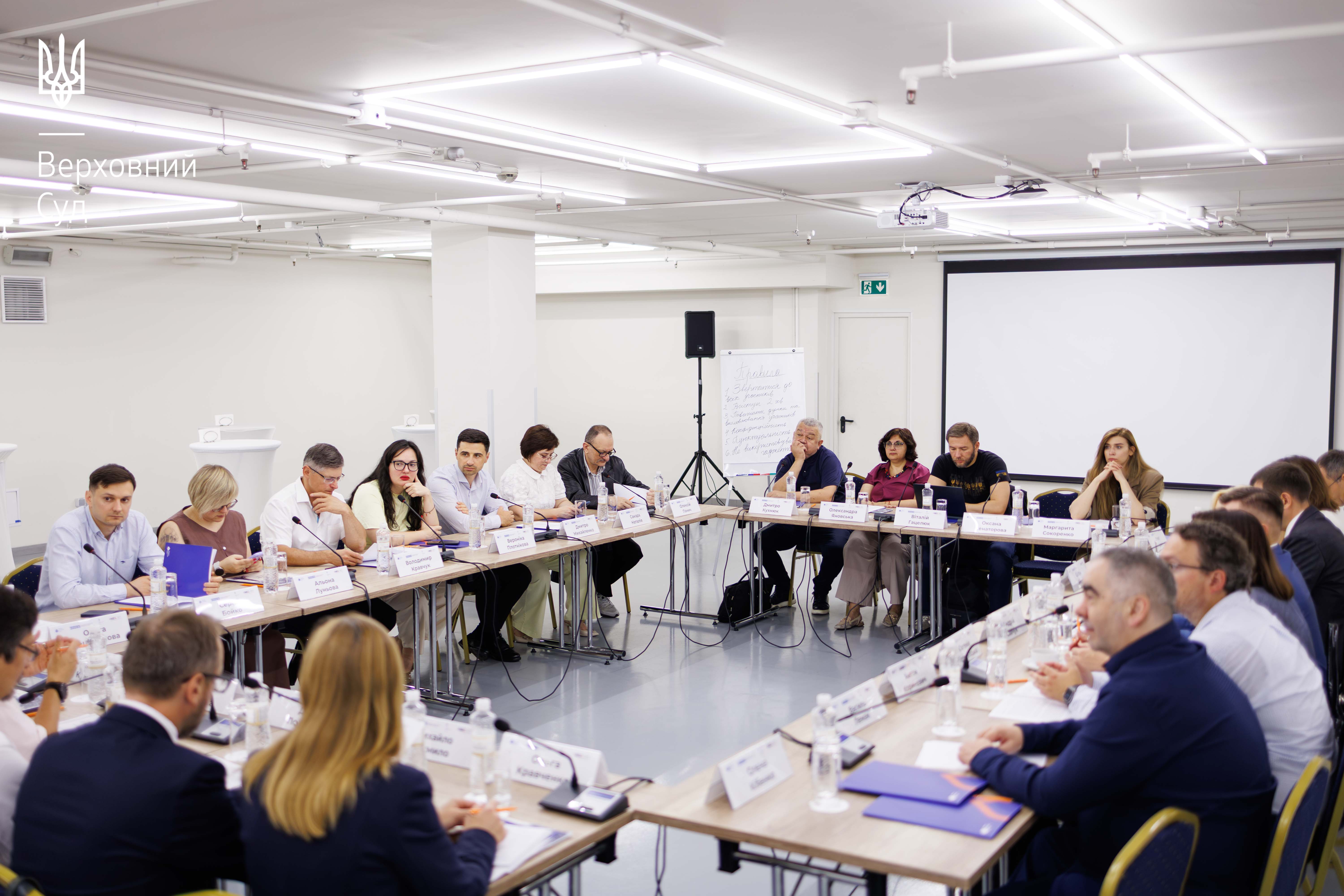
The participants also worked in groups on practical questions concerning the realisation of human rights in conditions of war and the proportionality of interference, in particular with electoral rights, freedom of expression and freedom of movement, in combination with the need to protect the resilience of the state and to preserve democratic institutions.
_03_03.png)