Contact center of the Ukrainian Judiciary 044 207-35-46
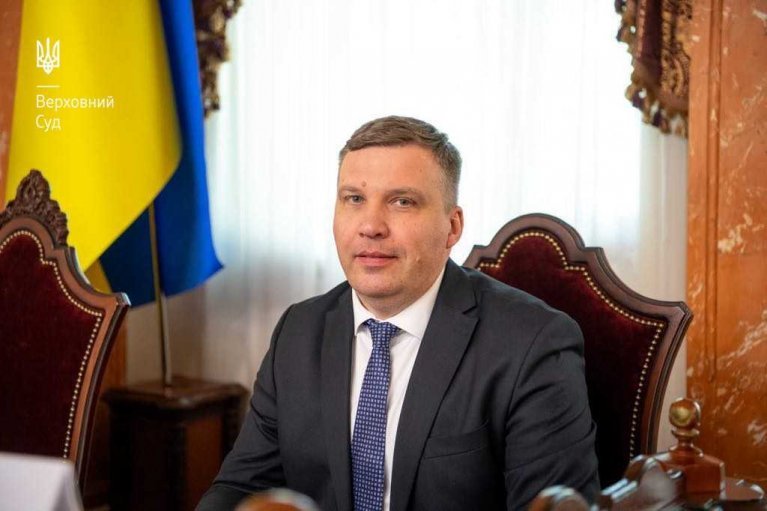
Can an aggressor state invoke jurisdictional immunity to avoid liability for damage caused by war? It is around this very question that the Supreme Court’s case law is currently taking shape in cases connected with the war. The approaches already applied by Ukrainian courts in cases against the Russian Federation were explained by Judge of the Grand Chamber of the Supreme Court Vitalii Urkevych during the webinar “State Immunity and Compensation for Damage Caused by War: Enforcement of Court Judgments”.
According to the speaker, international law has already moved away from an absolute understanding of state immunity. The modern approach is based on the concept of limited jurisdictional immunity of the state, which allows for exceptions, in particular in disputes concerning compensation for damage to life, health or property. Although Ukraine is not a party to the relevant international conventions on the jurisdictional immunity of states, the Supreme Court relies on them as an embodiment of customary norms of international law.
Vitalii Urkevych separately dwelt on the decisions of the Supreme Court that effectively laid the foundation for the consideration of claims against the aggressor state in Ukrainian courts. He recalled that as early as April 2022 the Supreme Court concluded that the Russian Federation, by committing armed aggression, cannot enjoy judicial immunity in disputes concerning compensation for the damage caused. In May 2022 this approach was further developed: the Court emphasised that refusing to consider such claims would effectively deprive victims of the right of access to justice, since it is obviously impossible to expect effective protection in the courts of the aggressor state.
No less important are the practical issues of applying these approaches. In its case law the Supreme Court has determined who may be a claimant in cases concerning compensation for environmental damage, who must be named as defendant in claims against the Russian Federation, and has also developed an approach to the enforcement of judgments against the property of state corporations that in fact perform certain functions and tasks inherent in state bodies. As an example the judge cited the application of the alter ego doctrine to the state corporation “VEB.RF”, whose property may be used for the enforcement of judgments in respect of the debts of the Russian Federation.
Another challenge is the notification of the aggressor state of judicial proceedings. After the severance of diplomatic relations and the cessation of postal services, Ukrainian courts publish information about the consideration of cases involving the Russian Federation on the judicial power web portal, in the Unified State Register of Court Decisions, and send it to the official electronic addresses of Russian state authorities.
Concluding his address, the speaker outlined the range of disputes currently pending before Ukrainian courts. These include claims for compensation for material and/or non-pecuniary damage caused by the death of people, the destruction of housing and property, forced displacement, captivity, the psychological consequences of war, as well as commercial disputes concerning the loss of assets, corporate rights and production capacities of enterprises. According to the judge, judgments in such cases must be particularly carefully reasoned, since they shape not only Ukrainian but also international practice of protecting those affected by armed aggression.
Vitalii Urkevych’s presentation is available at the following link – https://court.gov.ua/storage/portal/supreme/prezent2026/Prezent_Podolan_jurusd_imyn_derhzavu.pdf.
Judge of the Supreme Court in the Commercial Cassation Court Natalia Volkovytska also took part in the event.
The event was organised by the EU Project Pravo-Justice.
_03_03.png)