Contact center of the Ukrainian Judiciary 044 207-35-46
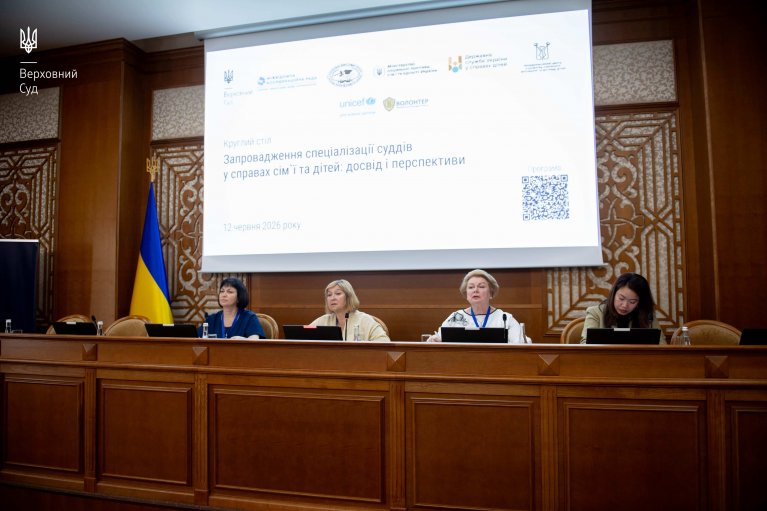
According to court statistics, the number of cases related to the rights and interests of children increases every year. Today, this is primarily due to the armed aggression of the Russian Federation, which has caused forced displacement of families, destroyed normal peaceful life, and provoked unprecedented challenges for the national judicial system.
In the realities of Russia’s full-scale war against Ukraine, the protection of children’s rights is one of the most important missions of our state. That is why the specialization of judges in this sensitive area is not just a reform, but an urgent step. The Supreme Court, being deeply concerned with this issue, is making every effort at its level to resolve the matter of specializing judges in cases of this category.
This was emphasized by Maryna Chervynska, President of the Civil Cassation Court within the Supreme Court, while welcoming participants of the roundtable “Implementation of Specialization of Judges in Family and Children’s Cases: Experience and Prospects”. The event was organized by the Supreme Court together with the Interagency Coordinating Council on Justice for Juveniles, the National School of Judges of Ukraine, and with the support of the United Nations Children’s Fund (UNICEF) Office in Ukraine, within the framework of the project implemented by the NGO Volunteer Centre.
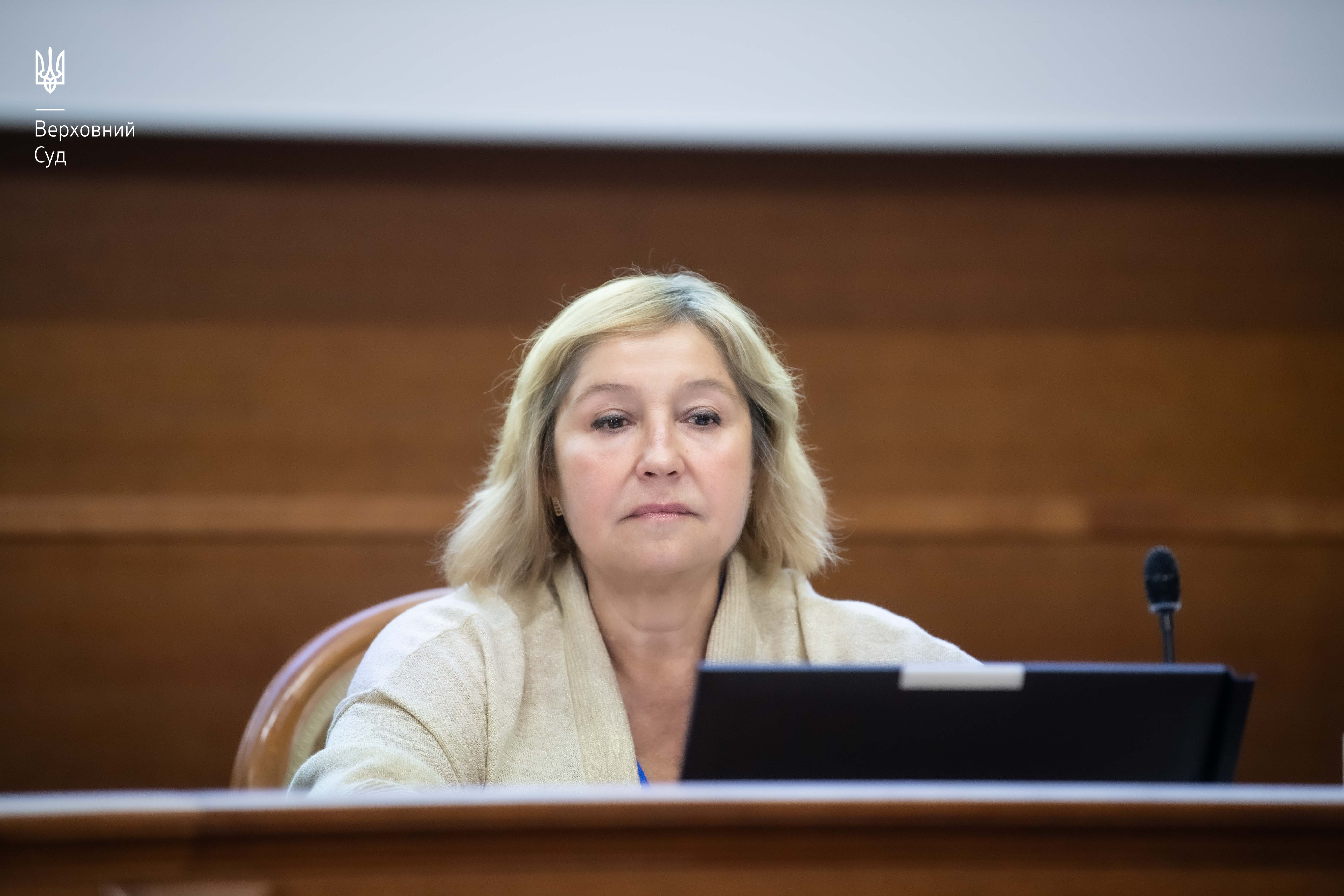
Maryna Chervynska expressed special gratitude to the judges who are not indifferent to this issue and to the implementation of the specialization idea. She summarized that specialization in family and children’s cases is not merely about hearing specific cases. It is about the unity and consistency of case law and the accumulation of experience so that these cases are considered with the best interests of the child in mind.
Liudmyla Kravchenko, Deputy Minister of Justice of Ukraine and Head of the Interagency Coordinating Council on Justice for Juveniles, noted that ensuring a child’s right to life, development, and growth in a society that is friendly and supportive of their interests is the duty of the state. A significant step in this direction was the establishment in 2017 of the Interagency Coordinating Council on Justice for Juveniles — a consultative and advisory body that has taken on the responsibility of consolidating actions between state authorities and developing child-friendly justice.
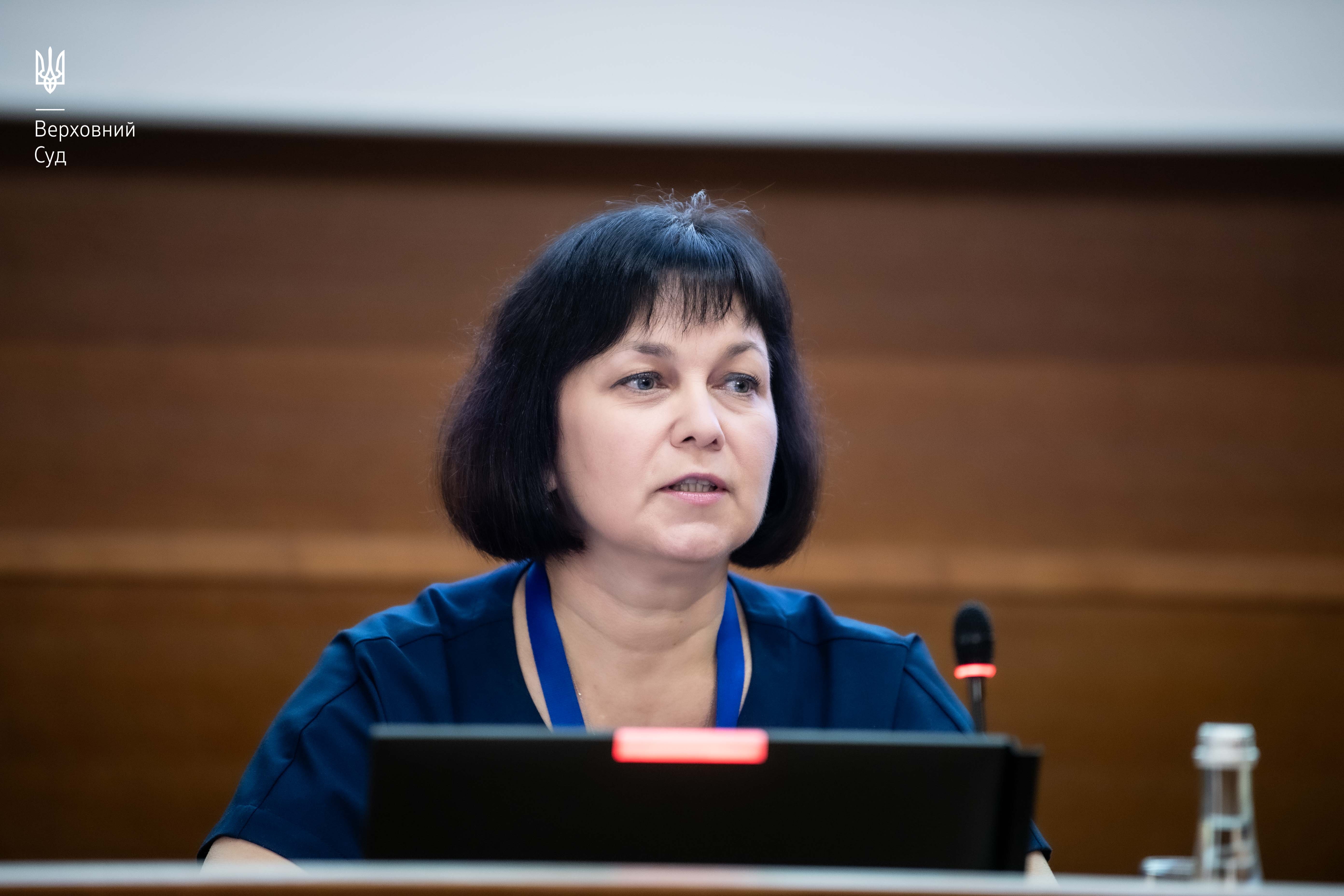
Today, one of the priorities in this activity is the implementation of the points of the Rule of Law Roadmap. In particular, it provides that the system of child-friendly justice should function in accordance with international and European standards, the priorities of the Council of Europe, and ensure respect for the best interests of the child.
The development of child-friendly justice has also been supported by the approval of the National Strategy for the Protection of Children’s Rights in the Field of Justice until 2028 and the adoption of the operational plan for its implementation. As Liudmyla Kravchenko reported, a separate strategic goal has now been defined to ensure better protection, representation of the child, and consideration of their best interests specifically in the field of civil justice. The pilot project on the introduction of specialization of judges in family and children’s cases is currently underway and has already produced certain results: 11 courts are participating in the project, and a total of 64 judges are dealing with this category of cases.
Liudmyla Kravchenko expressed confidence that the pilot project will lead to further legislative regulation and the acquisition of practical experience in implementing specialization to protect the interests of the child.
According to Nataliia Shuklina, Vice-Rector of the National School of Judges of Ukraine, the introduction of specialization of judges in cases involving children is one of the most important humanitarian reforms in the justice sector. It directly concerns the future of Ukrainian children, their safety, psychological well-being, and the realization of their best interests. International experience supports the position of introducing specialized judges or specialization in courts. For example, family and juvenile courts have been functioning in the United States for over a century. In many European countries, such as the United Kingdom, Germany, France, and the Netherlands, there are specialized family divisions or judges who undergo special training in child psychology, mediation, and the protection of vulnerable groups, the speaker noted.
.jpg)
Nataliia Shuklina proposed specific mechanisms for fulfilling Ukraine’s European integration requirements regarding the protection of children’s rights in the justice sector, including:
On behalf of UNICEF, Van Chi Pham, Acting Head of the Child Protection Section of the United Nations Children’s Fund (UNICEF) Office in Ukraine, expressed gratitude to representatives of the Supreme Court, the Interagency Coordinating Council on Justice for Juveniles, the National School of Judges of Ukraine, and other national partners for their cooperation and for implementing initiatives that contribute to the protection of the best interests of the child in Ukraine.

The UNICEF representative also emphasized the key role of inter-institutional cooperation in the effective implementation of the specialization of judges in family and children’s cases and in providing children with comprehensive support, particularly within civil proceedings.
According to her, this initiative is successfully operating in Ukraine, and UNICEF is ready to continue providing sustained support, including technical assistance, and to share experience in implementing the specialization of judges in family and children’s cases in order to improve compliance with the best interests of the child.
More details on the further discussion at the roundtable will be available later on the Supreme Court’s communication channels.
_03_03.png)