Contact center of the Ukrainian Judiciary 044 207-35-46
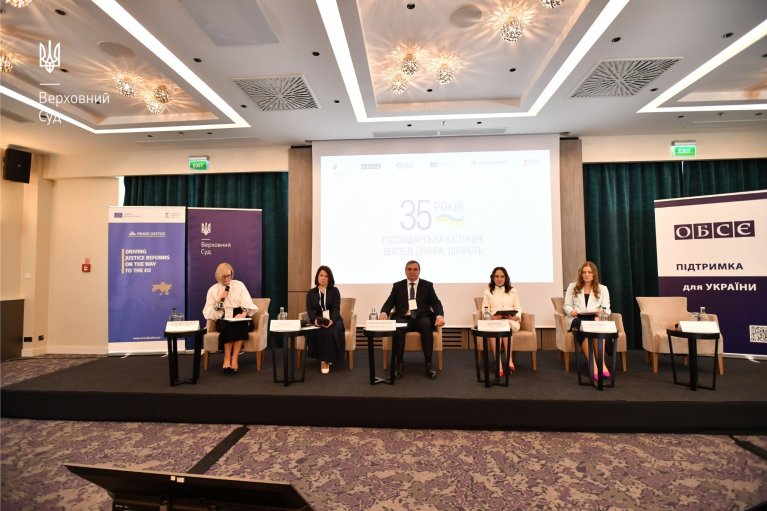
The creation of commercial jurisdiction as a separate branch 35 years ago marked an important stage in the development of the national legal system and the formation of the modern judicial structure. Over these years, commercial jurisdiction has undoubtedly undergone a challenging path of transformation – from a post-Soviet arbitration system to the modern model of commercial courts.
Today, a commercial court is much more than merely resolving disputes. It is a space where the law is transformed into economic stability, contracts acquire legal force, investments receive protection, and justice takes on practical significance for the development of the state.
This was emphasised by the President of the Supreme Court, Stanislav Kravchenko, during the opening of the International Scientific and Practical Conference “Commercial Jurisdiction of Ukraine: 35 Years of Development and European Benchmarks”, dedicated to the 35th anniversary of the establishment of commercial (arbitration) courts of Ukraine.
“We are living through very difficult times of trials for our state,” noted the President of the Supreme Court. Since the beginning of the full-scale Russian invasion, judges of the commercial jurisdiction, like the entire judiciary of Ukraine, have remained faithful to their oath, organised their work during martial law, and continue to demonstrate strong results in terms of timeliness and quality of dispute resolution.
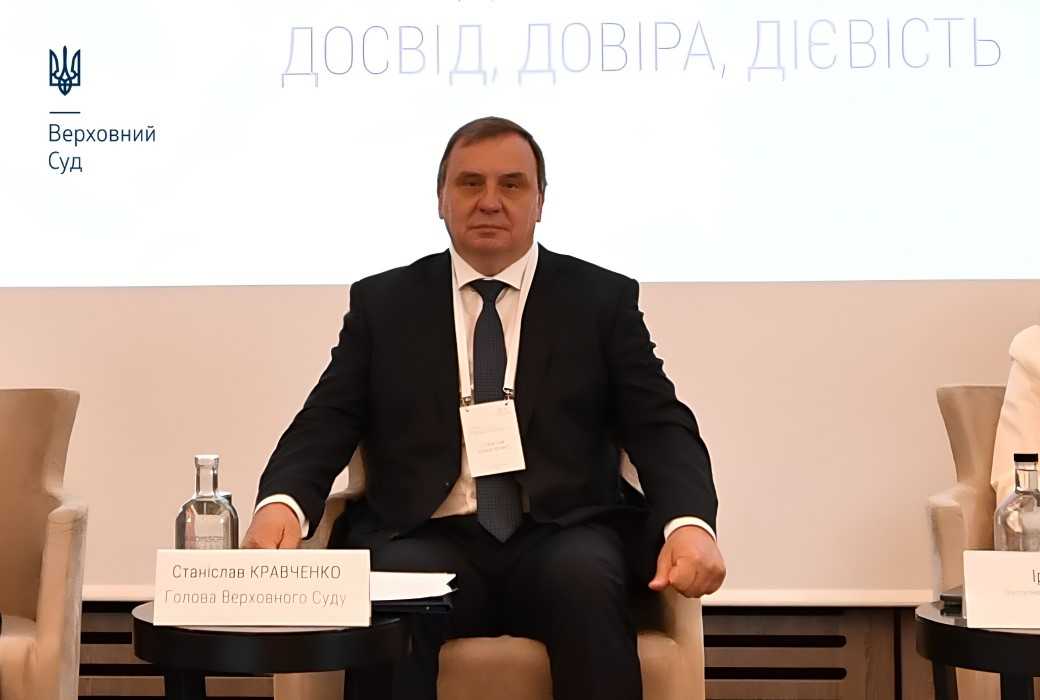
“Although our primary and main task at present is to ensure the administration of justice under wartime conditions – while complying with security requirements and adapting to the necessary legislative changes – we are confidently looking towards a peaceful future. In the post-war reconstruction of Ukraine, commercial jurisdiction will play a leading role, because we can only count on investment and rapid recovery if there is proper and effective legal protection,” Stanislav Kravchenko stated.
As the President of the Supreme Court emphasised, under these circumstances Ukraine and its national judicial system in particular have remained committed to the European integration course – the key to post-war recovery and the further development of our state as a sovereign, independent, and democratic country. At the same time, national courts, including commercial courts, face challenges in strengthening the capacity of the judicial system and guaranteeing judicial independence, taking into account legislative changes and the introduction of modern technologies in the administration of justice and court operations.
In addition, Stanislav Kravchenko thanked the OSCE Support Programme for Ukraine within the framework of the project “Enhancing the Quality of Justice by Strengthening the Role of the Supreme Court in Ensuring Transparent, Accountable and Inclusive Justice”, the EU project Pravo-Justice, and the German Foundation for International Legal Cooperation for their assistance in organising the conference.
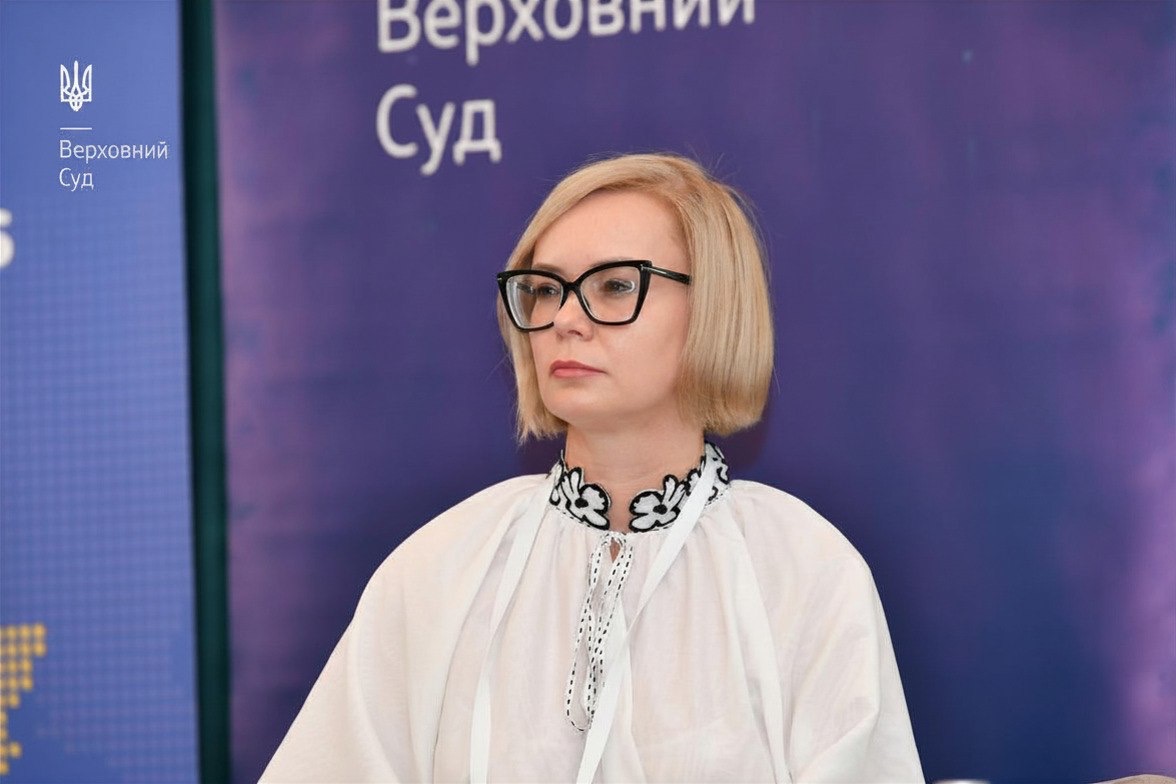
The solemn opening of the International Scientific and Practical Conference was moderated by Judge of the Supreme Court in the Commercial Cassation Court, Tetiana Malashenkova.
Oleksandr Kornienko, First Deputy Chairman of the Verkhovna Rada of Ukraine, emphasised that 35 years of commercial jurisdiction is no longer just a date. It represents institutional continuity, the capacity of commercial justice, and at the same time reflects the entire history of the Ukrainian economy over these years. Ukrainian commercial justice, together with the state, has gone through all stages of the development of the Ukrainian economy, the transformation of business, reforms, and continues to function under the conditions of the full-scale war unleashed by the Russian Federation against Ukraine, as well as during Ukraine’s accession to the EU.
“We understand that a strong state is impossible without a strong economy, especially now, when all economic efforts are directed exclusively towards defence capability. And a strong economy cannot be built without trust and without high-quality justice,” Oleksandr Kornienko assured.
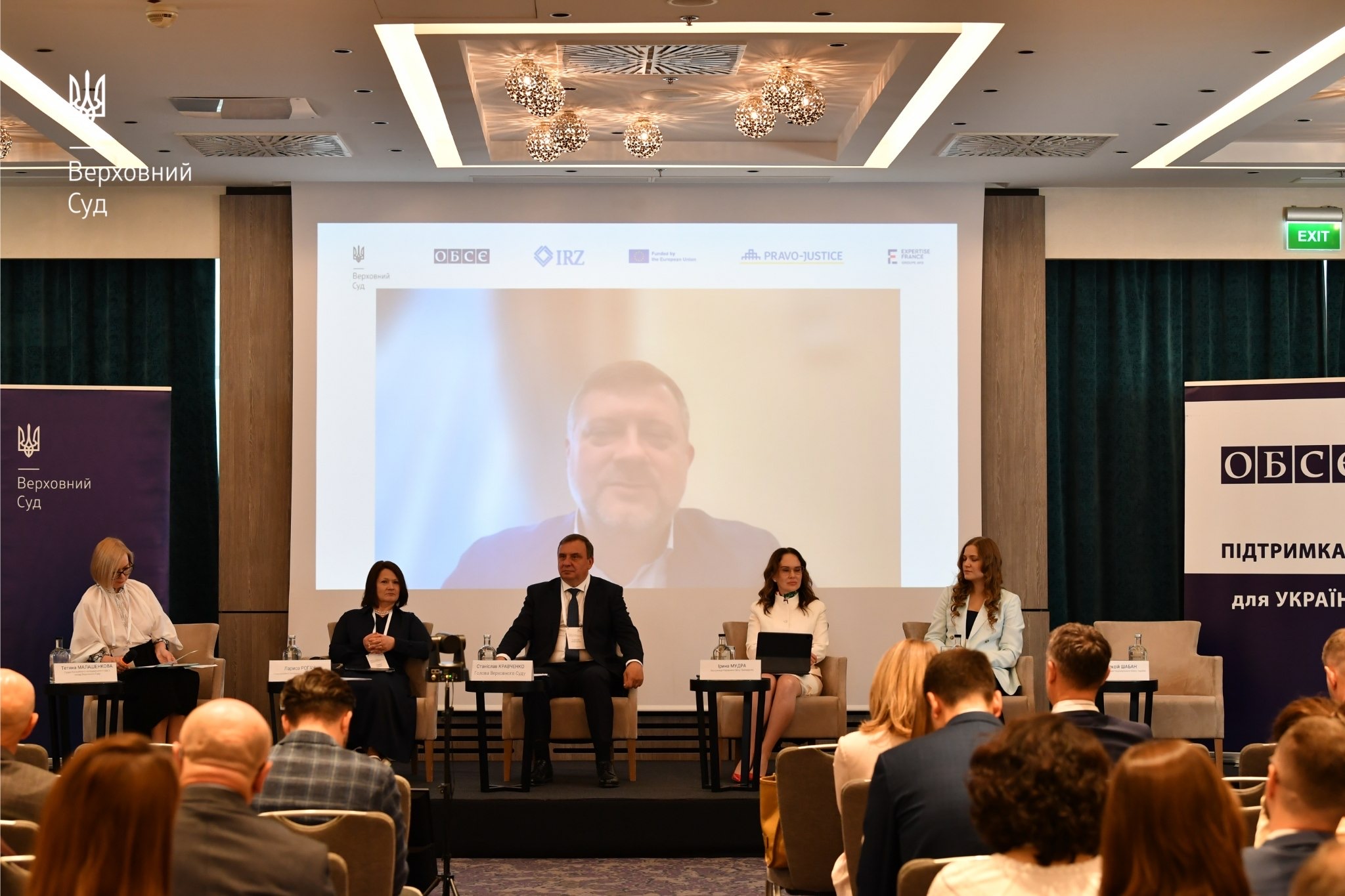
In his opinion, the consistent implementation of judicial reform, particularly in the field of commercial justice, raising the level of trust in the judiciary and, accordingly, in the protection of investments, will be a driver for attracting investment and creating additional opportunities for investing in Ukraine. As Oleksandr Kornienko noted, European integration for Ukraine is not only about negotiation clusters, directives, and technical approximation. European integration is about culture, traditions, legal predictability and certainty. Therefore, under such conditions, a court decision is the full stop in a dispute, not the beginning of a new struggle.
The First Deputy Chairman of the Verkhovna Rada of Ukraine thanked the judges for administering justice in wartime and expressed his conviction that commercial jurisdiction would remain one of the pillars of our country and its economic recovery.
The 35th anniversary of commercial justice is confirmation of the resilience of the Ukrainian legal system. These 35 years represent the path Ukraine has travelled from scratch: from a state that was only learning to speak the language of a market economy to a state that is negotiating full membership in the European Union. And commercial courts have been alongside at every stage, so the history of modern commercial justice is a reflection of the history of the formation of Ukrainian statehood. This was highlighted by Iryna Mudra, Deputy Head of the Office of the President of Ukraine.
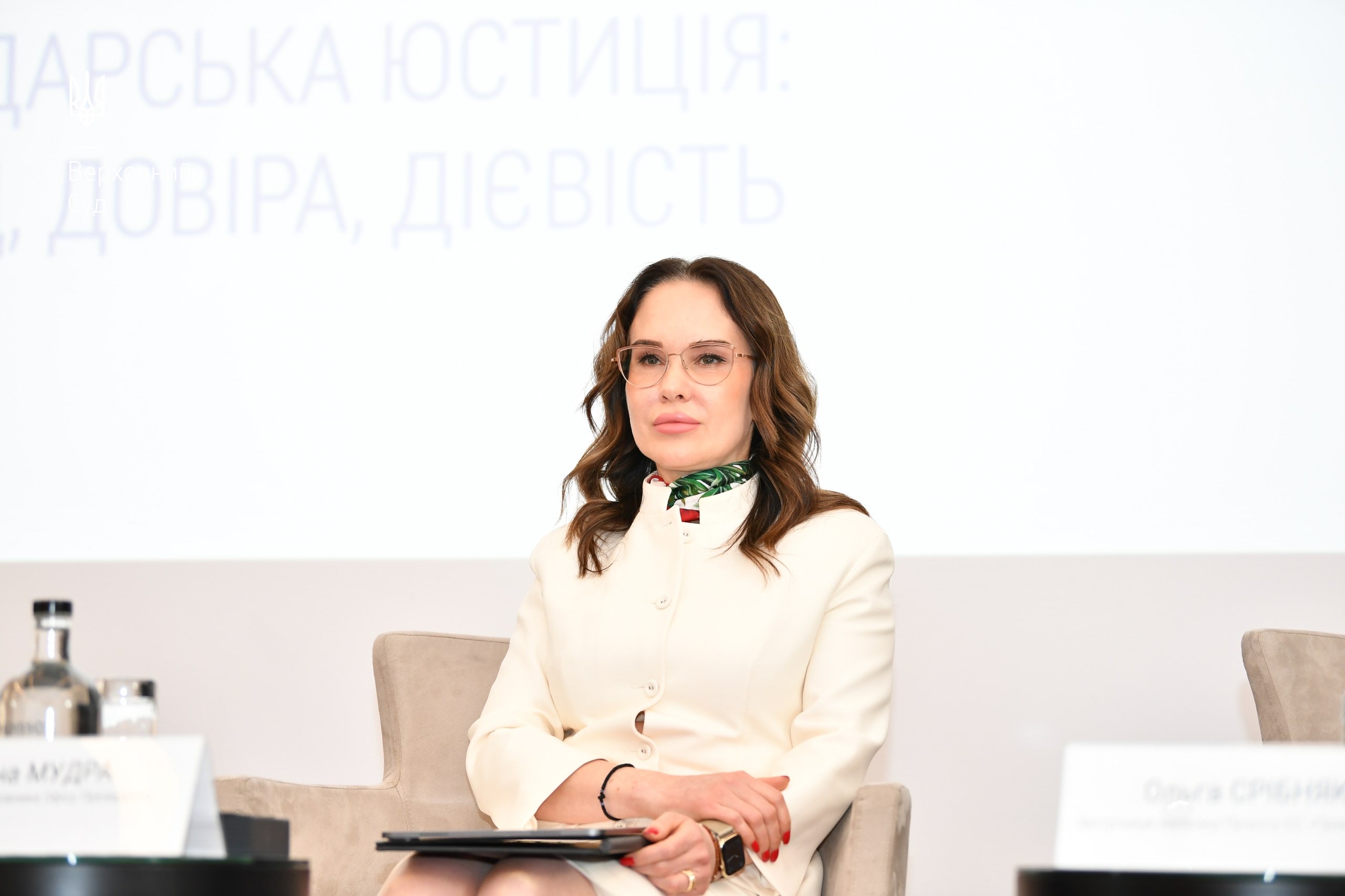
According to her, commercial courts have transformed from bodies of a transitional economy into a full-fledged judicial institution of the European model, whose activities are based on the principles of the rule of law, judicial independence, adversarial proceedings, and access to justice. It is the commercial jurisdiction that has largely shaped the legal culture of doing business in Ukraine and ensured a balance between private and public interests in the economic sphere, being the first to respond to the emergence of new economic relations and providing ideas for legislative work.
“Access to justice, the rule of law, enforcement of court decisions, protection of the rights of bona fide acquirers, and the balance of interests in corporate and land relations — these are not abstract academic categories, but the daily work of judges of the commercial jurisdiction,” Iryna Mudra noted. She thanked the judges for the dignified performance of their duties in the best interests of Ukraine.
The country’s investment climate is built not only on laws, the speaker added. It is built on trust in the courts: no international partner or investor will come to a place where a court decision is unpredictable or unenforceable. That is why the effectiveness of commercial jurisdiction is a matter of national security and Ukraine’s economic sovereignty.
Iryna Mudra expressed her conviction that commercial jurisdiction is the foundation on which the country’s future economy rests. Without transparent and independent judicial practice in the economic sphere, there will be neither large-scale private capital nor long-term investments.
At the same time, Ukraine faces new strategic tasks: acquiring candidate status for European Union membership and the start of the negotiation process determine the need to further strengthen the rule of law, ensure the effectiveness of the judicial system, and harmonise law enforcement with European standards. Judges of the commercial jurisdiction have already proved that they can work in the most difficult conditions. “Now we have a common task — to ensure that after Victory, Ukraine becomes a country that investors want to come to, where our people want to return, a country of projects and trust,” Iryna Mudra summarised.
Deputy Prime Minister for European and Euro-Atlantic Integration of Ukraine, Taras Kachka, noted that the transformation of arbitration courts into a system of commercial justice was a revolution in that the state ensured the possibility of fair consideration of cases between economic entities, rather than simply acting as an arbitrator between enterprises that were state-owned, as had been the case previously. This was a significant step towards a market economy, enshrined, inter alia, in the Constitution of Ukraine.
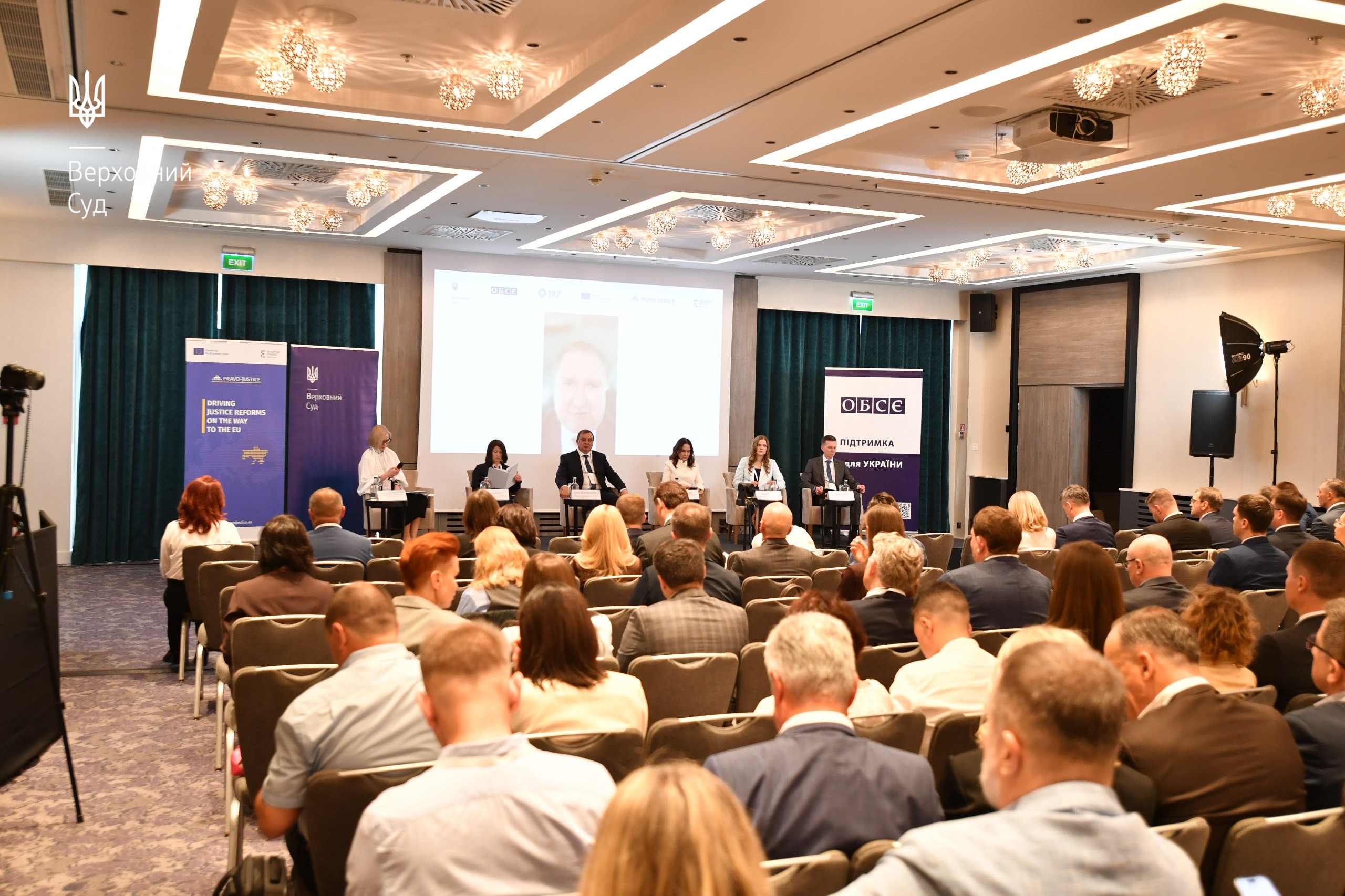
As explained by Taras Kachka, the lion’s share of the chapters in the negotiation process for Ukraine’s accession to the European Union relates precisely to economic activity. This includes the free movement of goods and services, issues of corporate law, bankruptcy, and generally any activity of an economic nature. “Therefore, it is important for us that the principles of the rule of law, the unity of case law, adherence to deadlines for hearing cases, and most importantly trust that decisions are fair continue to develop. I am very grateful that these values are being affirmed in the system of commercial justice, whose representatives are at the same time actively contributing to the establishment of the rule of law in all dimensions of justice,” emphasized the Deputy Prime Minister for European and Euro-Atlantic Integration of Ukraine.
The Head of the High Council of Justice, Hryhorii Usyk, noted: “Ukraine’s commercial jurisdiction has become an integral part of the formation of Ukrainian statehood, market economy, and legal culture. Thirty-five years of commercial justice is not only a history of institutional changes and legal reforms. It is the history of building trust in justice in the sphere of economic relations, the protection of investments, competition, and the economic stability of the state even in the most difficult periods of its development”. Effective and predictable justice in the sphere of commercial legal relations, Hryhorii Usyk stressed, is one of the key factors in the resilience of the state, economic recovery, and building trust in Ukraine around the world.
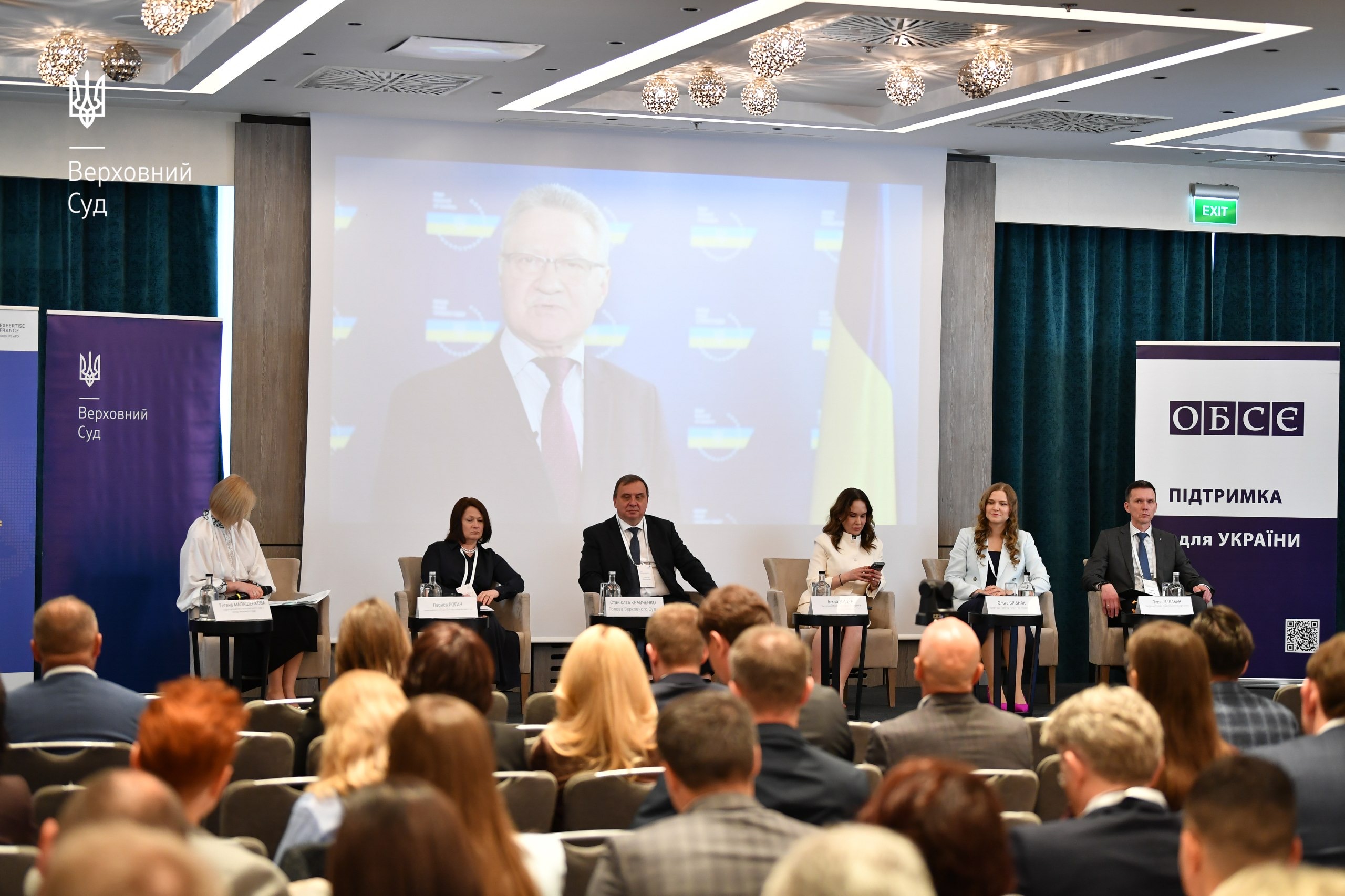
In the current wartime realities, justice continues to be delivered uninterrupted. At the same time, as the Head of the HCJ noted, the implementation of reforms on the path to European integration continues. An important milestone was the approval by the Government of Ukraine in May 2025 of the Roadmap on the Rule of Law, which defines a comprehensive set of reforms within the negotiation process for our country’s membership in the EU. The key tasks for the justice system in the near term are filling vacant judicial positions, intensifying the digital transformation of the justice system, developing criteria for optimizing the network of local general courts, the effective conduct of disciplinary proceedings, and ensuring stable rotation of the HCJ membership. As Hryhorii Usyk summarized, achieving these goals is possible only through the joint efforts of all branches of government.
The Head of the Project Department “Democratization and Good Governance, Rule of Law and Human Rights” of the OSCE Support Programme for Ukraine, Natalia Stupnytska, also addressed the conference participants with a welcoming speech. She emphasized that Ukraine’s commercial jurisdiction has undergone profound transformation over the years of its development and has become a modern system oriented towards European legal standards, the principle of the rule of law, and the independence of the judiciary.
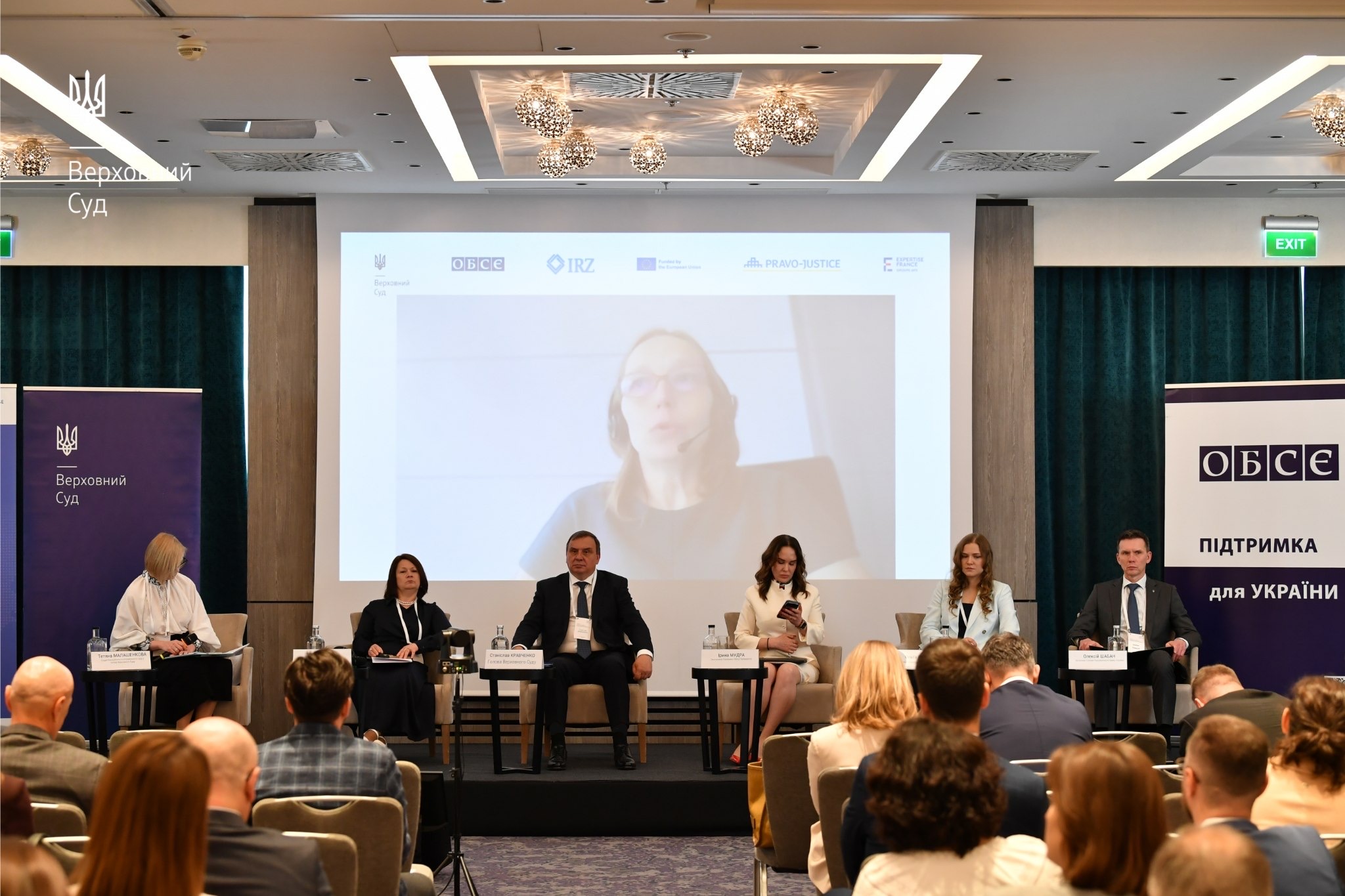
Natalia Stupnytska emphasized that today Ukraine is defending not only its territorial integrity, but also its democratic institutions and its European future, which is why the role of the judiciary is gaining particular importance. According to her, a predictable, transparent, and effective system of commercial justice is a necessary condition for economic resilience, investment, recovery, and the long-term stability of the state. “Commercial justice today is viewed not only as a mechanism for resolving disputes between economic entities, but also as an instrument for ensuring justice, protecting legitimate expectations, and strengthening public trust in state institutions,” she noted.
In her speech, the Head of the OSCE Support Programme for Ukraine drew attention to the harmonization of Ukrainian legislation and judicial practice with European legal standards, as well as the importance of the enforcement of court decisions as an integral part of the right to a fair trial. She stressed that support for the justice sector remains one of the strategic priorities of the OSCE’s activities in Ukraine, and the Programme will continue to contribute to strengthening an independent judiciary, developing effective justice, and implementing institutional reforms.
The International Scientific and Practical Conference was also joined by Asier Santillán Luzuriaga, Head of the European Integration, Governance and Rule of Law, Civil Society Section of the EU Delegation to Ukraine. He noted that the 35th anniversary of Ukraine’s commercial jurisdiction is an opportunity not only to reflect on the evolution of the commercial justice system, but also to assess the strategic role of commercial courts in Ukraine’s European integration processes, economic recovery, and the transformation of the rule of law.
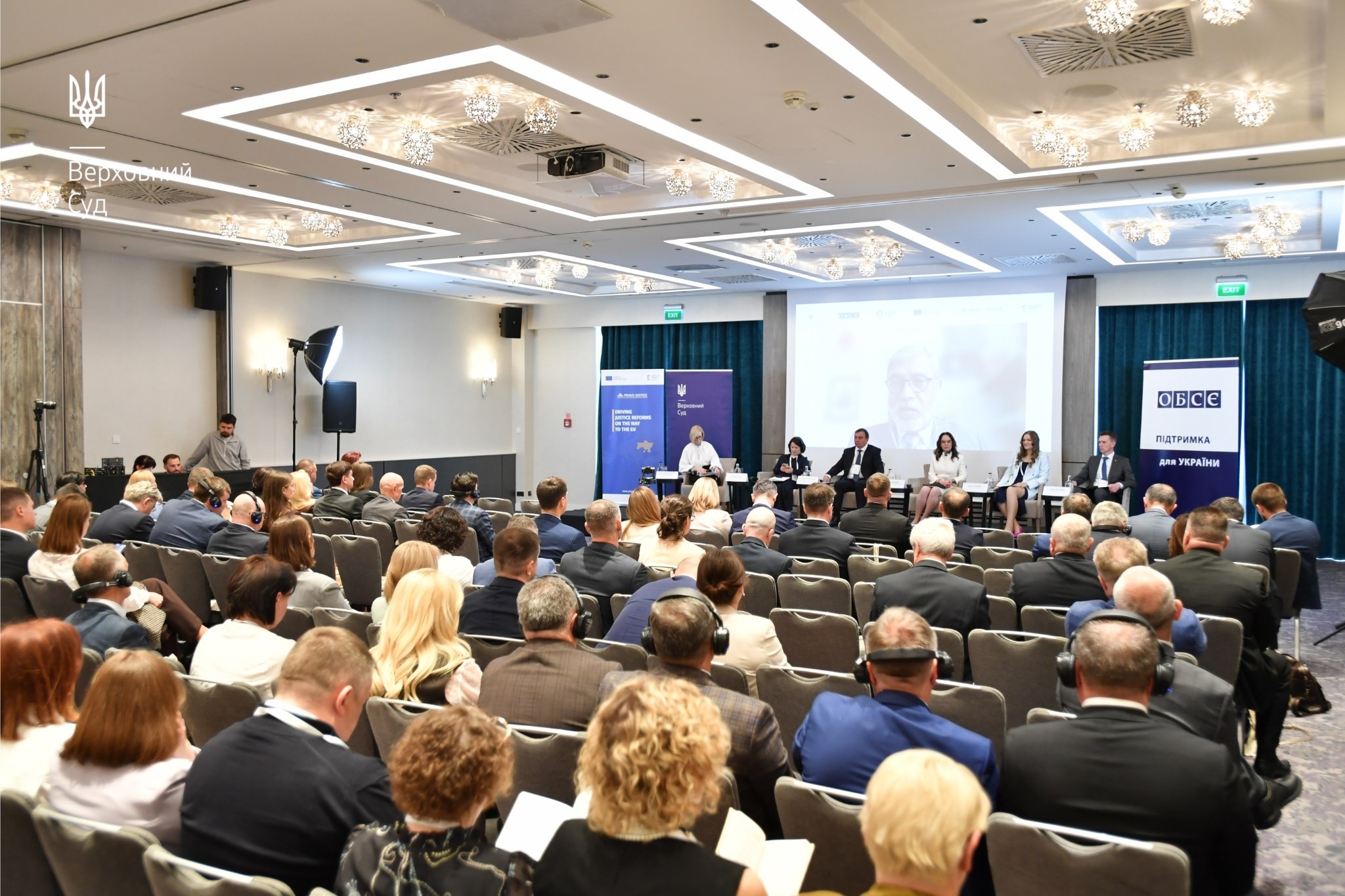
According to Asier Santillán Luzuriaga, effective commercial justice is one of the cornerstones of a modern market economy, as investors, businesses, and international partners require predictability, legal certainty, protection of property rights, and effective contract enforcement. He emphasized that in European Union member states, commercial justice is one of the fundamental elements for the protection of investments, the stability of economic relations, and public trust in state institutions. The speaker also highlighted that commercial courts today play an important role in matters of the state’s economic resilience, insolvency procedures and business restructuring, investment protection, corporate governance, competition policy, state aid, and Ukraine’s post-war recovery.
The EU representative examined the further implementation of the Roadmap on the Rule of Law and the alignment of the Ukrainian legal system with EU standards. He highlighted the important contribution of the Supreme Court and the commercial jurisdiction in ensuring the unity of case law and the gradual harmonization of Ukrainian approaches with European ones.
Olha Sribniak, Deputy Head of the EU Project Pravo-Justice, while greeting the conference participants, emphasized that trust in the state, the judiciary, legal certainty, and stability of law enforcement are key prerequisites for Ukraine’s European integration. According to her, the judiciary and commercial jurisdiction play a particularly important role in this process, since the issues of the rule of law and justice are among the fundamental areas of the negotiation process for Ukraine’s accession to the European Union.
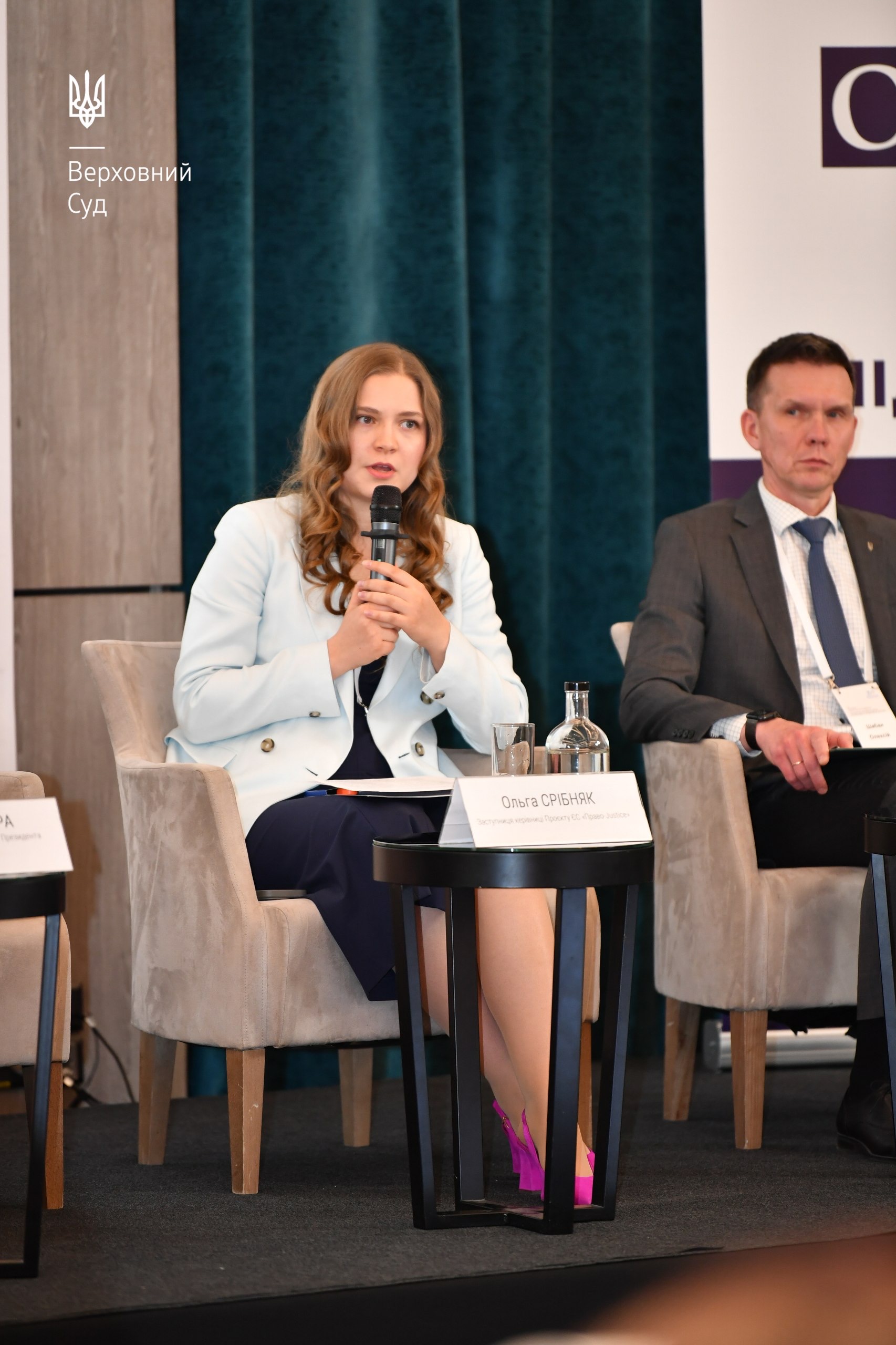
She noted that the commercial jurisdiction still has a great deal of work ahead, as the second cluster of the negotiation process for Ukraine’s EU accession - “Internal Market” - covers issues of corporate law, intellectual property, and competition policy. Referring to the latest European Commission report on Ukraine within the enlargement package, Olha Sribniak pointed out that, along with legislative changes, their effective practical application by commercial courts is of key importance.
The representative of the EU Project Pravo-Justice also drew attention to the relevance of insolvency issues and the enforcement of court decisions in wartime conditions. She recalled that the mechanism of preventive restructuring, introduced on the basis of EU Directive 2019/1023, has already proven its viability; however, its potential will largely depend on its application by commercial courts. Olha Sribniak stressed that an unenforced court decision affects not only the rights of the creditor, but also the level of trust that businesses and investors have in the state.
As part of the opening of the International Scientific and Practical Conference, a presentation of a commemorative coin issued for the 35th anniversary of the establishment of Ukraine’s commercial (arbitration) courts also took place.
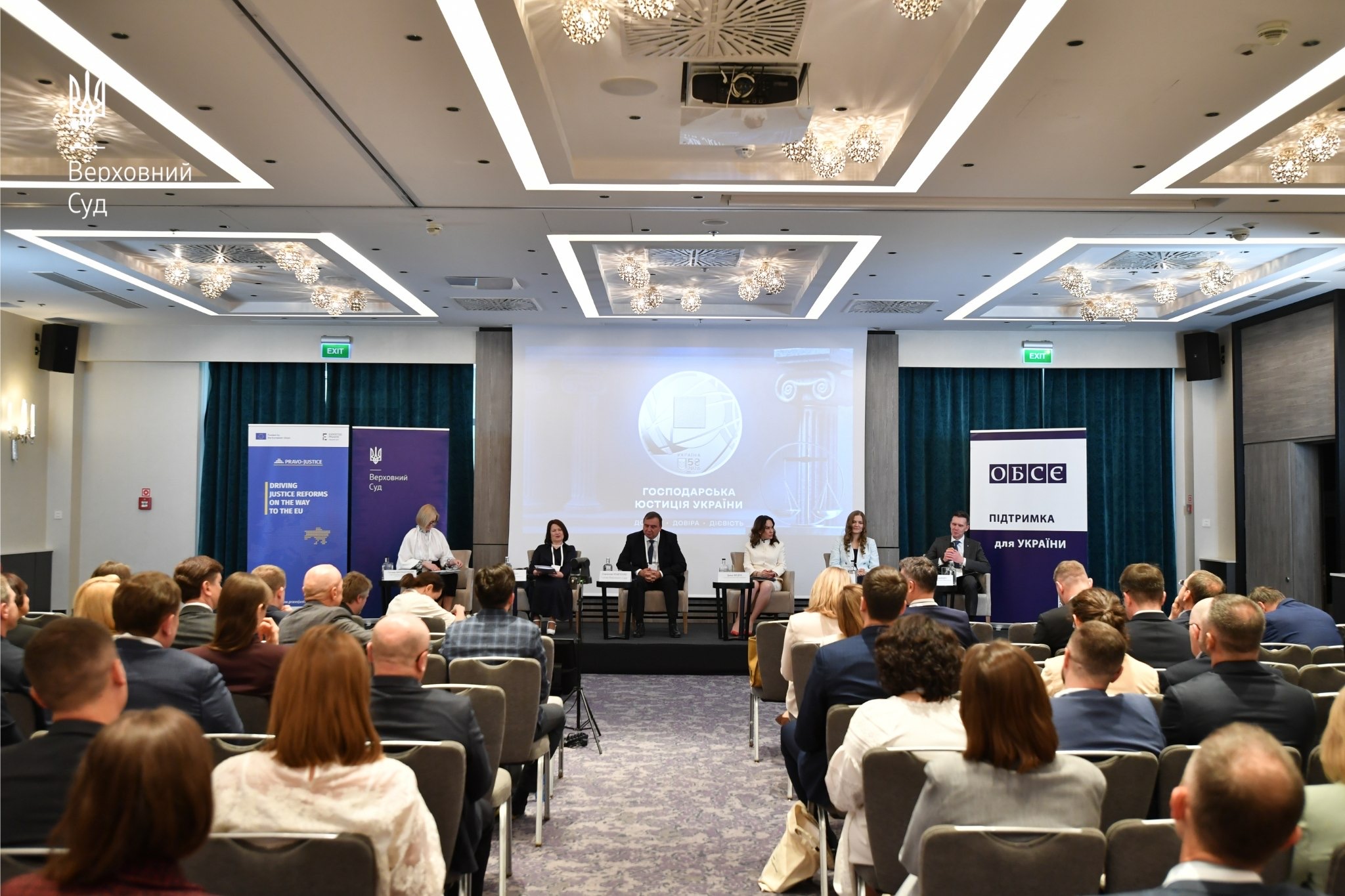
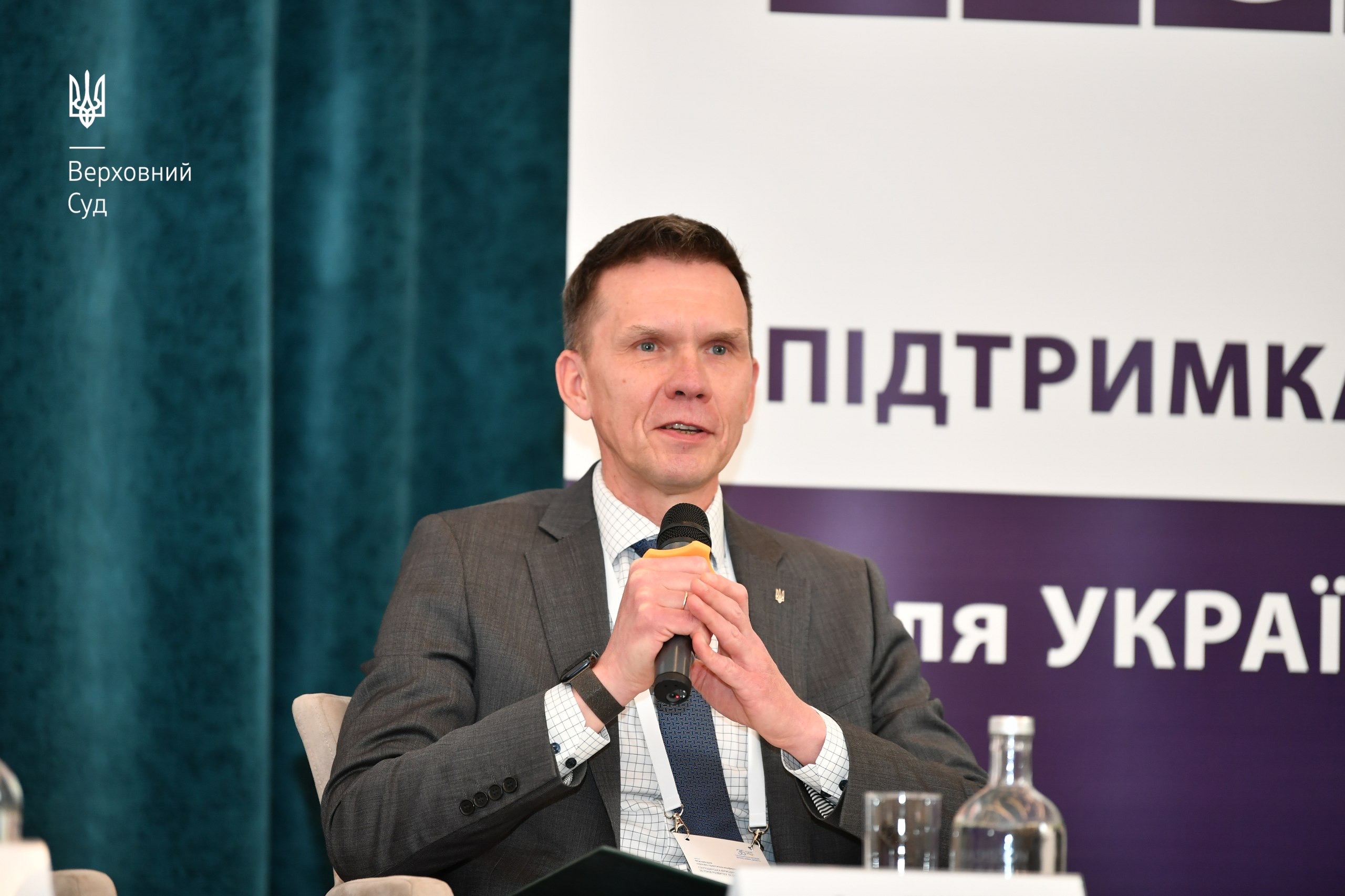
Oleksii Shaban, Deputy Governor of the National Bank of Ukraine, presented the commemorative coin issued for this anniversary. He emphasized that commercial justice is one of the foundations of a modern state, since fair competition, the investment climate, international trust, and business confidence in the future all depend on the stability of the legal system.
During his speech, Oleksii Shaban noted that in the conditions of war and Ukraine’s future post-war recovery, investors’ trust in state institutions and the judicial system becomes particularly important. According to him, the commemorative coin is intended not only to mark the significant date, but also to symbolically enshrine the role of commercial justice in establishing the rule of law and Ukraine’s economic resilience.
Speaking about the concept of the commemorative coin, the Deputy Governor of the NBU explained that its symbolism is intended to reflect the role of commercial justice as an institution of stability amid constant challenges. According to him, the square on the obverse of the coin embodies jurisdiction, balance, and the fundamental nature of the legal system, while the abstract elements surrounding it symbolize an environment of change and external challenges. The reverse of the coin features a column as a symbol of the steadfastness of the legal system and bears the inscription “Experience, Trust, Effectiveness”, which reflects the key values of Ukraine’s commercial justice.
The keynote speech on the topic “35 Years of Ukraine’s Commercial Jurisdiction: From the Post-Soviet Model to European Standards of Justice” was delivered by Larysa Rohach, President of the Commercial Cassation Court within the Supreme Court. At the beginning of her speech, she noted that the conference was the result of long-term joint work by judges, the chambers of the Commercial Cassation Court of the Supreme Court, and courts of commercial jurisdiction, which had been organizing sectoral events dedicated to current issues in the development of commercial justice for several months.
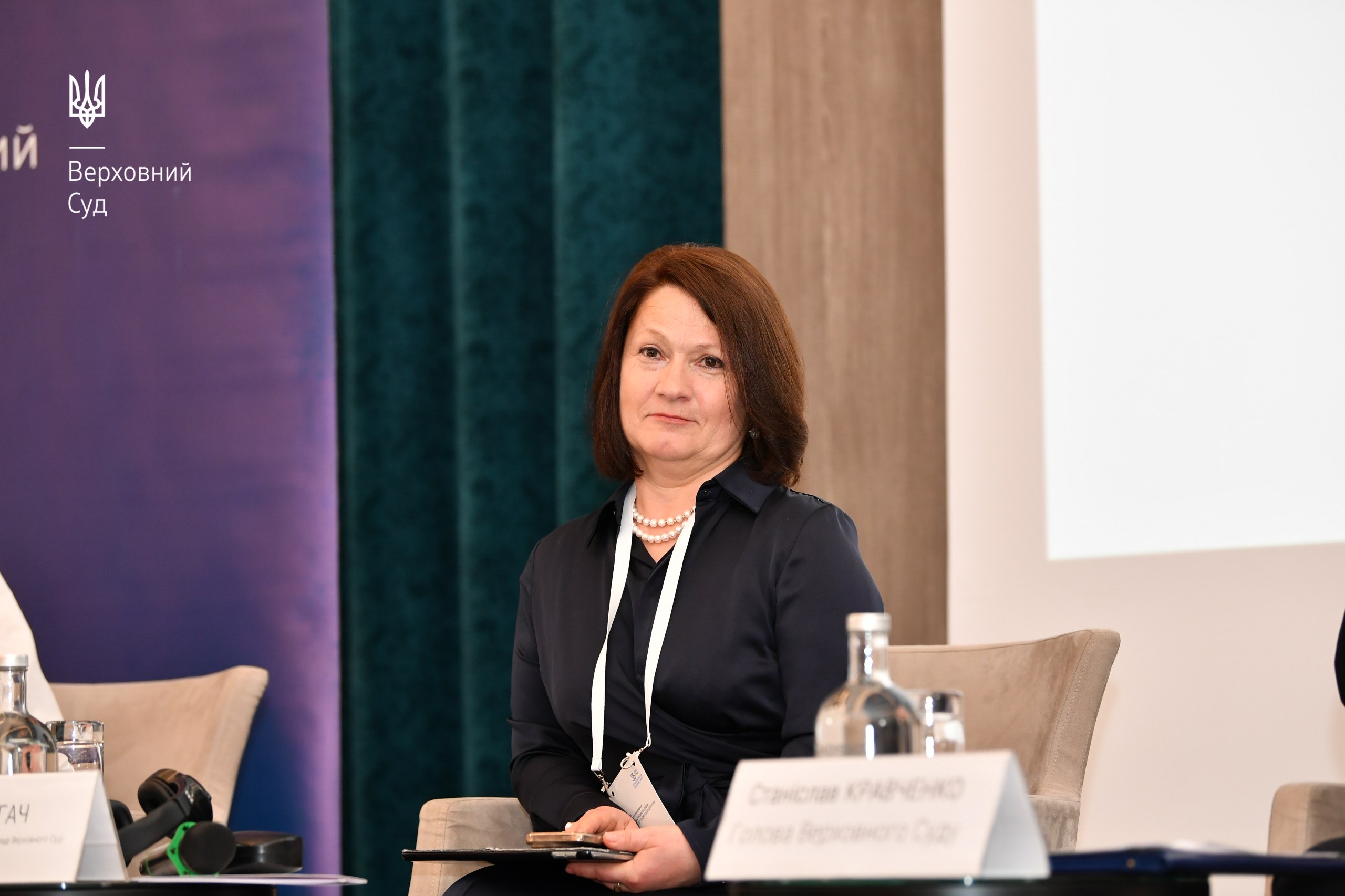
The speaker noted that while one could focus solely on statistics or the number of cases heard when discussing 35 years of commercial jurisdiction, it is far more important to reflect on what commercial jurisdiction means for the state and the economy. In this context, Larysa Rohach emphasized that virtually all conference participants, in their welcoming remarks, spoke about trust – trust of business in partners, state institutions, and the courts.
The President of the Commercial Cassation Court of the Supreme Court stressed that commercial jurisdiction has a special nature, as it is in this sphere that law interacts directly with the economy, and the key foundation of economic relations is trust – in partners, state institutions, and the judicial system. According to her, it is trust that encourages businesses to invest, launch new projects, conclude contracts, and carry out economic activities. Therefore, commercial justice effectively provides the infrastructure for the state’s economic stability.
Outlining the stages of the formation of commercial jurisdiction, Larysa Rohach pointed out that as early as 1991, even before Ukraine declared independence, the system of state arbitration had already been recognized as a judicial institution. In the transition from an administrative-command economy to a market economy, its task was to ensure discipline in the sphere of economic relations and contractual discipline. At the same time, from the very beginning, commercial courts had to operate with imperfect legislation and effectively apply the principle of the rule of law to overcome gaps in legal regulation.
The speaker focused on the procedural modernization of 2001, when appellate and cassation appeals were introduced, and the principles of adversarial proceedings, publicity, and equality of the parties were strengthened. She described the 2017 reform as an important stage of development, which changed the role of the Supreme Court as an institution tasked with ensuring the unity of case law and shaping the main approaches to the application of legal norms. It was then that procedural filters, electronic justice, tools to counter the abuse of procedural rights, and the institute of dispute resolution with the participation of a judge were introduced.
Larysa Rohach emphasized that commercial courts today play an important role in ensuring the economic security of the state, the stability of contractual relations, the protection of economic rights, investment attractiveness, and trust of international partners. In this context, she highlighted the significance of the Supreme Court case law during the screening of Ukrainian legislation in the field of corporate relations. In particular, the speaker noted that the case law of the Supreme Court and the chamber for hearing corporate disputes, corporate rights, and securities cases of the Commercial Cassation Court of the Supreme Court became the basis for developing approaches to the protection of minority shareholders’ rights, the application of squeeze-out procedures, the implementation of fiduciary duties, and liability for their violation.
The judge separately mentioned the development of the practice of the chamber for hearing bankruptcy cases of the Commercial Cassation Court of the Supreme Court, as well as the work of the chamber for hearing cases on land relations and property rights of the Commercial Cassation Court of the Supreme Court. She emphasized the importance of stability in property relations, non-interference or proportionality of state interference in property rights to ensure the protection of investors. She also drew attention to the activities of the chamber for hearing cases on the protection of intellectual property rights and cases related to antimonopoly and competition legislation of the Commercial Cassation Court of the Supreme Court, noting that issues of competitive principles and public procurement are among the key areas in which commercial courts must ensure compliance with both Ukrainian and pan-European approaches.
A significant part of the speech was devoted to the principle of the rule of law and the effectiveness of judicial protection. Larysa Rohach noted that modern commercial justice must ensure not a formal procedural outcome, but the real restoration of the violated right. According to her, effective judicial protection implies the ability to resolve a dispute within a single proceeding in a way that prevents further repeated disputes between the parties.
The President of the Commercial Cassation Court of the Supreme Court emphasized the importance of timely consideration of cases and maintaining high standards of justice even under the conditions of full-scale war. She noted that the judicial system has managed to ensure business continuity thanks to the interaction of all branches of government and the implementation of modern digital mechanisms. In this context, the judge highlighted the rapid development of electronic justice, the increase in the number of electronic documents, and the active use of videoconferencing, which has made justice more accessible and convenient for the participants in the proceedings.
Larysa Rohach also emphasized that the further development of commercial jurisdiction is inextricably linked with Ukraine’s European integration, the affirmation of the rule of law, the independence of the judiciary, and the strengthening of trust in the judicial system. According to her, it is largely the case law of the Supreme Court and the developments of individual chambers of the Commercial Cassation Court of the Supreme Court that are already shaping approaches that meet pan-European standards and influence the country’s economic resilience and investment attractiveness.
Keynote speech by Larysa Rohach, President of the Commercial Cassation Court of the Supreme Court: https://court.gov.ua/storage/portal/supreme/prezent2026/Konferencia_35_KGS.pdf
After the opening ceremony, the thematic sessions of the International Scientific and Practical Conference began.
The first session – “Fundamental Principles of Commercial Justice and European Standards of Effective Justice” – was moderated by Larysa Rohach, President of the Commercial Cassation Court of the Supreme Court. The discussion focused on access to court and the admissibility of claims in commercial disputes: how the approaches of the ECtHR, the Constitutional Court of Ukraine, and the Supreme Court influence the assessment of the good faith of the parties and the admissibility of appeals to the court, define the content of the principles of the rule of law, fairness, good faith, and reasonableness in law enforcement, and their importance for resolving business disputes.
The role of moderator of the second session – “The Role of Commercial Justice in Ensuring the Stability of Economic Turnover” – was performed by Ivan Mishchenko, Judge of the Supreme Court in the Commercial Cassation Court. Participants discussed effective justice as a factor in economic development.
The moderator of the third session – “Enforcement of Court Decisions in Commercial Disputes as Part of the Right to a Fair Trial” – was Volodymyr Pohrebniak, Judge of the Supreme Court in the Commercial Cassation Court. The discussion was devoted to issues of the binding nature of court decisions, the balance of the parties’ rights, and the effectiveness of enforcement proceedings, which shape trust in justice and influence economic relations.
The second day of the International Scientific and Practical Conference will be dedicated to issues of the effectiveness of justice and court administration. As part of the event, there will also be an awards ceremony for the winners of the creative works competition “Values and Principles of Commercial Justice: The European Vector of Development” and a presentation of the expert study “Jurisdictional Analysis of Judicial Control in Ukraine”.
Join the conference broadcast on the Supreme Court’s YouTube channel: https://www.youtube.com/watch?v=Ckb77UdM4gQ
Video recording of the first day of the conference: https://www.youtube.com/watch?v=i_UNgPdLKxw&t=5689s
Read more about the speeches of all the speakers of the event later on the Supreme Observer portal of contemporary law.
_03_03.png)