Contact center of the Ukrainian Judiciary 044 207-35-46
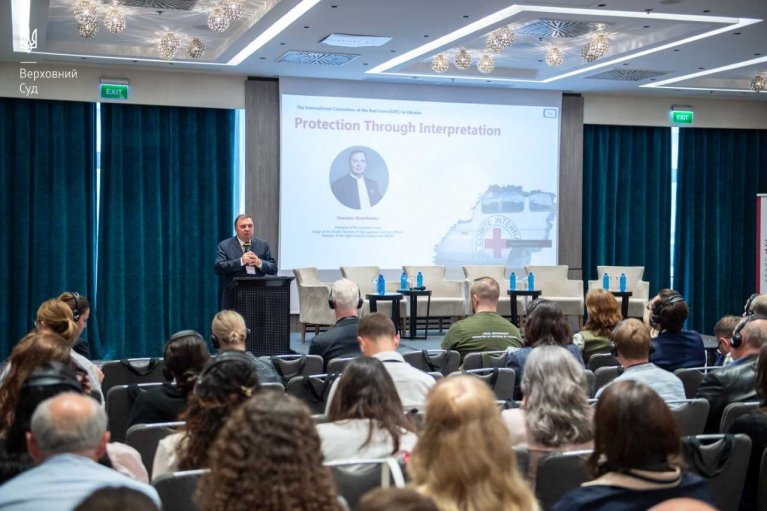
For Ukraine, international humanitarian law has definitively moved from the realm of academic discussion into the sphere of daily practical work of national courts. Moreover, Ukraine's experience in law enforcement during the war makes a significant contribution to the global development of humanitarian norms.
This was stated by the President of the Supreme Court, Stanislav Kravchenko, during the International Committee of the Red Cross conference "Protection through Interpretation: The Updated ICRC Commentary on the Fourth Geneva Convention and the Development of IHL in Contemporary Warfare".
The President of the Supreme Court emphasized that the fundamental transformation of the Ukrainian legal system began back in 2014, with the annexation of Crimea and aggression in eastern Ukraine. It was then that Ukrainian courts faced the need to provide a legal assessment of events under the conditions of hybrid warfare, where an armed conflict is conducted without a formal declaration of war and is accompanied by complex issues regarding the legal status of the participants in such events.
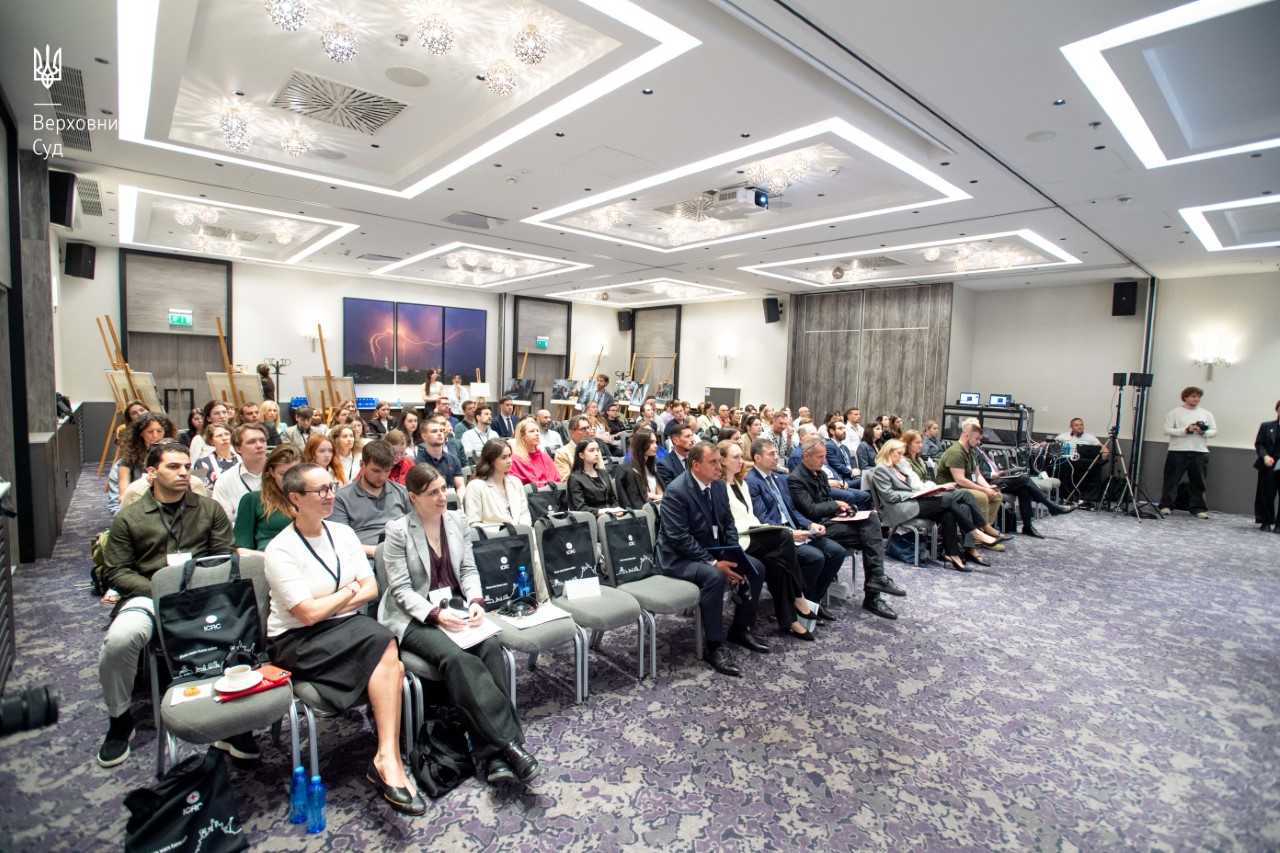
At the same time, according to Stanislav Kravchenko, it was precisely since the beginning of the full-scale invasion of the Russian Federation that the issues of investigation and judicial review of war crimes, which took on a mass character, actualized the need for the study and practical application of the Geneva Conventions at a fundamentally new level. In this regard, Ukrainian judges - both independently and with the support of international organizations - began to thoroughly analyze the norms of international humanitarian law in order to correctly qualify the actions of the aggressor state and properly apply these norms in judicial practice.
In this context, the President of the Supreme Court noted the particular relevance of the publication of the updated Commentary on the Fourth Geneva Convention, which, according to him, is extremely timely and will undoubtedly be useful for Ukrainian legal professionals.
Stanislav Kravchenko also drew attention to the practice of the Supreme Court regarding the qualification of the crime of aggression. In particular, he noted the decision of the Grand Chamber of the Supreme Court concerning the definition of the subject of the crime provided for in Art. 437 of the Criminal Code of Ukraine. The Grand Chamber of the Supreme Court concluded that responsibility for planning, preparing, initiating, and conducting an aggressive war can be borne not only by representatives of the highest political or military leadership, but also by individuals from the business environment who actually facilitate the execution of aggression, in particular through the production of weaponry or the construction of strategic facilities for the aggressor state.
Special attention in the speech was paid to the issues of protecting children's rights in war conditions, as well as the need for further adaptation of national legislation to international standards of justice and humanitarian law.
In conclusion, the President of the Supreme Court emphasized that today Ukraine not only applies the norms of international humanitarian law but also shapes the latest practice of their interpretation and development. The experience of Ukrainian courts in hearing cases related to armed aggression and war crimes is already becoming an important reference point for the international legal community and, in the long term, may influence the further development of international humanitarian standards.
_03_03.png)