Contact center of the Ukrainian Judiciary 044 207-35-46
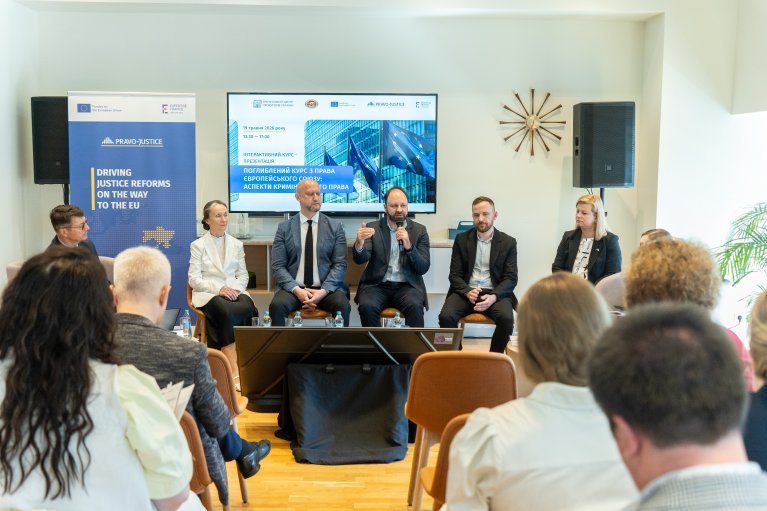
Training legal professionals capable of working with EU law will become one of the key tasks of Ukraine’s legal system on its path toward European Union membership. This was emphasised by Lev Kyshakevych, Judge of the Grand Chamber of the Supreme Court, during the official presentation of the online course “Advanced Course on European Union Law: Criminal Law Aspects”, developed by the EU-funded Pravo-Justice Project in cooperation with the National School of Judges of Ukraine and the Prosecutors’ Training Centre of Ukraine.
The judge stressed that Ukraine’s adaptation to the EU legal framework will not be limited to the adoption of new legislation and its formal implementation. A far more complex, yet decisive, stage will be the development of a professional legal community capable of effectively applying EU law in practice.
Judges of the Supreme Court are actively studying EU law and relying on European standards when applying national legislation, particularly in the areas of criminal justice and human rights protection.
The speaker also noted that the Ukrainian legal system possesses practical experience that may be valuable to the European legal community, especially regarding the functioning of the judiciary during a full-scale war.
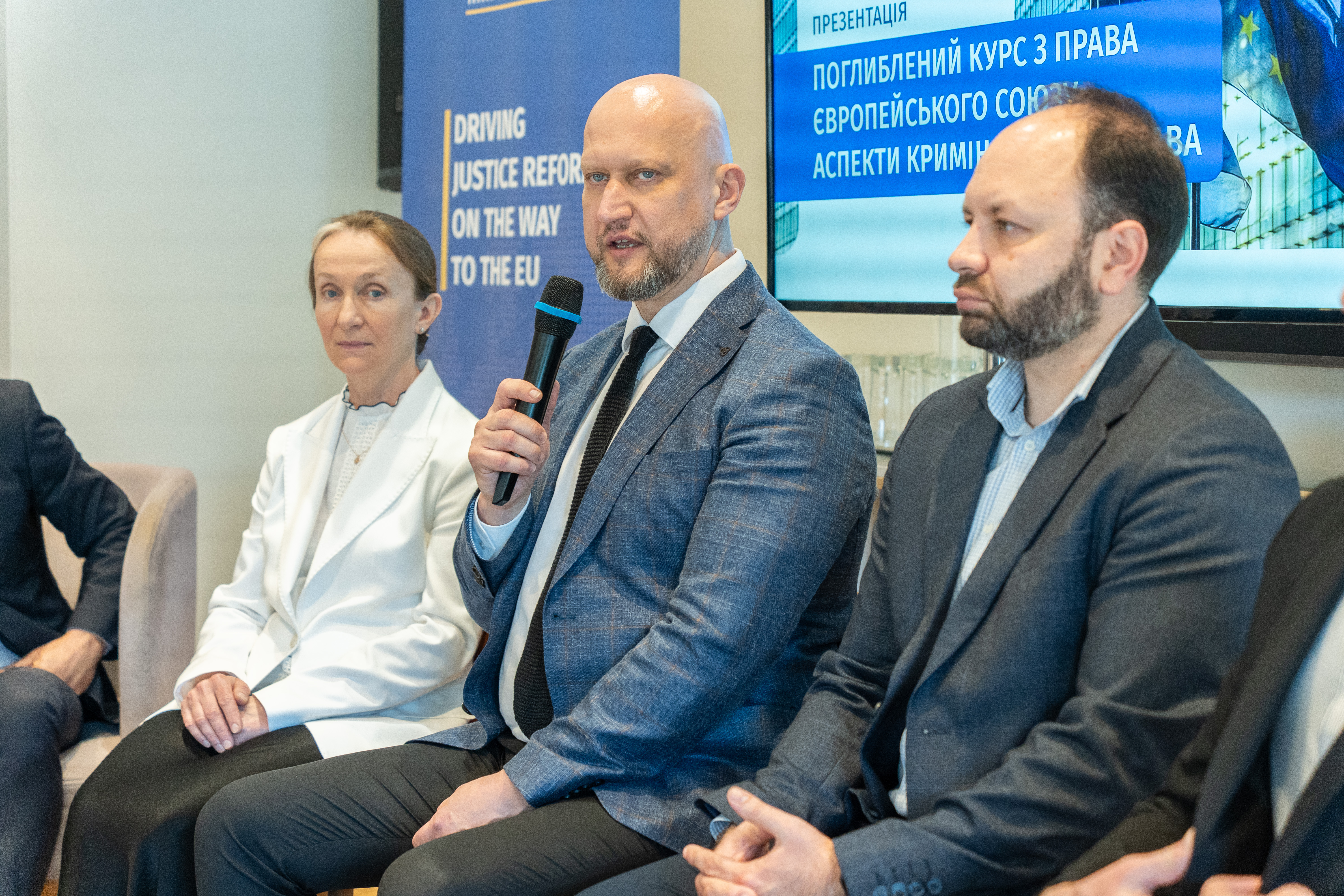
Additional remarks on the practical application of EU law in criminal justice were delivered by Rasim Babanly, Acting Chief of Staff of the Supreme Court.
He noted that the legal system must ensure a balance between the inevitability of responding to criminal offences and safeguarding individuals against excessive state interference with their rights. According to the speaker, modern EU criminal justice law is built around these fundamental principles.
The presenter also focused on issues relating to the protection of victims’ rights. Among the challenges identified were the problem of secondary victimisation and the absence of an effective mechanism for state compensation to victims, despite the existence of relevant international standards.
Furthermore, he stressed that integration into the EU legal area will require stronger international cooperation in criminal proceedings, ranging from mechanisms for the transfer of criminal cases between states to the practical handling of documents in foreign languages and the development of new approaches within law enforcement agencies and the judicial system.
Ihor Ivanenko, Judge of the Criminal Cassation Court within the Supreme Court, also participated in the presentation of the online course.
_03_03.png)