Contact center of the Ukrainian Judiciary 044 207-35-46

On 6 May 2026, the Council of Europe HELP course “Business and Human Rights” was launched in a tutored format. The event was organized by the Council of Europe projects “HELP (Human Rights Education for Legal Professionals) for Ukraine, including during wartime”, “Promoting Ukraine’s Recovery through Responsible Investment”, and the National School of Judges of Ukraine. The course is aimed at deepening the knowledge of legal practitioners regarding the effective implementation of Council of Europe, EU, and national legislation standards in the field of human rights protection in the business environment.
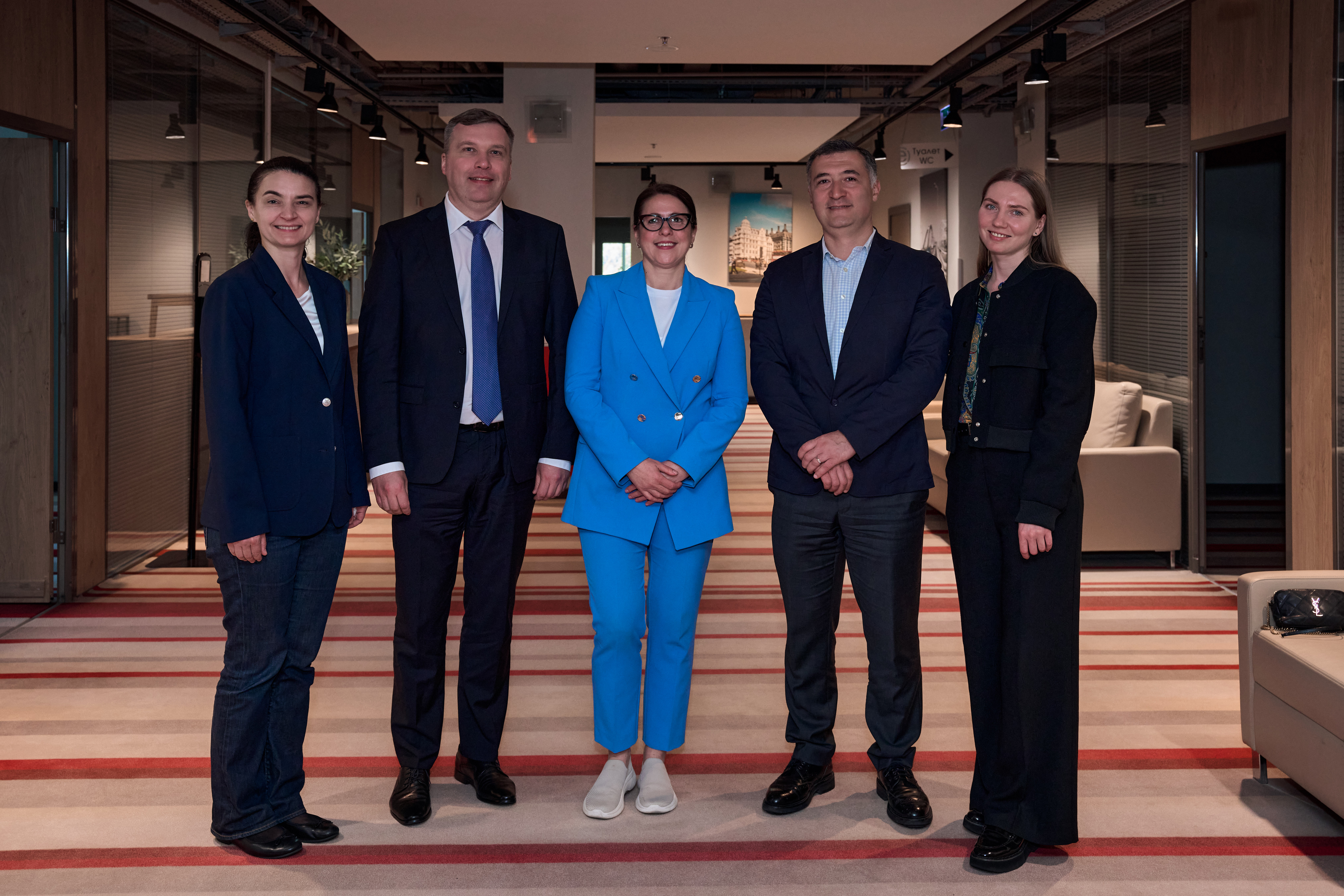
The opening of the course was attended, in particular, by Tigran Karapetyan, Head of Division at the Department for Human Rights and Judicial Cooperation. During the launch, Judge of the Grand Chamber of the Supreme Court Vitalii Urkevych and Judge of the Supreme Court in the Commercial Cassation Court Olena Kibenko, who serve as HELP course tutors, presented to the participants the content, structure, and schedule of the course, the Ukrainian version of the training program, the specifics of its adaptation to the national context, as well as the registration procedure and platform workflow. Following the course presentation, the event programme included professional speeches, in particular a report by Oleh Vaskovskyi, Secretary of the Judicial Chamber for Bankruptcy Cases of the Commercial Cassation Court within the Supreme Court, on the topic “Duration of Bankruptcy Proceedings as a Challenge to Legal Certainty: ECtHR Standards and National Mechanisms for Effective Protection”.
Olena Kibenko focused her speech on the motivational part of the course presentation: she explained the purpose of the training, what practical benefits it can bring to judges, lawyers, and other legal professionals, and why it is important to view the course not merely as a formal path to obtaining a certificate, but as an opportunity to acquire information necessary for professional work.
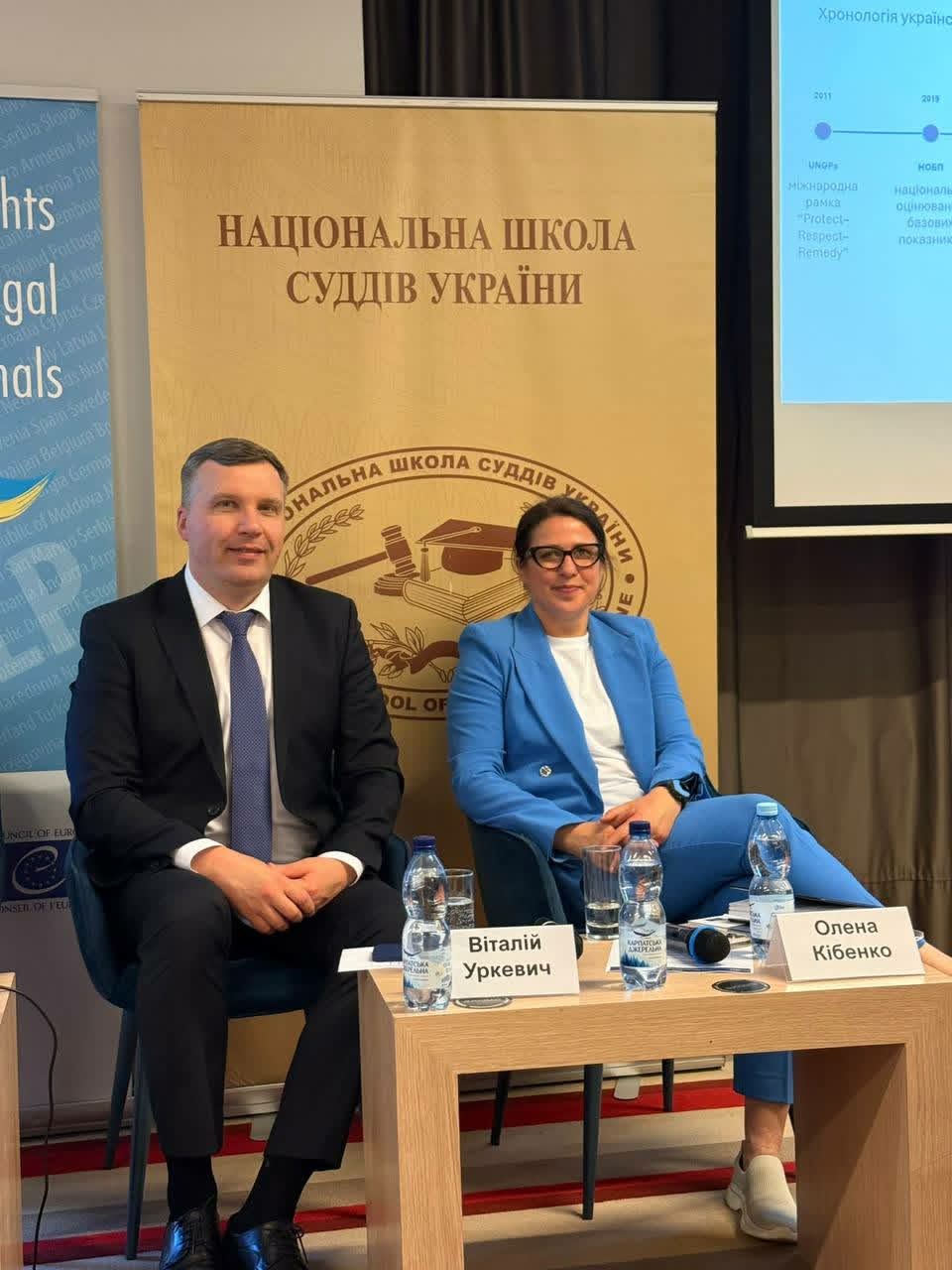
The judge emphasized that modern professional training should correspond to the real needs of legal professionals, their specialization, experience, and area of practice. She compared the HELP format with traditional approaches to professional development and stressed that the advantage of this platform is the ability to independently choose topics that are truly useful for one’s work. In her opinion, under conditions of significant information overload, it is especially important not just to undergo training for the sake of a formal result, but to work with materials that can strengthen professional argumentation and expand a lawyer’s toolkit.
Olena Kibenko noted the importance of soft law instruments, international documents, case law, and regulations as sources that legal professionals can refer to when national legislation does not provide an exhaustive answer. According to her, such materials can serve as a guide and source of inspiration for forming legal arguments, particularly in light of the European direction of development of the Ukrainian legal system.
Regarding the national adaptation of the course, the judge explained that tutors do not change the core content of the international course, but can supplement it with national case law, articles, references, assignments, and other materials that make the training closer to the Ukrainian legal context. The course was initially created for judges of commercial courts, but during the adaptation process it became clear that its subject matter is also important for judges of other jurisdictions, as well as for lawyers and prosecutors. The participation of representatives from various legal professions creates synergy, as it allows the issue of business and human rights to be viewed from different professional perspectives.
Olena Kibenko paid special attention to the changing approaches to understanding the role of business in the field of human rights. The judge emphasized that human rights must be respected not only by the state but also by private business, and this course demonstrates the relevant approaches through documents, practical cases, and court decisions. Concluding her speech, she urged participants to actively engage in the training.
Vitalii Urkevych provided participants with a detailed overview of the programme structure, the features of the platform, and the logic of completing the modules. The judge drew attention to the significant volume of European Union documents in the field of business and human rights. According to him, even if these standards are not yet mandatory for Ukraine today, the legal community should already develop an understanding of the direction in which European legal regulation is moving and the rules that Ukrainian lawyers and courts will soon be working with in practice.
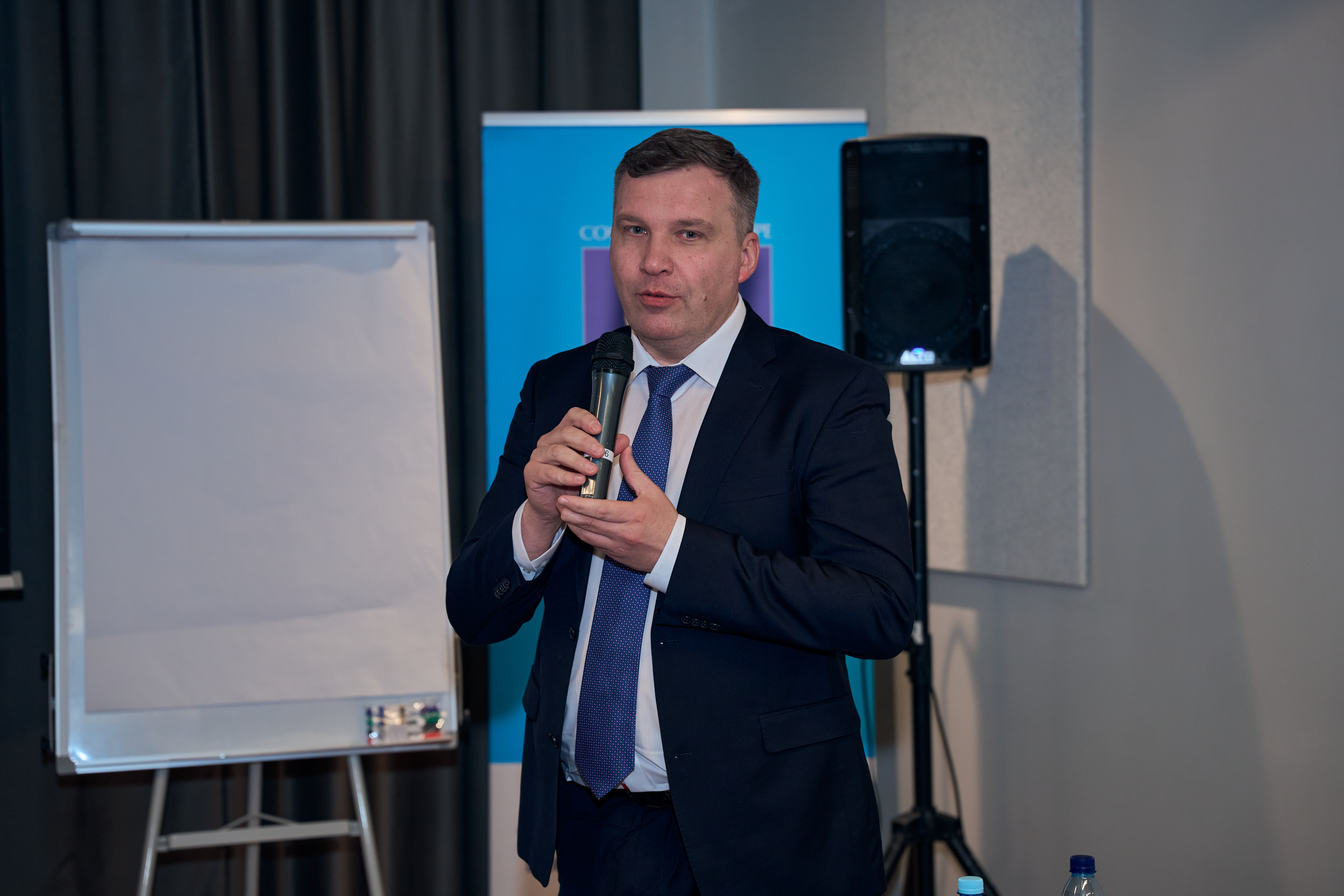
The tutor focused on the substantive content of the course. He explained that the programme covers several thematic modules, including an overview of the field of business and human rights, the state’s positive obligations to prevent harm, corporate responsibility, judicial and non-judicial remedies, as well as new regulatory changes in the European Union regarding due diligence and the activities of transnational companies. Vitalii Urkevych emphasized that the development of non-judicial dispute resolution mechanisms is currently of particular importance for Ukraine. According to him, within the framework of the European integration process and the Rule of Law Roadmap, one of the tasks is to reduce the number of cases reaching the courts. Therefore, the state must implement mechanisms that allow parties to effectively resolve conflicts without court proceedings.
The judge also emphasized the practical orientation of the training and the importance of professional exchange among the course participants. He noted that the main goal of the programme is not formal testing or grading, but the development of a real understanding of approaches in the field of business and human rights, as well as the accumulation of practical knowledge that can be applied in professional activities. Vitalii Urkevych stressed that every participant is a unique expert in their own field with practical experience in handling complex legal situations, and therefore the course should serve as a platform for joint professional contribution. He also encouraged participants to actively engage in forums, discussions, and webinars that are planned after the completion of the main modules.
Oleh Vaskovskyi delivered a report on the duration of bankruptcy proceedings as a challenge to legal certainty, ECtHR standards, and national mechanisms for effective protection. At the beginning, he outlined the broader context of the topic “Business and Human Rights”, highlighting the connection between bankruptcy and corporate relations, fiduciary duties, and subsidiary liability. According to the judge, subsidiary liability has become a dynamic institution in practice, and its understanding requires taking into account not only corporate law, but also the standards of the Convention, the Constitution of Ukraine, and human rights in general.
.jpg)
The speaker emphasized that bankruptcy should not be perceived merely as an emergency mechanism for responding to a business’s financial crisis. In his opinion, one of the important functions of bankruptcy is to ensure institutional trust. Insolvency proceedings must be based on clear rules and create confidence among market participants that temporary financial difficulties or business dysfunctions can be overcome within a predictable legal framework. In this context, the judge highlighted the dual purpose of bankruptcy legislation: restoring the debtor’s solvency and satisfying creditors’ claims. The ideal is a balance between these goals; however, if such a balance cannot be achieved, the procedure must ensure the effective satisfaction of creditors’ claims.
Speaking about the case law of the ECtHR, the speaker noted that its influence on Ukrainian law is gradually penetrating all areas — doctrine, legislation, and especially law enforcement. He drew attention to the judgments in the cases of Pronina v. Ukraine and Fesenko v. Ukraine, which signal the problem of excessive length of bankruptcy proceedings. Oleh Vaskovskyi explained that the prolongation of such procedures creates a cascade of legal and economic problems, particularly for creditors who are unable to satisfy their claims for years. At the same time, bankruptcy cases have a special nature: they combine elements of judicial proceedings and enforcement of decisions, and also include control over the debtor’s economic condition, the activities of the arbitration manager, creditors, founders, shareholders, and other participants.
The judge also drew attention to the effectiveness of remedies in bankruptcy cases. According to him, it is in bankruptcy proceedings that the requirement of effectiveness takes on particular importance, since every procedural action affects the timelines of the proceedings, the possibility of returning assets to economic circulation, and the actual satisfaction of creditors’ claims. Assets that remain blocked in proceedings for years do not work in the economy and cannot be used by creditors or other efficient economic actors.
In the final part of his speech, Oleh Vaskovskyi focused on the European regulatory context and the modern modernization of insolvency relations. He mentioned EU Directive 2019/1023, on the basis of which preventive restructuring was introduced into the Code of Ukraine on Bankruptcy Procedures, Regulation (EU) 2015/848 on insolvency proceedings, as well as the new EU Directive 2026/799 on the harmonization of certain aspects of insolvency legislation. The judge emphasized that the unification of basic procedures and legal constructs is important for business predictability, investment attractiveness, and market stability. In conclusion, he noted that Ukraine is currently in a period of rethinking and modernizing bankruptcy procedures, which must not only ensure reasonable timeframes but also build institutional and investment confidence among participants in economic turnover.
Oleh Vaskovskyi’s presentation: https://court.gov.ua/storage/portal/supreme/prezent2026/Prezent_Truval_proced_bankr.pdf
Reference: In May, the Council of Europe HELP course “Business and Human Rights” also became available in Ukrainian translation in a self-study format on the HELP platform. The platform currently hosts 67 self-study courses, 46 of which are in Ukrainian. New users need to create an account to gain access to the courses.
Photo courtesy of the organisers.
_03_03.png)