Contact center of the Ukrainian Judiciary 044 207-35-46
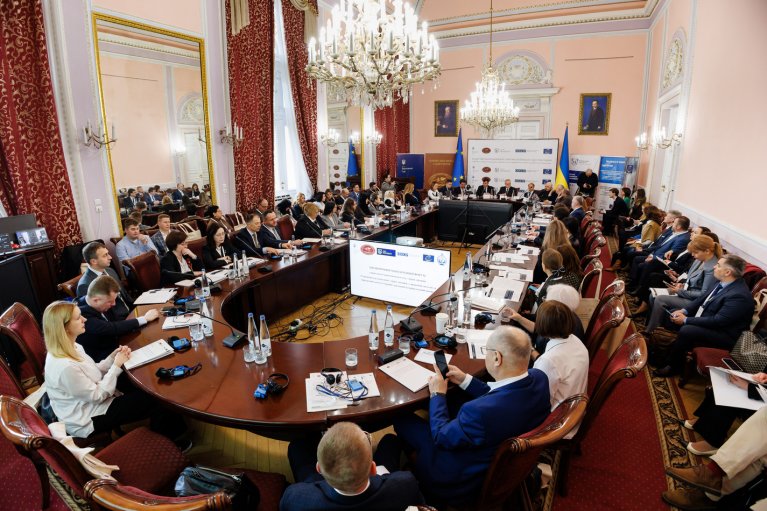
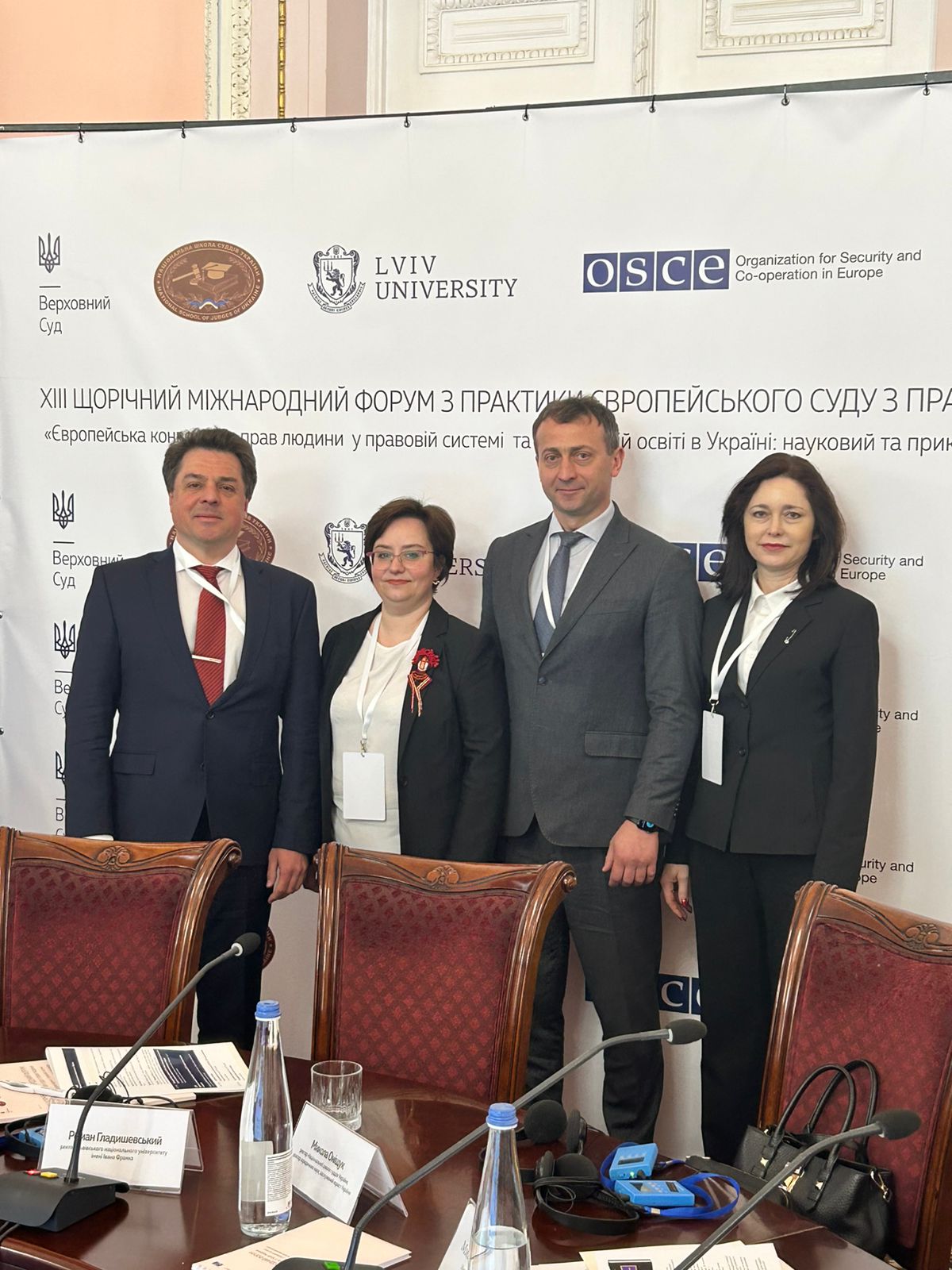
The review of national court decisions following ECtHR judgments, the interaction between the Supreme Court and the European Court of Human Rights through the lens of Protocol No. 16 to the Convention for the Protection of Human Rights and Fundamental Freedoms, as well as the case law of the ECtHR and the Convention in the training of Ukrainian lawyers, were discussed by Serhii Pohribnyi, Secretary of the Grand Chamber of the Supreme Court, Nataliia Blazhivska, Judge of the Supreme Court in the Administrative Cassation Court, and Dmytro Hudyma, Judge of the Supreme Court in the Civil Cassation Court. They spoke at the XIII International Forum on the Case Law of the European Court of Human Rights entitled “The European Convention on Human Rights in the Legal System and Legal Education in Ukraine: Scientific and Applied Dimension”.
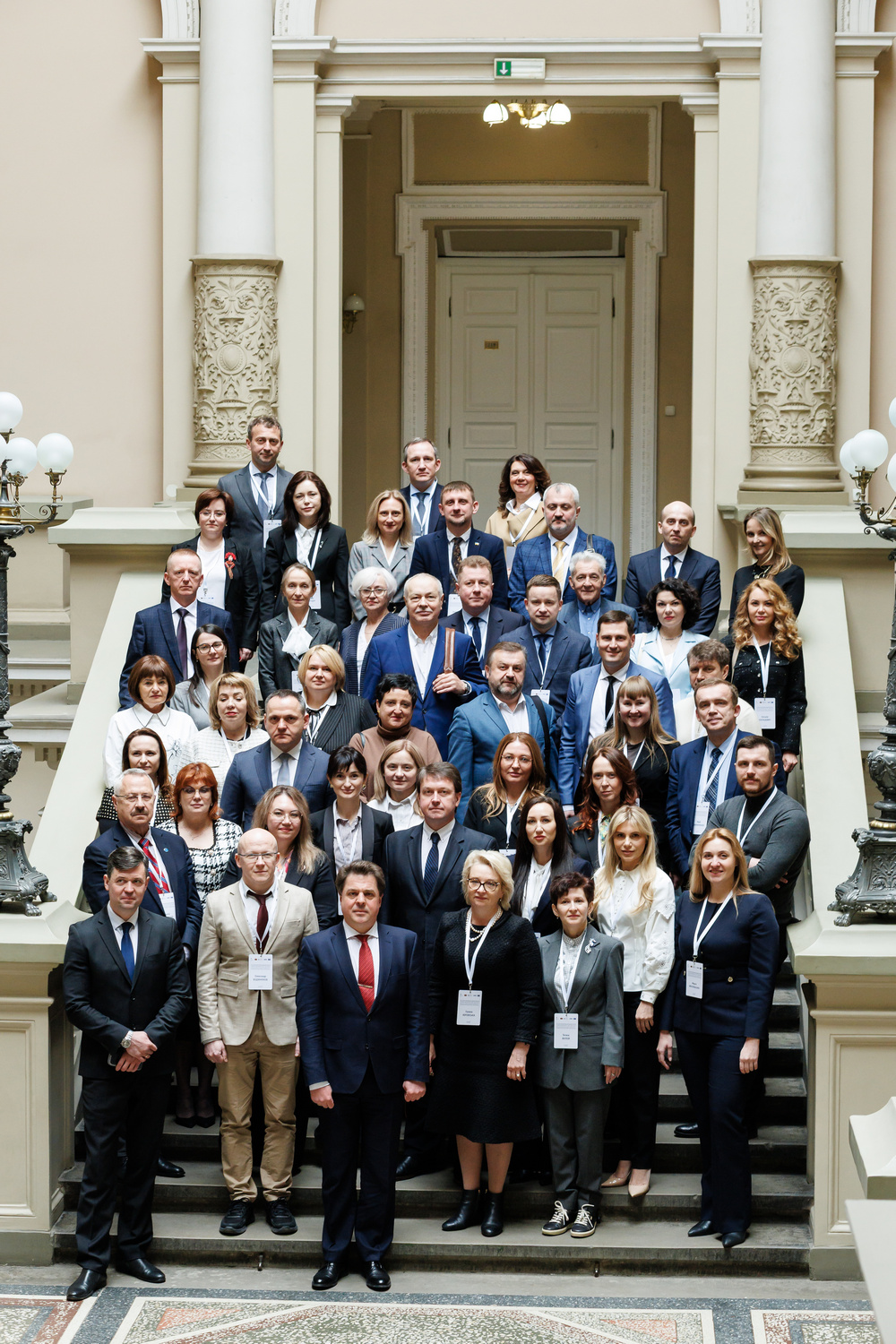
The event was also attended by Judge of the Grand Chamber of the Supreme Court Olha Buleiko, Secretary of the Judicial Chamber for the Protection of Social Rights of the Administrative Cassation Court within the Supreme Court Andrii Rybachuk, and Supreme Court Judges in the Civil Cassation Court Yevhen Synelnykov, Nataliia Sakara, and Iryna Dundar.
In his welcoming remarks, Serhii Pohribnyi noted, in particular, that the war has posed questions to the Ukrainian justice system that cannot be found in any textbook: how to administer justice when archives have been destroyed by the occupiers; how to measure a reasonable timeframe for case consideration when air raid alerts are constantly announced; and how to preserve the right to defence when a lawyer and client find themselves on opposite sides of the frontline. “Every case is a small test of whether the rule of law state can withstand war,” emphasized the Secretary of the Grand Chamber of the Supreme Court. Under such conditions, the ECtHR case law serves as a tool for Ukraine to preserve the state as a legal one.
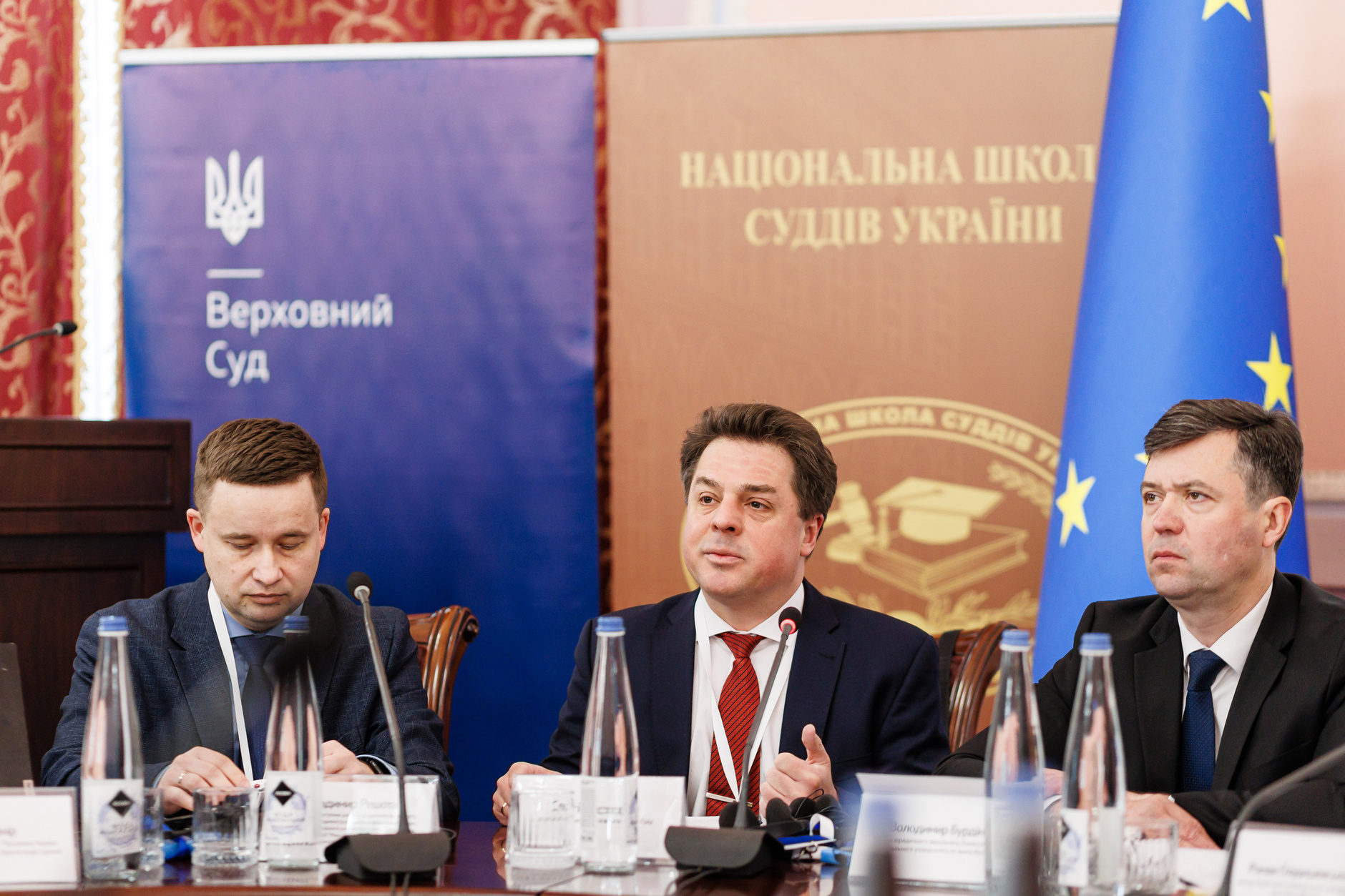
Serhii Pohribnyi also delivered the main speech on the topic “Review of National Court Decisions Following ECtHR Judgments: Current Approaches of the Grand Chamber of the Supreme Court”.
He noted that in June 2025, the Grand Chamber of the Supreme Court for the first time in Ukrainian history applied to the ECtHR with a request under Protocol No. 16 to the Convention for the Protection of Human Rights and Fundamental Freedoms for an advisory opinion. The case concerned a dispute between a former nun and a monastery regarding the right to religious property — a monastery cell — and raised issues concerning the application of Articles 6, 8, and 9 of the Convention. The speaker emphasized that the ECtHR’s advisory opinion is an extremely important instrument for ensuring dialogue between national courts and the ECtHR in order to prevent violations of Convention rights and freedoms.
Regarding the role of the Supreme Court in the legal system, Serhii Pohribnyi noted that the Supreme Court is a court of quasi-precedent law, whose decisions acquire a special status close to that of a classic precedent. The Supreme Court forms legal conclusions based on legal norms, narrows, expands, and clarifies their content, and adapts them to the changed social context and it is precisely this that makes it the main actor in the evolution of law.
The speaker addressed the issue of time limits for filing applications for review of court decisions. Previously, the legislation provided for a ten-year preclusive period for submitting an application for review of a court decision (for example, on exceptional or newly discovered circumstances). The Grand Chamber of the Supreme Court faced a fundamental question: whether to apply the norm literally or to give priority to Convention standards. In its resolution of July 7, 2021, in case No. 2-а-256/08, the Grand Chamber of the Supreme Court stated that, as an exception, the restoration of national court proceedings is permissible despite the statutory preclusive period if it is necessary for the proper execution of an ECtHR judgment and the effective restoration of human rights. Thus, as early as 2021, the Grand Chamber of the Supreme Court effectively overcame this shortcoming of procedural legislation, and in 2025 the legislator corrected the relevant regulatory deficiencies.
The Secretary of the Grand Chamber of the Supreme Court also emphasized the dual legal nature of ECtHR decisions: they serve not only as grounds for reviewing national court decisions but are also a direct source of law. As an example, the speaker cited the resolution of the Grand Chamber of the Supreme Court dated January 21, 2026, in case No. 925/1293/19, adopted in execution of the judgment Korol and Others v. Ukraine. The Grand Chamber of the Supreme Court stressed that the proportionality of restrictions on access to court must be assessed individually and gave priority to the conclusions of the ECtHR over the provisions of statutory law.
The speaker also described the algorithm for examining applications for review of court decisions on exceptional circumstances. He explained that the Grand Chamber of the Supreme Court resolves several key issues each time. The first is whether it is necessary to reopen court proceedings at the national level as a means of restitutio in integrum in execution of an ECtHR judgment. If so, it must then be determined whether the case involves exclusively issues of law or also issues of fact. If it concerns only issues of law, the Grand Chamber of the Supreme Court, acting as a cassation instance, has full authority to independently cancel the decision and issue its own. An example is the resolution of February 13, 2025, in case No. 2а-16636/12/2670 regarding the execution of the ECtHR judgment in Tsimeyko v. Ukraine, which found a violation of Articles 11 and 13 of the Convention. The Grand Chamber of the Supreme Court resolved the dispute on the merits itself and issued a decision refusing to satisfy the claims seeking a ban on a peaceful assembly.
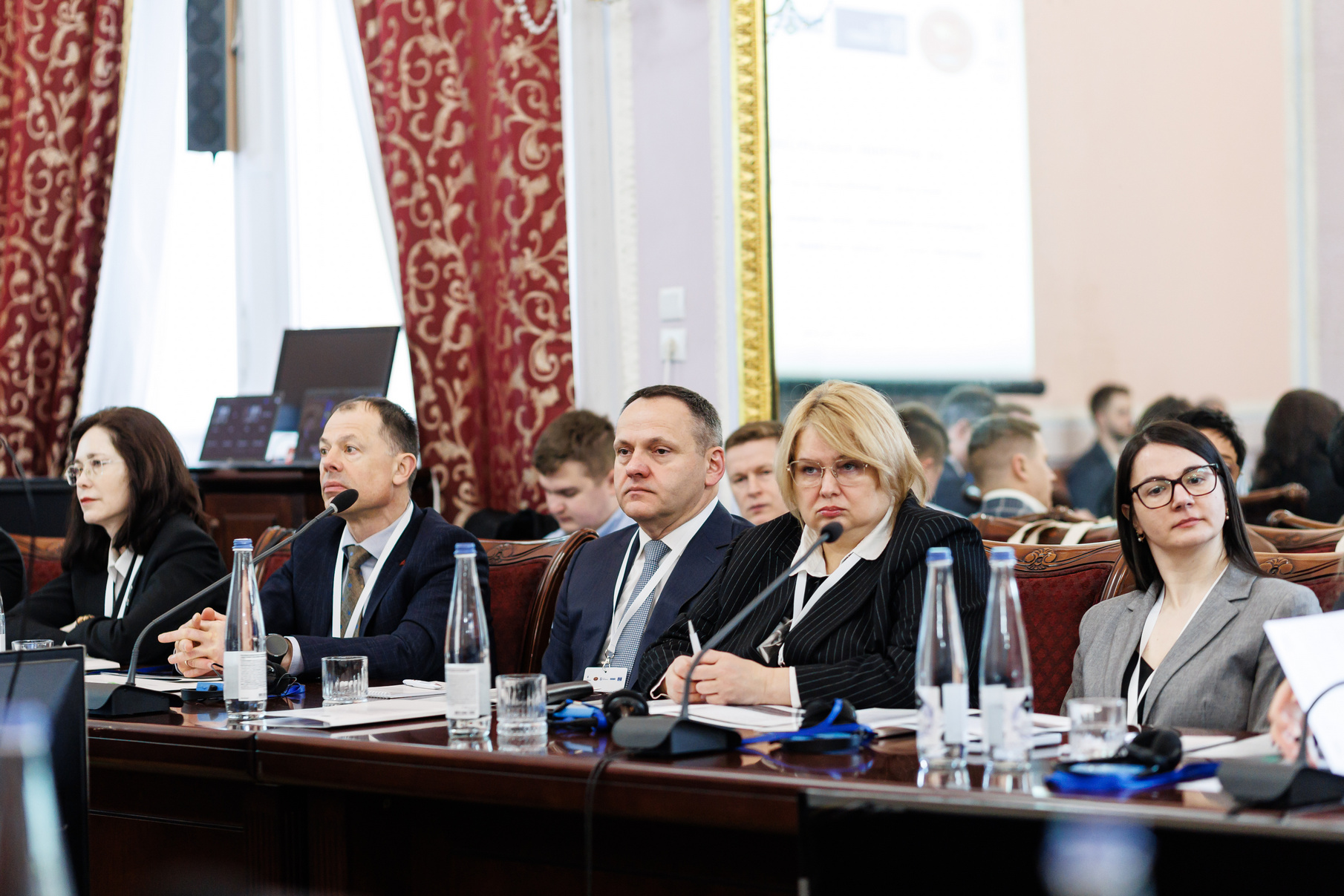
If it is necessary to establish facts, the case is referred to the court of first instance or the appellate instance. In particular, the speaker cited the resolution of the Grand Chamber of the Supreme Court dated April 9, 2025, in case No. 723/3691/13-ц concerning the review of a national court decision following the ECtHR judgment in Drozdyk and Mikula v. Ukraine. If the reopening of proceedings is not required as a means of restitutio in integrum, the Grand Chamber of the Supreme Court dismisses the application, for example, when the ECtHR has found only a violation of reasonable time requirements without calling into question the outcome of the proceedings on the merits.
Serhii Pohribnyi emphasized that determining the method of restoring proceedings is the most complex issue that the Grand Chamber of the Supreme Court faces each time. This process is the result of a careful balancing of the interests of all parties to the proceedings, as a fair decision always lies between the violated rights of one party and the legitimate expectations of the other.
In conclusion, the Secretary of the Grand Chamber of the Supreme Court stressed that the main goal of the review is to ensure the real and effective restoration of rights violated by the state, rather than the formal execution of ECtHR judgments. The key guideline for the Grand Chamber of the Supreme Court is whether the violation found by the ECtHR is of such a nature that it undermines the fairness and validity of the national court decision. If the violation is significant and directly affected the outcome of the case, a retrial may be the only possible measure to restore the violated rights of the individual.
Thus, said Serhii Pohribnyi, the ECtHR is an effective mechanism for restoring justice, which allows for the correction of shortcomings in the legal system and judicial errors, while ensuring the protection of human rights and fundamental freedoms. At the same time, it is the Grand Chamber of the Supreme Court that has the authority to determine the specific and effective way to execute an ECtHR judgment in each individual case.
Nataliia Blazhivska spoke about the interaction between the Supreme Court and the ECtHR through the lens of Protocol No. 16 to the Convention for the Protection of Human Rights and Fundamental Freedoms.

The speaker noted that courts face the same pressing questions every year: whether the literal application of a norm always ensures a proportionate and fair outcome. She suggested considering Decision No. 5-р(II)/2025 of the Constitutional Court of Ukraine. In it, the Constitutional Court of Ukraine emphasizes the need for the individualization of legal liability while drawing attention to the procedural limitations of the court. At the same time, the judge noted, we must remember Articles 8 and 129 of the Constitution of Ukraine, as well as the Law of Ukraine “On the Execution of Judgments and Application of the Case Law of the European Court of Human Rights”. These provisions oblige courts to use ECtHR case law as a source of law, ensuring a proportionate and fair balance.
However, in a number of categories of cases, judges observe the following problem: the law often establishes imperative sanctions without alternatives. This creates a conflict between the imperative norm of the law and the principle of proportionality. As an example of such a situation, the speaker cited case No. 240/3843/24 in the claim of “Ovruchgazavto”. In this case, the offence consisted of technical errors that caused no damage to the state and were voluntarily corrected. Nevertheless, the law provides for a sanction in the amount of 200% of the value of the sold products. As a result, the fine amounts to 63 million UAH, while all assets of the enterprise are valued at 22 million UAH. Payment of such a fine would effectively mean the termination of the business entity’s activities. The judge noted that this case was referred to the Judicial Chamber for Tax, Fees, and Other Mandatory Payments of the Administrative Cassation Court of the Supreme Court.
Guided by the current legislation, judges rely on the established practice of the ECtHR, which sets clear criteria for assessing financial sanctions and interference with property rights. While analyzing the case filed by "Ovruchgazavto", Nataliia Blazhivska focused on the relevant ECtHR case law regarding the principle of proportionality. In particular, she examined the judgments in the cases of Mamidakis v. Greece and Bendenoun v. France.
The ECtHR’s practice indicates that what matters is not only the formal legality of sanctions, but also their direct impact on a specific individual. The principle of proportionality requires that the court has a real opportunity to assess the individual circumstances of the case. It was precisely these problematic issues that prompted the Judicial Chamber of the Administrative Cassation Court of the Supreme Court to submit a request to the ECtHR under Protocol No. 16.
The following key questions were put before the ECtHR:
Thus, the issue is not about deviating from the law, but about the court’s ability to apply the norm in a manner compatible with the principle of the rule of law. The mechanism provided by Protocol No. 16 allows for preventive action, preventing violations of the Convention and ensuring the uniformity of judicial practice.
Summing up, Nataliia Blazhivska noted that ECtHR case law does not replace national legislation, but forms a methodological framework for legal analysis. Given Ukraine’s European integration aspirations, this toolkit is inevitably compared with the preliminary ruling procedure before the Court of Justice of the EU. As the judge explained, there is a significant difference: under current legislation, only the Supreme Court may refer a request to the ECtHR for an advisory opinion. In contrast, in the EU system, judges at all levels have the right to make a preliminary reference. This raises a debatable question of whether courts of first and appellate instance should be involved in initiating requests to the ECtHR and in what procedure this should be done.
The speaker emphasized that the practice of applying Protocol No. 16 does not change the nature of judicial activity. The court continues to interpret the law through the prism of the Convention, but gains an additional dimension of justice. This mechanism does not replace the usual application of ECtHR case law, but helps to contextualize it more precisely in complex cases. It allows formal norms to be filled with the content of the Convention without going beyond the limits of the law.
Dmytro Hudyma delivered a presentation titled “ECtHR Case Law and the European Convention on Human Rights in the Training of Ukrainian Lawyers”.
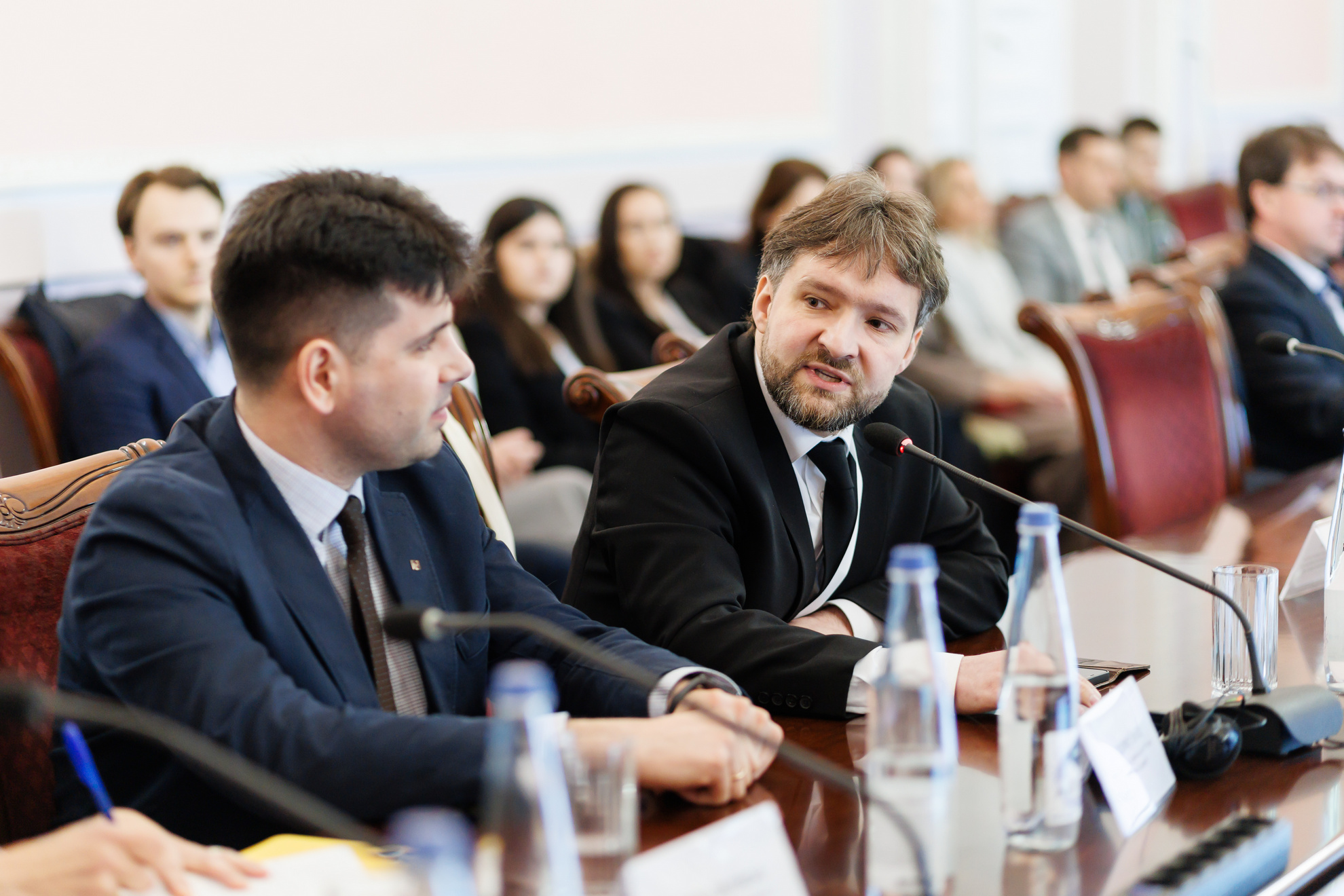
He shared his thoughts on improving the teaching of disciplines related to ECtHR case law in Ukraine. In his opinion, the following problems are widespread:
It creates the impression that in Ukraine the dominant approach is teaching what the ECtHR decided, whereas it is necessary to teach how the Court solved the problem. In other words, there needs to be a shift from a knowledge-based teaching model to a skills-based model focused on decision-making. The goal is to form the mindset of a judge, not that of a lawyer-commentator on legal provisions. “We must move from studying the result to studying the method of how to arrive at the result,” the judge emphasized.
Speaking about specific methods, he proposed first abandoning lecture-based classes and replacing them with methodological guidelines for independent preparation. The judge said it is worth developing a problem book, but not based on cases already decided by the ECtHR. Instead, it should be based on cases currently being considered by Ukrainian courts. This approach would teach students how to work with the Convention in the context of local realities.
Dmytro Hudyma also stressed the need to work with ECtHR judgments assigned for home reading at every class session — specifically analyzing which facts of the case were decisive for the Court’s conclusion — and to demonstrate to students how the ECtHR’s decision might likely have changed if the set of facts had been different.
Separately, the judge noted that a significant number of cases in the Supreme Court are remanded for a new hearing solely because lower courts failed to assess the proportionality of the interference with the party’s rights. “This indicates a lack of understanding of how the so-called three-part test should work,” he remarked. Therefore, practical tasks should be aimed at developing students’ ability to think in terms of lawfulness, necessity, and proportionality, in particular, balancing private and public interests.
For the master’s degree programme, the judge proposed a more advanced level of tasks: predicting a possible ECtHR decision in cases currently pending before the Court; identifying trends in the development of its practice; understanding the peculiarities of societies through the situations of applicants; analyzing ECtHR statistics in relation to years, countries, population size, etc.; and identifying the psychological characteristics of judges through the analysis of their separate opinions. “For a Master of Law — a person we are preparing for legal practice — this is important for broadening her worldview and for understanding how the court operates and how judges think,” the judge emphasized.
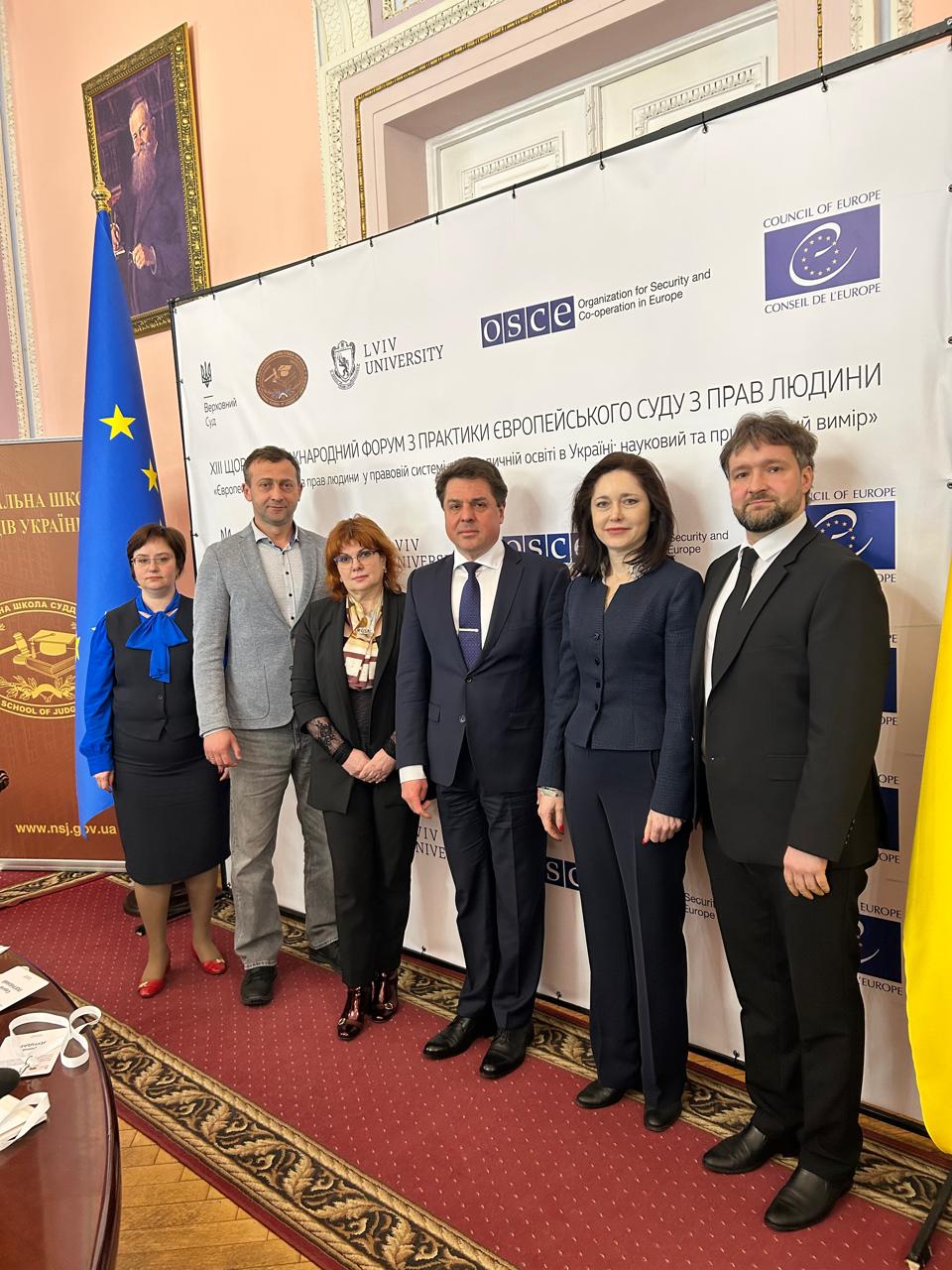
The event was organized by the OSCE Support Programme for Ukraine as part of the project “Safeguarding Human Rights through Courts, Phase II” and the Council of Europe project “Support to Ukraine in Implementing Council of Europe Standards on the Judiciary”, together with the Supreme Court, the Faculty of Law of Ivan Franko National University of Lviv, and the National School of Judges of Ukraine.
_03_03.png)