Contact center of the Ukrainian Judiciary 044 207-35-46
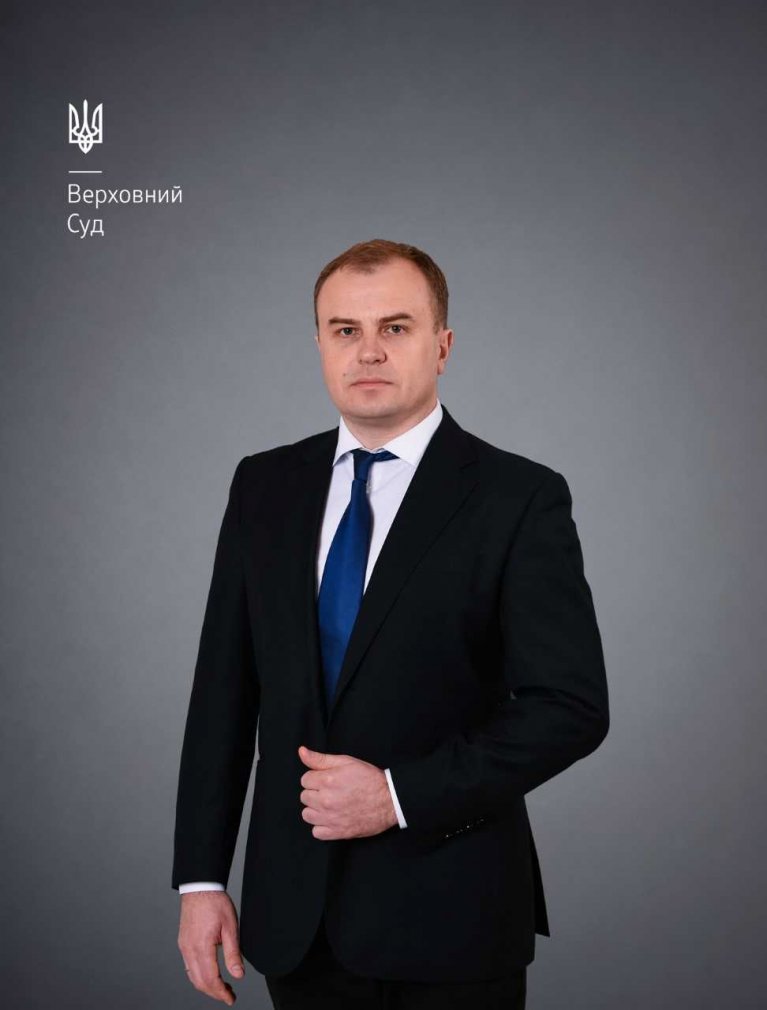
Yan Bernaziuk, a judge of the Supreme Court in the Administrative Cassation Court, participated in the launch of the HELP course “Environment and Human Rights” in a tutored format. The event was supported by the Council of Europe project “HELP (Human Rights Education for Legal Professionals) for Ukraine, including during the war”, Phase II, in cooperation with the Prosecutors' Training Centre of Ukraine and the National School of Judges of Ukraine, for 40 prosecutors and judges.
Yan Bernaziuk delivered a presentation titled “Environmental Human Rights: Case Law of the Supreme Court, the ECHR, and the Court of Justice of the EU”.
In his report, the speaker highlighted the relevance of constitutional norms ensuring environmental safety, emphasizing that it constitutes an integral part of the public interest and the positive obligations of the State. The judge analyzed the application of Articles 2, 6, 8, and 13 of the Convention for the Protection of Human Rights and Fundamental Freedoms, as well as the provisions of the EU Charter of Fundamental Rights. The speaker emphasized that, unlike the Convention, the Charter contains a distinct provision regarding environmental protection. This enables the Court of Justice of the EU to treat environmental standards as an independent element of the legal order rather than merely derivative of the right to private life or health.
The judge examined in detail the case of the Court of Justice of the EU in C.Z. and Others v. Ilva S.p.A. and Others, alongside the positions of the ECtHR in Verein KlimaSeniorinnen Schweiz and Others v. Switzerland, Duarte Agostinho and Others v. Portugal and 32 Other States, and Locascia and Others v. Italy.
Yan Bernaziuk also focused on the jurisprudence of the Supreme Court, particularly highlighting the legal positions established in cases No. 440/1326/25, No. 320/29225/23, No. 400/2062/23, and No. 420/22829/21.
Furthermore, the speaker elaborated on the concept of public interest and identified its key characteristics:
More details are available in Yan Bernaziuk's presentation via the link: https://court.gov.ua/storage/portal/supreme/prezent2026/187_Environmental_Rights_SC_ECtHR_CJEU_bernaziuk.pdf.
_03_03.png)