Contact center of the Ukrainian Judiciary 044 207-35-46
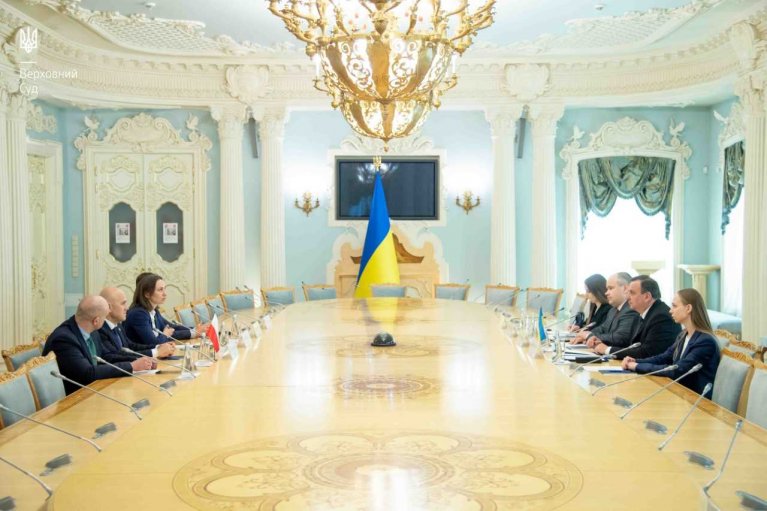
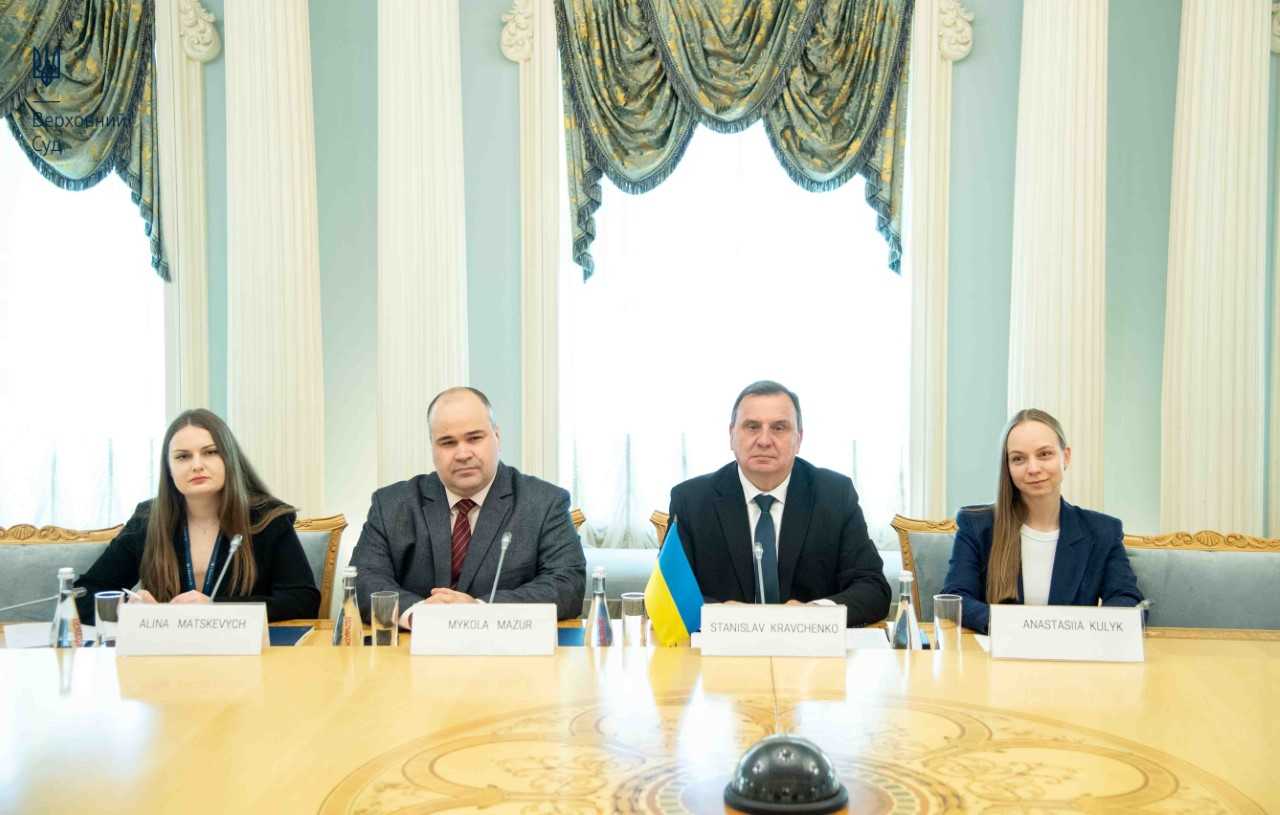
Since the very beginning of the full-scale war unleashed by Russia, Poland has been a key ally of Ukraine. It was among the first to provide both military and humanitarian assistance to our country. This was noted by the President of the Supreme Court, Stanislav Kravchenko, during a meeting with a delegation from the Ministry of Justice of the Republic of Poland. The meeting focused on the functioning of the judicial system under wartime conditions.
The President of the Supreme Court thanked the people and the government of Poland for their support during these difficult times for Ukraine. “In this challenging period for Ukraine, every such visit is a manifestation of solidarity with the Ukrainian legal community. We highly appreciate this,” said Stanislav Kravchenko.
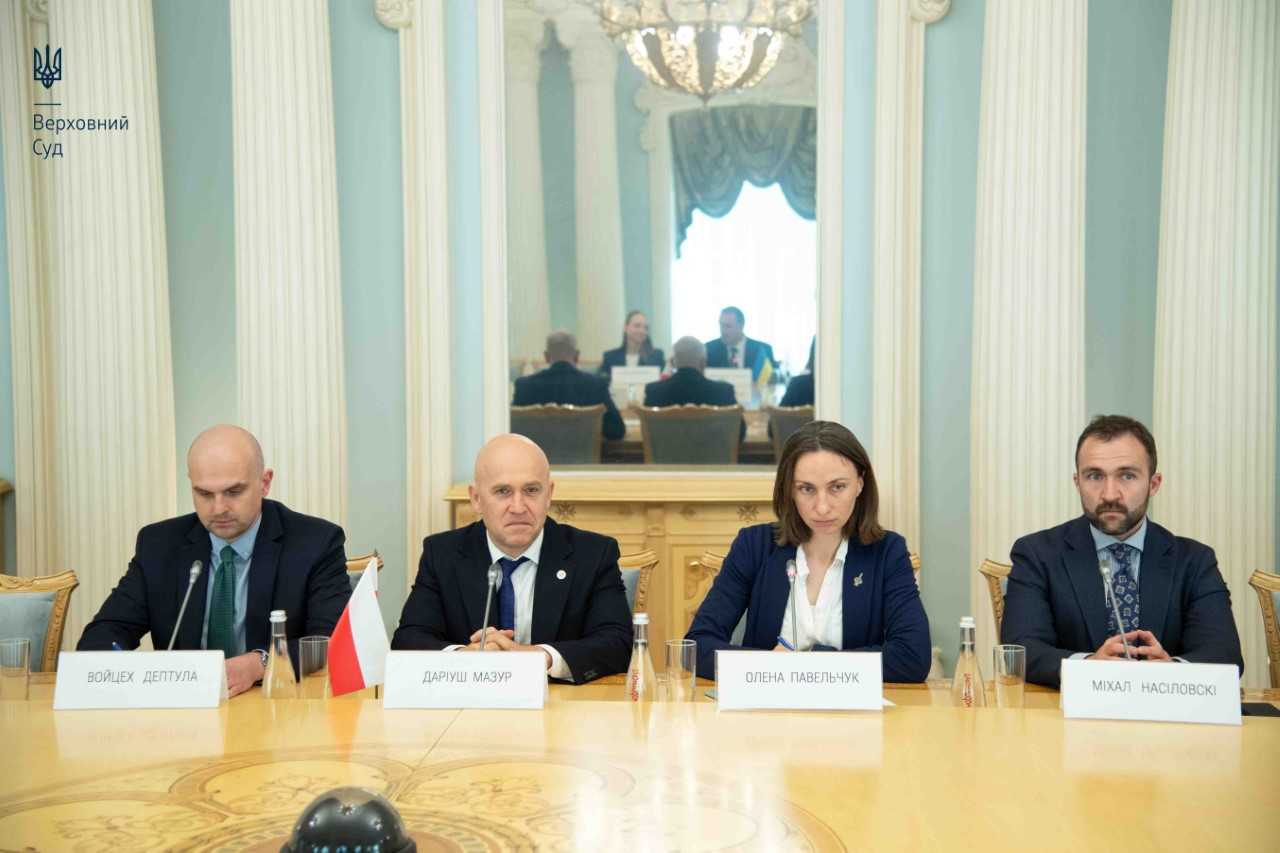
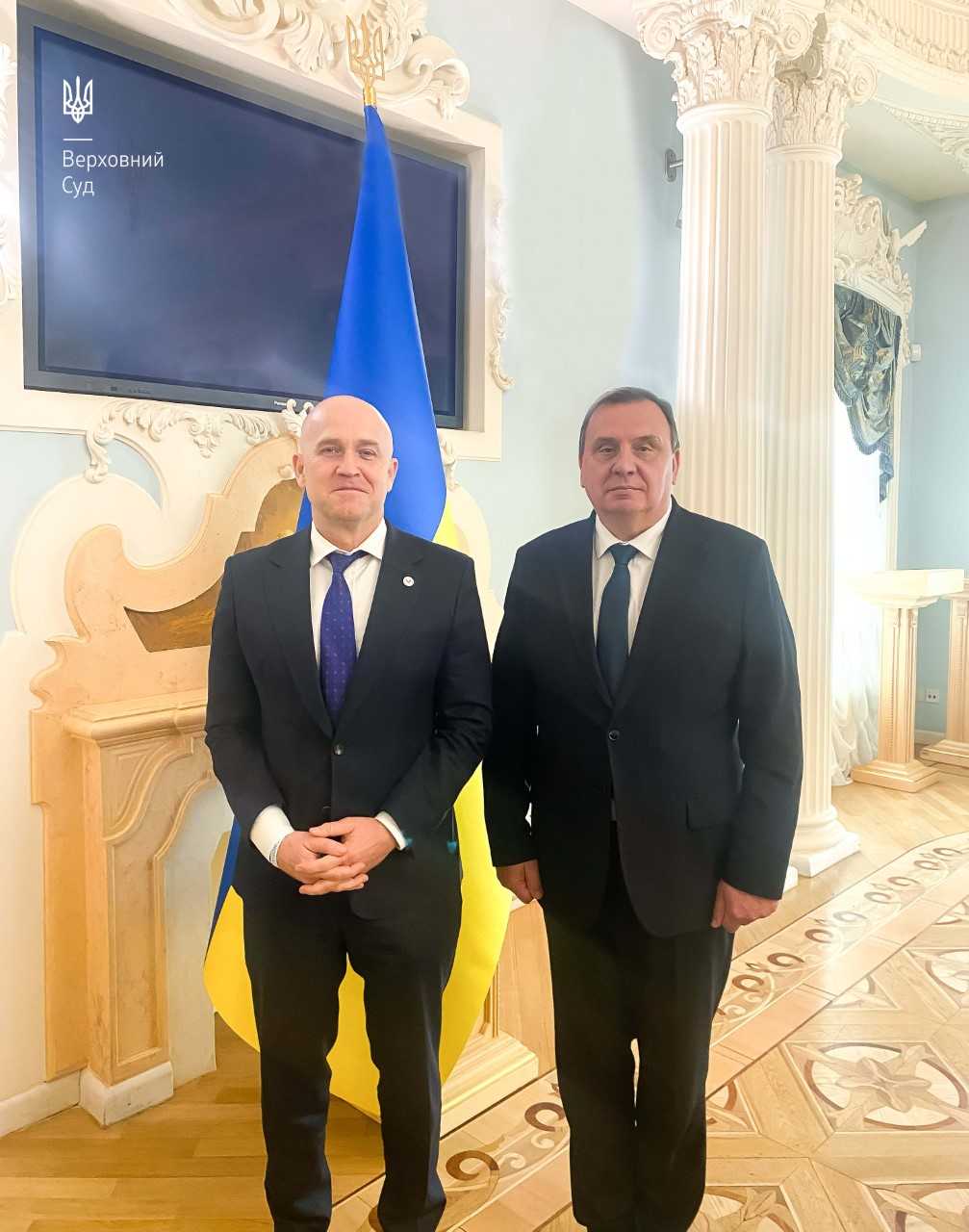
Dariusz Mazur, Deputy State Secretary of the Ministry of Justice of the Republic of Poland, on behalf of the Minister of Justice and Prosecutor General of Poland, Waldemar Żurek, thanked the Supreme Court for its cooperation. He recalled that, according to the Treaty on the Functioning of the European Union, the EU is an area of freedom, security, and justice. “Poland is aware that for Europe to remain such an area, we owe it to the Ukrainian people, who are paying with their own blood to defend the values of freedom, security, and justice. Therefore, we will make every effort to ensure that our assistance also includes support for Ukraine’s European integration aspirations, the fulfillment of obligations related to EU membership, and the strengthening of Polish-Ukrainian cooperation, including in the field of justice,” assured Dariusz Mazur.
Stanislav Kravchenko stated that the Supreme Court is actively involved in the negotiation process for Ukraine’s integration into the European community and is responsible for 16 points in the implementation of measures provided for by the Roadmap on the Rule of Law. Ukraine’s accession to the European Union means both the possibility of ending the war, prospects for post-war reconstruction, and the development of Ukraine as an independent sovereign state. Since Poland went through the EU accession path much earlier, the Polish experience is very important for us, noted the President of the Supreme Court.
Stanislav Kravchenko informed the guests that, despite martial law, all courts of Ukraine (except those located in the temporarily Russian-occupied territories) continue to operate and administer justice. The main challenge today remains ensuring the safety of courts, especially in frontline regions. A significant number of court buildings have been damaged, and some have been completely destroyed. This has necessitated decisions to change territorial jurisdiction and the secondment of judges to other courts. Ukrainian courts have also been tasked with hearing war crimes cases (more than 220,000 such crimes have been registered to date) in full compliance with international standards of justice.
The parties also discussed the importance of the judiciary’s ability to maintain its independence, authority, and resilience under external pressure as an essential condition for the existence of a democratic state, as well as the leading role of supreme courts in these processes. They exchanged views on the factors influencing public trust in the judiciary and ways to improve communication between courts and the public.
The meeting was also attended by Wojciech Deptuła, Director of the Department of International Cooperation and Human Rights at the Ministry of Justice of the Republic of Poland, Michał Nasiłowski, Second Secretary of the Political Department of the Embassy of the Republic of Poland in Kyiv, and Mykola Mazur, Judge of the Grand Chamber of the Supreme Court.
_03_03.png)