Contact center of the Ukrainian Judiciary 044 207-35-46
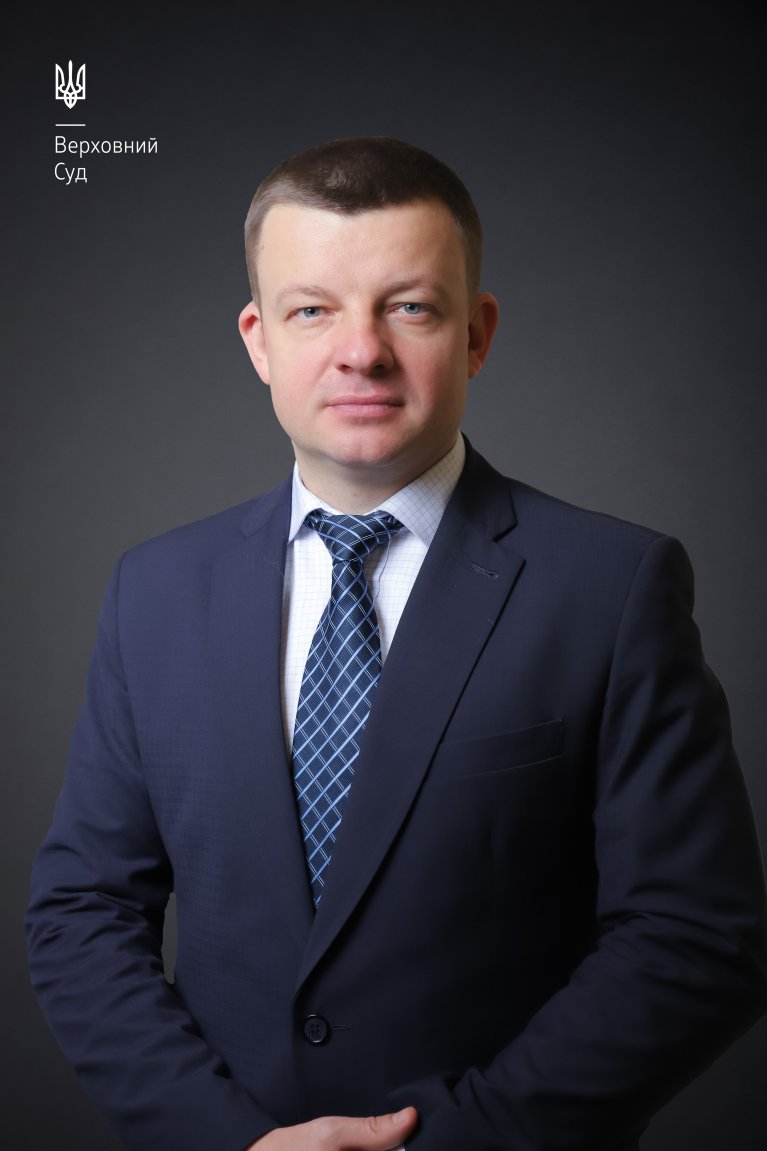
The President of the Administrative Cassation Court within the Supreme Court, Ihor Dashutin, took part in the second meeting of the Steering Committee of the Council of Europe project “Strengthening the Social Dimension in Ukraine”, during which the results achieved over the project implementation period in cooperation with partners from April 2025 to April 2026 were discussed, and future priorities and the work plan through to the end of 2026 were determined.
The project is being implemented within the framework of the Council of Europe Action Plan for Ukraine “Resilience, Recovery and Reconstruction” for 2023–2026. The aim of the project is to help ensure targeted social protection and support for broad sections of the population, in particular for vulnerable groups and citizens affected by the war.
Welcoming the participants of the event, Ihor Dashutin thanked the Council of Europe for its consistent support of Ukraine. He underlined the importance of initiatives aimed at protecting human dignity, social and labour rights, and at introducing European standards into the national legal system. In conditions of war the project is of particular significance, since the securing of social rights has ceased to be merely a direction of state policy and has become a guarantee of the state’s resilience, the foundation of citizens’ trust in institutions and of social cohesion in a time of the severest trials.
In the speaker’s conviction, the social dimension today is not an abstract category. It is first and foremost a concrete individual and his or her right to support, social services, accessible housing, decent work and fair remuneration. It is equality of opportunity and protection against discrimination. In this context the European Social Charter, which enshrines the fundamental socio-economic rights, acquires particular importance. For Ukraine its implementation is not only an international obligation but also a strategic guideline for building a modern social state.
At the same time, the true significance of international standards is revealed not only in the texts of normative acts but also in their practical realisation — in the decisions of public authorities, the case law of the courts, the accessibility of social services and the ability of the individual to defend his or her right. It is therefore important that the project is directed not merely at the general proclamation of social values but also at practical support for reforms.
Separately, the head of the Administrative Cassation Court of the Supreme Court noted the importance of targeted support for the most vulnerable categories of the population. In conditions of limited resources, social policy must combine justice and efficiency with financial responsibility in order to ensure a balance between the real capacities of the state and a people-centred approach.
For the judiciary this subject is very close to home. Administrative courts resolve disputes every day in which, behind formal legal categories, stand concrete human destinies: pension provision, social benefits, the protection of the rights of service personnel, veterans and internally displaced persons. In such cases the court must not only apply a legal norm but also strike a balance between the public interest, the capacities of the state and human rights.
Ihor Dashutin also noted that an important aspect of the project is raising awareness of social rights and the mechanisms for their protection among various target groups, in particular judges, advocates, civil servants, representatives of civil society and social partners. Effective protection of social rights is impossible without a proper understanding of the standards of the European Social Charter, the case law of the European Committee of Social Rights, and the approaches of the European Court of Human Rights in cases concerning social guarantees, the protection of property, non-discrimination and the enforcement of court decisions.
The speaker observed that for Ukraine the issue of the enforcement of court decisions remains topical. This problem is particularly sensitive in the field of social disputes, since for an individual the payment of a pension or social assistance is often not merely a legal claim but a matter of daily existence, dignity and basic security. In this context it is important that the project is also linked to the further enforcement of the judgments of the European Court of Human Rights in the cases of the Zhovner / Yuriy Nikolayevich Ivanov v. Ukraine and Burmych and Others v. Ukraine groups. These cases once again remind us that a right must not only be recognised by a court but must also be actually enforced by the state.
In conclusion, the President of the Administrative Cassation Court of the Supreme Court emphasised that Ukraine today faces an unprecedented task: simultaneously to withstand the war, ensure the functioning of state institutions, fulfil social obligations, carry out reforms and advance along the path of European integration. This is a difficult path, yet it is precisely such initiatives that make it possible to bring the Ukrainian legal and social system closer to European standards not declaratively but in practical terms.
“I am convinced that this event will become a platform for professional dialogue, the exchange of experience and the development of practical solutions. For our common goal is not merely to talk about social rights but to create mechanisms for their protection,” the speaker concluded.
The event was organised by the Council of Europe Office in Ukraine.
_03_03.png)