Contact center of the Ukrainian Judiciary 044 207-35-46
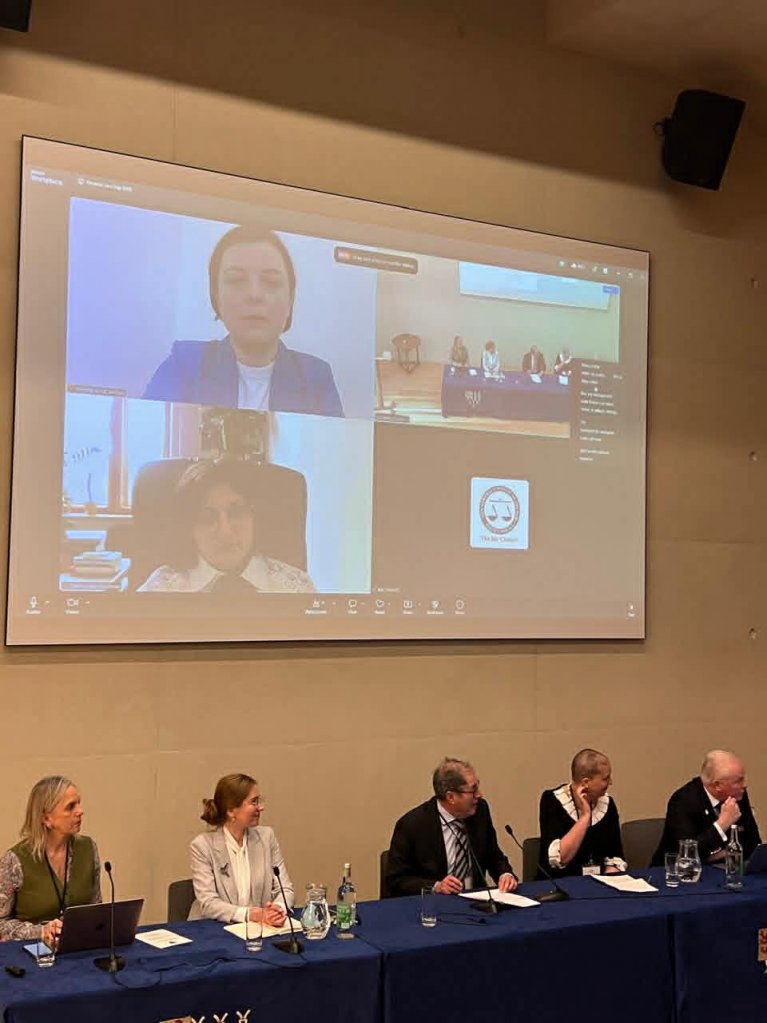
Judge of the Supreme Court in the Cassation Criminal Court Oleksandra Yanovska joined online the second annual Ukraine Law Day 2026 in London — a platform for professional dialogue between the legal communities of Ukraine and the United Kingdom. The discussions focused on issues of accountability for war crimes, mechanisms for compensation of war-related damages, resolution of disputes in the defence sector, and legal instruments for the restoration of Ukraine’s energy infrastructure.
The event, organised by the Law Society of England and Wales with the support of the Ukrainian Bar Association and the legal community Spilka, brought together lawyers, representatives of state authorities, judges, academics, and experts from various countries.
Oleksandra Yanovska spoke about the work of the Ukrainian judicial system under the conditions of the war unleashed by the Russian Federation against Ukraine, and the challenges faced by national courts when considering cases related to war crimes.
As the judge emphasised, Ukrainian courts continue to operate even under the conditions of full-scale war, seeking answers to questions that no national system has ever faced alone, while relying on norms developed for peacetime application. Nevertheless, in 2025, national courts in Ukraine heard over 4.6 million cases.
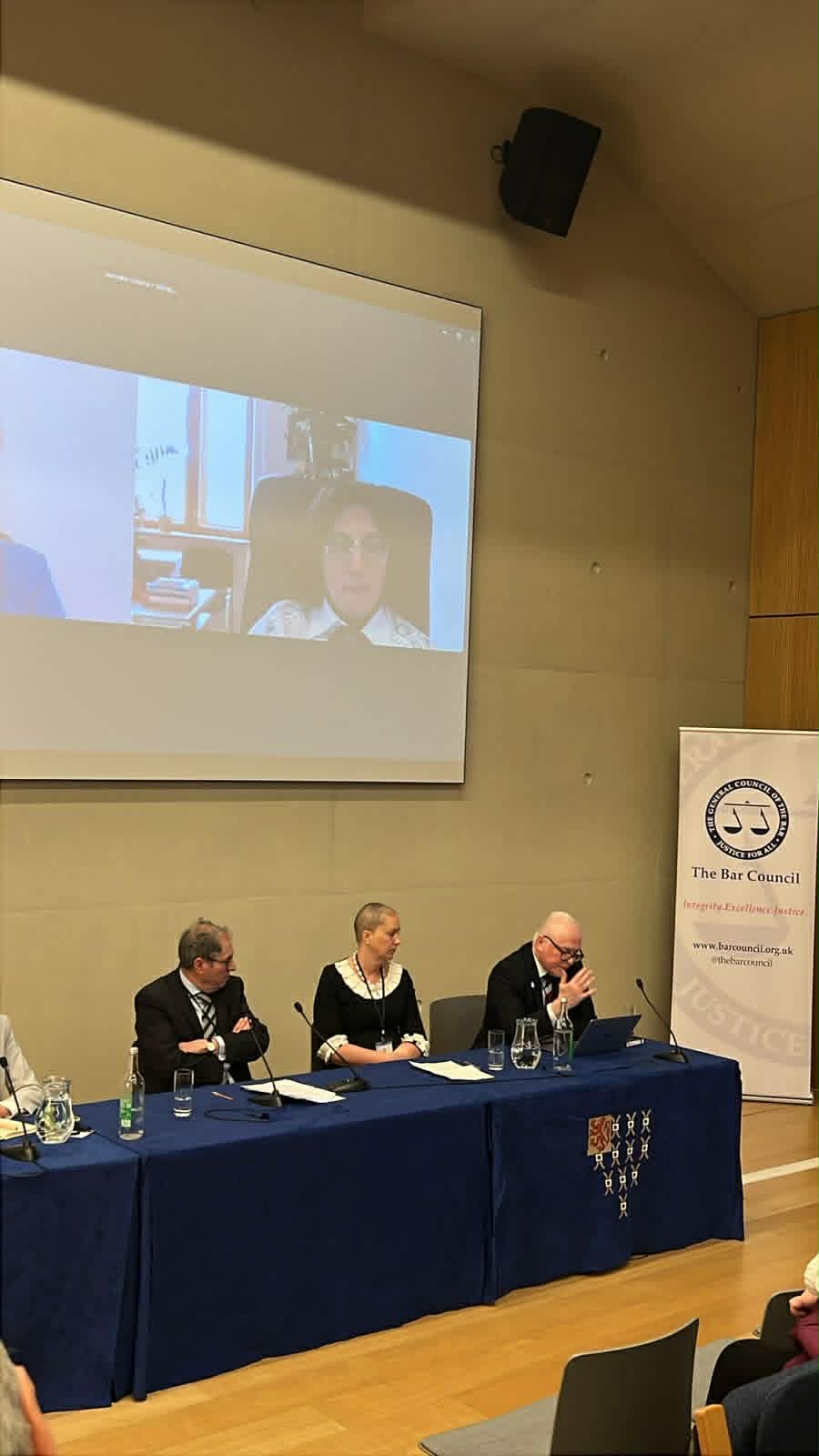
As of April 2026, approximately 225,000 episodes of war crimes (Article 438 of the Criminal Code of Ukraine) have been recorded in Ukraine. However, only 3,000 criminal proceedings concerning war crimes have been submitted to courts of first instance. Of these, more than 2,000 have been considered, over 200 cases have been reviewed on appeal, and the Supreme Court has reviewed more than 40 cases. This is less than 1% of registered incidents that have resulted in a verdict, the speaker noted. Thus, as the figures show, in the context of war crimes cases, the courts are dealing with only the tip of the iceberg. However, this is a structural problem related to the specific nature of holding perpetrators accountable for war crimes.
Firstly, proving a war crime is a complex process. To qualify an act under Article 438 of the Criminal Code of Ukraine, it is necessary to establish a contextual link: the act must be connected to the armed conflict and committed under Russian command. Following Ukraine’s ratification of the Rome Statute of the International Criminal Court in 2024, courts must also refer to the elements of crimes defined by the ICC.
Secondly, the full-scale war launched by the Russian Federation against Ukraine necessitated amendments to national legislation. Since February 2022, more than 50 changes have been made to the Criminal Procedure Code of Ukraine. In addition, the courts were forced to adapt to wartime realities to ensure the administration of justice under any circumstances, in particular by changing the territorial jurisdiction of courts located in temporarily occupied territories or damaged as a result of hostilities.
Thirdly, the use of digital evidence and data obtained from open sources in war crimes cases requires more detailed analysis and legislative regulation.
Regarding the determination of the boundary between efficiency and justice in considering cases in the absence of the accused (in absentia procedure), the judge noted that the special procedure for criminal proceedings in absentia may comply with the right to a fair trial, but only if we clearly understand all the shortcomings of the current system.
The Criminal Procedure Code of Ukraine allows for the judicial consideration of a criminal proceeding in the absence of the accused (in absentia) if, for example, the accused is hiding in a temporarily occupied territory or in Russia. In such cases, the accused is notified by publishing the relevant information in nationwide media and on the official website of the Office of the Prosecutor General. At the same time, according to the position of the Supreme Court, publication alone is not sufficient. It is necessary to use all available channels of notification: email, messengers, social networks, and telephone.
However, a deeper problem lies in the fact that even with proper notification of the person and the presence of strong evidence, decisions of Ukrainian courts may be challenged at the international level.
Therefore, when considering war crimes cases, national courts must strictly adhere to all international standards of fair trial, especially during wartime. When examining cases in absentia, the real involvement of the defence side in the proceedings must be guaranteed, there must be a clear mechanism for review provided by law, and documented confirmation that the state has made all possible efforts to achieve actual notification of the accused person about the criminal proceedings against them.
Ultimately, the consideration of cases in absentia at the national level is a lawful and necessary first step. However, to hold perpetrators accountable for crimes of such scale (war crimes, the crime of aggression, and crimes against humanity), assistance from international institutions is essential – such as the International Criminal Court and the future Special Tribunal for the Crime of Aggression against Ukraine.
In conclusion, Oleksandra Yanovska added that the boundary between efficiency and justice is not fixed, and this boundary should not be viewed as an obstacle to justice. Every person guilty of committing war crimes and crimes against humanity must stand trial and receive a fair punishment, the judge expressed her firm conviction.
_03_03.png)