Contact center of the Ukrainian Judiciary 044 207-35-46
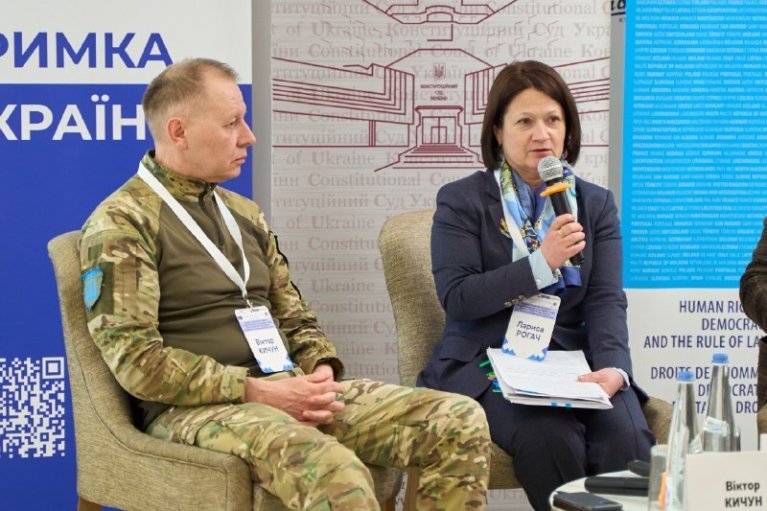
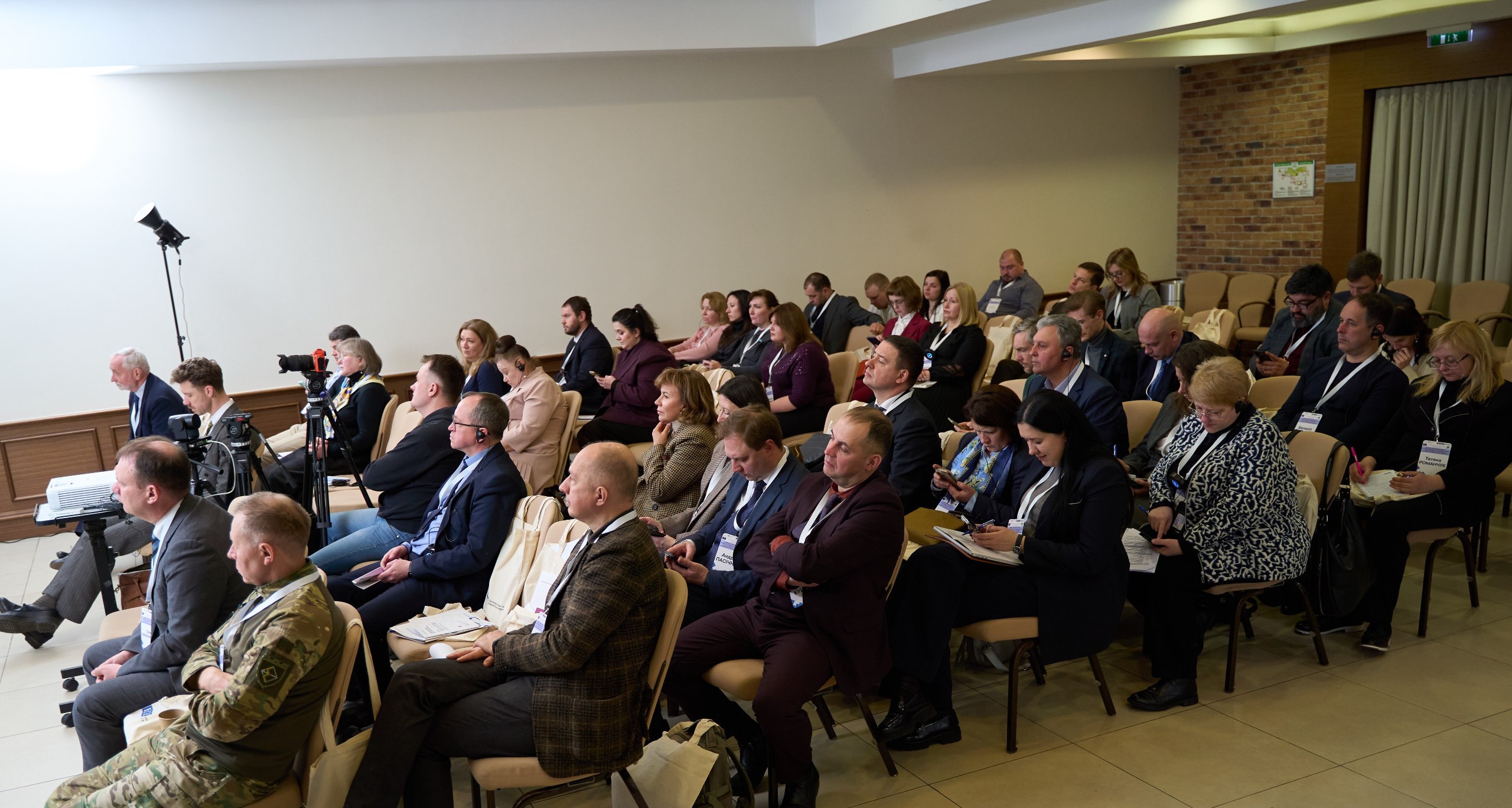
The recommendations of the Office for Democratic Institutions and Human Rights of the Organization for Security and Co-operation in Europe concerning the rules of professional ethics and the standards of recusal / self-recusal of a judge of the Constitutional Court of Ukraine and their implementation in national constitutional proceedings were discussed within the thematic dialogue platform “Rules of professional ethics and standards of recusal / self-recusal of a judge of the Constitutional Court of Ukraine: discussion of the OSCE/ODIHR recommendations”.
During the session “The institution of recusal / self-recusal of a judge of the Constitutional Court of Ukraine: expert discussion”, the President of the Commercial Cassation Court within the Supreme Court, Larysa Rohach, noted that the materials presented were of practical significance.
Speaking about the institution of recusal / self-recusal, the speaker emphasised that it is not merely a technical procedure regulated by the procedural codes, but first and foremost a matter of public confidence in the judiciary. According to the conclusions of the Consultative Council of European Judges, public confidence is the very guarantee of the effectiveness of justice. Judicial proceedings must not only be conducted fairly, but must also appear transparent to an outside observer.
The speaker presented a statistical analysis of the case law of the Commercial Cassation Court of the Supreme Court for 2024–2025 regarding the application of the institution of recusal and self-recusal. In her words, judges effectively use the mechanism of self-recusal in order to prevent the emergence of objective grounds for recusal. Notably, 100 per cent of the recusal applications lodged were based on paragraph 5 of part 1 of Article 35 of the Commercial Procedure Code of Ukraine, that is, on the existence of other circumstances that may give rise to doubts as to impartiality. In 99 per cent of cases such applications concerned a judge’s repeated participation in the same case (for example, after the case had been remitted for a fresh hearing) or the expression of a legal position in similar disputes.
In addition, there are instances of applications for recusal / self-recusal based on the fact that a judge has publicly expressed a position on the application of a particular legal issue, including at academic or professional events. In such situations, the speaker observed, it is important to distinguish between a judge’s professional position and bias.
Separately, the speaker drew attention to the doctrine of necessity, which is of particular importance when the recusal of judges of the Constitutional Court of Ukraine or of the Supreme Court is at issue. This is due to the nature of the cases, the limited number of judges and the absence of an alternative composition of the court. It is therefore essential, when assessing the impartiality of a judge or of a court composition, to take into account the special place and role of such a court within the judicial system.
In the view of the President of the Commercial Cassation Court of the Supreme Court, it is also important to improve the mechanisms for responding to abuse of procedural rights, in particular the lodging of knowingly unfounded applications for recusal or breaches of the procedure and time-limits for lodging them.
In conclusion, the SC CommCC President noted that a key aspect of countering the abuse of procedural rights is preventing a person from achieving an unlawful purpose where a participant’s actions are aimed at blocking the proceedings, and so on.
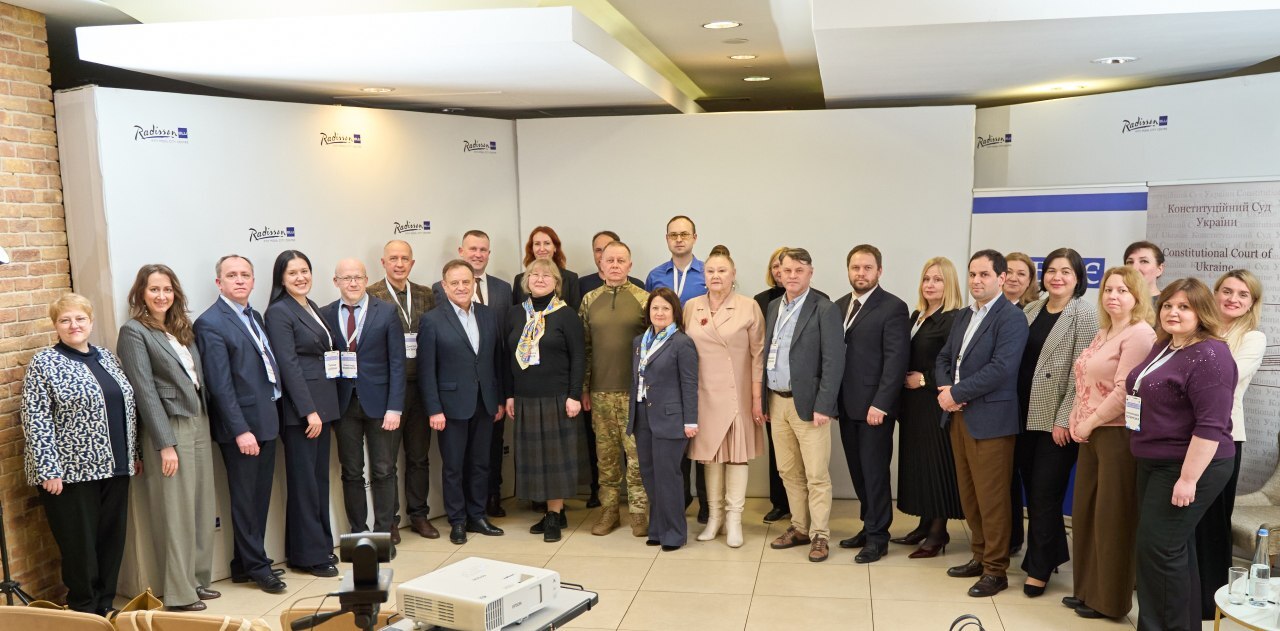
Judge of the Supreme Court in the Administrative Cassation Court Albert Yezerov, Judge of the Supreme Court in the Commercial Cassation Court Yehor Krasnov, and Judges of the Supreme Court in the Civil Cassation Court Yevhen Petrov and Yevhenii Krasnoshchokov also took part in the event.
The event was organised by the Constitutional Court of Ukraine.
_03_03.png)