Contact center of the Ukrainian Judiciary 044 207-35-46
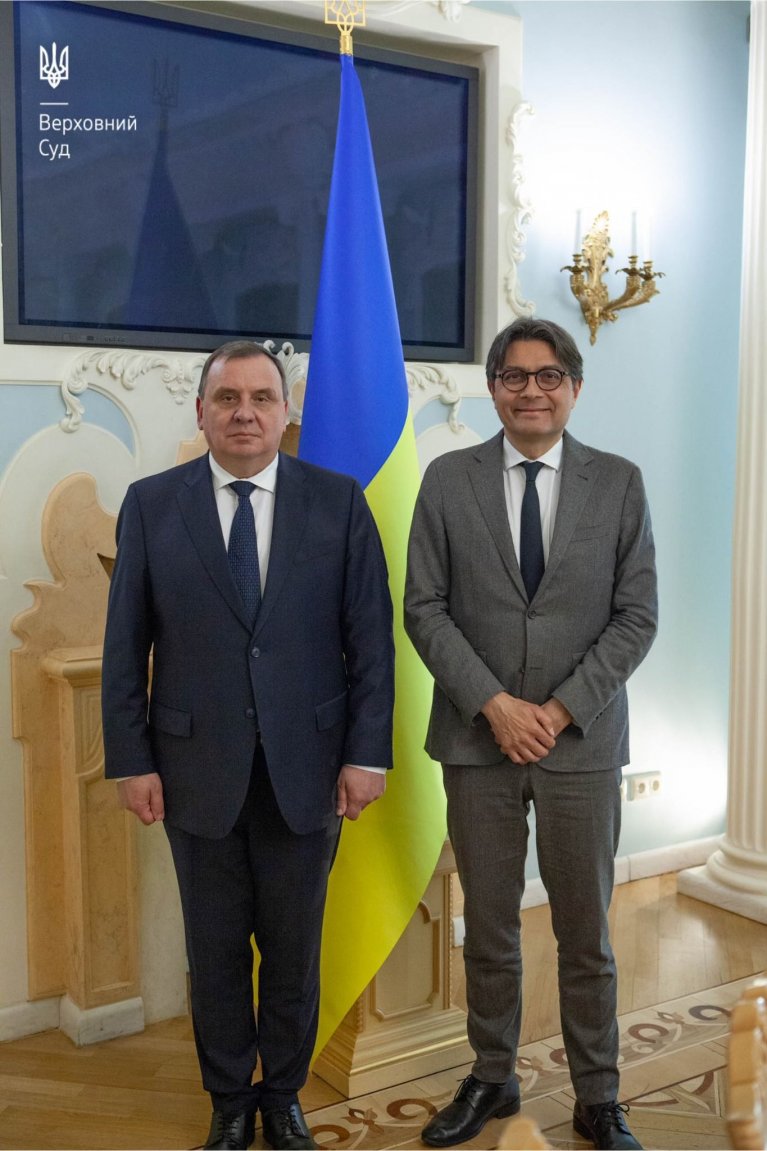
President of the Supreme Court Stanislav Kravchenko expressed gratitude to the delegation of the European Court of Human Rights for the visit, which is not only evidence of deep interaction between the national and European judicial systems, but also an important symbol of unwavering support for Ukraine.
In addition, according to the President of the Supreme Court, this visit holds special symbolic significance. The last time the President of the ECtHR visited Ukraine was on July 1, 2011 – at that time the position was held by Jean-Paul Costa. Since then, 15 years have passed, during which Ukraine has undergone profound transformations: the construction of a new architecture of judicial power, a rethinking of judicial independence, and the establishment of justice as a true guarantor of fairness.
Stanislav Kravchenko emphasized that the role of the ECtHR in these transformations has been extremely significant, as its case law has become not only a guideline but also a catalyst for systemic changes that are of fundamental importance for the development of the state.
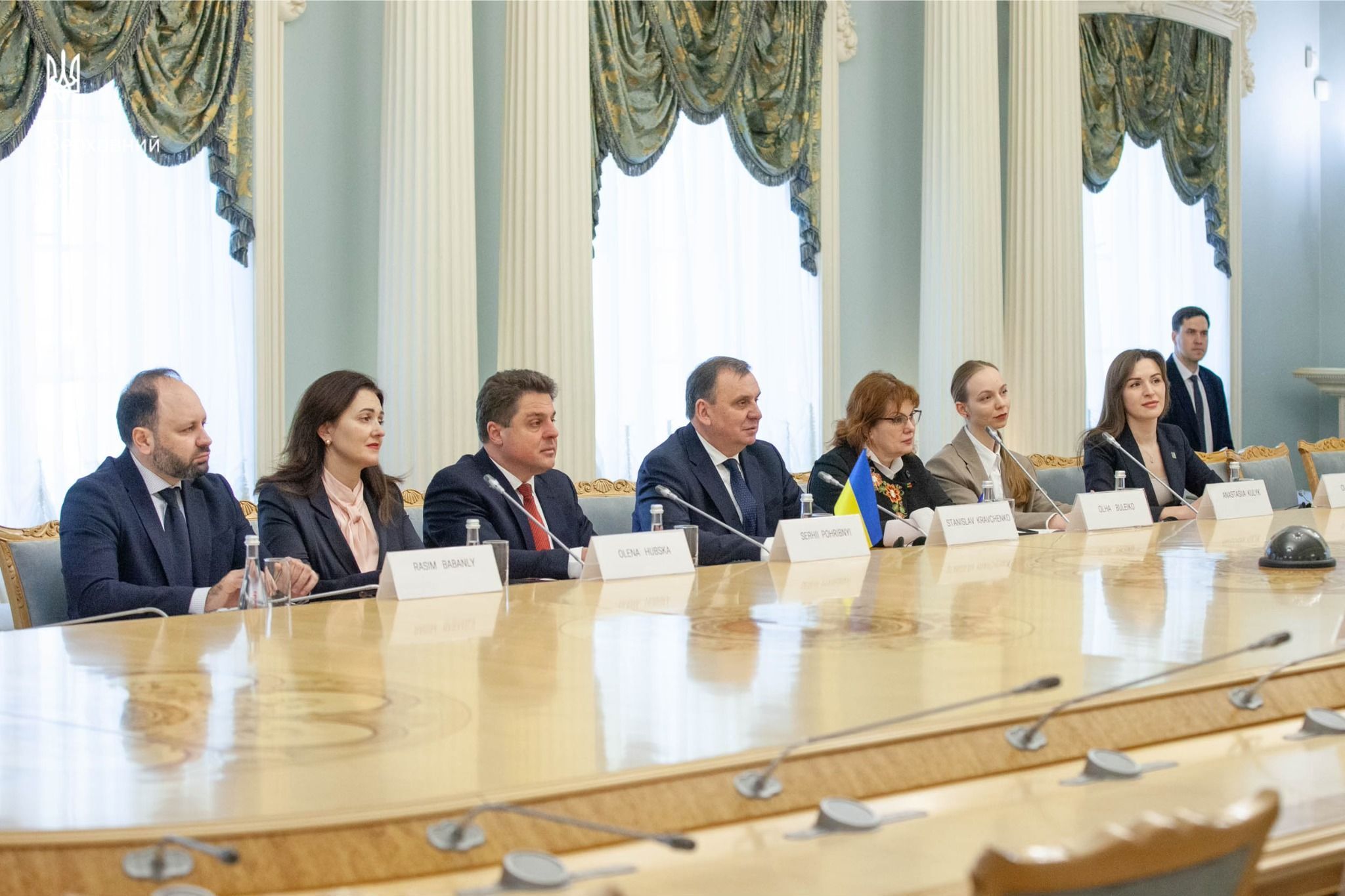
The President of the Supreme Court also highlighted that an important outcome of the interaction between the Supreme Court and the ECtHR was the presentation of the Ukrainian-language version of the ECtHR Knowledge Sharing Platform. According to Stanislav Kravchenko, this resource has already become an indispensable tool in the work of judges, lawyers, prosecutors, and scholars, and has enabled a deeper and more systematic study of the ECtHR’s approaches to resolving various legal issues.
President of the ECtHR Mattias Guyomar noted that this meeting is a logical continuation of the direct dialogue that is necessary to strengthen ties between the ECtHR and the Supreme Court and is key to the effective functioning of the human rights protection system. Such interaction is extremely important in view of the principle of subsidiarity, according to which national courts should play the leading role in this process.
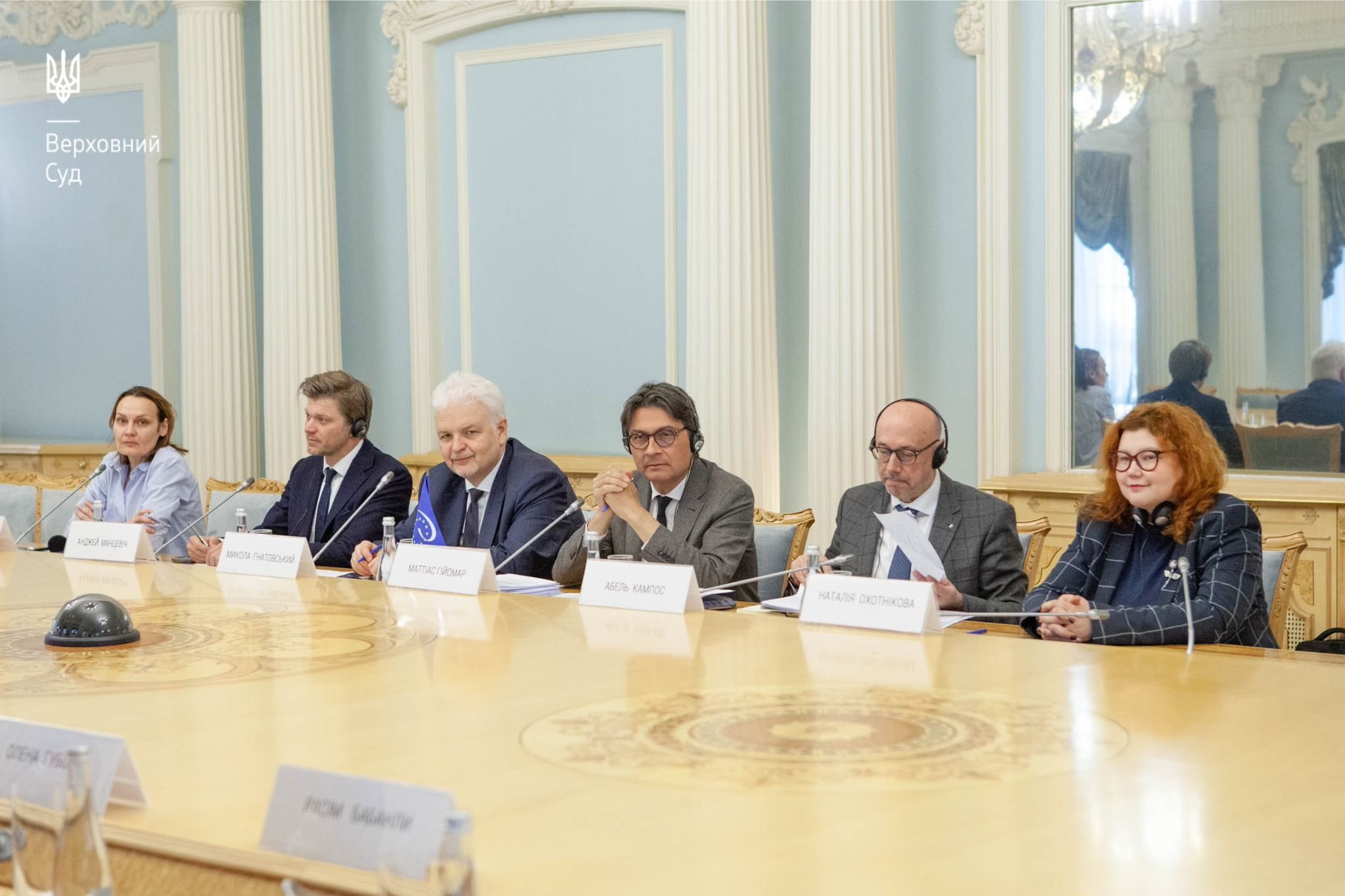
One of the key elements in building effective cooperation, according to Mattias Guyomar, is the mechanism for submitting requests for advisory opinions to the ECtHR, as provided for by Protocol No. 16 to the Convention for the Protection of Human Rights and Fundamental Freedoms. In this context, he referred to two requests submitted by the Supreme Court and expressed hope that the opinions delivered by the ECtHR would prove useful in the Supreme Court’s adjudication of the relevant cases. Moreover, according to the President of the ECtHR, the issue raised in the Supreme Court’s second request is also relevant for many other countries, which are likewise awaiting the outcome of its consideration by the ECtHR.
In addition, Mattias Guyomar noted that, despite the extremely challenging situation in the country caused by the war, Ukraine has demonstrated its ability to ensure the effective functioning of the justice system and to protect not only the national but also the European legal order.
ECtHR Judge Mykola Hnatovskyi emphasized that the dialogue between the ECtHR and the national judicial system is of paramount importance, as is the strengthening of domestic remedies, which will help eliminate the systemic violations identified by the ECtHR. At the same time, appropriate organizational and legislative efforts are critically necessary to achieve this.
Deputy Registrar of the ECtHR Abel Campos expressed gratitude for the positive feedback and recognition of the importance of the ECtHR Knowledge Sharing Platform as a key tool that helps to better understand the Court’s case law and the reasoning behind its decisions, as well as to interpret the provisions of the Convention.
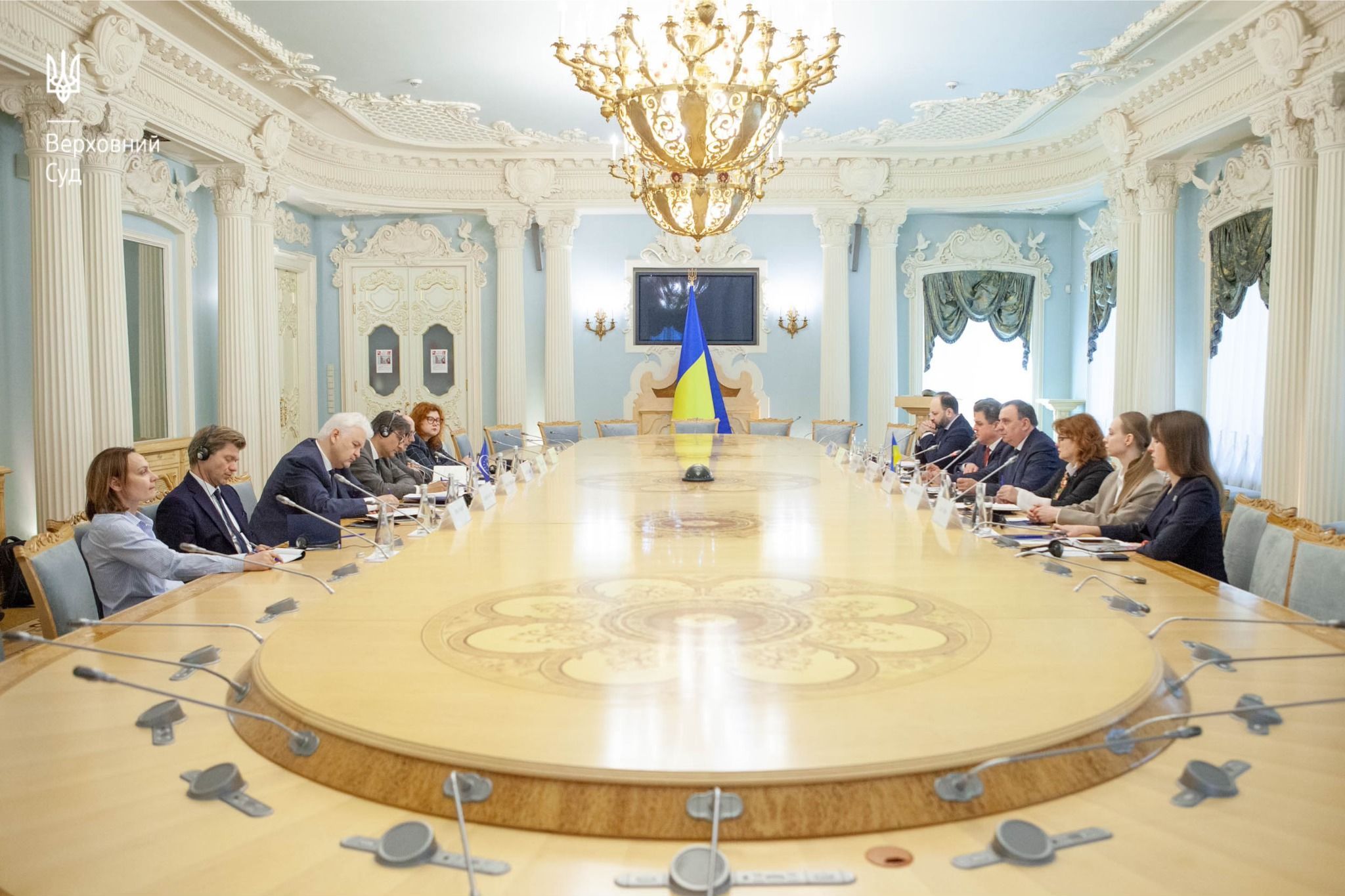
Secretary of the Grand Chamber of the Supreme Court Serhii Pohribnyi noted that the national judicial system has undergone significant changes, including as a result of the implementation of the ECtHR’s case law, and is now confidently moving towards further improvement, guided by the best European practices. He also expressed gratitude to the ECtHR for the advisory opinion provided in response to a request concerning a dispute over determining the right of a former nun to use a monastic cell within a monastery.
The meeting was also attended by Grand Chamber judges of the Supreme Court Olha Buleiko and Olena Hubska, Acting Head of the Supreme Court Administartion Rasim Babanly, Adviser to the President of the ECtHR Andrzej Mancewicz, Project Manager of the Council of Europe project “Support to Ukraine in implementing Council of Europe standards on the judiciary” Iryna Kushnir, and Head of the Council of Europe project “Enhancing judicial and non-judicial remedies for the protection of the rights of war-affected persons in Ukraine” Nataliia Okhotnikova.
_03_03.png)