Contact center of the Ukrainian Judiciary 044 207-35-46
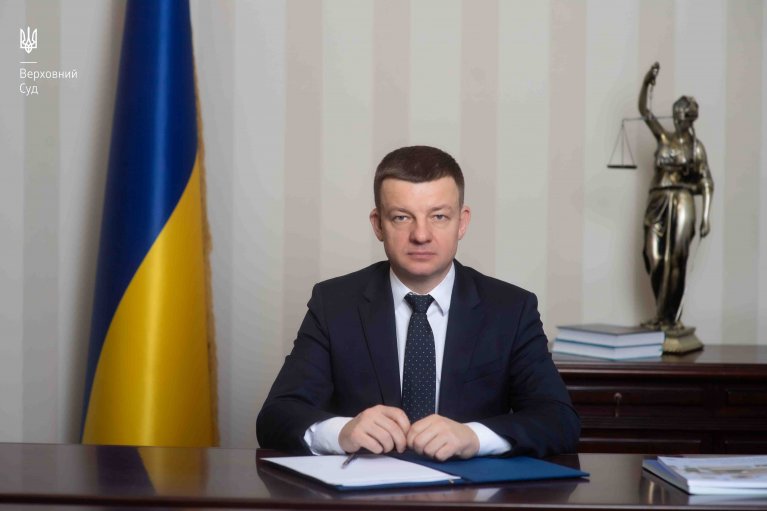
Summing up the eighth virtual seminar “Resolution of Disputes in International Tax Law” as part of the second stage of the International Tax Capacity Building Programme for Judges of Administrative Courts of Ukraine, the President of the Administrative Cassation Court within the Supreme Court, Ihor Dashutin, emphasized the key aspects of the programme and highlighted the importance of professional exchange. Ukrainian judges not only acquired knowledge but also actively presented their own practice and vision for the development of international tax law doctrine. This dialogue demonstrated that Ukrainian administrative justice is an equal participant in the international professional community.
The speaker noted that the course contributed to the systematization of approaches to the interpretation of international tax norms, a deeper understanding of transnational tax processes, and the acquisition of practical tools for handling cases with an international element. For administrative justice, this is of fundamental importance, as tax disputes always lie at the intersection of the state’s fiscal interest and the protection of property rights. The quality of a court decision affects not only the outcome of a particular case, but also the level of public trust in the judiciary, the stability of economic relations, and the predictability of the legal environment.
According to the President of the Administrative Cassation Court of the Supreme Court, participation in this project made it possible to integrate the best international practices into the national legal context. It helped to comprehend the experience of other states through the prism of Ukrainian legislation, national judicial practice, and the constitutional principles of the rule of law.
Ihor Dashutin expressed gratitude to the Organisation for Economic Co-operation and Development (OECD) for supporting this unique project, to the programme partners, and to all the judges participating in the event for their high level of professional engagement, openness to discussion, and commitment to development.
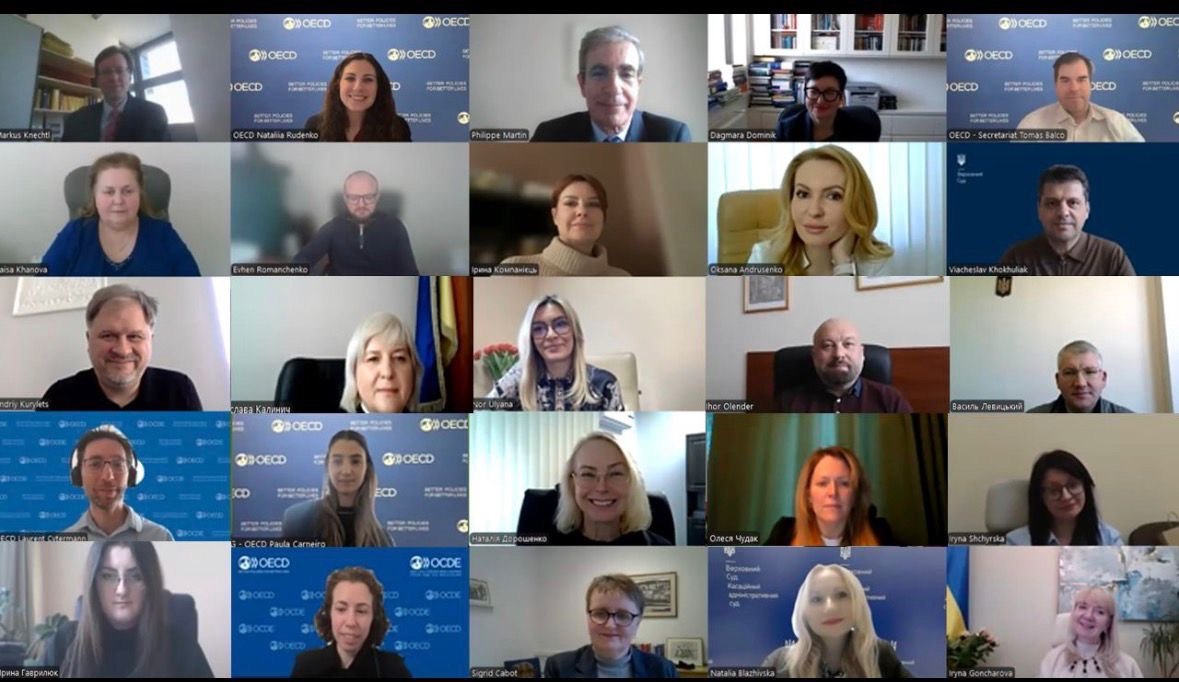
Raisa Khanova, Secretary of the Judicial Chamber for Tax, Fees and Other Mandatory Payments of the Administrative Cassation Court of the Supreme Court and scientific supervisor of the course, noted that the field of taxation is endless in its development. Our key task is to find a balance in every tax case by implementing high OECD standards and the principles of fairness of the EU legal community, so that international taxation is transparent and understandable for business and effective for the state.
The speaker congratulated the course participants on the successful completion of their joint learning journey, which began back in October 2022. According to her, this project has laid a new foundation in the architecture of Ukrainian justice. “Thanks to live communication and practical work, we have gained invaluable experience for handling complex cases in international taxation,” the judge noted.
Raisa Khanova also expressed gratitude to the partners for the opportunity to exchange experience in the Czech Republic, Austria, and France. “Communicating with colleagues from different continents, we became convinced that not only the language of peace, but also the language of tax rules and principles is universal around the world,” the Secretary of the Chamber summarized.
Judge of the Supreme Court in the Administrative Cassation Court, founder of the course and moderator of the event, Nataliia Blazhivska, expressed gratitude to her colleagues and partners for supporting the idea of organizing this unique course on international taxation for judges. According to her, the experience of participating in international programs has clearly shown that judges need specialized training that takes into account the complexity of tax disputes and the global architecture of modern taxation.
The speaker separately thanked the OECD team, in particular Tomas Balco and Laurent Cytermann, for supporting the idea of creating the course. Despite the challenges of Russia’s full-scale war against Ukraine, the training launched in the autumn of 2022 has grown into a powerful platform, with 100 participants joining the dialogue, including judges from various countries.
In a world where corporations operate in dozens of jurisdictions simultaneously, court decisions cannot be formed in isolation. Joint training builds trust between legal systems, helps prevent mistakes, and ensures the uniformity of case law. Predictability of law enforcement even in the most difficult times is the foundation of stability for business and the state.
“True integration begins with people, professional trust, and open dialogue. Tax rules may be national, but justice and the rule of law are always global,” the speaker concluded.
Participants were also congratulated on the successful completion of the course by the judge-lecturers, including: Judge of the Federal Supreme Court of Switzerland Michael Beusch, Judge of the Supreme Court of Spain Rafael Toledano Cantero, Judge of the Federal Fiscal Court of Austria Markus Knechtl, Judge of the Administrative Court in Wrocław (Poland) Dagmara Dominik-Ogińska.
This event marked the completion of the second phase of the programme, which builds on the knowledge acquired during the previous modules and focuses on practical application and experience-sharing among colleagues.
During the seminar dedicated to value added tax (VAT) issues, participants analyzed the interaction between EU legislation (in particular, the case law of the Court of Justice of the EU) and the national norms of EU member states. Particular attention was paid to practical aspects: sanctions, measures to combat abuse and fraud. These issues are critically important for Ukraine in the context of the current administrative burden.
At the end of the training, the participants received certificates.
_03_03.png)