Contact center of the Ukrainian Judiciary 044 207-35-46
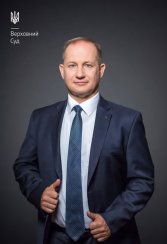
Judge of the Grand Chamber of the Supreme Court Serhii Martiev focused on the key challenges faced by practicing lawyers when protecting the rights and fundamental freedoms of military personnel and their family members during his presentation at the tutor course for judges titled “Human Rights in the Armed Forces”. The speaker noted that relevant court cases are scattered across different jurisdictions, which complicates their search and systematization. That is why, the speaker emphasized, the generalization of case law and the formation of clear guidelines for law application are extremely important.
A separate section of the judge’s presentation was devoted to issues of establishing legal facts under martial law and distinguishing between separate and claim proceedings. He pointed out that the decisive criterion is the presence or absence of a dispute over the right. If there is no dispute over the right, the case may be considered in separate proceedings in accordance with Article 293 of the Civil Procedure Code of Ukraine, whereas in the presence of a dispute over the right between parties, it must be resolved in claim proceedings. At the same time, the speaker stressed the fundamental difference between these procedures: in claim proceedings, the principle of party disposition (dispositive principle) applies, while in separate proceedings an inquisitorial approach is used, under which the court acts on behalf of the state and independently establishes all the circumstances; consequently, the state itself assumes responsibility for establishing such a legal fact.
Serhii Martiev dwelt in detail on the legal positions of the Supreme Court regarding access to justice. In particular, the judge cited an example of a change in the approach of the Joint Chamber of the Civil Cassation Court of the Supreme Court in cases concerning the establishment of the fact of a serviceman’s death as a result of Russia’s armed aggression. The Court concluded that such a fact can be established exclusively through judicial proceedings, since the legislator has not provided any other mechanism for determining the causal link between the serviceman’s death and the military aggression. This fact affects the realization of the personal and property rights of the deceased’s family members, in particular regarding the granting of the status of a victim of an international armed conflict, receipt of humanitarian aid, and the possibility of applying to international judicial institutions.
At the same time, the speaker drew attention to cases where the establishment of legal facts does not fall within the competence of the court. For example, the recognition of a person as unfit for military service with exclusion from military registration, as well as the establishment of the fact of providing constant care for persons in need of it, is provided for by legislation in an extrajudicial procedure and is resolved by the relevant non-judicial authorities. In such situations, applying to the court in separate proceedings is inadmissible.
Separately, the judge analyzed judicial practice regarding the recognition of the fact of living as one family with a deceased serviceman, which is directly relevant to the exercise of the right to a one-time monetary assistance. The speaker emphasized that when considering such cases, courts must comprehensively evaluate the evidence, including blood kinship, cohabitation, and joint household management, while ensuring compliance with Article 8 of the Convention for the Protection of Human Rights and Fundamental Freedoms, namely the right to respect for private and family life.
In his presentation, the speaker also raised a number of issues, including: establishing the fact of sole upbringing of a child for the purpose of obtaining a deferment from mobilization; declaring a natural person dead in connection with hostilities; the application of Article 336 of the Criminal Code of Ukraine in the context of freedom of conscience and religious beliefs; as well as issues related to the mandatory suspension of proceedings in cases involving military personnel. The judge noted that excessive formalism in these matters may lead to a violation of the right to a fair trial; therefore, the Grand Chamber of the Supreme Court has developed balanced approaches that take into account both the interests of the state and the rights of the individual.
In conclusion, Serhii Martiev remarked that the task of the judiciary in wartime conditions is to ensure effective and understandable protection of the rights of military personnel and their family members, taking into account the standards of the Convention and the realities of wartime.
The event was organized by the National School of Judges of Ukraine in cooperation with the Council of Europe project “HELP (Human Rights Education for Legal Professionals) for Ukraine, including during wartime”.
The presentation by Serhii Martiev can be viewed at the following link: https://court.gov.ua/storage/portal/supreme/prezent2026/Prezent_zah_prav_viiskovi.pdf
_03_03.png)