Contact center of the Ukrainian Judiciary 044 207-35-46
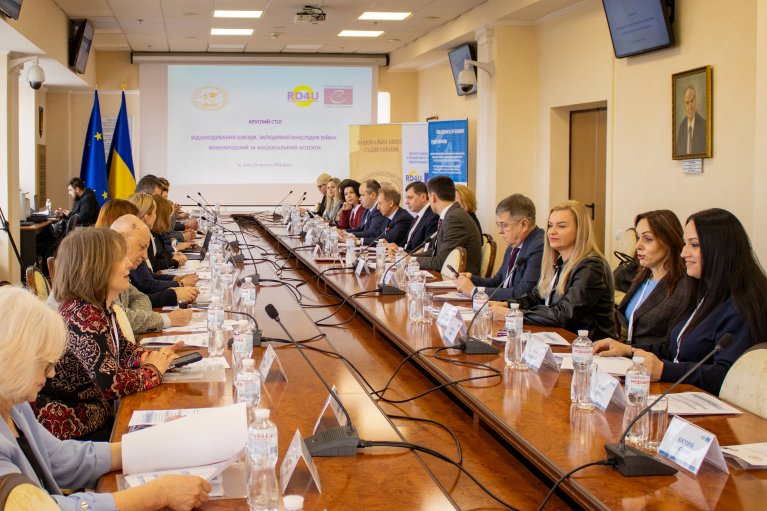
The administrative and judicial mechanisms for compensating damages caused by the aggressor state, issues with the enforcement of decisions in this category of cases, and prospects for their resolution were discussed by President of the Civil Cassation Court within the Supreme Court Maryna Chervynska, Judges of the Grand Chamber of the Supreme Court Mykola Mazur and Nadiia Stefaniv, and Judge of the Civil Cassation Court of the Supreme Court Olha Stupak at the round table “Compensation for Damage Caused by War: International and National Aspects”.
Maryna Chervynska expressed deep gratitude to everyone who contributed to the creation of the Register of Damage Caused by the Aggression of the Russian Federation against Ukraine (RD4U). She emphasized the importance of establishing an effective administrative mechanism for compensating damage caused by the aggressor state, which allows victims to receive compensation without going to court.
The President of the Civil Cassation Court also drew attention to the fact that Ukraine has already introduced another administrative mechanism by law, which provides for the assignment to the state of the right to claim compensation from the aggressor country for destroyed real estate in exchange for a certificate or funds for housing repair.
Regarding judicial practice in this category of disputes, she noted that after 2014, claims for damages were filed primarily against the State of Ukraine, as courts refused to open proceedings against the aggressor state. The aggressor country, invoking judicial immunity, did not grant permission for Ukrainian courts to hear such cases.
A turning point occurred after the SC CivCC adopted its resolution on 18 May 2022 in case No. 760/17232/20-ц. By this decision, the Supreme Court effectively lifted the immunity of the Russian Federation in cases involving compensation for damage caused by armed aggression, and courts began to consider cases on the merits against the aggressor state.
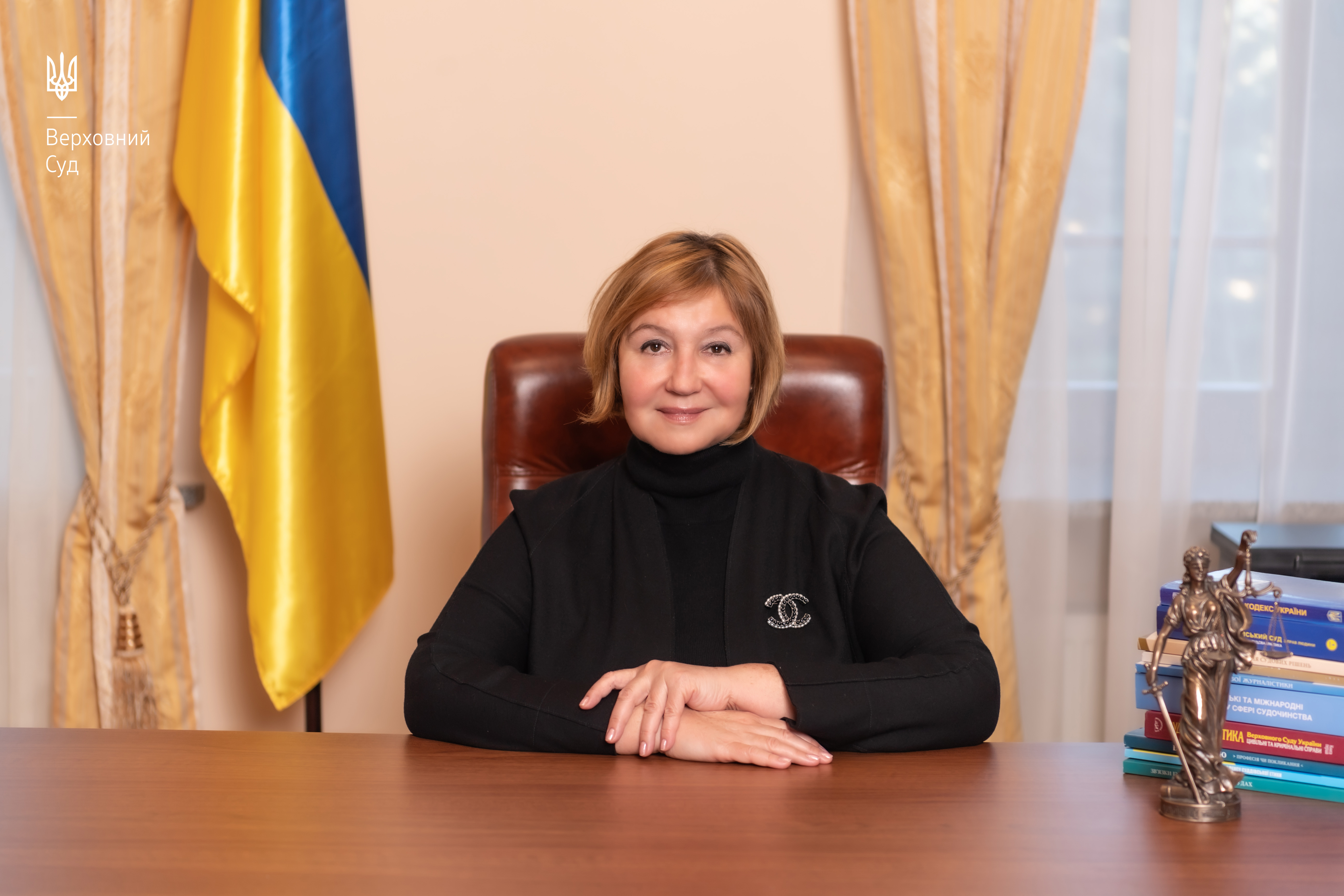
Maryna Chervynska stated that the majority of these cases were resolved at the courts of first instance and less often at the appellate courts, because the Russian Federation did not participate in the proceedings and did not appeal the decisions. In some cases, such decisions were appealed by the plaintiffs themselves, who disagreed with the amount of compensation awarded or with the refusal to satisfy the claim.
The President of the Civil Cassation Court of the Supreme Court also noted that to date, fewer than 30 cassation appeals against decisions in this category of cases have been filed with the Supreme Court. In some cases, the Court refused to open proceedings, in particular due to the insignificance of the case. The cassation court has considered some cases on the merits, while others are still pending.
However, even when a decision ordering the recovery of damages from the Russian Federation in favour of the plaintiff becomes final, the issue of its enforcement arises. The speaker pointed out that it is almost impossible to recover damages from the aggressor state’s assets in other countries, as they do not recognize the restriction of immunity even for a country that has started the most terrible war since World War II. Accordingly, they do not recognize decisions of Ukrainian courts awarding compensation for damage caused by the aggressor state if those decisions were made without the participation of the aggressor itself.
Maryna Chervynska therefore highly praised the fact that such decisions will be entered into the aforementioned Register of Damage, and thus will be enforceable. She emphasized that a case does not conclude with the adoption of a final decision, but with its actual enforcement.
Mykola Mazur highlighted the issue of state jurisdictional immunity in court proceedings, stressing the need to take into account the international legal context when considering cases of this category. Ukrainian courts, guided by the legal conclusions of the Civil Cassation Court of the Supreme Court, recognize that the Russian Federation, as an aggressor state, has no immunity. At the same time, judges must be aware of the prospects for enforcing such decisions outside Ukraine.
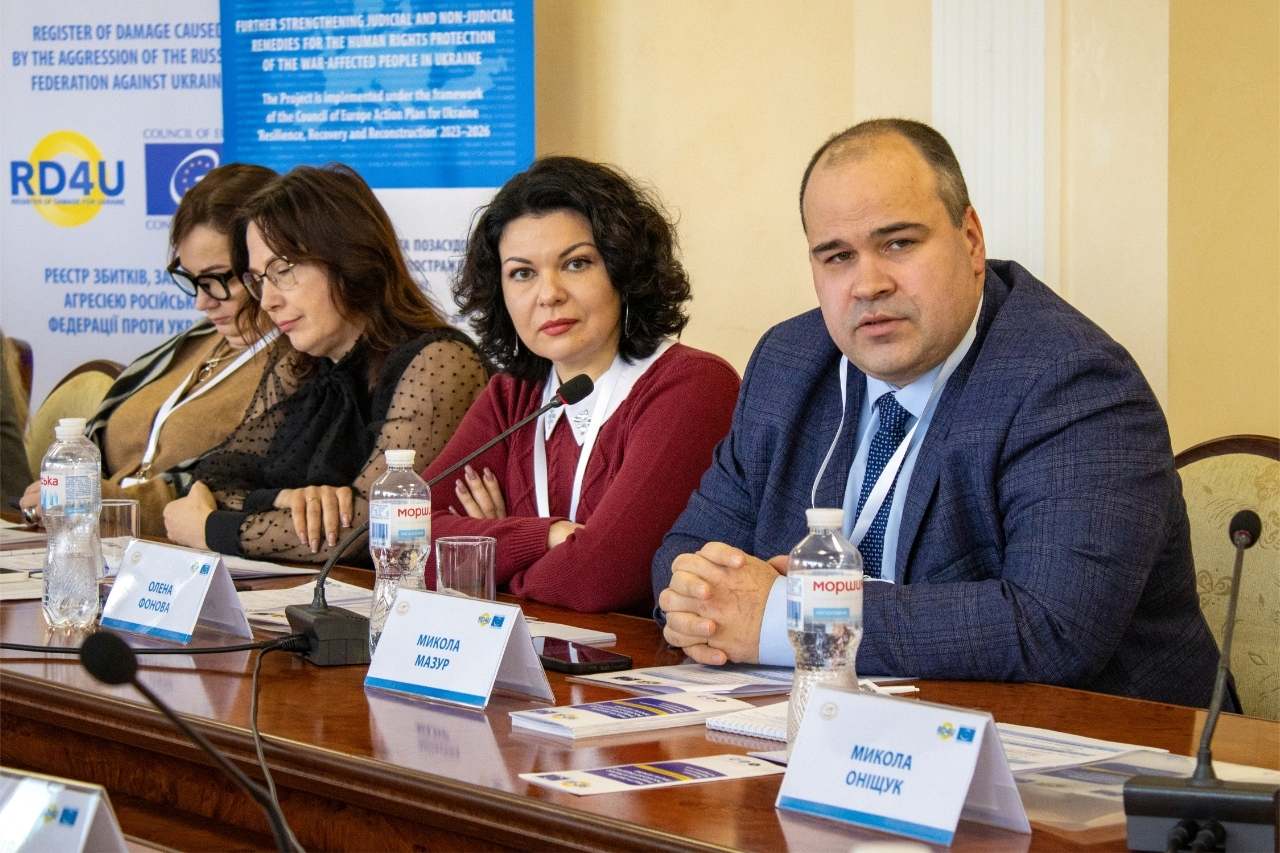
The judge noted that international judicial practice in cases related to state immunity remains predominantly cautious. These approaches have been formed over more than two hundred years and, despite the recognition of serious violations of international humanitarian law, often do not result in the satisfaction of claims for judicial compensation. Examples of such practice exist in the jurisprudence of courts in the United States, Japan, and a number of European states.
The speaker separately analyzed the experience of Greece and Italy. In particular, in the 2000s Italy recognized the possibility of limiting Germany’s immunity in cases involving violations of peremptory norms of international humanitarian law. However, in 2012, the International Court of Justice ruled that such actions violated Italy’s international obligations. Subsequently, Italy introduced a national compensation mechanism, effectively assuming responsibility for the enforcement of court decisions itself.
At the same time, Ukraine’s situation is fundamentally different due to the ongoing armed aggression and the complete absence of any compensation mechanisms from the aggressor state. Moreover, there are already decisions by individual foreign courts refusing to enforce Ukrainian court rulings, which poses a significant challenge to national judicial practice.
In this context, Mykola Mazur emphasized the importance of cooperation between Ukrainian courts and international mechanisms for documenting damage. Although such mechanisms are not obligated to take national court decisions into account, the mere possibility of their consideration imposes higher requirements on the quality of court rulings, particularly regarding the thorough establishment of the factual circumstances of the case and proper legal reasoning.
Nadiia Stefaniv, one of the co-authors of the training course for judges on handling cases of compensation for damage caused by the Russian Federation’s aggression (developed on the basis of the National School of Judges of Ukraine), highlighted its practical value.
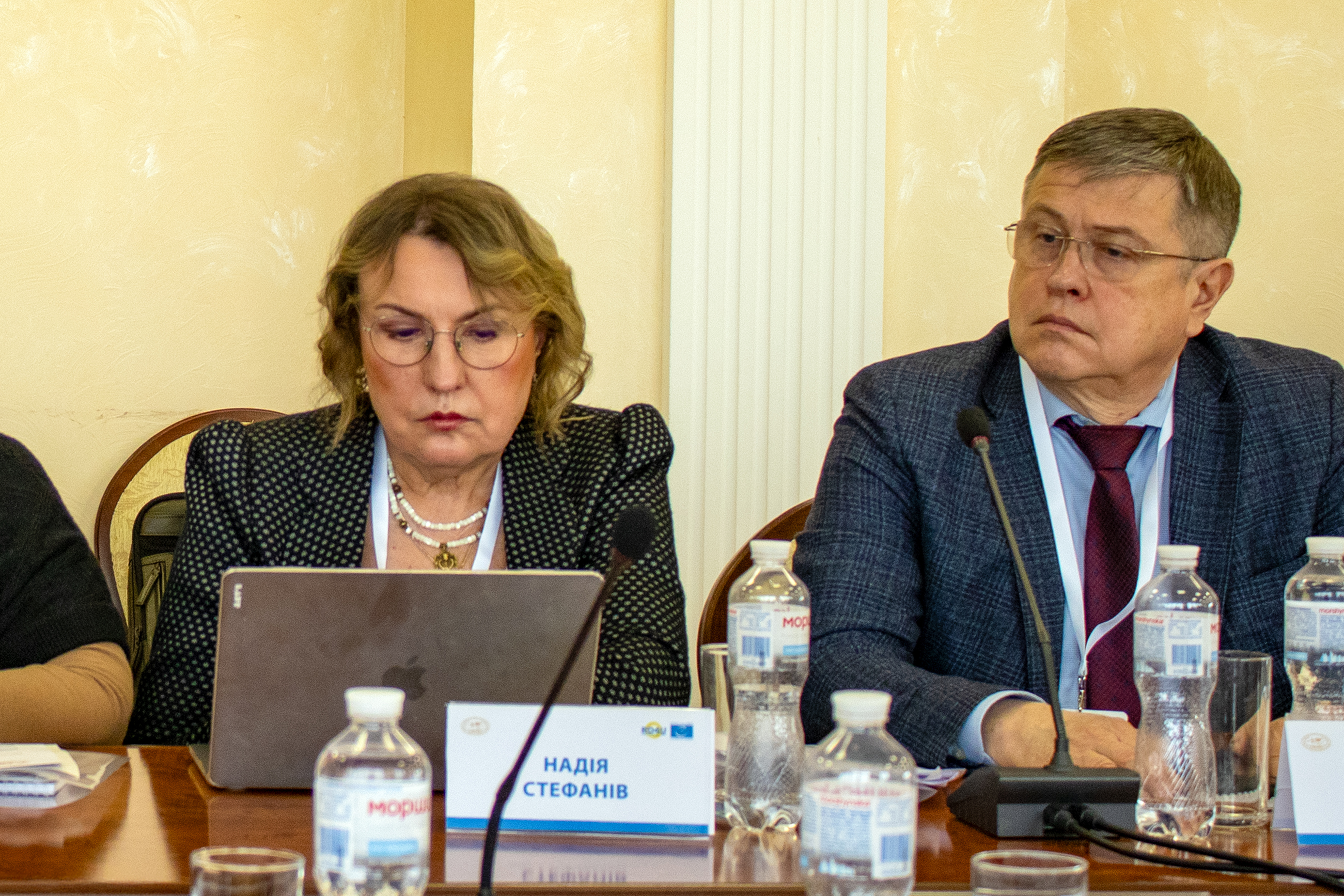
Regarding the international Register of Damage, the judge noted that it has evolved from a theoretical idea into a real mechanism for compensating harm. She pointed out that the functioning of the Register had previously been discussed only as a concept, whereas today it is already possible to speak about its practical application.
The international compensation mechanism, established on the basis of a UN General Assembly resolution, has effectively created a quasi-judicial body that combines accepting claims, assessing submitted materials, taking court decisions into account, and enforcing compensation awards. This mechanism is grounded in the norms of international humanitarian law and international human rights law.
The judge paid particular attention to the need to ensure equal rights for all applicants - both those who approach the Register with a national court decision and those who submit an application without one. She stressed that the presence of a court decision should not be perceived as an advantage, as the key factor for the Register remains the factual circumstances of the case.
Olha Stupak, who is also a co-author of the training course for judges on cases involving compensation for damage caused by the Russian Federation’s aggression, thanked the National School of Judges of Ukraine and all those involved in developing the program, and urged all judges to complete the course.
The judge reported that, according to the Ministry of Justice of Ukraine, more than 1,500 enforcement documents have been issued on the territory of our state based on decisions in cases concerning compensation for damage caused by the aggression of the Russian Federation. These documents have been consolidated into a single enforcement proceeding. The total amount to be recovered exceeds 1.2 trillion UAH. Among the claimants, 37% are individuals, 12% are legal entities, and approximately 51% is the State of Ukraine.
Olha Stupak drew attention to the fact that although legal entities represent the smallest percentage of claimants, they account for 99% of the total amount of debt owed by the aggressor state as awarded by national courts. She emphasized that 52% of the entire amount of debt in Ukraine for unenforced decisions consists of debts arising from court decisions on compensation for damage caused by the aggressor state.
The judge noted that in the Roadmap approved by the Government of Ukraine, our country has undertaken to conduct an analysis and develop recommendations for resolving problematic issues related to the non-enforcement of court decisions ordering recovery from the Russian Federation. The Supreme Court, as one of the key implementers of the Roadmap measures in this area, will complete the analysis of the relevant judicial practice by the end of the first quarter of 2026. Subsequently, the legislator will need to develop appropriate mechanisms to address the issues of enforcing court decisions.
Olha Stupak also pointed out that due to the impossibility of enforcing court decisions awarding compensation for damage caused by the Russian Federation using the aggressor state’s assets located in Ukraine, citizens have already begun filing lawsuits against the State of Ukraine for compensation for failure to enforce court decisions.
She drew attention to the resolution of the Civil Cassation Court of the Supreme Court dated 14 January 2026 in case No. 553/88/25. In that case, the plaintiff stated that a national court had awarded him 1 million UAH in moral damages from the Russian Federation due to the occupation of the Autonomous Republic of Crimea, which forced him to move to government-controlled territory. Since this decision had not been enforced for a long time, he asked the court to recover 1 million UAH in property damage and 100 million UAH in moral damages from the State of Ukraine for the state’s failure to fulfill its positive obligation. The plaintiff referred, among other things, to a violation of Article 6 of the Convention for the Protection of Human Rights and Fundamental Freedoms.
The courts of first and appellate instances refused to satisfy the claim, noting that a draft law was being developed to regulate the enforcement of such decisions. The Civil Cassation Court of the Supreme Court agreed with the decisions of the lower courts, stating that the plaintiff was essentially attempting to shift responsibility for the damage caused by the aggression from the aggressor state to Ukraine, even though there were neither factual nor legal grounds for this. In addition, the cassation court noted the absence of a national mechanism for enforcing decisions where the debtor is the aggressor state, and concluded that the lack of such a mechanism does not prevent individuals affected by armed aggression from applying to the international Register of Damage.
Olha Stupak also referred to the resolution of the Civil Cassation Court of the Supreme Court dated 4 February 2026 in case No. 572/4899/24. The cassation court agreed with the decisions of the previous instances, which refused to satisfy the claim for moral damages in the amount of 300,000 euros due to the failure to prove that moral damage had been caused. The plaintiff did not prove all the necessary elements required for a positive decision in a tort liability case.
The speaker addressed all her colleagues, primarily judges of the first instance who hear such cases, urging them not to allow the devaluation of national court decisions today, but to uphold their authority and weight. This can only be achieved through impeccable reasoning and proper substantiation of conclusions.
The round table was organized by the National School of Judges of Ukraine.
_03_03.png)