Contact center of the Ukrainian Judiciary 044 207-35-46
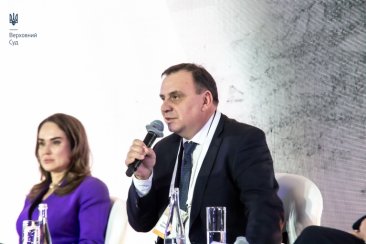
Ukraine is a unique state that, even under wartime conditions, has not abandoned its aspirations and continues to implement reforms, as commitment to European values and consistent progress toward European integration are part of our victory.
This conviction was expressed by the President of the Supreme Court, Stanislav Kravchenko, during the panel discussion “Justice and Fairness After the War” at the International Justice Conference, organized by the Office of the President of Ukraine on the eve of the fourth anniversary of Russia’s full-scale invasion of Ukraine.
According to the President of the Supreme Court, over the past 12 years, the judicial system has faced an extremely difficult task – ensuring the stability of its operations under unprecedentedly challenging conditions. Today, looking back at the path traveled, it can be confidently stated that thanks to the dedicated work of judges across all instances and jurisdictions, the judiciary has withstood the challenges of wartime and properly ensured the continuity of its functioning.
This is convincingly evidenced by statistical data – last year, courts of all instances and jurisdictions had 5.8 million cases under consideration, of which 4.6 million were resolved. This confirms the institutional capacity of the judiciary, and it is not only about the significant workload but also the wide range of case categories under review.
Among them, in particular, are war crimes. In each of these proceedings, courts must ensure proper judicial oversight at the pre-trial investigation stage. At the same time, nearly 3,000 proceedings have been considered on the merits, meaning that courts have already developed a number of approaches that are of significant importance not only for national judicial practice but also for the development of international law.
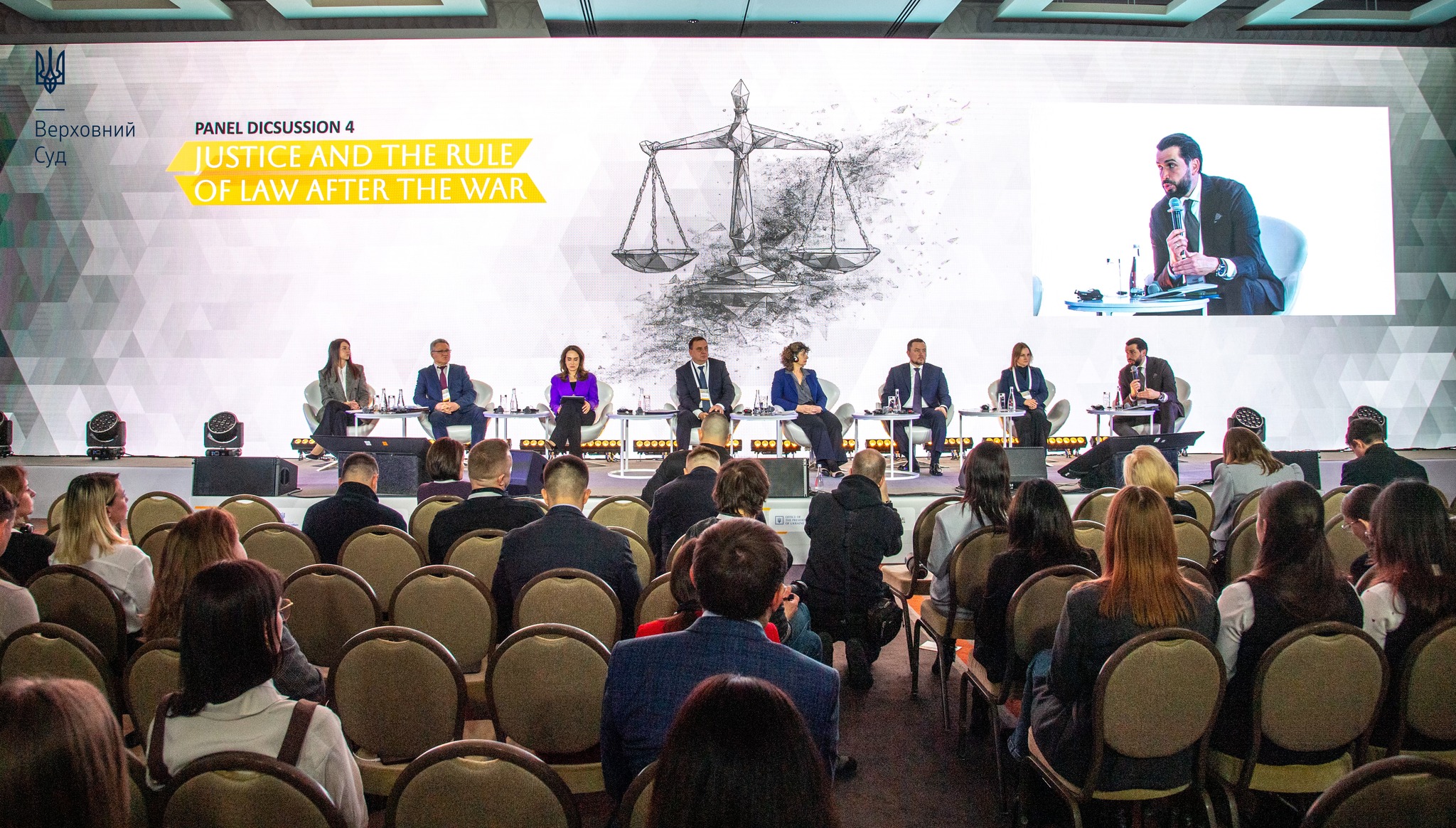
In this context, Stanislav Kravchenko drew attention to a resolution of the Grand Chamber of the Supreme Court, which for the first time formulated the definition of the subject of the crime of aggression. He emphasized that this legal position represents Ukraine’s contribution to shaping international legal standards for holding perpetrators accountable for the most serious crimes.
“However, the most important indicator of the quality of the judicial system’s work is not measured by numbers – we are well aware that the courts’ efforts will be worthwhile only if their decisions meet the highest international standards and are perceived by Ukrainian society and the international community as fair,” noted the President of the Supreme Court.
Reflecting on what the judicial system of the future should look like, Stanislav Kravchenko pointed out that in the process of improving individual mechanisms in its operations, various challenges will inevitably arise. Nevertheless, the Supreme Court is ready to take a leadership position in addressing them.
Thanks to its active involvement in the European integration process, the Supreme Court is able to highlight current issues and propose its own ideas regarding models for improving certain aspects of the judicial system’s work.
At the same time, to effectively fulfill the tasks facing the judiciary, it requires sufficient resources – primarily human resources. In outlining the key directions for further reforms, Stanislav Kravchenko stressed the urgent need to improve competition and disciplinary procedures, as well as mechanisms and tools to ensure the uniformity of case law.
In summary, the President of the Supreme Court emphasized that the national judicial system has demonstrated exceptional resilience and commitment to democratic values, laying a solid foundation for its further development in the post-war period.
The event was also attended by Ihor Dashutin, President of the Administrative Cassation Court within the Supreme Court; Larysa Rohach, President of the Commercial Cassation Court within the Supreme Court; and Maryna Chervynska, President of the Civil Cassation Court within the Supreme Court.
_03_03.png)