Contact center of the Ukrainian Judiciary 044 207-35-46
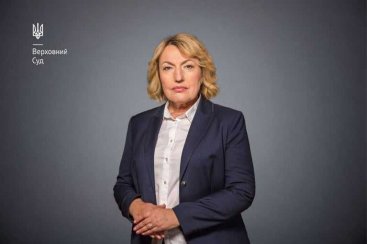
The VI Regional Forum on International Cooperation in Criminal Matters entitled “Interinstitutional and International Response to Trafficking in Persons and Migrant Smuggling” recently took place in Budva, Montenegro. The event brought together representatives of ministries of justice, prosecution services and judicial authorities from the Western Balkans (Montenegro, Albania, Bosnia and Herzegovina, Kosovo, North Macedonia, Serbia), as well as Sweden and Ukraine, together with representatives of the United Nations Office on Drugs and Crime (UNODC) and the EU project “EU Support to Strengthen the Fight against Migrant Smuggling and Trafficking in Human Beings in the Western Balkans” (EU4FAST). At the invitation of the Ministry of Justice of Montenegro, Judge of the Grand Chamber of the Supreme Court Nadiia Stefaniv took part in the forum.
Participants and experts discussed measures to strengthen international judicial cooperation in combating migrant smuggling and human trafficking, and to improve international and interinstitutional responses to trafficking for sexual exploitation. Particular attention was given to the need to reinforce regulatory and policy frameworks for countering irregular migration and migrant smuggling.
Judge Nadiia Stefaniv informed her European colleagues about the procedure by which Ukrainian courts apply international conventions ratified by Ukraine, in particular: the United Nations Convention against Transnational Organised Crime (together with its two Protocols: the Protocol to Prevent, Suppress and Punish Trafficking in Persons, Especially Women and Children, and the Protocol against the Smuggling of Migrants by Land, Sea and Air), and the Council of Europe Convention on Action against Trafficking in Human Beings. She also outlined the provisions of national legislation governing international cooperation, counter-trafficking measures and action against irregular migration, as well as the challenges arising from Russia’s full-scale invasion and armed aggression against Ukraine. In addition, Judge Stefaniv presented the main findings of the 2025 GRETA (Group of Experts on Action against Trafficking in Human Beings) report concerning the implementation of international cooperation by competent Ukrainian authorities.
Using examples of specific criminal proceedings considered by the Criminal Cassation Court within the Supreme Court, she analysed Ukrainian judicial practice in cases involving human trafficking and related offences.
In addition, Judge Stefaniv reported on the outcomes of joint training sessions and seminars for judges and prosecutors held under the auspices of the Council of Europe’s HELP programme on issues of human trafficking and the protection of victims of trafficking in human beings. In her view, more effective action against the most serious forms of human trafficking and migrant smuggling, as well as faster procedures for international legal assistance, would be greatly assisted by active use of platforms such as Eurojust and the European Judicial Network (EJN).
Following the forum, a number of recommendations were developed to expand international cooperation, in particular:
It was also recommended that Ukraine be invited to participate in future similar forums on international and inter-regional cooperation. Such events align with Ukraine’s aspirations to develop and strengthen legal relations in the field of criminal justice at the global level, including with the countries of the Western Balkans, and in the context of Ukraine’s future membership of the European Union.
_03_03.png)