Contact center of the Ukrainian Judiciary 044 207-35-46
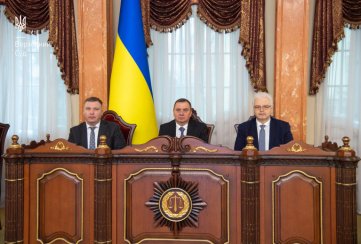
Reflecting on the contribution of the European Convention on Human Rights over the past 75 years, it is evident that it has been one of Europe's most fundamental responses to the devastation the continent faced after World War II. At its core, the Convention placed the individual at the centre, assigning the European Court of Human Rights a special role as an institutional guarantor of the rule of law, tasked with overseeing whether states comply with the rights and freedoms they committed to respect.
Today, amid the ongoing armed aggression by the Russian Federation against Ukraine, these foundational ideas carry particular weight. It is precisely during such trials that the Court's significance as an institution capable of preserving the legal dimension – even when brute force seeks to destroy it – manifests most clearly.
This was noted by the President of the Supreme Court, Stanislav Kravchenko, during the International Conference “75 Years of Implementing the European Convention on Human Rights in Europe and 30 Years in Ukraine: Achievements on the Path to Establishing the Rule of Law”.

Stanislav Kravchenko emphasized that within the national justice system, the Supreme Court plays a special role in introducing Convention standards. By ensuring the uniformity of case law, the Supreme Court consistently and systematically focuses on implementing the provisions of the Convention and the case law of the ECHR. In recent years, the Supreme Court's practice has seen a qualitative shift in approaches: greater attention is paid not only to formal references to ECHR judgments but primarily to the reception of the legal approaches and principles formulated by the Court for resolving a wide range of complex legal issues.
In the President's view, implementing the Convention is not merely a matter of normative changes. It involves a deeper transformation of legal thinking and the formation of a shared legal worldview based on respect for human rights.
To this end, the Supreme Court has intensified efforts to disseminate ECHR case law: preparing reviews of judgments, ensuring translations, and developing tools for access to Convention standards for the entire legal community. The Supreme Court prepares reviews of ECHR case law, which are sent to courts across all regions of Ukraine and made freely available on the Court's official information resources.
In 2025, another significant step forward was taken – the Ukrainian-language version of the European Court of Human Rights Knowledge Sharing Platform (ECHR Knowledge Sharing Platform) was presented, greatly expanding national courts’ access to Convention case law.
At the same time, implementing the Convention holds fundamental importance in the context of Ukraine’s European integration, as the EU’s requirements largely correspond to the standards enshrined in the Convention and ECHR case law. Thus, by implementing the Convention, Ukraine not only fulfills its international obligations but also consistently brings its national legal system closer to the legal space of the European Union.
For this reason, further deepening the implementation of Convention standards and developing a substantive and mutually respectful dialogue between the European Court of Human Rights and the Ukrainian judiciary remain key priorities for the future.
In summary, Stanislav Kravchenko emphasized that for the Supreme Court, the Convention is not merely a source of law, but a strategic guideline in shaping the uniformity of case law, developing modern legal thinking, and establishing justice based on respect for human dignity and the principle of the rule of law.
The President of the Supreme Court also expressed gratitude to the Council of Europe projects “Support to Ukraine in Implementation of the Council of Europe Standards on the judiciary”, “Fostering Human Rights in the Criminal Justice System in Ukraine – Phase II”, and “Strengthening Judicial and Non-Judicial Remedies for the Human Rights Protection of the War-Affected People in Ukraine” for their assistance in organizing this important event.
Head of the Department for the Implementation of Human Rights, Justice and Legal Cooperation Standards at the Council of Europe, Lilja Grétarsdóttir, first expressed gratitude on behalf of the Council of Europe to Ukrainian courts for their unwavering commitment to the principles of justice and the rule of law, which inspires and makes international cooperation fruitful.

“Ukraine has much to be proud of. Despite the war and destruction, Ukraine continues to implement reforms in the judicial system and achieves impressive results. The Council of Europe is proud of the effective cooperation with Ukrainian courts,” Lilja Grétarsdóttir stressed. She recalled that, with the support of the Supreme Court, a series of trainings for judges of all instances and jurisdictions on the application of the European Convention on Human Rights and analysis of ECHR case law had been organized. The Council of Europe representative also highlighted the development of the Ukrainian-language version of the ECHR Knowledge Sharing Platform.
Thanks to Council of Europe support projects in Ukraine, sociological surveys have been conducted on the level of public trust in the judiciary. According to Lilja Grétarsdóttir, this year’s survey made it possible to understand how the war has affected the judiciary in the public’s opinion, and objectively demonstrated that, despite the difficult conditions in which the Ukrainian judicial system operates, public trust in the courts is growing.
The speaker also highlighted significant progress and achievements in Ukraine’s legal system: recently, the Committee of Ministers of the Council of Europe adopted a decision to close its supervision of the execution of judgments in the group of cases Oleksandr Volkov v. Ukraine. The Committee of Ministers positively noted the functioning of the reformed system regulating issues of judicial career and disciplinary liability of judges, which became possible thanks to a series of legislative and institutional reforms carried out since 2016 with extensive expert support from the Council of Europe.
At the same time, in Lilja Grétarsdóttir’s view, it is also worth discussing the challenges that Ukraine’s judicial system continues to face in aligning with Council of Europe standards. Among these challenges – which significantly affect the level of public trust in the courts – is the enforcement of court decisions, in particular in the group of cases Burmych and Others v. Ukraine concerning the non-enforcement of national court judgments. Therefore, Ukraine is expected to take broad general measures to address the problem of prolonged enforcement of judicial decisions.
Lilja Grétarsdóttir assured that the Council of Europe remains determined to continue assisting Ukraine in these difficult times in ensuring justice and strengthening public trust in the justice system: “We believe that accountability, fairness, and resilience of the judiciary will support Ukraine in its further development. Through our joint efforts, we can ensure that justice and accountability remain pillars in responding to Russian aggression and in shaping a peaceful future based on rights - a future that the Ukrainian people deserve”.
Deputy Head of the Office of the President of Ukraine Iryna Mudra emphasized: over its 75 years of existence, the European Convention on Human Rights has become more than an international treaty. It has become the foundation of a unique supranational system for the protection of human rights, serving as a value-based and legal benchmark for national legal orders. The key point is that the Convention has always been – and remains – about the real life of individuals. That is why the European Court of Human Rights plays a leading role in this system, constantly reminding states that human rights must not merely be proclaimed, they must be guaranteed.
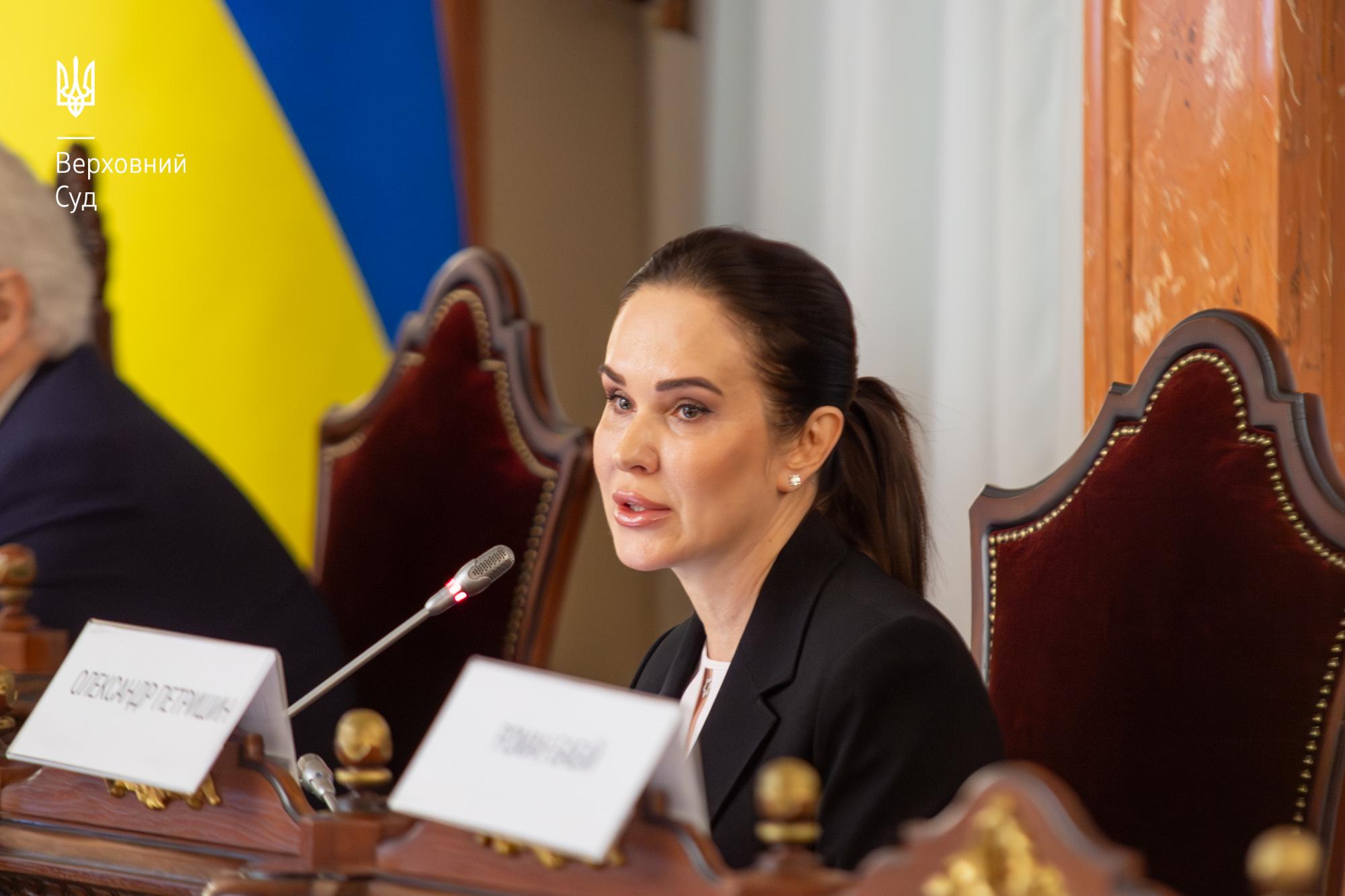
For Ukraine, nearly 30 years of implementing the Convention represent a period of profound transformation: from a declarative approach to human rights to their real integration into the legal system; from abstract formulations to the concrete content of rights and state obligations; and from occasional references to ECHR case law to its systematic application by national courts.
At the same time, as Iryna Mudra noted, ECHR case law has clearly revealed our systemic problems: the right to a fair trial, non-enforcement of court decisions, protection of property rights, freedom of expression, and conditions of detention. This has served as an impetus for legislative, institutional, and managerial changes. This is precisely how the Convention functions as a tool for reform.
One of the most sensitive challenges remains the enforcement of court decisions, especially when the debtor is the state. The adoption in 2020 of the National Strategy for Resolving the Issue of Non-Enforcement of Court Decisions Where the Debtor is a State Body or State Enterprise, Institution, or Organization marked an important step, but the strategy alone does not resolve the problem. Thus, implementing the Convention is not solely the responsibility of the courts. It is a shared responsibility: of the Verkhovna Rada of Ukraine for high-quality legislation, of the Cabinet of Ministers of Ukraine for policy and resources, and of all relevant government bodies. Without this coordinated effort, the Convention may remain unimplemented.
For Ukraine, implementing the Convention is inextricably linked to European integration. “The ratification of the Convention in 1997 and the adoption of the Law of Ukraine ‘On the Execution of Judgments and Application of the Case Law of the European Court of Human Rights’ in 2006 represented our civilizational choice, made long before Ukraine obtained EU candidate status. Today, the provisions of the Convention and ECHR case law form the foundation for the post-war reconstruction of a state that seeks to build trust rather than fear,” Iryna Mudra is convinced.
For nearly four years now, Ukraine has lived under conditions where every day requires balancing security and freedom, public interest and human rights. It is precisely in these circumstances that the Convention only gains greater significance, and Ukraine demonstrates that even during war, we do not abandon the principle of the rule of law or restrict human rights beyond what the situation demands. In circumstances where traditional human rights protection mechanisms have proven not fully effective or always sufficient, Ukraine, together with its partners, is working to establish a special tribunal for the crime of aggression by the Russian Federation and an international compensation mechanism for the damages caused by Russia. These instruments will complement the Convention in response to the new reality.
“Thirty years of implementing the Convention have proven: for Ukraine, human rights and the rule of law are not rhetoric, but a condition for justice, peace, democratic development, and citizens’ trust in the state. It depends on us – judges, lawmakers, government officials, and legal professionals – whether the Convention remains a mere text or becomes a living instrument for protecting human rights,” summarized the Deputy Head of the Office of the President of Ukraine.
Addressing the conference participants, President of the European Court of Human Rights Mattias Guyomar expressed solidarity with Ukraine, which continues to defend itself against Russia’s attacks.

He focused on the origins of the Convention as a unique human rights protection system, created in response to the devastation caused by war and any manifestations of totalitarianism. From 12 original signatories, the Convention has expanded to 47 states (now 46 following Russia’s exclusion from the Council of Europe). It has become the most advanced international mechanism for the protection of human rights.
As Mattias Guyomar explained, the European Court of Human Rights has repeatedly described the European Convention on Human Rights as a constitutional instrument of the European public order. This does not exclude national constitutional identities, as the Convention draws inspiration from the political and legal traditions of the member states.
The Convention system is complementary in nature. As early as 1976, the ECHR confirmed that the protection mechanism established by the Convention is subsidiary to national systems of human rights protection. In 2021, the principle of subsidiarity (which holds that national authorities bear the primary responsibility for interpreting, protecting, and implementing Convention rights and freedoms) was officially enshrined in the text of the Convention’s Preamble.
This is particularly important in the context of Ukraine when addressing legal dilemmas arising from the war. For example, in the judgment in the case of Borzykh v. Ukraine, the Court recalled that national authorities are in a better position than the ECHR to understand and assess specific problems, including those related to the protection of national security.
The President of the ECHR also noted that shared responsibility implies a constructive and open dialogue in implementing Convention standards. The principle of shared responsibility is also reflected in institutional cooperation between courts. An example of such dialogue is the Network of the Presidents of the Supreme Judicial Courts of the European Union, of which Ukraine’s Supreme Court is a member.
Mattias Guyomar recalled that another avenue of judicial dialogue is the possibility of requesting an advisory opinion from the ECHR under Protocol No. 16 to the Convention. On June 25, 2025, the Grand Chamber of Ukraine’s Supreme Court addressed the ECHR for the first time with a request for an advisory opinion in a case concerning the removal of obstacles to the use of residential premises. The Grand Chamber of the ECHR is currently considering this request.
Judge of the European Court of Human Rights in respect of Ukraine, Mykola Hnatovskyy, delivered the keynote address on the topic “National Judicial Practice Through the Lens of European Court of Human Rights Judgments in 2025”. He thanked the Supreme Court for its proactive stance in cooperating with the European Court of Human Rights, taking into account its case law, and maintaining dialogue – without which the effective implementation of the provisions of the European Convention on Human Rights would be impossible.

Ukraine has been a member state of the Council of Europe for 30 years. Despite the challenges of war, our country is doing everything possible to preserve the state and affirm its true identity, taking important steps toward full European integration which is impossible without full participation in the Council of Europe and the implementation of ECHR judgments, taking into account the shared legal traditions that unite Europe and define both European and Ukrainian identity.
According to Mykola Hnatovskyy, this year the European Court of Human Rights witnessed events that will be remembered for a long time. One of them was the ECHR Grand Chamber’s adoption of a judgment in the interstate case Ukraine and the Netherlands v. Russia. “This judgment is perhaps the most important in the entire history of the ECHR, as it addresses the very meaning of the existence of the European Convention on Human Rights – life on the European continent that must be grounded in the principles of peace, human rights, democracy, and the rule of law,” the judge is convinced.
Importantly, as of the beginning of 2025, slightly fewer than 8,000 applications against Ukraine were pending before the European Court of Human Rights. By the end of this year, that figure has halved (to fewer than 4,000). As Mykola Hnatovskyy noted, this represents the most significant change and the greatest progress ever achieved in this area. Moreover, it is directly linked to the judgments in the cases Ukraine and the Netherlands v. Russia and Ryashentseva and Others v. Ukraine. The ECHR’s decision in the latter case demonstrates that, despite the war, a fully functioning judicial system operates in Ukraine and that the country is capable of providing effective remedies and access to national courts.
Regarding the specific features of judgments adopted by the European Court of Human Rights in cases concerning Ukraine, Mykola Hnatovskyy highlighted several trends. First, in 2025, there was a substantial increase in the number of judgments against Ukraine adopted by the seven-judge chamber of the ECHR. In this format, the Court considers only complex, ambiguous cases in which there is no established Court practice. This indicates that the Court is paying particular attention to finding answers in difficult and unclear matters. The second trend concerns the growing number of complaints and applications against Ukraine examined in the form of Committee judgments. These relate to issues already covered by well-established ECHR practice, that is, systemic problems.
As in previous years, a huge number of applications against Ukraine were declared manifestly inadmissible by a single judge of the ECHR. The majority of these cases are rejected under the “fourth instance” doctrine: the ECHR once again reminds that it is not an appellate or cassation court over national courts and will not substitute its own assessment for that of the national authorities.
The rapporteur explained that the “fourth instance” doctrine is closely linked to the concept of the absence of arbitrariness as an important factor in ensuring the rule of law. The Court increasingly formulates the key question as follows: “Is the national decision manifestly unreasonable or arbitrary?” Therefore, the quality of reasoning in national court decisions (i.e., the court’s ability to demonstrate the logic of its reasoning) is a central issue.
Every violation of the Convention found by the ECHR, Mykola Hnatovskyy noted, is a violation by the state, not by a specific judge or a specific panel of judges. The ECHR does not establish disciplinary or personal liability for particular judges, nor does it re-examine cases anew. The Court assesses whether the state has provided an adequate normative and institutional framework for the protection of human rights. This is especially evident in cases concerning the right to property, the right to a fair trial, freedom of expression, and similar issues. In this context, the ECHR clearly points to the role of parliament rather than the courts (for example, this year important judgments were delivered in the cases Denysyuk and Others v. Ukraine concerning the conduct of covert investigative (search) actions and Korniyets and Others v. Ukraine concerning searches without prior court authorization, in which violations of Convention norms were established due to the insufficient quality of national legislation).
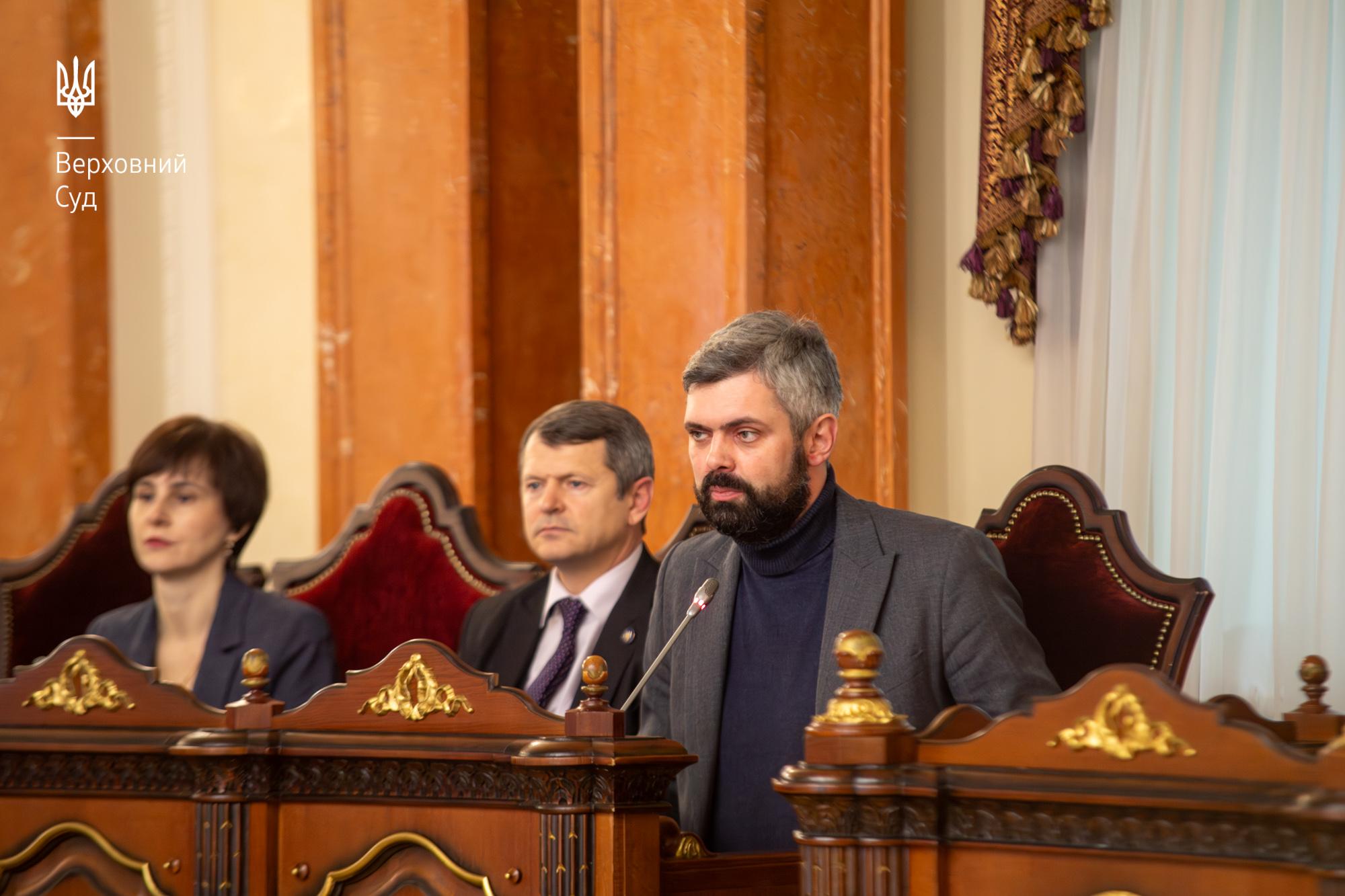
At the same time, this year - as in previous years - ECHR case law shows that the Court quite often agrees with the national court and upholds its conclusions, including those of the Supreme Court. In particular, in the recent judgment in the case Basyuk and Others v. Ukraine, the Court endorsed the position of the Supreme Court in a case concerning the payment of wage arrears and certain other payments to employees of “Ukrzaliznytsia” in temporarily occupied territories. The ECHR recognized that the national courts were operating in the context of a new, unprecedented situation caused by the war, and that the application of the force majeure concept in this case was not arbitrary or capricious, since the state retains a wide margin of appreciation, particularly in matters related to certain payments in wartime conditions. “The ECHR does not expect perfect decisions in emergency circumstances. It expects consistency, foreseeability, and conscientious reasoning of decisions,” Mykola Hnatovskyy emphasized.
Another group of cases that is illustrative from the perspective of the dialogue between the ECHR and the Supreme Court concerns so-called “title annulment” cases (where the state, typically upon a prosecutor’s motion, revokes property rights, thereby interfering with the right guaranteed by Article 1 of Protocol No. 1 to the Convention). The Court’s relevant case law (judgments in the cases Drozdyk and Mikula v. Ukraine, Tverdokhlebova v. Ukraine, and Kosmatska v. Ukraine) demonstrates that the state has the right to correct errors in the sphere of property rights, but any interference must be foreseeable, proportionate, and accompanied by appropriate procedural safeguards.
The judge also drew attention to the judgment in the case LLC ‘M.S.L.’ v. Ukraine, which addresses the limits of judicial review of decisions imposing sanctions by national courts. The ECHR indicated that limited judicial review does not equate to an absence of judicial review, and recalled that it understands and respects the content of Article 124 of the Constitution of Ukraine in this regard. Of course, the practice in this unique situation remains complex both for national courts and for the ECHR itself.
In summary, Mykola Hnatovskyy emphasized that this has been a productive year in terms of dialogue between the European Court of Human Rights and Ukrainian national courts. The ECHR firmly reiterates that it is not and will not become a “fourth instance”, and that violations of the Convention are a matter of the state’s overall responsibility, not of specific individuals. The Court also recognizes that wartime conditions expand the state’s margin of appreciation, but they do not, of course, eliminate Convention guarantees.
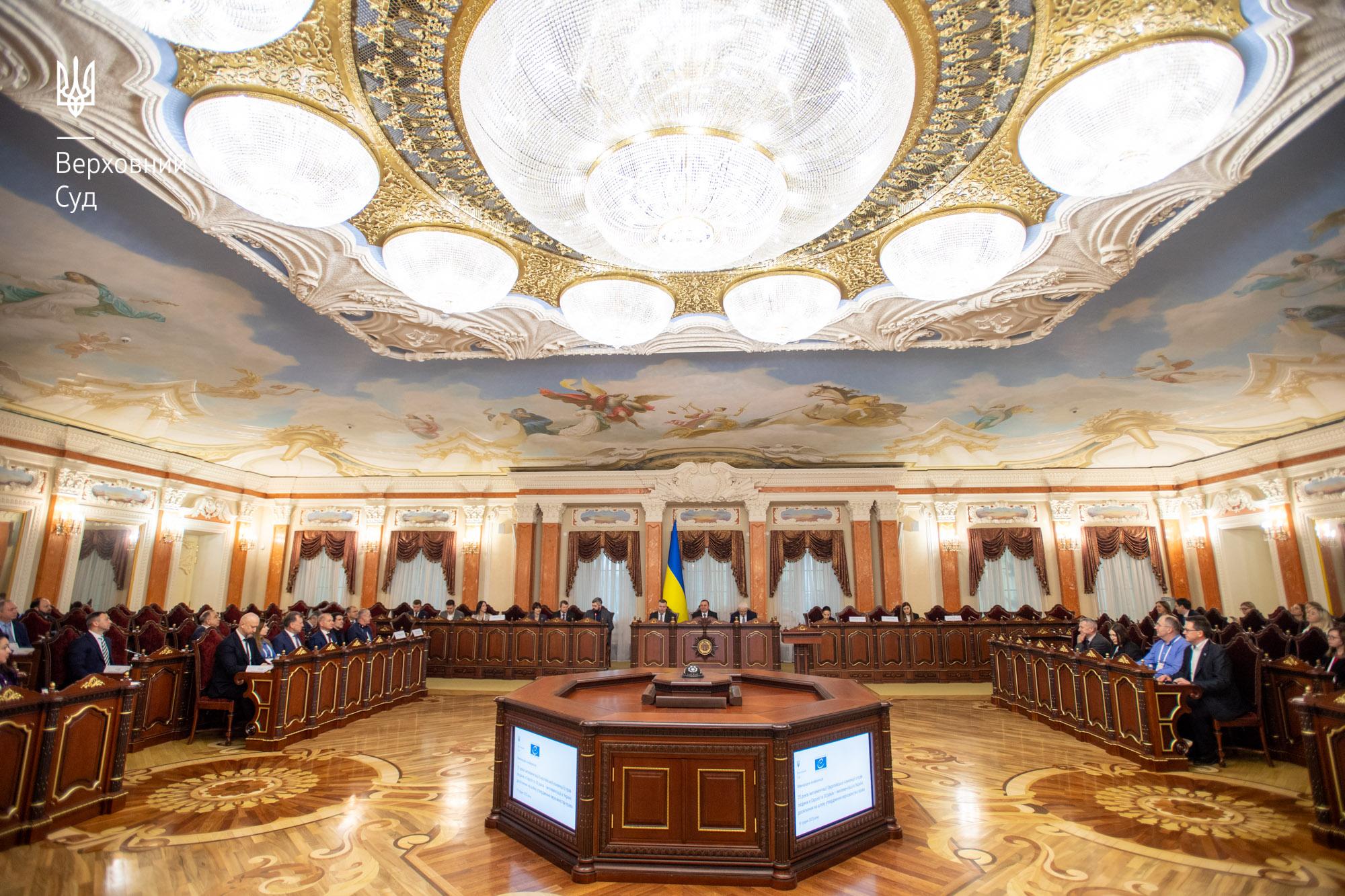
For more details on the discussions in the subsequent sessions of the conference, stay tuned to the Supreme Court’s official information resources.
Join the livestream of the event on the Supreme Court’s YouTube channel: https://www.youtube.com/watch?v=yyjEv0vr-V0.
_03_03.png)