Contact center of the Ukrainian Judiciary 044 207-35-46
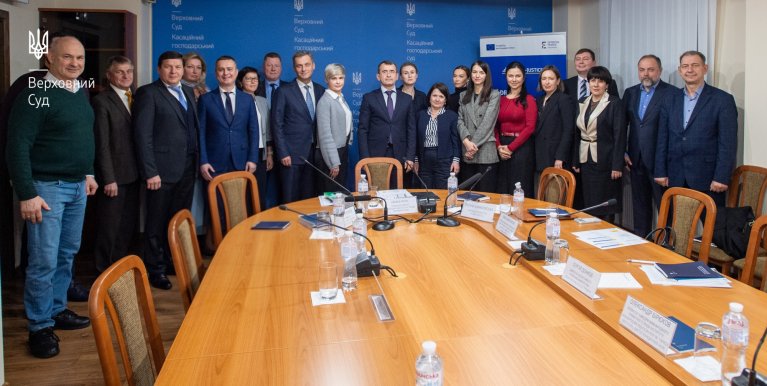
This was discussed at an event dedicated to the analysis of the main provisions and practical application of Regulation (EU) 2015/848 on insolvency proceedings, as well as the presentation of its Ukrainian translation. The event, organized by the Commercial Cassation Court of the Supreme Court in cooperation with the EU Project Pravo-Justice, took place on December 11, 2025.
During the discussion, Judge of the Supreme Court in the Commercial Cassation Court, Volodymyr Pohrebniak, delivered a report titled “Normative Legal Regulation of Cross-Border Bankruptcy in Ukraine: Current State and Issues”.
He noted that since 1992, Ukraine has undergone an evolution in its bankruptcy legislation. The Code of Ukraine on Bankruptcy Procedures represents the fourth version of this legislation. In 2013, the Law of Ukraine “On Restoration of Debtor’s Solvency or Recognition of Debtor as Bankrupt” was supplemented with a section on cross-border bankruptcy. At the same time, processes to improve regulation in this area were taking place at the European level, which influenced the expert community in Ukraine and, accordingly, changes to national legislation.

At the international level, there existed the UNCITRAL Model Law on Cross-Border Insolvency of 1997, as well as Regulation (EC) No 1346/2000 on insolvency proceedings. These documents influenced the aforementioned amendments to the Law of Ukraine “On Restoration of Debtor’s Solvency or Recognition of Debtor as Bankrupt”, while Regulation (EU) 2015/848 on insolvency proceedings influenced the amendments to the Code of Ukraine on Bankruptcy Procedures.
The speaker emphasized that a proper understanding of the relevant provisions of the Code requires knowledge of the norms of the said Regulation. He expressed hope that Ukraine would soon apply these norms as a member of the EU. He also added that the provisions of the Regulation have direct effect for EU member states.
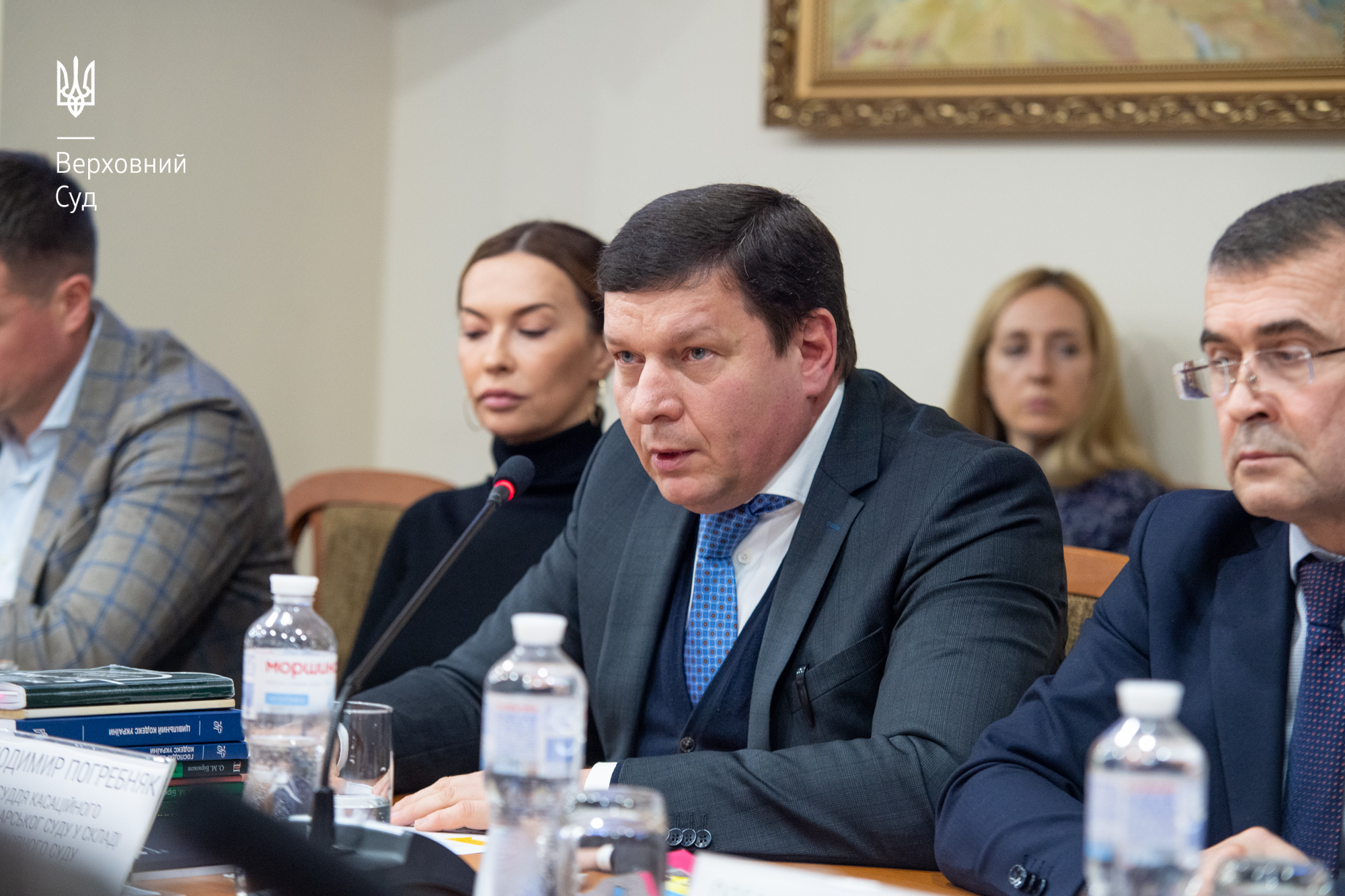
Volodymyr Pohrebniak noted that the presented translation of the document was done professionally and should be part of the working library of every judge handling bankruptcy cases in order to understand the “spirit” of the relevant provisions of the Code of Ukraine on Bankruptcy Procedures. The judge also stated that the reflection of these norms in the Code demonstrates that Ukraine is carrying out significant preparatory work towards achieving full membership in the EU.
Judge of the Supreme Court in the Commercial Cassation Court, Viacheslav Pieskov, spoke on the topic “Judicial Practice and Prospects of Applying the Regulation”.
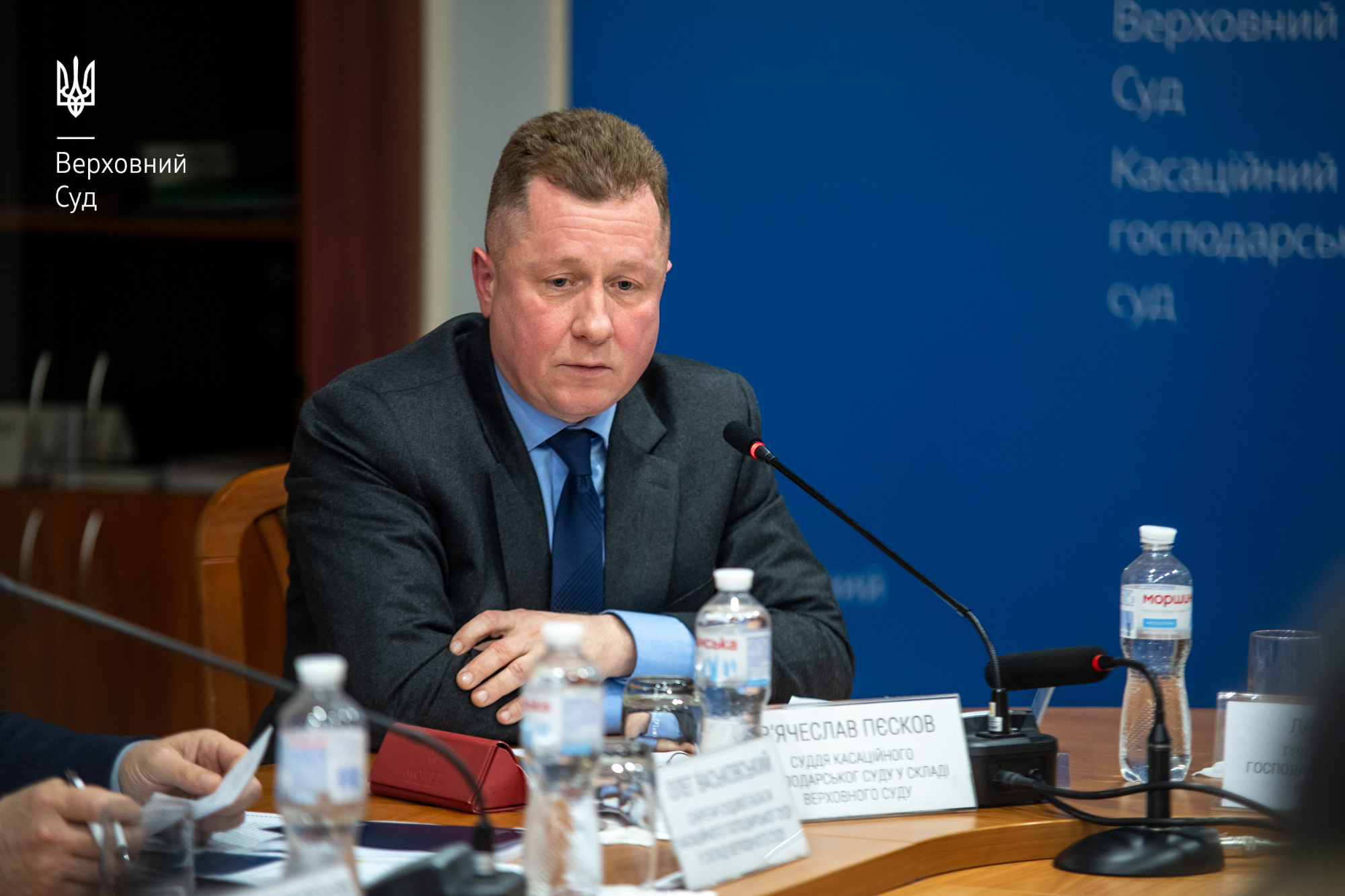
He noted that in the context of European integration processes, it is advisable for courts to define two strategic goals that would shape the development of insolvency law: reducing the number of cases against Ukraine pending before the European Court of Human Rights, including those related to bankruptcy procedures, and improving the country’s ranking in the World Bank’s Doing Business (now B-Ready) report in the “Resolving Insolvency” category. The last time Ukraine participated in this ranking in 2023, it placed only 146th out of 190 economies in that category.

The speaker stated that understanding the provisions of the Regulation will also contribute to improving our country’s position in the ranking, as it will help find common ground with representatives of European countries participating in cross-border bankruptcy proceedings. The document contains many definitions that are relatively new to our legislation. Today, it is very important that we, even before becoming full EU members, already begin to speak the same language as Europeans in this field.
Viacheslav Pieskov emphasized that coordination between two insolvency practitioners located in different countries, or between two courts situated in different jurisdictions within a single cross-border insolvency proceeding regulated by the Regulation, is still a new matter for us. We will need to develop our understanding of it together — judges, insolvency practitioners, and participants in bankruptcy proceedings. Therefore, cooperation in this area is essential.

Director of the Bankruptcy Department of the Ministry of Justice of Ukraine, Serhii Donkov, delivered a report titled “Recognition of Foreign Bankruptcy Proceedings in Ukraine: Practical Aspects and Prospects for Adapting European Standards”.
He noted that over recent years, bankruptcy legislation has undergone significant changes. However, it currently requires further refinement. This legislation must be unified and harmonious. He pointed out that the implementation of European legislation is a very delicate matter. At the same time, such implementation should take into account the realities of the national economy, law enforcement, and judicial practice.
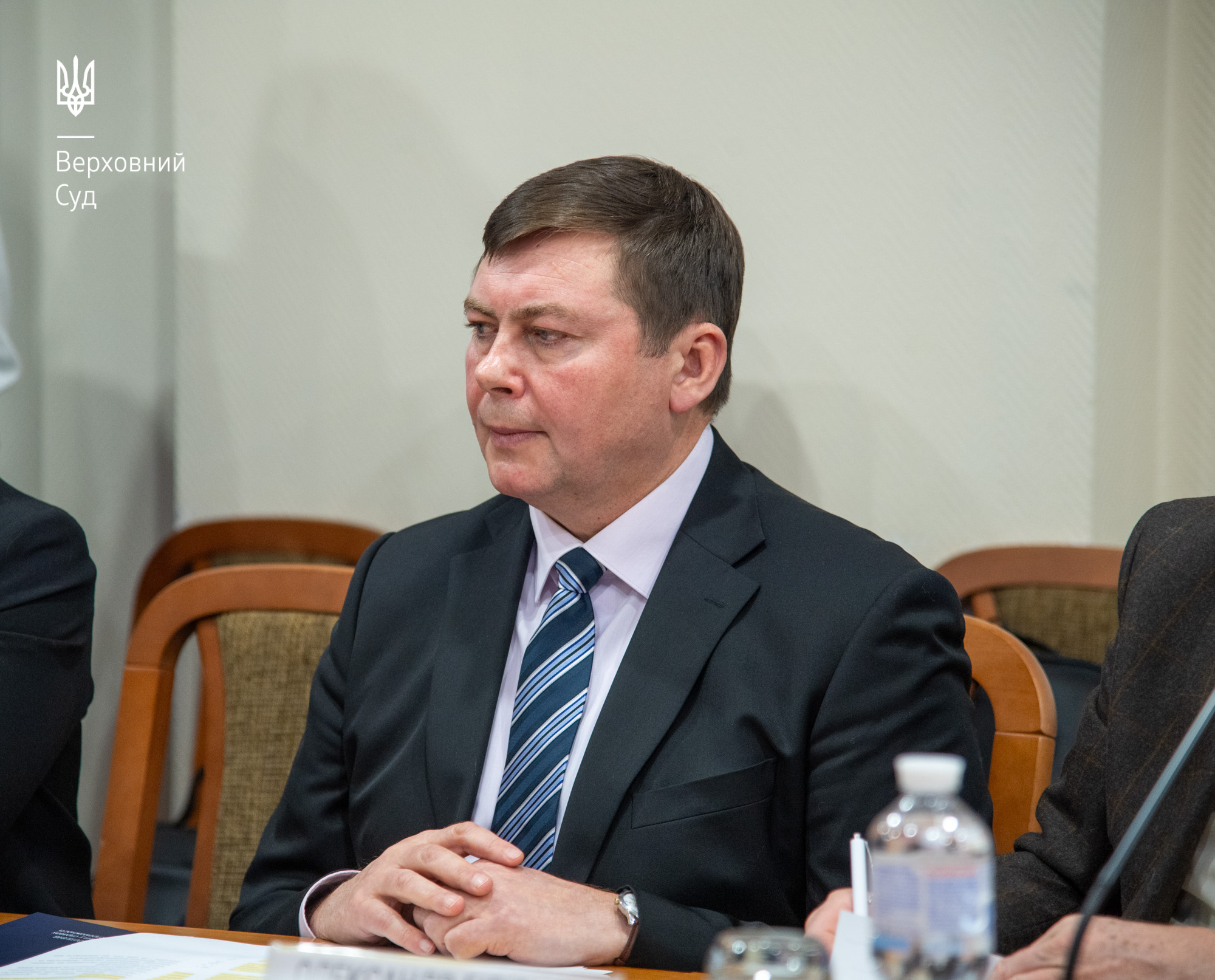
The speaker noted that Regulation (EU) 2015/848 is part of a large European integration package that the Ministry of Justice of Ukraine is working on. The issue of cross-border bankruptcy currently occupies a special place in Ukraine, as more and more business processes extend beyond a single jurisdiction. The interconnectedness of economies requires adequate legal interaction mechanisms to protect the rights of creditors and debtors, as well as to ensure the transparency of bankruptcy procedures. The harmonization of legislation governing all business relations is one of the key directions for the development of Ukrainian law.
Serhii Donkov also pointed out that with the development of cross-border bankruptcy legislation, a certain group of specially trained professionals may emerge within the community of insolvency practitioners who could be appointed specifically in such proceedings.

In addition, he drew attention to the resolution of the Commercial Cassation Court of the Supreme Court dated December 22, 2021, in case No. 910/5107/20. In this case, the practitioner in the foreign bankruptcy proceeding of joint-stock company “CGM Czech a.s.” applied to the Commercial Court of Kyiv with a motion requesting recognition in Ukraine of the foreign bankruptcy proceeding and the foreign insolvency practitioner, the introduction of a moratorium on the satisfaction of creditors’ claims, and the opening of the asset disposal procedure.
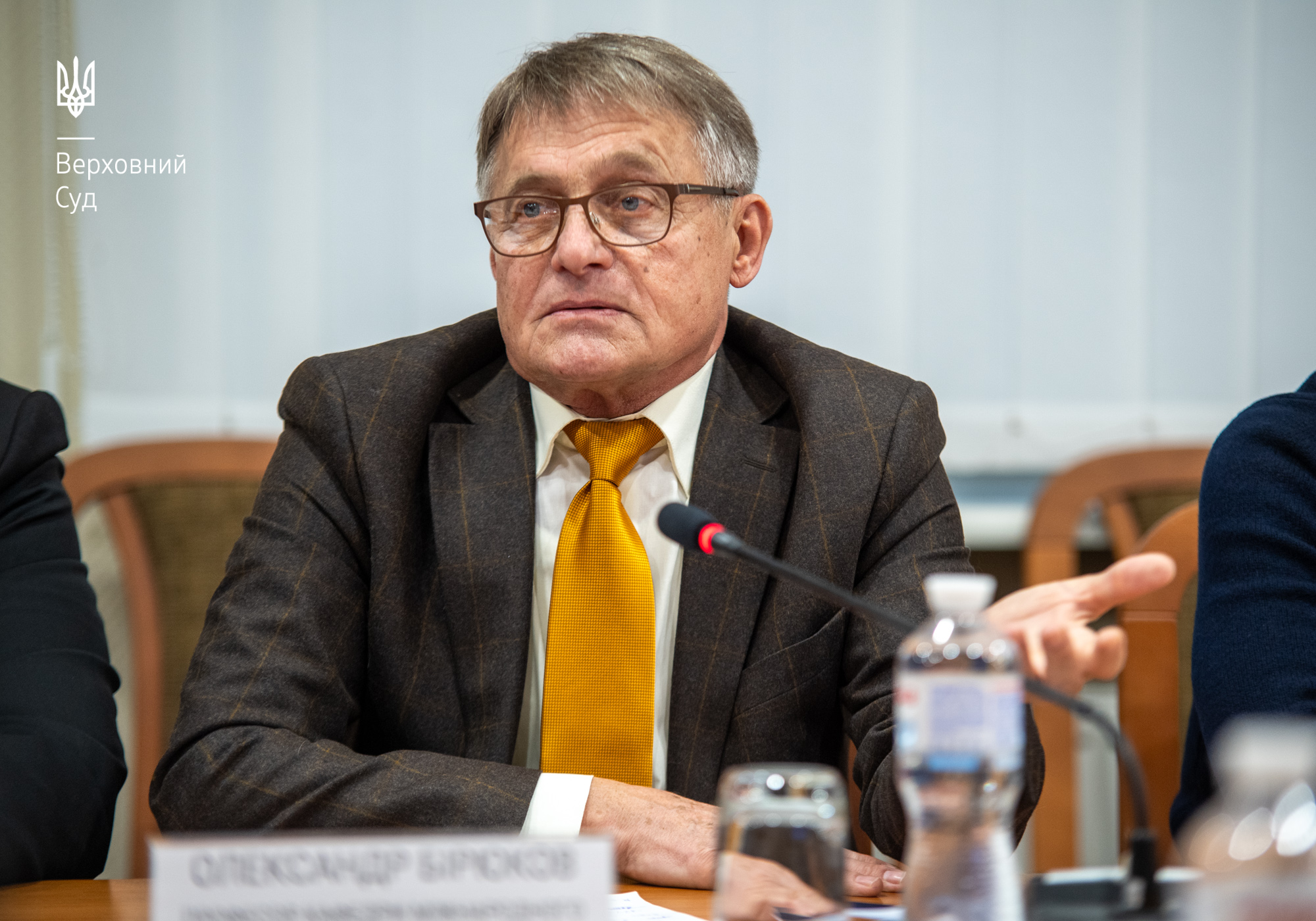
Professor of the Department of Private International Law at the Institute of International Relations of Taras Shevchenko National University of Kyiv, Oleksandr Biriukov, delivered a report on the topic “International Regulation of Cross-Border Bankruptcy: Best Practices for Ukraine”.
He stated that the translation of Regulation (EU) 2015/848 is an excellent step towards Ukraine’s European integration. At the same time, translating and scientifically editing such a complex legal document, which is based on different conceptual foundations, is an extremely difficult and responsible task.

The speaker noted that national legislation on cross-border bankruptcy is based on the UNCITRAL Model Law on Cross-Border Insolvency of 1997. In contrast, the Regulation is aimed at somewhat different legal relations and has different mechanisms and terminology. Today, discussions are also ongoing within the EU regarding the relevant terminology and the application of the provisions of the Regulation.
In addition, Oleksandr Biriukov said that judges need to take a comprehensive approach to the application of legislation on cross-border bankruptcy and understand how it works.

Summarizing the discussion, the participants of the event emphasized that understanding and practical comprehension of the provisions of Regulation (EU) 2015/848 is a necessary prerequisite for forming consistent judicial practice in cross-border insolvency cases. The presentation of its Ukrainian translation is viewed as an important step towards harmonizing national legislation with EU law, as well as a tool that will promote uniformity in law enforcement, the development of professional expertise, and the preparation of Ukraine’s judicial system for future membership in the European Union.

The video of the event can be viewed on the YouTube channel of the Supreme Court: https://www.youtube.com/watch?v=-9UepA0btL4.
_03_03.png)