Contact center of the Ukrainian Judiciary 044 207-35-46
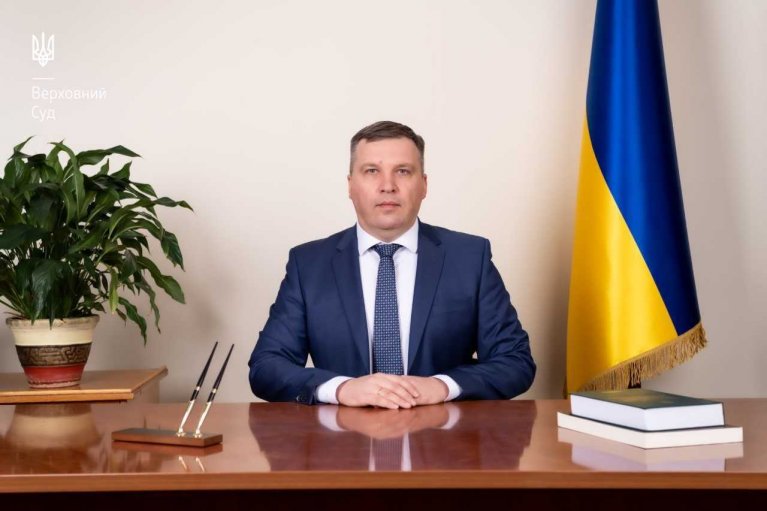
During the “lunch session” webinar of the project “Criteria for the Assessment of Environmental Damage” (CAED) within the framework of the ECA incI ECD initiative (Environmental Compliance Assurance including Environmental Crime Directive implementation), the Secretary of the Grand Chamber of the Supreme Court Vitalii Urkevych spoke about the legal nature of ecocide as a crime under Ukrainian legislation and its correlation with European approaches in the field of environmental protection. He outlined the key challenges facing the Ukrainian legal system in the context of large-scale environmental damage caused by the armed aggression of the Russian Federation and emphasized the relevance of the topic of ecocide for both national and international legal order.
The Secretary of the Grand Chamber of the Supreme Court drew attention to the provisions of Directive (EU) 2024/1203 (Environmental Crime Directive – ECD), which provides for the qualification of offences causing widespread and significant damage to ecosystems as serious criminal offenses. He emphasized that such acts may be comparable to ecocide. Ukraine already has a corresponding provision in its criminal legislation, and the process of harmonization with the EU acquis communautaire is an integral part of the country’s European integration course, particularly after Ukraine received EU candidate status in 2022.
Vitalii Urkevych noted that in 2001, crimes against peace, the security of humanity, and the international legal order were separated into Section XX of the Criminal Code of Ukraine, and pointed out that all articles of this section establish criminal liability for such socially dangerous acts. He focused in detail on the elements of the crime of ecocide provided for in Article 441 of the Criminal Code of Ukraine. The judge explained that ecocide covers the mass destruction of flora or fauna, poisoning of the atmosphere or water resources, as well as other actions that may cause an environmental catastrophe. The speaker described the elements of the crime — the object, the objective and subjective sides, and the subject — and stressed that ecocide is an intentional crime, which differs from other environmental offenses in the form of guilt (the subjective side).
The judge also drew attention to the need to take into account the contextual element when qualifying ecocide, namely the perpetrator’s awareness that the relevant actions are being committed in the context of an armed conflict. He cited examples of significant environmental damage caused by Russia’s war against Ukraine, including the destruction of critical infrastructure, the devastation of natural ecosystems, and the death of animals, and noted that the scale of such consequences is estimated in hundreds of billions of euros.
In conclusion, Vitalii Urkevych remarked that Russian aggression has clearly demonstrated the reality of the threat of ecocide to the modern world. He emphasized the need to strengthen liability for such acts both at the national and international levels and stated that Ukraine is already playing a leading role in shaping approaches to the criminalization of ecocide. According to him, the Ukrainian experience is of fundamental importance for ensuring environmental security and protecting the environment in the interests of all humanity.
The presentation by Vitalii Urkevych is available in English at https://court.gov.ua/storage/portal/supreme/prezentacii_2025/Ecocide_as_a_crime_under_Ukrainian_law_.pdf.
_03_03.png)