Contact center of the Ukrainian Judiciary 044 207-35-46
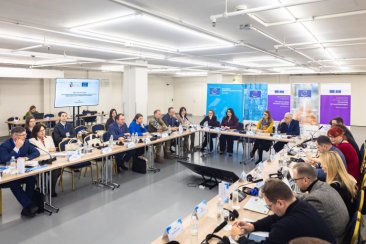
Supreme Court judges took part in the Council of Europe High-Level Dialogue “How to Introduce a New Social Model in Ukraine: Experience of Other Countries in Light of Council of Europe Standards”, held on December 8, 2025 in Kyiv. The discussion focused on key challenges in reforming the state’s social policy, in particular: issues related to the enforcement of court decisions, the role of courts in ensuring a balance between social guarantees and the state’s budgetary capacity, systemic causes of disputes in the social sphere.
The dialogue aimed to strengthen interaction among legislative, executive, and judicial authorities in the context of building a social state and to find common approaches to achieving an appropriate balance between the state’s social obligations, its financial resources, and the constitutional principles of social justice.
Judge of the Supreme Court in the Civil Cassation Court Olha Stupak drew attention to the sharp increase in citizens’ appeals to courts amid the war, mass population displacement, and non-enforcement of national court decisions concerning social payments. According to her, the court remains the “last bulwark” for people who do not receive the state-guaranteed protection, while non-enforcement of judgments only deepens the problem and generates new lawsuits over delayed execution.
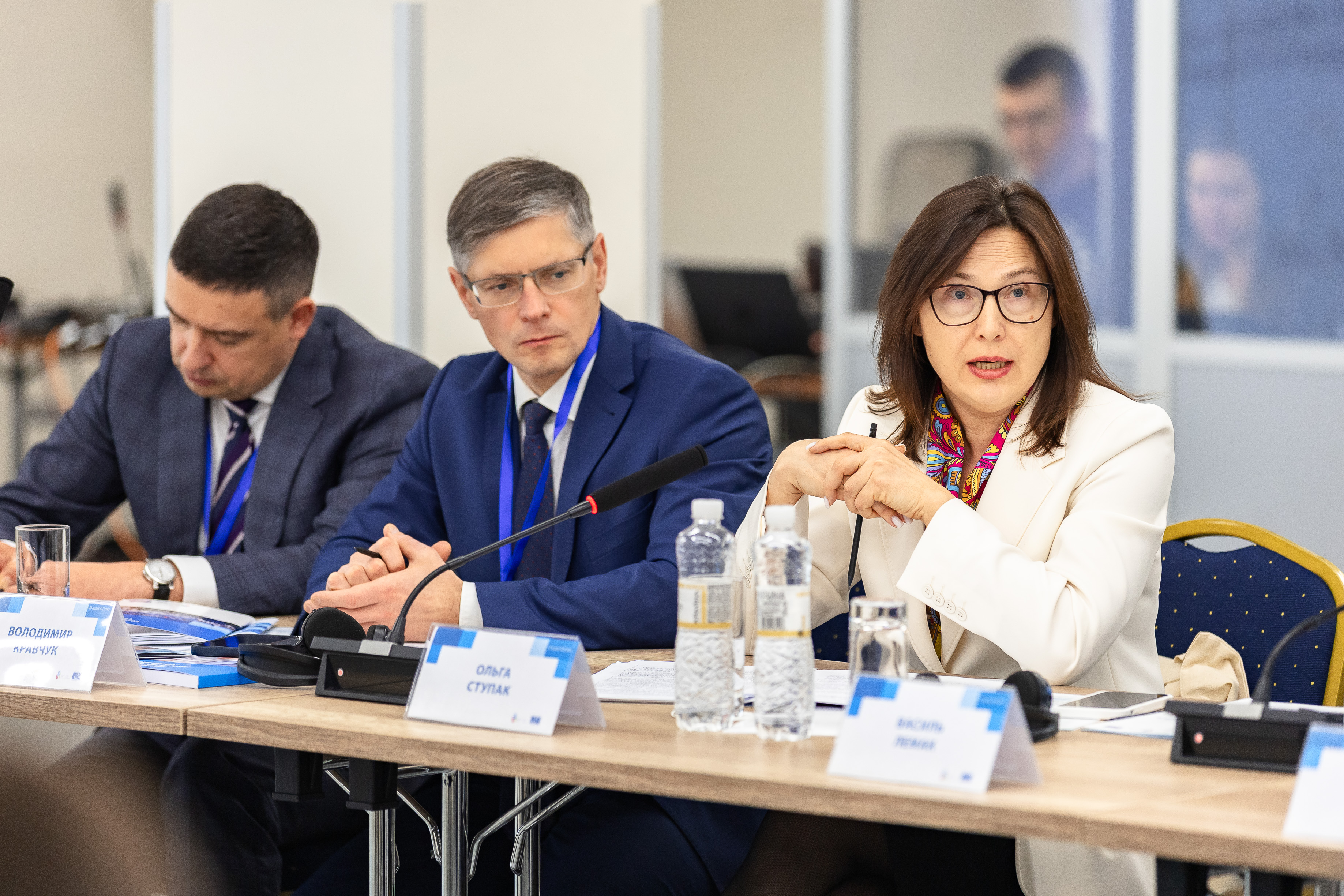
She separately addressed the Grand Chamber of the Supreme Court’s decision of May 14, 2025, in the model case No. 440/14216/23 concerning the recovery of one-time monetary assistance. This ruling triggered further debate within the judicial system and was referred by the Plenum of the Supreme Court to the Constitutional Court of Ukraine for consideration. Judge Stupak emphasized that, for the first time, the Grand Chamber clearly defined the limits within which the state may impose restrictions on social guarantees during wartime, distinguishing the scope of application of Articles 22 and 46 of the Constitution of Ukraine.
Concluding her speech, Olha Stupak stressed the importance of building social policy on the principles of realistic budgetary possibilities and responsible societal attitudes toward the institution of the family. She cited examples from her own practice showing how an excessive number of benefits can create false incentives and artificially generate vulnerable groups. In her view, the new social model should be grounded in raising moral and ethical standards, strengthening parental and children’s responsibility, and fostering honest dialogue between the state and citizens about the real possibilities of the budget.
Judge of the Supreme Court in the Administrative Cassation Court Volodymyr Kravchuk emphasized that the majority of social disputes arise due to imperfections in legislation, the presence of legal gaps, and contradictory norms. He stressed that courts are forced to apply a complex set of interpretive tools in light of the Constitution of Ukraine, decisions of the Constitutional Court of Ukraine, and the case law of the European Court of Human Rights, which is oriented toward the protection of human rights.
.jpg)
In addition, the judge highlighted the problem of insufficient response by public authorities to individual court rulings that identify the need for legislative changes. He cited examples related to mass disputes involving Chernobyl victims, where signals from the courts about problems in legal regulation remained without appropriate action. In his view, ignoring the legal positions of the Supreme Court and the repetition of the same violations create excessive workload on the judicial system and lead to inefficient use of state resources.
Volodymyr Kravchuk also addressed the issue of state debt on social and pension payments. The judge stressed that the state must seek comprehensive solutions that will prevent the accumulation of new debts and reduce the number of recurring disputes.
Judge of the Supreme Court in the Commercial Cassation Court Yehor Krasnov also participated in the Dialogue.
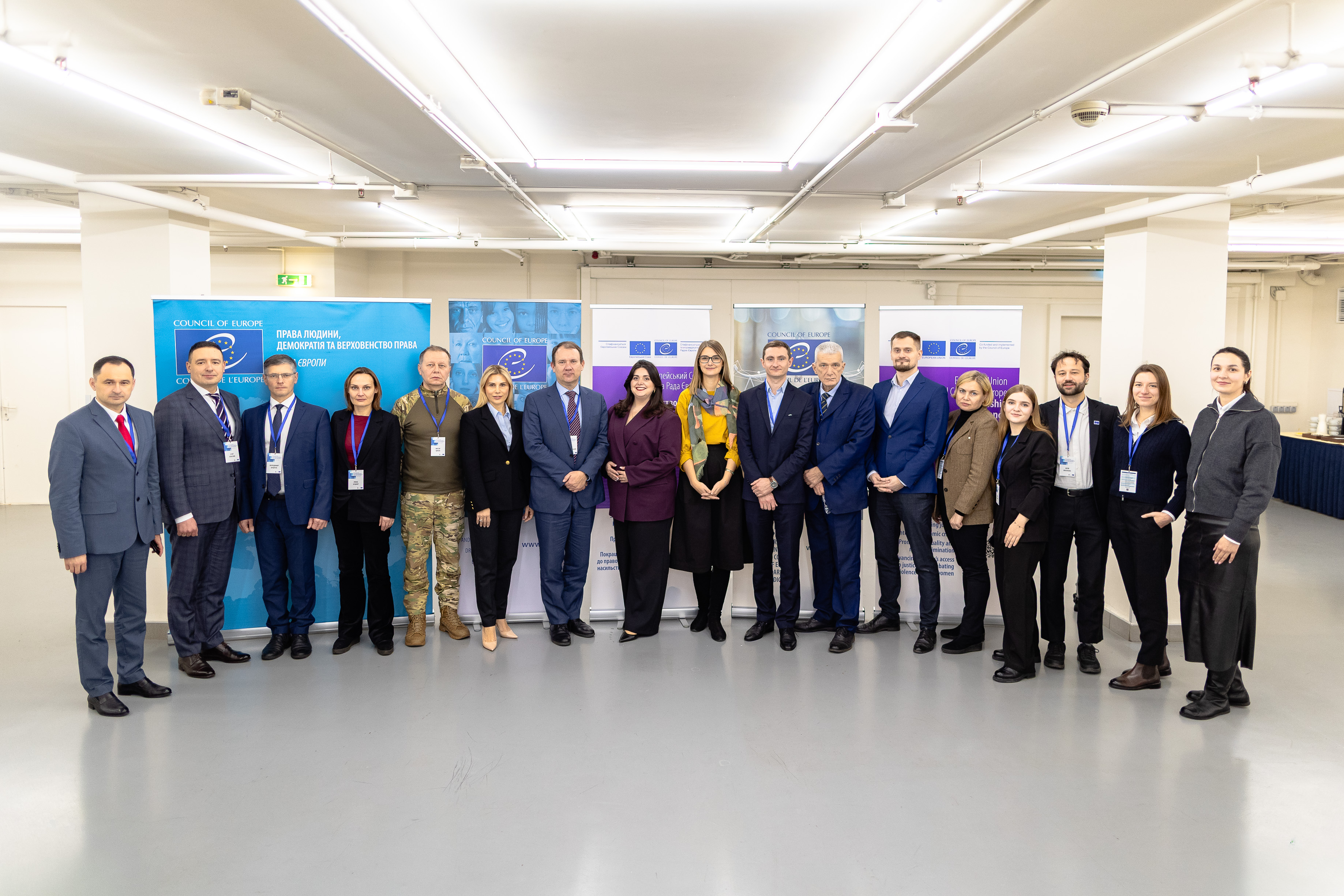
The event was organized within the framework of the Council of Europe projects “Strengthening the Social Dimension in Ukraine”, “Support to Ukraine in Implementing Council of Europe Standards on the Judiciary”, and “Support to the Development of Constitutional Justice in Ukraine”, which are being implemented under the Council of Europe Action Plan for Ukraine “Resilience, Recovery and Reconstruction” for 2023–2026.
Photo courtesy of the organisers.
_03_03.png)