Contact center of the Ukrainian Judiciary 044 207-35-46
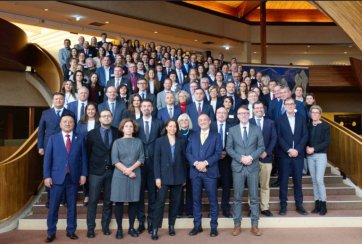
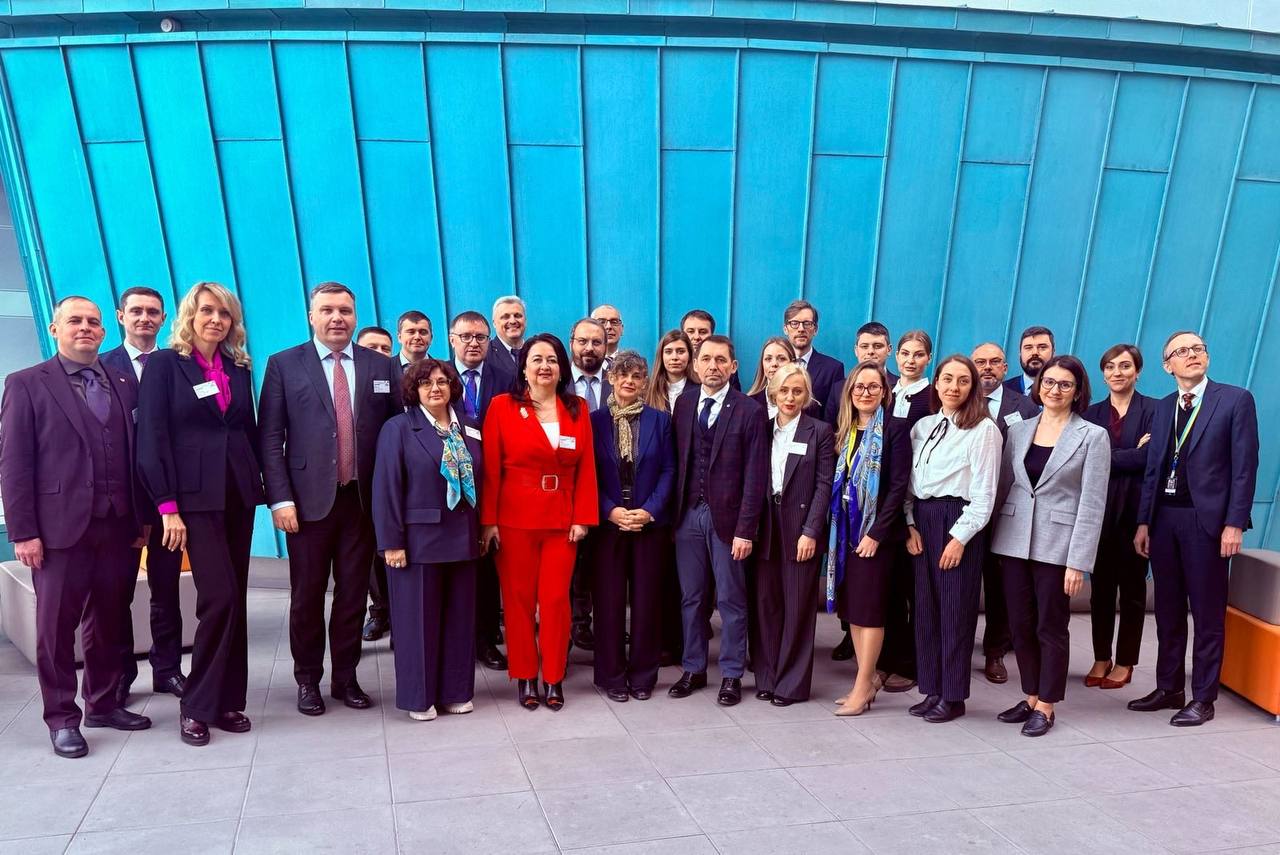
Judges of the Supreme Court took part in a series of Council of Europe events in Strasbourg devoted to the resilience of justice in times of war, the execution of judgments of the European Court of Human Rights, the digital transformation of justice, and the use of artificial intelligence in courts. The Ukrainian judiciary was represented, inter alia, by Vitalii Urkevych, Secretary of the Grand Chamber of the Supreme Court, and Oleksandra Yanovska, Judge of the Supreme Court at the Criminal Cassation Court, who is a member of the Council of Europe’s European Commission for the Efficiency of Justice (CEPEJ).
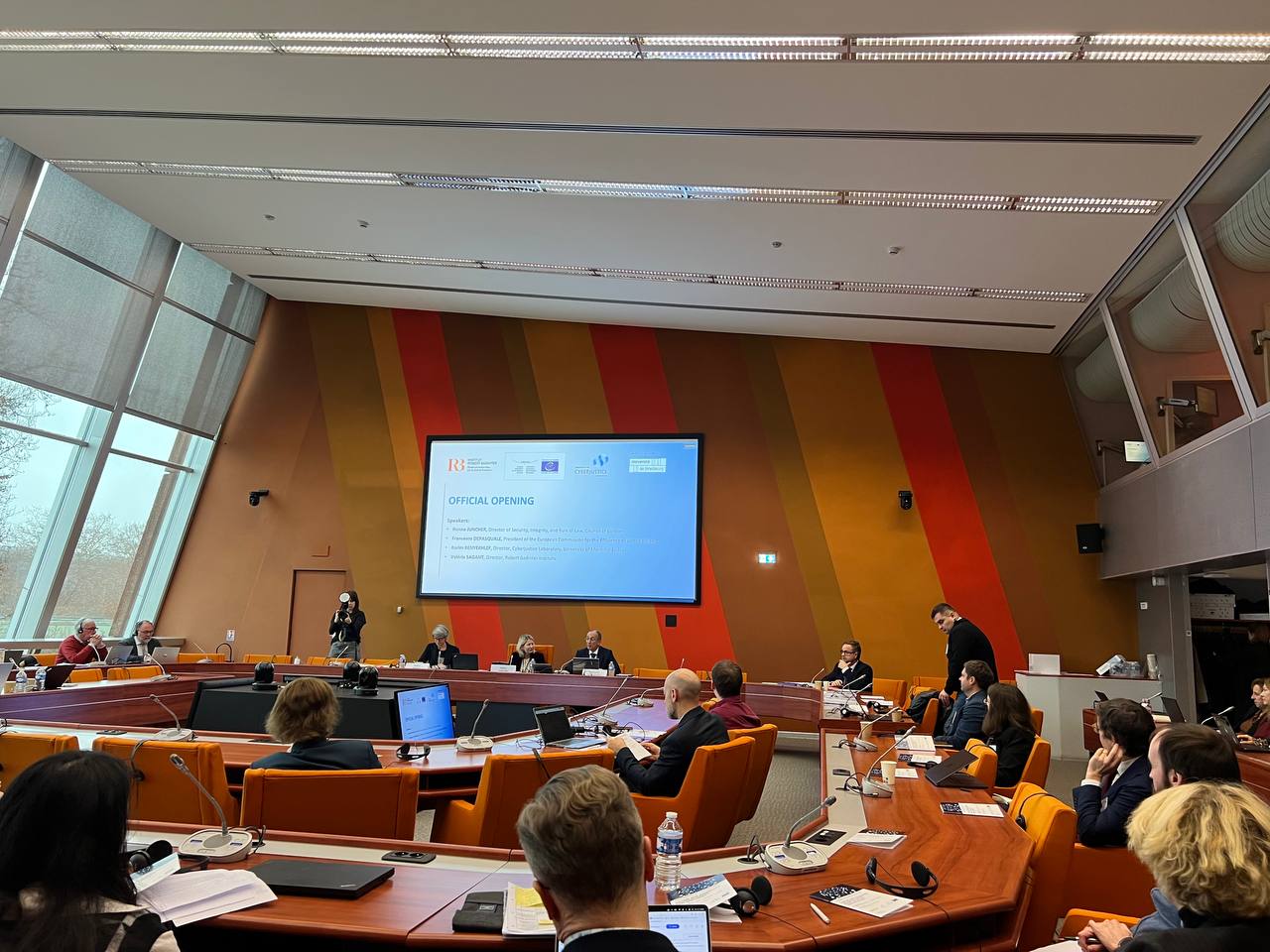
On 3 December, representatives of the Supreme Court participated in the Cyberjustice Europe Conference 2025 dedicated to the theme “Virtual and Augmented Reality in Justice: Uses and Issues”. Conference participants discussed key areas for the use of virtual and augmented reality technologies within the justice system, including immersive environments to support, prepare and protect victims and witnesses; the potential use of virtual reconstructions and 3D modelling for the accurate recreation of crime scenes; the application of VR/AR in restorative justice to enhance empathy and promote the resocialisation of offenders; as well as the impact of virtual environments on the perception of evidence, the behaviour of procedural participants, and the overall quality of judicial proceedings. Particular attention was paid to issues of digital ethics, data security and the admissibility of digital evidence, as well as to the development of virtual courtrooms and “digital twins” as innovative tools for professional training.
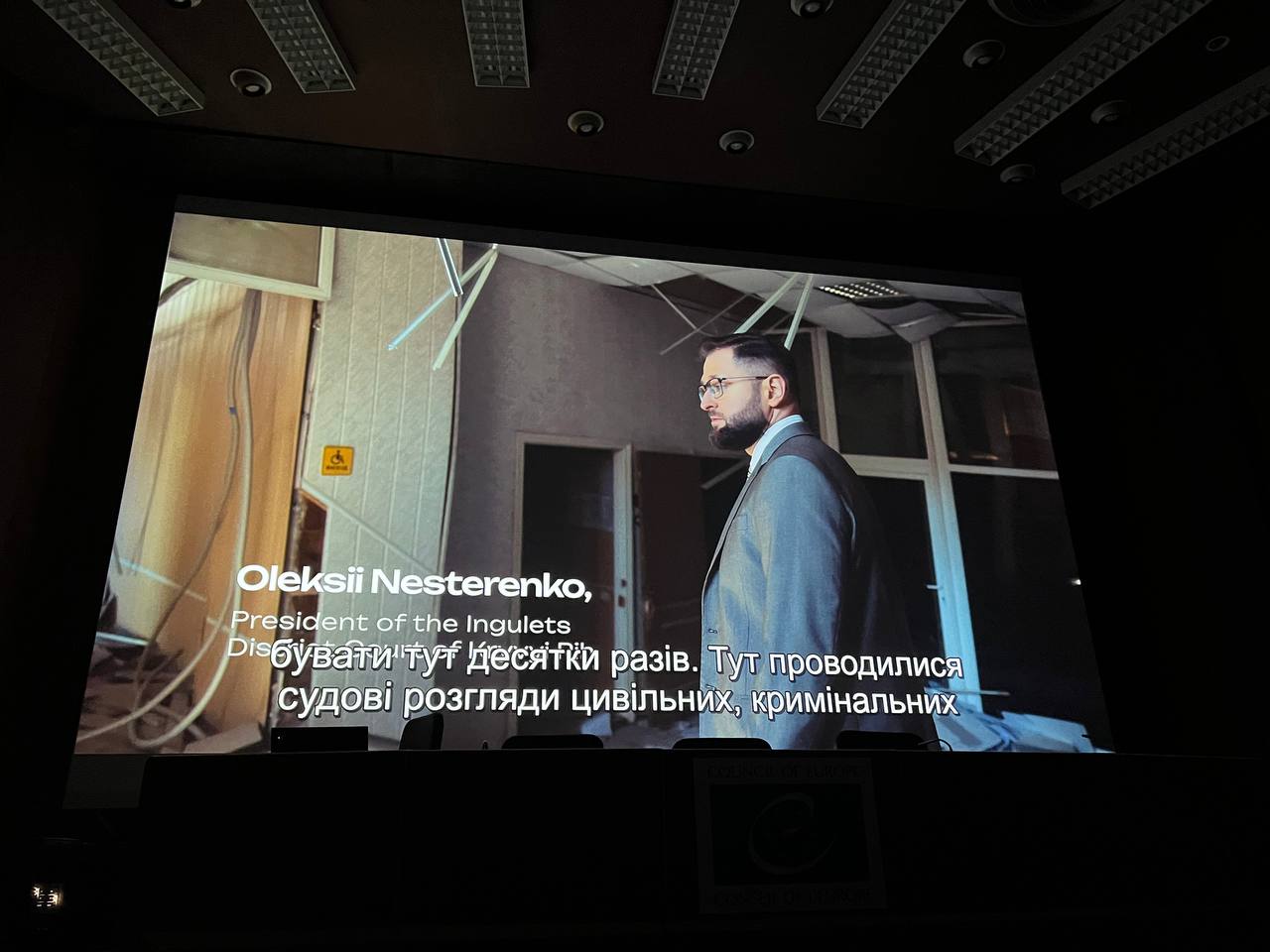
On the same day, with the support of the Permanent Representation of Ukraine to the Council of Europe, a screening of the documentary film “In Your Name: Justice in Wartime,” produced with the participation of the EU project Pravo-Justice, also took place.
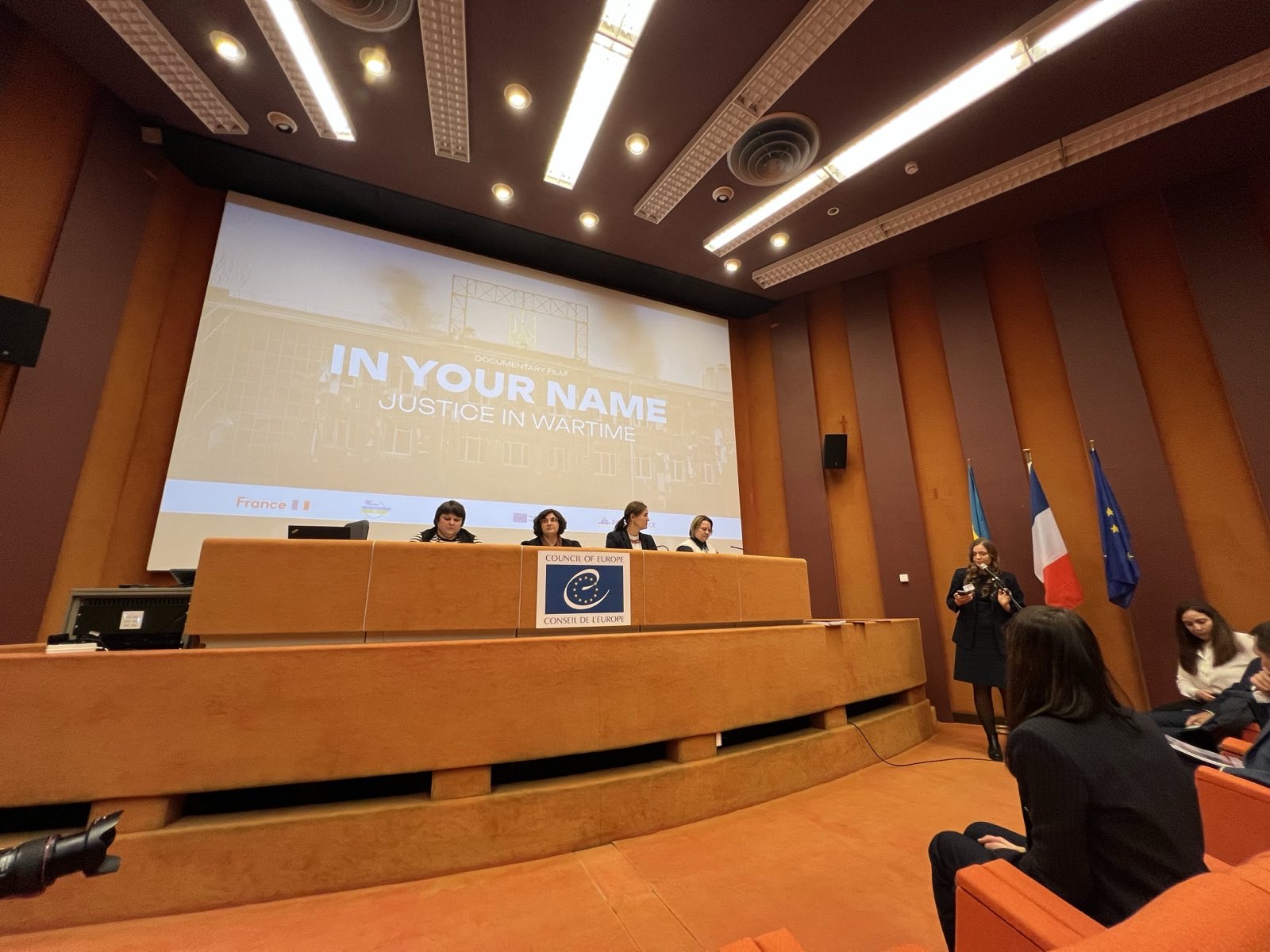
Following the screening, a discussion entitled “Resilience of the Ukrainian Judiciary: Beyond the Reports and Reforms” was held, with the participation of Oleksandra Yanovska in her capacity as Ukraine’s CEPEJ member. In her address, she emphasised that Ukrainian judges continue to administer justice under shelling, hold hearings in shelters, and protect people’s rights even when their own safety is at risk.
The speaker drew attention to the unprecedented challenges faced by the Ukrainian justice system, including destroyed court buildings, staff shortages, disruptions to electricity supply, and more than 180,000 registered war crimes, all of which significantly affect the workload of the courts. Despite these difficulties, in 2024 Ukrainian courts examined more than four million cases, demonstrating a high level of public trust in the judiciary even in wartime.
Vitalii Urkevych spoke about his colleague, Supreme Court judge Leonid Loboiko, who was killed by a Russian drone strike during a humanitarian mission in late September 2024, noting that his integrity, humanity and devotion to justice remain an example for all.
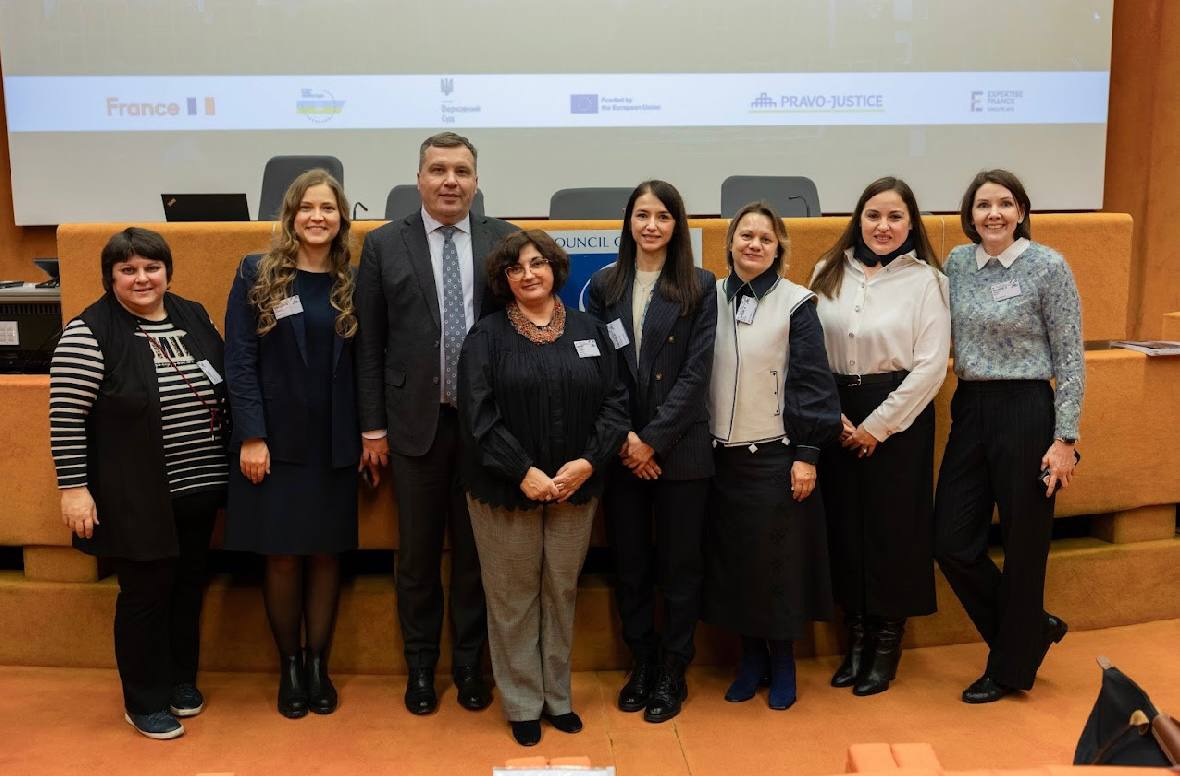
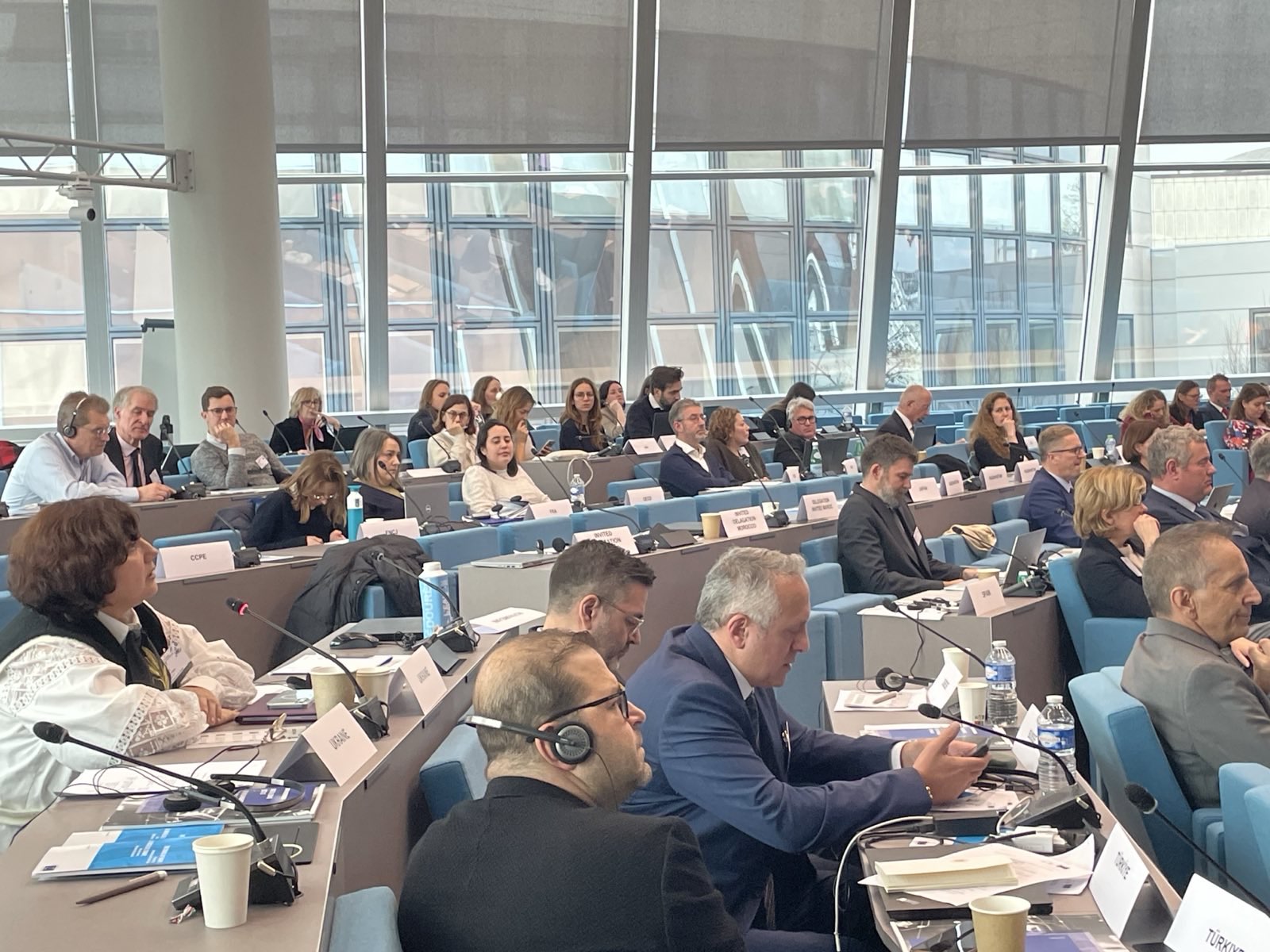
On 4 December, Vitalii Urkevych and Oleksandra Yanovska took part in the 45th Plenary Meeting of the European Commission for the Efficiency of Justice (CEPEJ), at which a number of strategic decisions were adopted concerning the development of the judicial systems of European countries for the coming years. CEPEJ approved a new Roadmap for 2026–2029 (the Valletta Plan), aimed at strengthening the rule of law by enhancing trust in judicial systems and improving the protection of justice users. The activity programme for 2026–2027 was adopted, the mandates of the working groups on the evaluation of judicial systems, quality, cyberjustice and artificial intelligence were renewed, and the remit of the Working Group on Judicial Time Management was expanded with the establishment of a new Working Group on the Efficiency of Judicial Proceedings.
During the meeting, guidelines on the use of generative artificial intelligence in courts were adopted to assist legal professionals in the responsible and secure application of such technologies. The Commission also approved a checklist on access to justice as a tool for courts seeking to improve the accessibility of their services, as well as a Handbook on the participation of children in family mediation.
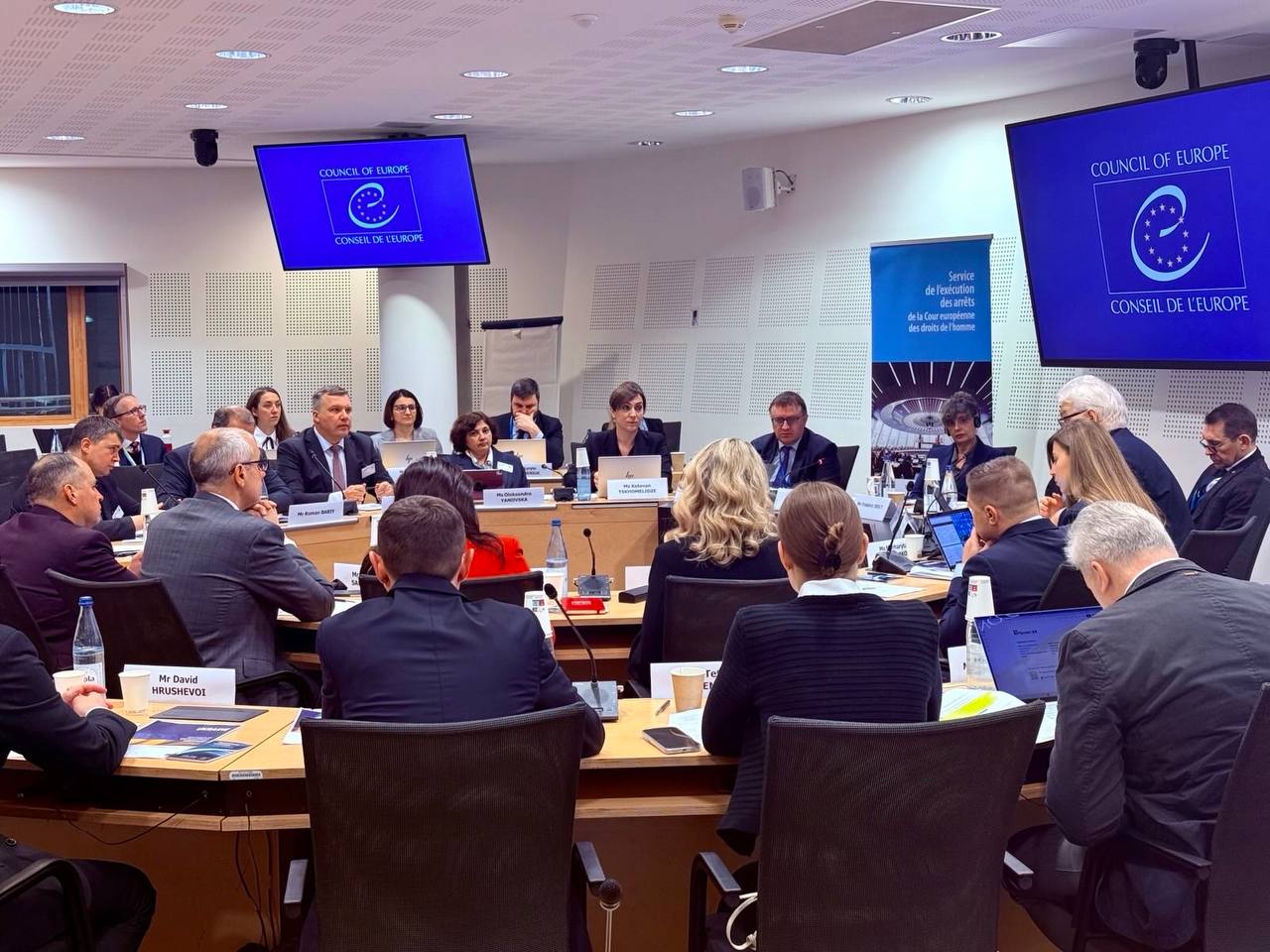
At the initiative of Ukraine’s representative, Oleksandra Yanovska, and with the support of the Permanent Representation of Ukraine to the Council of Europe, a screening of the documentary film “In Your Name: Justice in Wartime” took place during the CEPEJ plenary meeting. Supreme Court judges Oleksandra Yanovska and Vitalii Urkevych expressed their sincere gratitude to the European community for its support of Ukraine during the full-scale military invasion and drew attention to the unprecedentedly difficult conditions in which courts in Ukraine are operating.
On 5 December, an expert discussion entitled “Execution of Judgments of the European Court of Human Rights – for Democratic Security in Ukraine” was held, organised by the Council of Europe’s Department for the Execution of Judgments of the European Court of Human Rights.
Vitalii Urkevych delivered a presentation on the case law of the Grand Chamber of the Supreme Court regarding the review of cases following findings by the European Court of Human Rights of violations of the Convention for the Protection of Human Rights and Fundamental Freedoms. He emphasised that the mechanism for reviewing national decisions on the basis of ECtHR judgments is one of the key instruments for implementing the constitutional guarantee enshrined in Article 55(5) of the Constitution of Ukraine: the right of an individual, after exhausting domestic remedies, to apply to international judicial bodies, as well as the State’s obligation to restore violated rights not merely formally but in substance (restitutio in integrum). The Grand Chamber consistently seeks to strike a balance between full and effective restoration of an individual’s rights and the principles of legal certainty and the protection of the rights of other participants in legal relations. Where the violations found by the ECtHR are so serious as to cast doubt on the fairness or soundness of the national decision, a re-examination of the case becomes necessary.
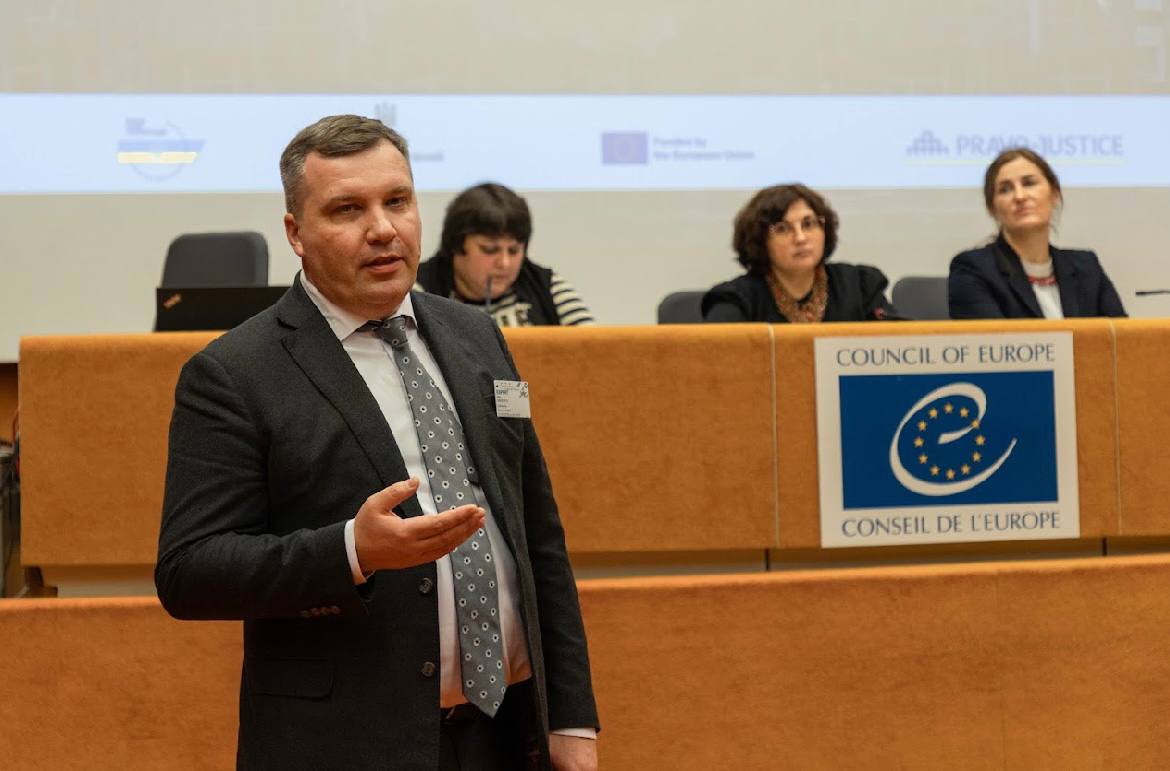
The speaker provided a number of illustrative examples. Thus, in the case of Didenko v. Ukraine, the Grand Chamber ensured a fresh appellate examination of the case, as the European Court of Human Rights found a violation of the principle of equality of arms: the applicant had in effect been deprived of the opportunity to submit observations on the appeal. A similar approach was applied in Leonidov v. Ukraine, Yakovlieva v. Ukraine, Levchuk v. Ukraine, Shemet v. Ukraine and other cases in which the procedural violations identified by the ECtHR had a material impact on the outcome of the proceedings at national level. Vitalii Urkevych also drew attention to cases concerning the right to property and the principle of good governance - Drozdyk and Mikula v. Ukraine and Federation of Trade Unions of Chernihiv Region v. Ukraine - in which the Grand Chamber either remitted the cases for a new examination or itself revised the approach to assessing the proportionality of interference with property rights. An important step in the development of approaches to the review of decisions following ECtHR judgments was the case of Mykhaylyk and Others v. Ukraine, in which the Grand Chamber confirmed that not only verdicts or other court decisions on the merits of the prosecution, but also decisions of the investigating judge made at the pre-trial investigation stage may be subject to review, if these decisions embody violations found by the ECtHR.
Vitalii Urkevych also addressed the issue of procedural time limits for initiating the review of national judicial decisions. He recalled that the Constitutional Court of Ukraine had declared unconstitutional the absolute prohibition on restoring the ten-year time limit for lodging an application for review following an ECtHR judgment, and that the legislator, by adopting Law of Ukraine No. 4283-IX of 11 March 2025 “On Amendments to Certain Legislative Acts of Ukraine in Connection with the Decision of the Constitutional Court of Ukraine of 14 February 2024 No. 1-r(II)/2024 on Ensuring the Protection of Human Rights and Freedoms on the Basis of Judgments of the European Court of Human Rights”, had brought the procedural codes into line with that decision. As a result, taking into account the length of proceedings before the ECtHR, the Grand Chamber is now vested with the power to restore missed time limits, making the mechanism for the execution of ECtHR judgments realistic and effective. At the same time, as the speaker noted, the Grand Chamber does not regard the review of judicial decisions as an automatic consequence of every ECtHR judgment (for example, where the violation found relates solely to the length of proceedings and does not affect the outcome of the case, the award of just satisfaction may be sufficient), and considers that a retrial may be disproportionate and capable of infringing the rights of third parties.
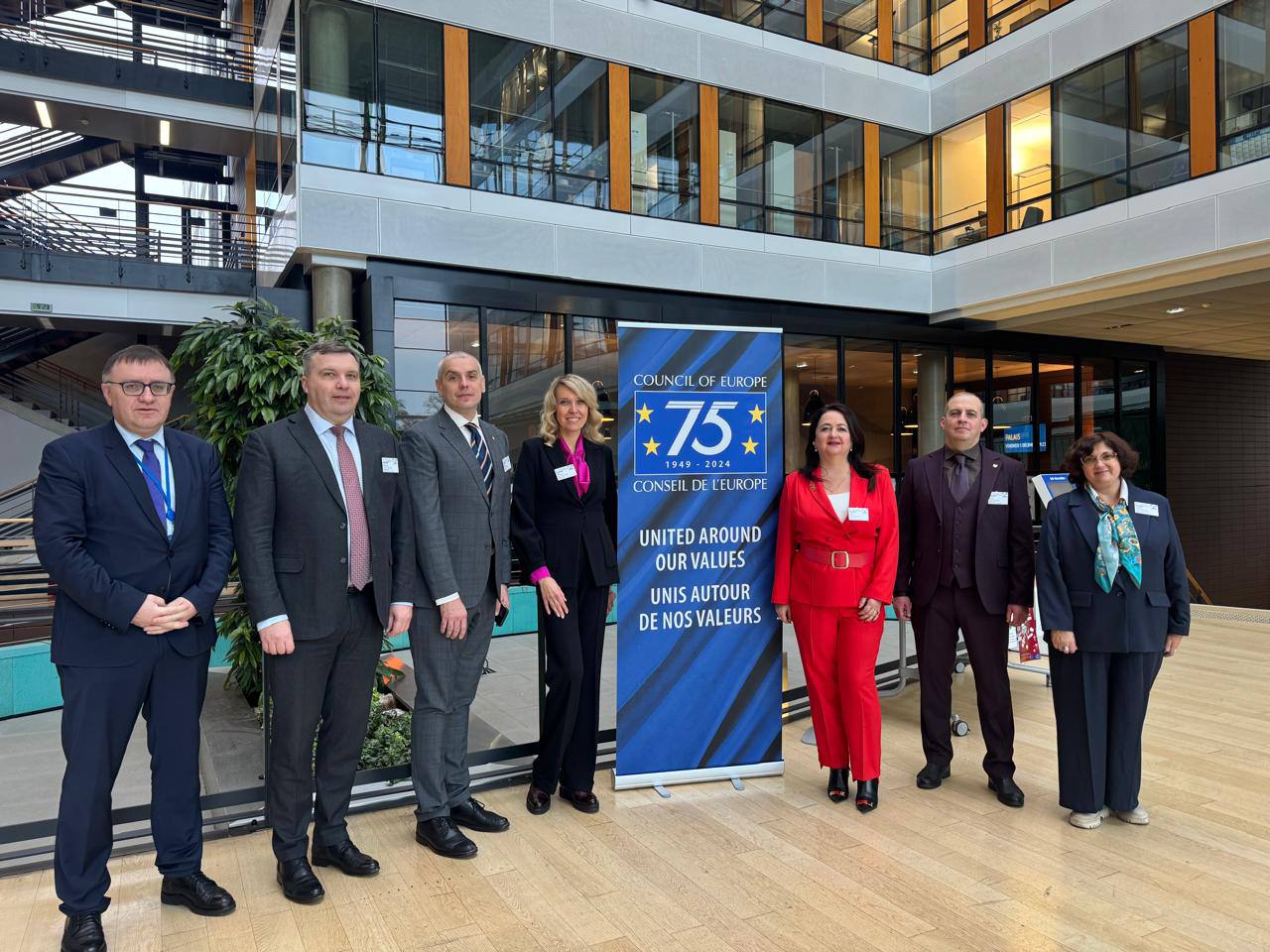
Oleksandra Yanovska, Judge of the Supreme Court at the Criminal Cassation Court, presented a comprehensive analytical report on the functioning of Ukrainian courts in wartime and on the execution of ECtHR judgments in the criminal justice sphere, in particular with regard to the restoration of lost criminal case materials and the implementation of the judgment in Medvid v. Ukraine.
One section of the report focused on the development of legislation and judicial practice concerning the restoration of lost criminal case materials in the context of the right to a fair trial guaranteed by Article 6 of the Convention. Oleksandra Yanovska recalled that, prior to 2022, Chapter VII of the Criminal Procedure Code of Ukraine in effect allowed for the restoration only of materials from proceedings concluded by a final judgment, which created legal uncertainty for individuals whose cases had been lost at the stage of pre-trial investigation or during trial before a judgment had been delivered. These shortcomings were also highlighted by the ECtHR in Kurochenko and Zolotukhin v. Ukraine, where a violation of Article 6 of the Convention was found precisely because of the absence of a procedure for restoring materials at such a stage. In the context of the war and the mass destruction of case materials in the occupied territories, the situation became more acute, prompting the adoption of the Law of Ukraine of 14 April 2022 No. 2201-IX “On Amendments to the Criminal Procedure Code of Ukraine Aimed at Improving the Procedure for Criminal Proceedings under Martial Law” and the Law of Ukraine of 16 November 2022 No. 2751-IX “On Amendments to the Criminal Procedure Code of Ukraine Clarifying the Provisions on the Restoration of Lost Criminal Case Materials and the Lifting of Preventive Measures for the Purpose of Military Service under Martial Law”, as well as the introduction of Article 615-1 of the Criminal Procedure Code of Ukraine.
The new provision significantly expanded the possibilities for restoring lost materials. It allows proceedings to be restored both at the stage of pre-trial investigation and at the trial stage prior to a judgment becoming final; the range of actors authorised to initiate such proceedings now includes not only the prosecutor, investigator or inquirer, but also the defence, the victim and the court itself; and the mandatory requirement of an exact reproduction of all materials has been abolished, enabling the court to restore them to the extent sufficient to adopt a decision at the relevant stage or to ensure appellate or cassation review.
Drawing on the 2025 case law of the courts of the Dnipropetrovsk region, Oleksandra Yanovska demonstrated that the restoration mechanism is genuinely functioning: courts restore case materials in order to continue pre-trial investigations, to ensure consideration of applications for preventive measures, to enable appellate review of judgments, and, in some instances, on the court’s own initiative. At the same time, a significant number of rulings discontinuing the examination of such applications are linked to non-compliance with the formal requirements of Article 615-1 of the Criminal Procedure Code of Ukraine (absence of a list of documents, lack of evidence confirming the fact of loss of the materials, errors in data, improper certification of copies, etc.) or to the insufficiency of the documents submitted. The judge emphasised that even where the examination is discontinued, participants in the proceedings are always informed of their right to reapply with a properly prepared application, which is consistent with the standard of access to justice.
In the context of the execution of the ECtHR judgment in Medvid v. Ukraine, Oleksandra Yanovska spoke about the introduction in Ukraine of a new mechanism for replacing a sentence of life imprisonment with a fixed-term prison sentence. The ECtHR found that, prior to 3 March 2023, persons sentenced to life imprisonment in practice had no clear and realistic prospect of release, which was contrary to Article 3 of the Convention; however, it noted that following the introduction of the new mechanism such a prospect had emerged. In response to this judgment, the Supreme Court brought its conclusions to the attention of judges and collected statistical information from the courts of appeal. In the period from 3 March 2023 to 31 March 2025, 60 convicted persons made use of this mechanism: their life sentences were replaced with terms of imprisonment ranging from 15 to 20 years. In their rulings, courts assess not only the formal length of the sentence served (at least 15 years), but also genuine changes in the convicted person, including behaviour, progress in resocialisation and attitude towards the offence committed. In this way, Ukraine has already established a functioning system for the review of life sentences that complies with European standards.
_03_03.png)