Contact center of the Ukrainian Judiciary 044 207-35-46
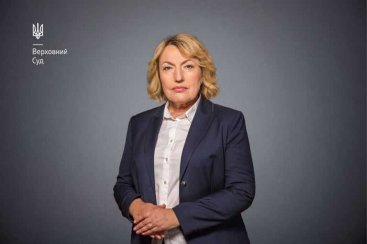
Judge of the Grand Chamber of the Supreme Court Nadiia Stefaniv took part in the launch of the HELP course “Combating Trafficking in Human Beings and Protecting Victims” in a tutored format for judges and prosecutors. The course is supported by the Council of Europe project “HELP (Human Rights Education for Legal Professionals) for Ukraine, including during wartime, Phase II”, in cooperation with the National School of Judges of Ukraine and the Training Centre for Prosecutors of Ukraine.
The tutored HELP course provides essential tools for the effective identification of victims of human trafficking and for ensuring the protection of their rights. Its objective is to promote effective investigation of this crime, the bringing of perpetrators to justice, and the imposition of proportionate punishment.
Nadiia Stefaniv addressed current issues in judicial practice concerning combating trafficking in human beings and protecting victims. She emphasised that, in the context of the armed aggression of the Russian Federation against Ukraine, the issue of countering human trafficking takes on particular significance, especially given the increased vulnerability of potential victims. The detection, investigation, and judicial consideration of criminal proceedings under Article 149 of the Criminal Code of Ukraine are conducted in accordance with international standards and national legislation, with active use of relevant judgments of the European Court of Human Rights. The speaker also stressed the protection of the interests of victims of human trafficking (vulnerable state, suppression of will, deprivation of liberty, coercion, various forms of violence).
The judge noted an increase in the number of court decisions adopted in criminal proceedings under Article 149 of the Criminal Code of Ukraine, observable at every level of the judicial system.
Main categories of adopted court decisions:
Nadiia Stefaniv noted that, according to information from the Office of the Prosecutor General, during 2025 law enforcement authorities in Ukraine registered 144 criminal proceedings concerning facts of human trafficking.
During her presentation, the speaker provided a detailed analysis of the case law of the Criminal Cassation Court within the Supreme Court in this category of cases. In particular, she drew the audience’s attention to the Court’s position as expressed in cases No 750/5031/18, No 344/13523/18 and No 203/929/21. The judge also highlighted the conclusion of the European Court of Human Rights that trafficking in human beings as such, within the meaning of Article 3(a) of the Palermo Protocol and Article 4(a) of the Council of Europe Convention on Action against Trafficking in Human Beings, falls within the scope of Article 4 of the Convention for the Protection of Human Rights and Fundamental Freedoms.
Following her analysis of judicial practice, Nadiia Stefaniv reported that courts of first instance impose on persons found guilty of committing a criminal offence under the relevant part of Article 149 of the Criminal Code of Ukraine a sentence of imprisonment for a fixed term and apply the provisions of Article 75 of the Criminal Code of Ukraine, thereby releasing them from serving the sentence with probation and establishing a probationary period. Appellate review of some of these judicial decisions, following appeals by the prosecutor or the victims, resulted in the appellate court delivering a new judgment in respect of the imposed punishment, without applying Article 75 of the Criminal Code of Ukraine.
In conclusion, the judge drew attention to procedural issues concerning the participation of victims in court hearings.
Further details are available in Nadiia Stefaniv’s presentation at the following link: https://court.gov.ua/storage/portal/supreme/prezentacii_2025/Present_protydia_torgivli_lydmu.pdf.
_03_03.png)