Contact center of the Ukrainian Judiciary 044 207-35-46
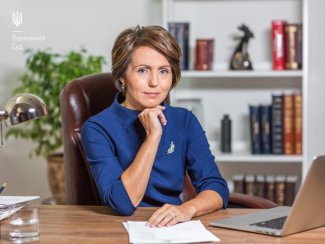
Judge of the Supreme Court in the Civil Cassation Court Yuliia Cherniak participated in the 14th Anglophone-Germanophone Judicial Conference for International Family Law. This conference, established in 1997, has a distinguished history and serves as a powerful platform for communication and productive discussions among judges from countries of the common law and civil (continental) law systems.
This year, the conference was held in the Swiss Confederation (Bern) and brought together 50 judges and legal experts from relevant departments of the central justice authorities of Switzerland, Germany, Austria, the United Kingdom (England, Wales, Scotland, Northern Ireland), Ireland, Poland, and Ukraine.
Yuliia Cherniak was invited as a guest speaker to present in two sessions of the conference: “Ukraine / Israel: Problems of War, Court Decisions on the Return of Children under the 1980 Hague Convention on the Civil Aspects of International Child Abduction” and “Country Presentation: Key Changes in Family Legislation and Judicial Practice in Its Application”.
In the first part of her presentation, titled “Child Abduction and Cross-Border Child Protection in Times of Russian War in Ukraine: Challenges and Comments on the Case Law”, the judge conducted a comprehensive analysis of the Supreme Court’s practice regarding whether the introduction of martial law in Ukraine constitutes sufficient grounds for applying Article 13(1)(b) of the 1980 Hague Convention on the Civil Aspects of International Child Abduction. This provision would make it impossible to return a child to Ukraine as the child’s country of habitual residence, from which the child was wrongfully removed (or is being retained).
.jpeg)
The judge also emphasized that in recent years, the Civil Cassation Court of the Supreme Court has not only resolved contentious issues regarding the possibility of applying interim measures in cases involving the return of children under the aforementioned Convention in favour of their applicability (Resolution of the Civil Cassation Court of the Supreme Court dated January 14, 2022, in case No. 754/7569/21), but has also formulated a legal position on the specific features of applying this institute in such categories of cases during wartime (Resolution of the Civil Cassation Court of the Supreme Court dated January 31, 2024, in case No. 711/4569/23).
In the second part of her presentation, the judge examined problematic aspects of determining the jurisdiction of Ukrainian courts under Article 5 of the 1996 Hague Convention on Jurisdiction, Applicable Law, Recognition, Enforcement and Co-operation in Respect of Parental Responsibility and Measures for the Protection of Children, tracing the evolution of domestic judicial practice: from the categorical conclusion that the mere fact of a Ukrainian child leaving Ukraine to obtain temporary protection in EU countries due to the Russian war in Ukraine cannot be automatically qualified as a change in the child’s habitual residence in Ukraine (Resolution of the Civil Cassation Court of the Supreme Court dated December 1, 2023, in case No. 607/20787/19); to the application of the rule of “invariability of jurisdiction” provided for in Part 1 of Article 75 of the Law of Ukraine “On Private International Law” (Resolution of the Civil Cassation Court of the Supreme Court dated June 12, 2023, in case No. 359/2356/21); and to the conclusion that proceedings may be terminated because the child has acquired a new habitual residence abroad (Resolution of the Civil Cassation Court of the Supreme Court dated June 28, 2023, in case No. 372/2558/21).
Drawing on her own experience as Ukraine’s contact judge within the International Hague Network of Judges (IHNJ), Yuliia Cherniak analyzed typical situations in current judicial practice involving the parallel existence of two jurisdictions: Ukrainian courts as the jurisdictional authorities of the child’s state of habitual residence, and national courts of the state where the Ukrainian child is residing under temporary protection status. Such parallel proceedings can lead to the legal phenomenon known as “jurisdictional competition”, and in all cases require cooperation and coordination between the courts of both states, including through the IHNJ mechanism.
In the session “Ukraine / Israel: Problems of War, Court Decisions on the Return of Children under the 1980 Hague Convention on the Civil Aspects of International Child Abduction”, presentations were also delivered by: Alistair MacDonald, Judge of the High Court of England and Wales; Torsten Hub, Judge of the Appeal Court of Stuttgart (Germany); Marco Nademleinsky, Professor of Law from Austria. The session was moderated by Mary Rose Gearty, Judge of the High Court of Ireland. Among the issues actively discussed by conference participants were: how a court should assess the overall security situation in a country at war (whether at the level of a specific region or the entire country), and what constitutes a reliable source of information about the security situation in Ukraine.
The second presentation by Yuliia Cherniak focused on recent changes in Ukrainian family law and the current case law of the Supreme Court in resolving family disputes. The judge presented modern family law not only as being significantly influenced by the challenges of war but also as an integral part of European family law, reflecting general trends in its development – particularly the rapid advancement of mediation and pre-trial settlement of family disputes with judicial involvement, as well as the gradual introduction of specialization for judges handling family disputes at the level of local courts. Foreign judges were particularly interested in the following issues: what changes have occurred in Ukrainian legislation regarding the adoption of children by foreigners during wartime; whether a foreign married couple can be recognized as the parents of a child if the child was born to a surrogate mother in Ukraine; and who can represent a child abroad and how the representative’s authority is confirmed.
.jpeg)
Among other topics discussed were: possible interim measures for child protection in proceedings under the 1980 Hague Convention; the placement of a child in care institutions pursuant to Article 33 of the 1996 Hague Convention; case management (conduct of court proceedings) – experience from common law and civil law countries; civil cases involving domestic violence; and specific features of legal regulation of the initial stage of adult life.
Presentation “Child Abduction and Cross-Border Child Protection in Times of Russian War in Ukraine: Challenges and Comments on the Ukrainian Case Law” – https://court.gov.ua/storage/portal/supreme/prezentacii_2025/Presentacia_Child_Abduction.pdf.
Presentation “Family Law. Country presentation: Ukraine” – https://court.gov.ua/storage/portal/supreme/prezentacii_2025/Presentacia_Family_Law.pdf
_03_03.png)