Contact center of the Ukrainian Judiciary 044 207-35-46
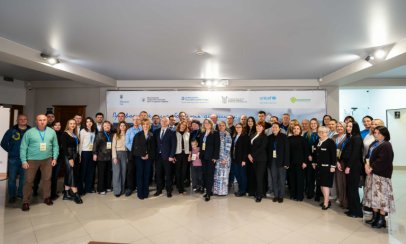
Judges of the Supreme Court in the Civil Cassation Court – Olha Stupak, Yevhen Synelnykov, Olena Bilokon, and Pavlo Parkhomenko – spoke at the regional forum in Lutsk titled “Child-Friendly Justice: Rolling Out Judicial Specialization in Family and Children’s Cases”. They discussed the principle of the best interests of the child, Singapore’s experience in applying alternative dispute resolution methods for family conflicts, the protection of children’s rights under the 1980 Hague Convention on the Civil Aspects of International Child Abduction, and the implementation of a pilot project to introduce judicial specialization in family and children’s cases in Ukraine.
The event was devoted to the interim results of the pilot project to introduce the specialisation of judges in family and children's cases, as well as to the issue of rolling out specialisation in the western region of Ukraine.
To recap, the pilot project is being implemented at the initiative of the Civil Cassation Court of the Supreme Court and the Interagency Coordination Council on Juvenile Justice with the support of UNICEF Ukraine and the NGO Volunteer Centre (https://supreme.court.gov.ua/supreme/pres-centr/news/1710562/).
.jpeg)
Olha Stupak delivered a presentation titled “Implementation of the Best Interests of the Child Principle in Civil Proceedings”. She emphasized that all actions concerning children – whether carried out by public or private institutions dealing with social welfare, courts, administrative authorities, or legislative bodies – must give primary consideration to ensuring the best interests of the child. Family disputes remain the most relevant category of civil cases.
The speaker analyzed the case law of the European Court of Human Rights on this issue. In the judgment in the case of Vyshnyakov v. Ukraine, the ECtHR noted that in cases involving custody matters, the interests of children are of paramount importance. The best interests of the child must be given primary consideration and, depending on their nature and seriousness, may override the interests of the parents.
In the judgment in the case of Mamchur v. Ukraine, the ECtHR indicated that when determining the primary interests of the child in each specific case, two conditions must be taken into account:
Olha Stupak referred to the resolution of the Grand Chamber of the Supreme Court dated October 17, 2018, in case No. 402/428/16-ц, which rejected the presumption “in favour of the mother” in disputes concerning the determination of a child’s place of residence. The Grand Chamber of the Supreme Court noted that Ukrainian legislation does not contain any norms granting either parent a preferential right to live with the child.
In the resolution of the Civil Cassation Court of the Supreme Court dated August 4, 2021, in case No. 654/4307/19, the Court provided an interpretation of the content of the “best interests of the child”. In that case, the Court emphasized that judicial proceedings in family disputes involving the interests of a child are particularly complex, as they do not merely resolve disputed issues between parents and other persons, but determine the child’s future. Therefore, the outcome of the proceedings must be directed toward protecting the best interests of the child.
The general principles governing the consideration of disputes related to the protection of children’s rights are set out in the resolution of the Civil Cassation Court of the Supreme Court dated March 14, 2025, in case No. 527/955/24. In particular, the Court indicated that when resolving disputes concerning the protection of children’s rights, the court decision must provide reasoned explanations regarding the consideration (or non-consideration) of the following: how the best interests of the child were taken into account; which elements depending on the specifics of the dispute were considered in determining their content; whether the child’s opinion was taken into account or the reasons why it was not; an assessment of the opinion of the guardianship and custody authority or the reasons preventing its obtainment; responses to allegations of domestic violence; and, depending on the circumstances of the specific case, the child’s level of development, socio-psychological characteristics, living and educational conditions, safety, family situation, and relationships with adults, among others. The relevance and priority of each of these elements depend on the circumstances of the particular case.
The speaker also drew attention to the following resolutions: Civil Cassation Court of the Supreme Court dated December 16, 2020, in case No. 466/5767/18, which established that the best interests of the child may override the interests of the parents; Civil Cassation Court of the Supreme Court dated December 23, 2020, in case No. 712/11527/17, regarding the mandatory requirement of an opinion from the guardianship and custody authority; the Grand Chamber of the Supreme Court dated September 11, 2024, in case No. 201/5972/22, concerning the establishment of the fact of sole upbringing of a child; and others.
Olha Stupak’s presentation – https://court.gov.ua/storage/portal/supreme/prezentacii_2025/Prezent_naikr_interesu_dutunu.pdf.
.jpeg)
Yevhen Synelnykov spoke about international experience in applying alternative methods of resolving family conflicts, using Singapore as an example. He noted that Singapore is a relatively young state (gained independence in 1965), making it interesting to draw certain parallels with Ukraine in terms of the development of state institutions, economic formation, civil society, and, in particular, the establishment of family justice.
The speaker explained that the Family Justice Courts of the Republic of Singapore were established in October 2014. Given the emotional complexity of disputes in this category, family justice has developed schemes that address not only legal but also psychological and social aspects of such disputes.
Singapore’s family justice system employs an interdisciplinary approach, in which family conflicts are resolved by specialists in social sciences and mental health (Court Family Specialists, or CFS) and judge-mediators from the Family Dispute Resolution Division (FDR).
The key features of this multidisciplinary approach include:
The speaker informed that, since September 2011, Singapore has had a mandatory counselling and mediation scheme for divorcing parties who have at least one minor child under 8 years of age. From July 2013, the scheme was extended to parties with a minor child under 14 years, and from October 2014 — to parties with a child under 21 years.
Yevhen Synelnykov highlighted that the country implements special programs aimed at resolving custody disputes and improving parent-child relationships.
Regarding ascertaining the child’s opinion, he noted that although judge-mediators have the opportunity to communicate directly with children, the more common practice is for specialists to meet with the child over one or several sessions and provide the judge-mediator with a written report.
The judge also described the four stages of the pre-trial family conflict resolution program: conference, intake and assessment, counselling, and mediation or co-mediation. As he noted, on average, parents of minor children who are divorcing attend between one and three mediation sessions with a judge-mediator. If the spouses have no children and/or the matrimonial property is not substantial, and the issues are not complex, only one mediation session may be required.
Judge-mediators devote time to explaining to the parties the core concepts of parental custody, care and control, access to children, and child maintenance, including relevant court practice, to prevent misconceptions and unrealistic demands. By moderating the expectations of both parties, the court during mediation fosters a situation in which the parties are more likely to be willing to reach a compromise regarding child-rearing.
The court may appoint a parenting coordinator for a specific period simultaneously with issuing a court decision on parenting matters, in order to assist parents in complying with the court order.
Yevhen Synelnykov’s presentation – https://court.gov.ua/storage/portal/supreme/prezentacii_2025/Prezent_mign_dosvid_Singapyr.pdf.
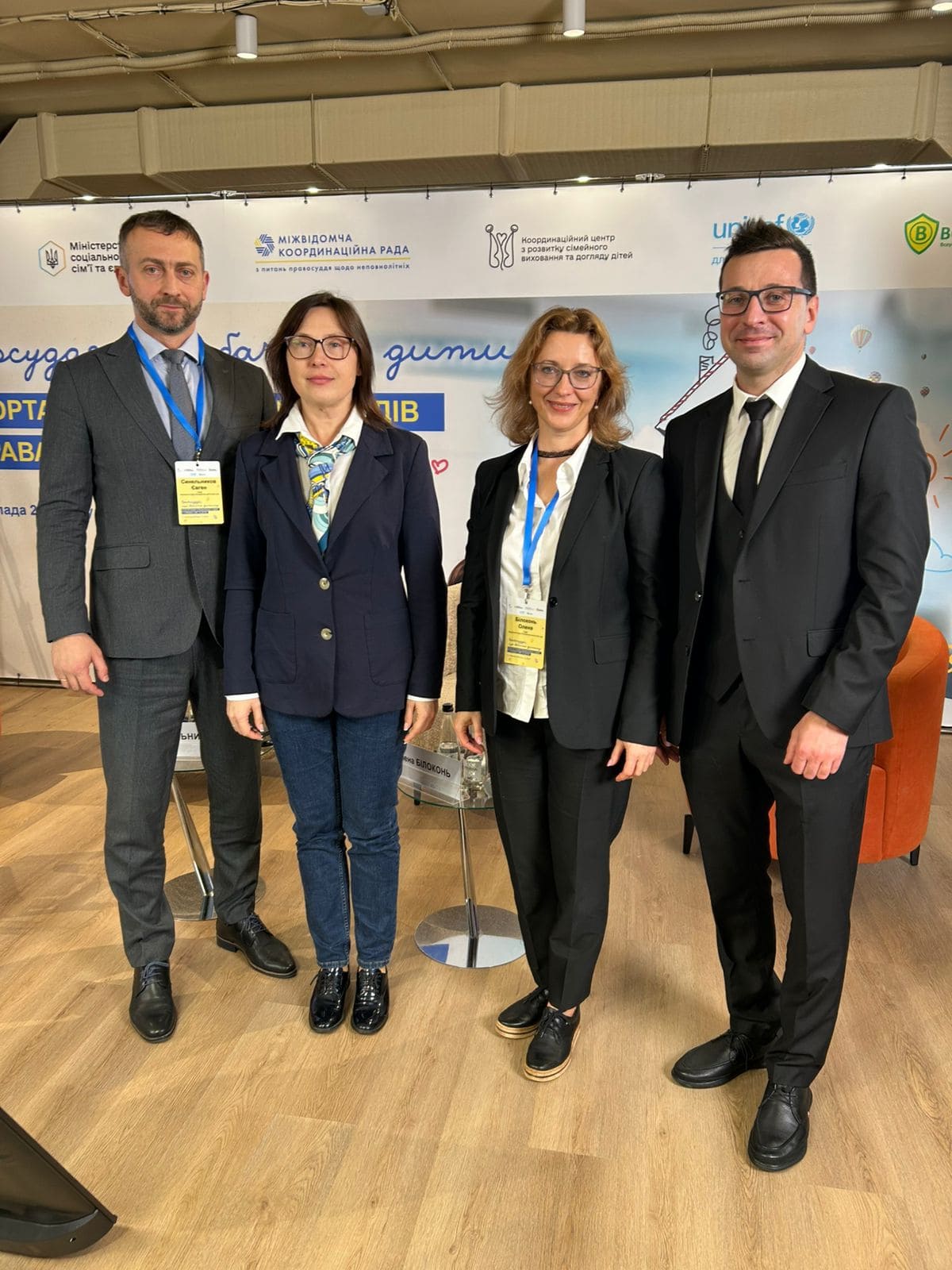
Olena Bilokon prepared a report titled “Protection of the Child’s Rights in Cases Based on the 1980 Hague Convention”.
During her presentation, she noted that, in accordance with Article 11 of the Convention on the Rights of the Child, States Parties shall take measures to combat the illicit transfer and non-return of children abroad. To this end, they shall promote the conclusion of bilateral or multilateral agreements or accede to existing agreements.
On January 11, 2006, Ukraine acceded to the Convention on the Civil Aspects of International Child Abduction, which now involves more than 80 Contracting States. This Convention establishes an international legal mechanism for the peaceful and orderly return of children who have been wrongfully removed to and/or retained in the territory of another State. Its purpose is to guarantee the child’s upbringing in a safe environment while preserving normal family relationships.
The speaker drew attention to the ECtHR judgment in the case of Satanovska and Rodgers v. Ukraine, which obligated States to properly justify decisions on the return of a child or refusal thereof. In the judgment in Vilenchik v. Ukraine, the ECtHR emphasized the need for the swiftest possible consideration of cases in this category. The case of Chabrowski v. Ukraine concerned the enforcement of a decision rendered by the national court. And in the judgment in Nerevnya v. Ukraine, the ECtHR stated the necessity of understanding where one country’s competence and responsibility end and another’s begin.
Olena Bilokon emphasized the need to ensure the best interests of the child in all actions concerning children. This principle is also embedded in the 1980 Hague Convention. This is reflected in the resolution of the Grand Chamber of the Supreme Court dated April 13, 2021, in case No. 2-37/12. Olena Bilokon also drew attention to the Supreme Court resolution dated September 24, 2025, in case No. 718/1867/23, which states that the interests of children may prevail over the interests of parents; and the Supreme Court resolution dated August 4, 2021, in case No. 654/4307/19, which notes that when determining the best interests of the child, consideration is given to the child's protection and safety, vulnerable position, age, state of health, right to education, individuality of the child, and his/her views.
The speaker emphasized that one of the ways to determine the best interests of the child when deciding on his/her return to the country of habitual residence is to ascertain the child's opinion. Article 12 of the Convention on the Rights of the Child guarantees the right of a child who is capable of forming his/her own views to freely express those views in all matters affecting him/her. The Supreme Court resolution dated May 19, 2021, in case No. 766/7657/20 states that it is the Ukrainian courts, as the courts deciding the case on the merits, that bear the obligation to hear the child's opinion and provide it with a reasoned legal assessment.
Olena Bilokon also analyzed the Supreme Court's case law regarding: the application of Article 13 of the 1980 Hague Convention concerning the refusal to return a child to the country of habitual residence; ascertaining the child's opinion on returning to the country of habitual residence; and other related issues.
Olena Bilokon's presentation – https://court.gov.ua/storage/portal/supreme/prezentacii_2025/Prezent_zahust_prav_dutunu_Konven.pdf.
.jpeg)
Pavlo Parkhomenko, who was also one of the moderators of the event, spoke about the experience of the pilot project on introducing specialization of judges in family and children's cases.
He noted that the goal of the project is to introduce in Ukraine an element of child-friendly justice, namely the specialization of judges in handling family and children's cases, which will ensure the implementation of international standards, recommendations of the UN Committee on the Rights of the Child, priorities of the Council of Europe, and the European Union.
Eleven local courts from various regions of Ukraine are involved in the pilot project. Currently, the issue of extending the project to other regions, including the city of Dnipro, is under consideration.
The implementation of the project began with an inaugural seminar held on November 28, 2024, at the premises of the Civil Cassation Court within the Supreme Court. The next stage involved the development, during January–February of this year, of a specialized training program for judges and multidisciplinary teams, as well as the training of specialists involved in the pilot project from March to July 2025.
Pavlo Parkhomenko informed that as of today, a total of 58 judges have been appointed to the pilot courts by the decision of the judges' meeting, with specialisation in family and children's issues.
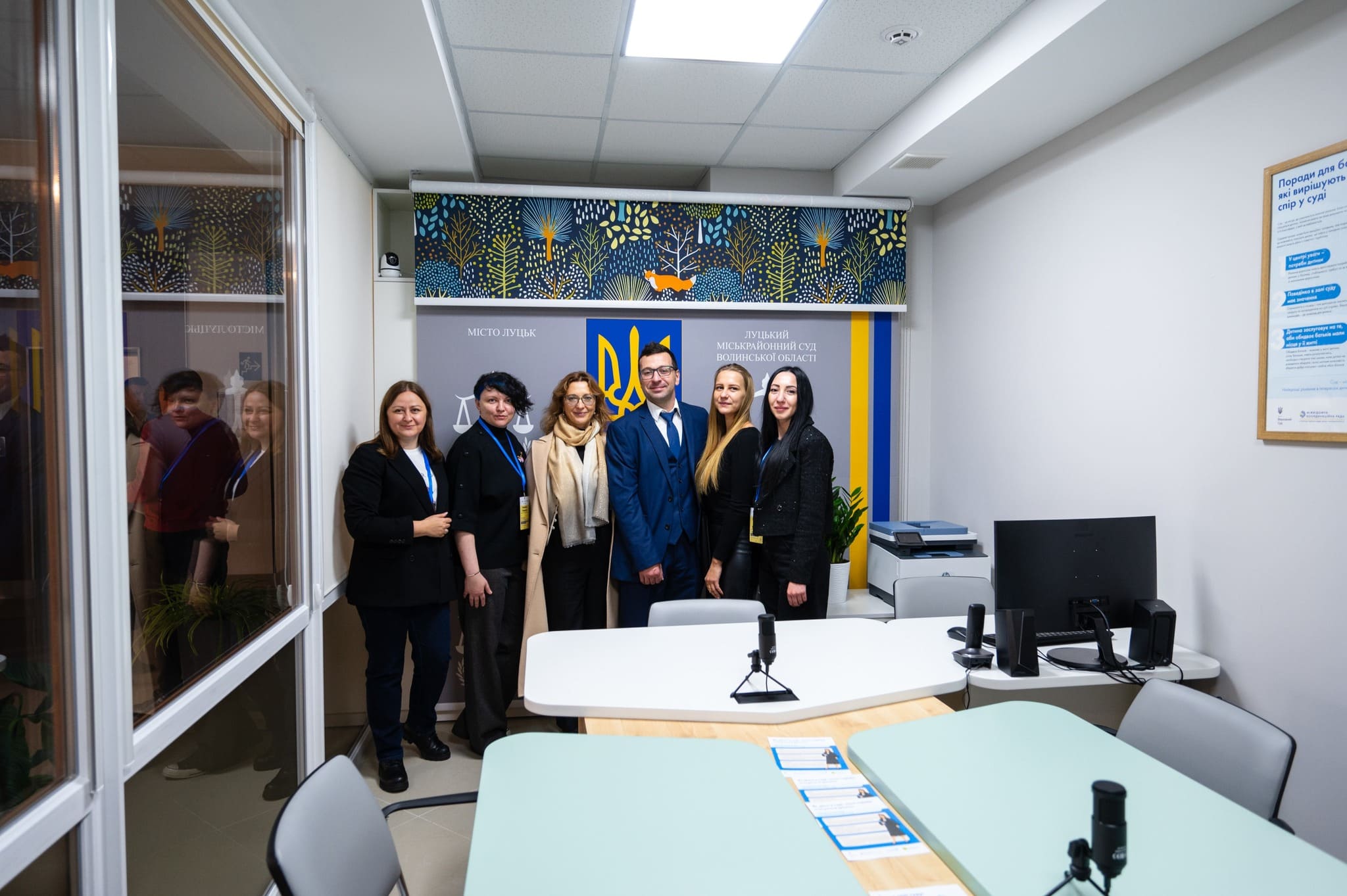
In order to explore the possibilities of equipping courtrooms for cases involving children, visits to 9 pilot courts took place from February to September 2025, along with working meetings during which issues related to the arrangement of appropriate premises were coordinated. To date, child-friendly courtrooms have already been equipped in four courts: the Kholodnohirskyi District Court of Kharkiv, the Darnytskyi District Court of Kyiv, the Lutsk City District Court of Volyn Region, and the Sykhivskyi District Court of Lviv. In addition, work is ongoing to equip such premises in five more courts.
Furthermore, to further implement the specialization of judges, relevant recommendations have been developed for courts, summarizing the experience of the pilot project and the established practices. A series of studies and generalizations of judicial practice have been conducted, and methodological recommendations have been produced on issues related to the consideration of cases involving children. Experts from various fields concerned with children's rights have been involved in studying these issues.
_03_03.png)