Contact center of the Ukrainian Judiciary 044 207-35-46
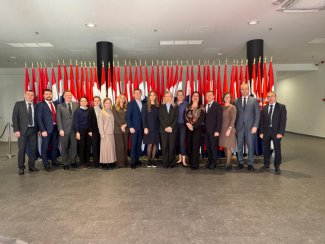
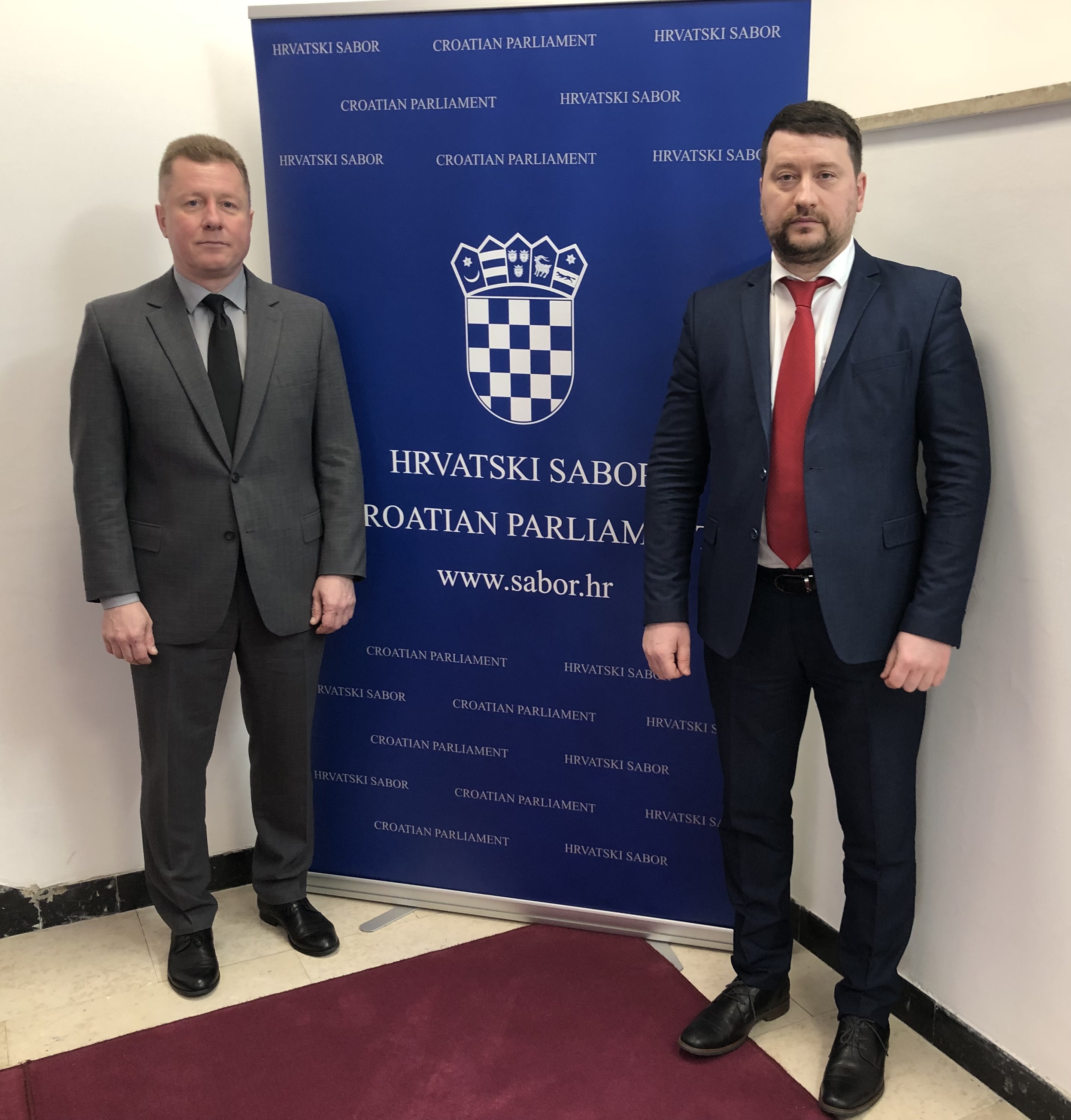
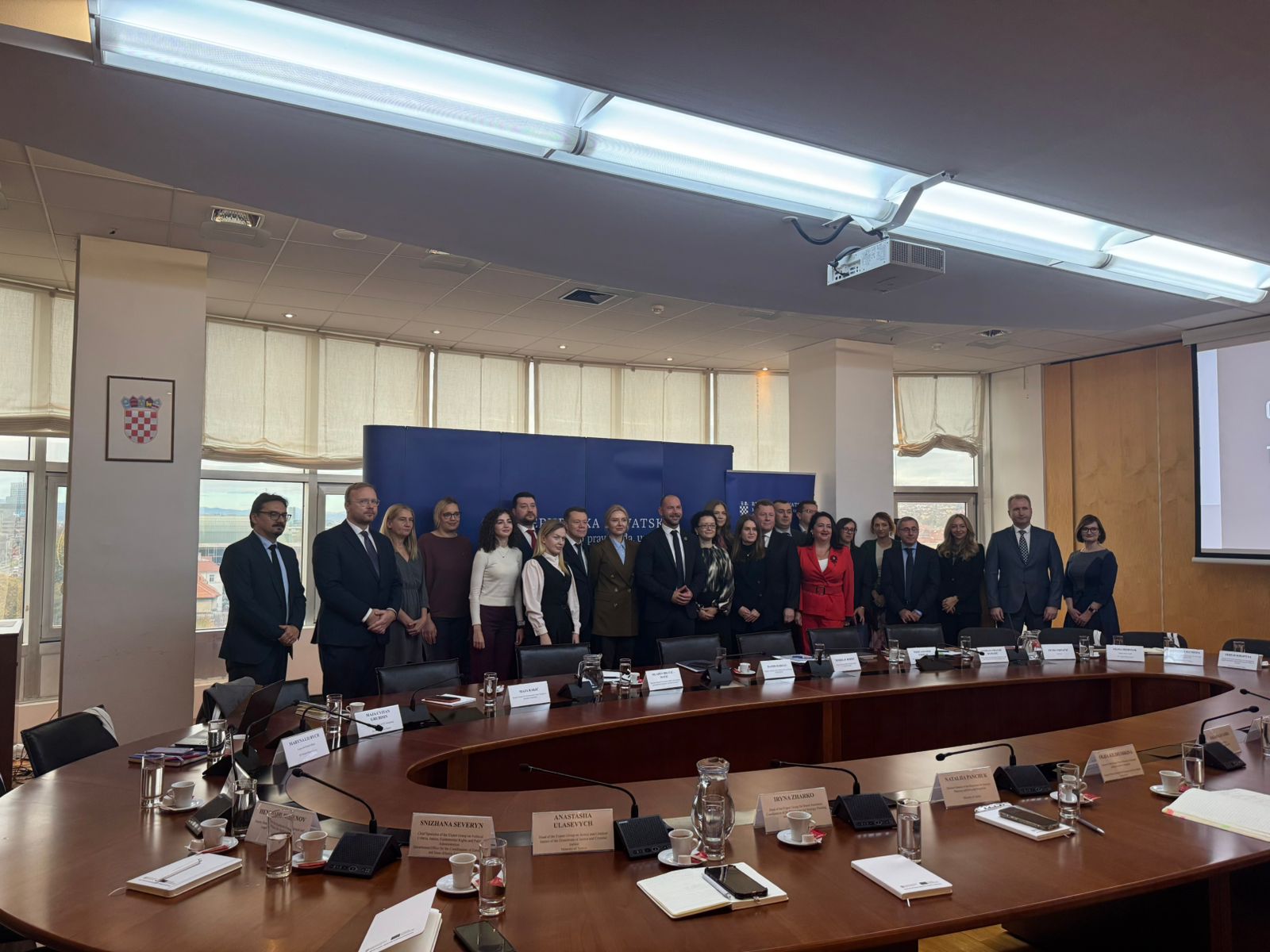
Supreme Court Judge at the Commercial Cassation Court Viacheslav Pieskov and Deputy Head of the Department for Analytical and Legal Work of the Supreme Court Hennadii Zelenov took part in a study visit to the Republic of Croatia organised by the EU Pravo-Justice project.
The visit was held to support the rule of law and European integration reforms in Ukraine. Its purpose was to deepen cooperation between Ukrainian and Croatian justice institutions and to exchange practical experience in adapting national judicial systems to European Union standards.
The programme included a series of official meetings and thematic lectures in the context of reforms in the field of justice, judicial self-governance, constitutional review, and issues relating to the efficiency of the judicial system. The representatives of the Supreme Court became acquainted with the practical experience of the Republic of Croatia, which, after completing the EU accession process, carried out a profound transformation of its judiciary.
The delegation met with the Minister of Justice, Public Administration and Digital Transformation of the Republic of Croatia, as well as with members of the State Judicial Council and the State Council of Prosecutors. The discussions focused on Croatia’s experience in ensuring judicial independence, the selection of judges and prosecutors, and mechanisms of disciplinary liability for judges and prosecutors. The participants in the visit also visited the Office of the State Attorney of the Republic of Croatia, where they learned about the structure of the prosecution service and the principles of its operation, the reforms it underwent during Croatia’s accession to the European Union, the investigation and prosecution of war crimes, and the changes introduced to Croatia’s criminal procedural legislation following the judgment of the European Court of Human Rights in Sanader v. Croatia.
Representatives of the Supreme Court also visited the State Department for Combating Corruption and Organised Crime (USKOK), followed by a meeting at the Judicial Academy. The participants had the opportunity to discuss issues relating to judicial training, the functioning of educational programmes, and the criteria for assessing the effectiveness of judicial performance.
Special attention was given to Croatia’s experience in fulfilling its obligations under Chapters 23 “Judiciary and Fundamental Rights” and 24 “Justice, Freedom and Security” of the EU accession negotiation process. During lectures and seminars at the Judicial Academy and the Faculty of Law of the Catholic University, the participants of the visit became acquainted with the institutional and procedural aspects of implementing European standards in the operation of national courts. In particular, within the framework of a lecture entitled “Chapter 23: How Croatia Turned Challenges into Reforms”, the Dean of the Faculty of Law of the Catholic University, Dr Kristian Turkalj, who had served as State Secretary of Justice and Chief Negotiator for the Judiciary and Fundamental Rights during Croatia’s EU accession process, shared practical experience in implementing reforms.
During their visit to the Supreme Court of the Republic of Croatia, the participants discussed the administrative organisation of the judicial system, the role of the court president, caseload management mechanisms, and ways to enhance the efficiency of case adjudication. The meeting at the Croatian Parliament focused on the legislative aspects of justice reform within the EU accession process and on interaction between the legislature and the executive and judicial branches.
Issues relating to prosecution reform were addressed during the presentation “Chapter 23: Reform of the Prosecution System”, delivered by Mladen Bajić, Prosecutor General of Croatia (2002-2014), and Davorka Čolak, Deputy State Prosecutor and international expert. They shared their experience in establishing the independence of prosecutorial bodies and improving the effectiveness of investigations.
A separate segment of the training programme took place at Šibenik University of Applied Sciences, where representatives of the Croatian legal community delivered lectures on constitutional justice, the application of the EU acquis in judicial practice, the administration of justice with an emphasis on efficiency and transparency, and the reform of administrative justice in connection with the transition to a two-tier system.
In addition, the Ukrainian delegation visited the Municipal and County Courts in the city of Šibenik, where they learned about Croatia’s experience in organising the work of local courts, case adjudication procedures, mechanisms for ensuring reasonable timeframes of proceedings, determining judicial workload and the allocation of cases among courts, the use of electronic document management systems, and the practice of openness of court proceedings to the public.
_03_03.png)