Contact center of the Ukrainian Judiciary 044 207-35-46

Vice President of the Supreme Court Oleksandr Mamalui, President of the Administrative Cassation Court within the Supreme Court Mykhailo Smokovych, Judge of the Grand Chamber of the SC Volodymyr Korol, Supreme Court Judge at the Criminal Cassation Court Nataliia Bilyk, and Supreme Court Judge at the Civil Cassation Court Iryna Lytvynenko paid a visit to Germany and Austria as part of the “Building Bridges for the Rule of Law” programme. The visit was supported by the project “Strengthening Ukraine's EU Accession in the Rule of Law (3*E4U)” implemented by Deutsche Gesellschaft für Internationale Zusammenarbeit (GIZ), as well as by the German Foundation for International Legal Cooperation (IRZ).
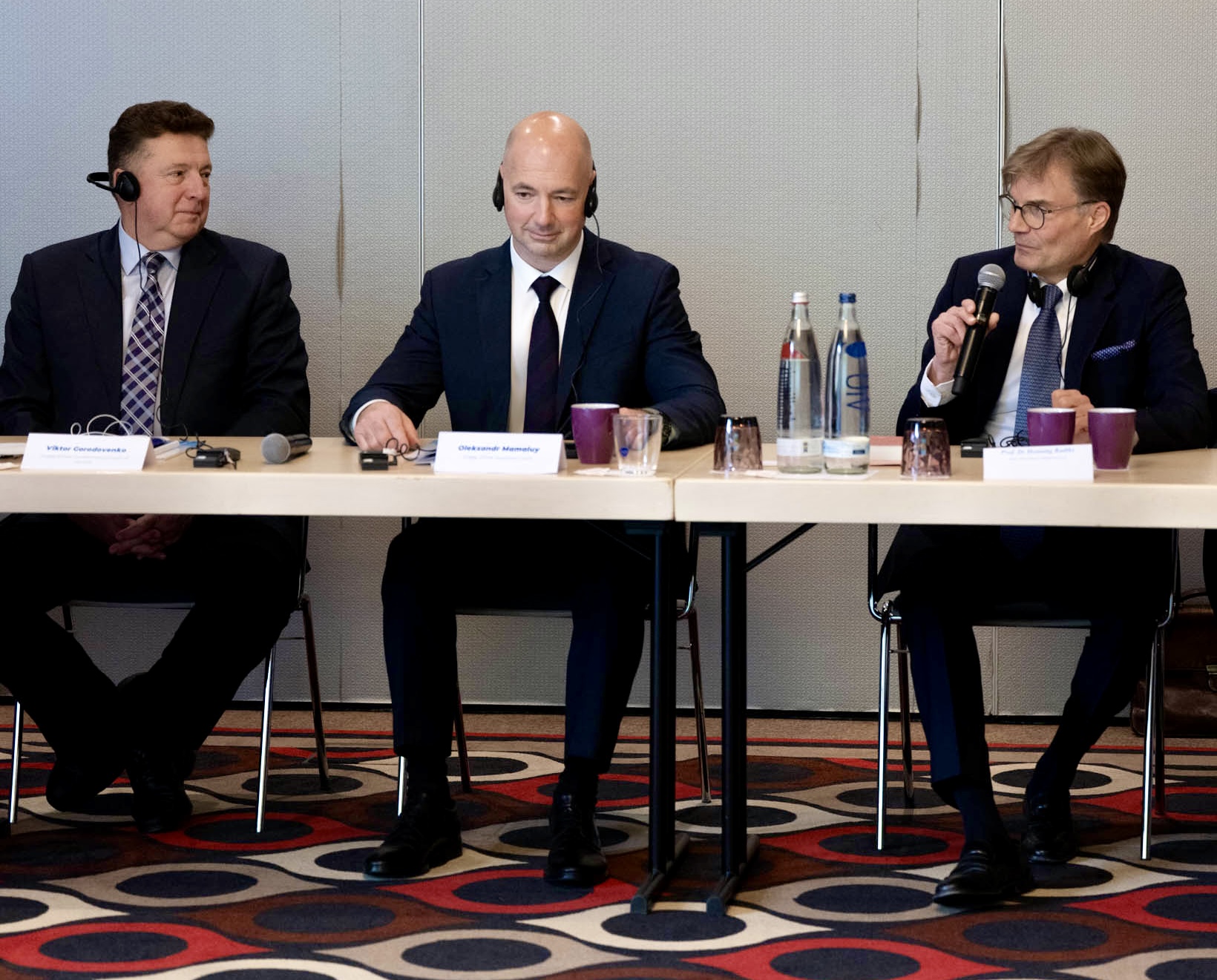
During the first days of the visit to Karlsruhe (Germany), the SC judges had the opportunity to speak with Judge of the Federal Constitutional Court of Germany Henning Radtke and Germany’s Judge at the European Court of Human Rights Anja Seibert-Fohr.
The meetings covered many engaging topics, including the administration of justice during wartime and the importance of ensuring a balance of interests when it becomes necessary to restrict citizens’ rights during a pandemic or under martial law. The topic of judicial activism was also addressed. In addition, judges from Ukraine and Germany discussed guarantees of judicial independence in the case law of the ECtHR.
The participants of the visit also toured the Federal Court of Justice of Germany. During the visit, they learned about the history and operations of the court and spoke with the presiding judges of the Third and First Civil Senates, Ulrich Herrmann and Thomas Koch.
In conversations between the SC judges and their German colleagues, the issue of consistency in judicial practice in Germany was raised. They discussed examples of cases in which the Senate of the court changed its approach to the application of substantive legal norms, as well as the grounds for such changes. They also discussed the interaction between the Federal Court of Justice and the Court of Justice of the European Union. Additionally, the guests were invited to the office of the presiding judge, where they were introduced to the work of his secretariat.
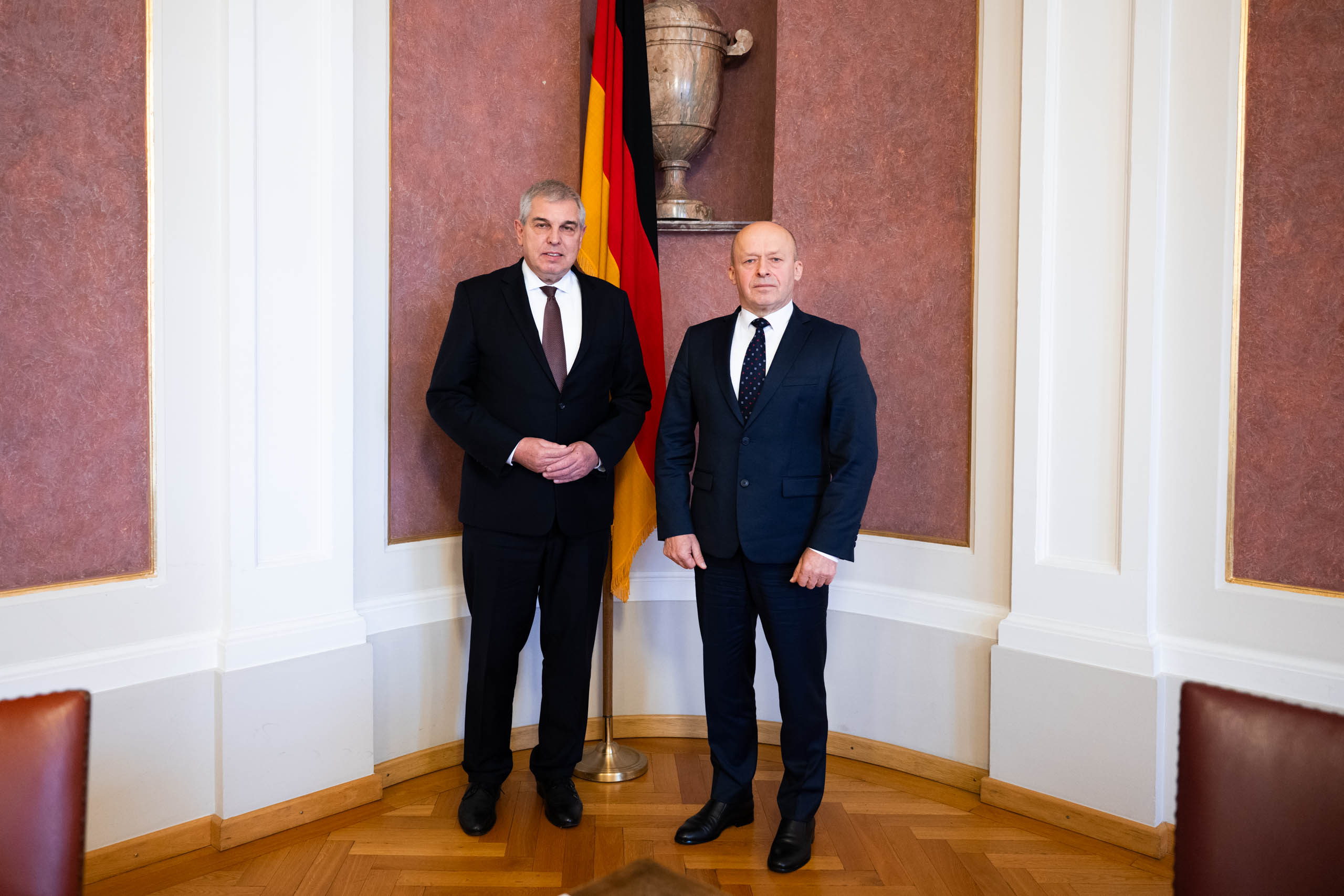
The judges concluded their stay in Karlsruhe with a visit to the Office of the Federal Public Prosecutor General of Germany, where they discussed the main areas of its work and issues related to war crimes.
At the Federal Fiscal Court in Munich, the SC judges had the honour of meeting with the President of the Court Hans-Josef Thesling and the judges of that court.
The SC judges noted the openness and friendliness of their colleagues, who answered their numerous questions. The meeting addressed, in particular, issues related to cassation filters, the criticism of judicial decisions, and the communication between the Federal Fiscal Court and the Court of Justice of the European Union.
.jpg)
Iryna Lytvynenko shared that she greatly appreciated the definition of an arbitrary decision given by the presiding judge of the Federal Fiscal Court, Francesca Werth: “A court decision is arbitrary if it cannot be justified in any way”. The SC judge was surprised to learn that Germany’s Ministry of Finance may issue recommendations on the non-application of a judicial decision in cases where it disagrees with the court’s interpretation of the law.
During discussions at both the Federal Court of Justice and the Federal Fiscal Court, relevant issues were raised regarding ensuring the uniformity of judicial practice under the legislation of Germany and Ukraine, in particular concerning the procedure for publishing court decisions containing legal positions (conclusions on the application of legal norms) of higher judicial instances.
.jpg)
The SC judges also visited the Constitutional Court of Bavaria, where they were welcomed by the President of the Court, Hans-Joachim Geßler. The guests were introduced to the court’s work by Kornelia Kornprobst, Secretary-General of the Constitutional Court of Bavaria.
She explained that the main types of proceedings before the court are constitutional complaints, through which citizens may claim a violation of their subjective constitutional rights by a judicial decision or an administrative (individual) act, as well as popular actions - complaints allowing any citizen to assert that a provision of Bavarian legislation violates a fundamental right guaranteed by the Constitution of Bavaria.
The SC judges also visited the Federal Patent Court of Germany. Proceedings in this court are conducted exclusively in electronic form; the panels include judges with both technical and legal education, and all expert assessments are carried out by the court itself. The guests were presented with an engaging Ukrainian-language presentation about the court’s work.
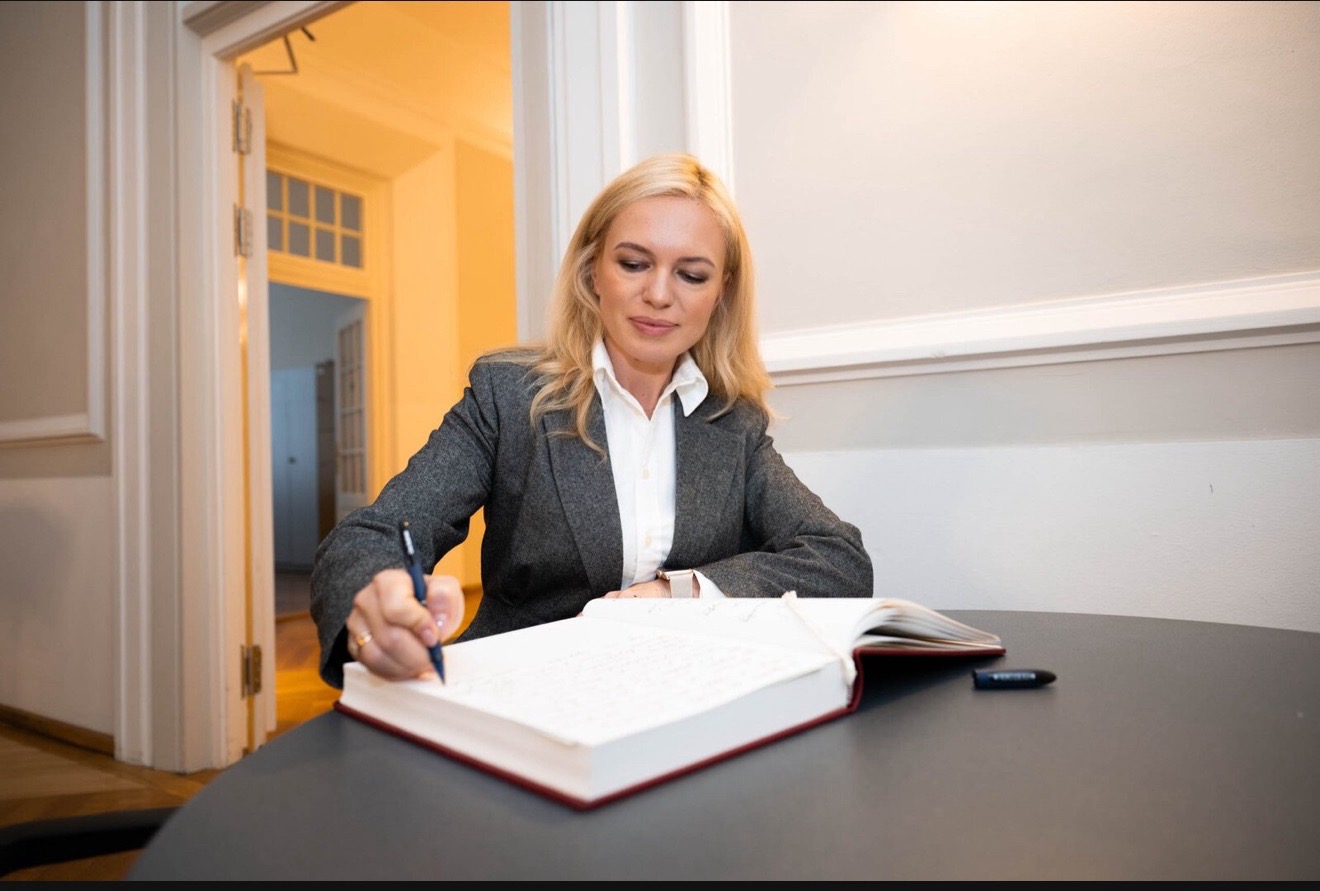
As part of their visit to Vienna (Austria), the SC judges visited the Constitutional Court of Austria, where they met with the Court’s Vice President Verena Madner and its Secretary-General Stefan Frank.
In addition, the delegation visited the EU Agency for Fundamental Rights (FRA), where they spoke with International Relations Officer Massimo Toschi, Legal Expert Sanja Jovičić, Research Officer in the Asylum, Migration and Borders Sector Tamás Molnár, and Head of the Anti-Racism and Non-Discrimination Sector in the Equality, Roma and Social Rights Unit Rossalina Latcheva.
At the Supreme Court of Austria, a discussion was held with the President of the Court Georg Kodek and Judicial Adviser Nora Wallner-Friedl. The guests were also given a brief tour of the court.
During the visit to the Federal Ministry of Justice of Austria, members of the Ukrainian delegation met with Georg Stawa, Rule of Law Adviser at the Embassy of Austria in Belgrade for South-Eastern Europe, to discuss “Ukraine’s EU Accession – Judicial Reforms in the Light of European Experience”.
%20(1)%20(1).jpeg)
During these meetings, the Ukrainian judges asked their European colleagues about the positions of the higher judicial authorities of Germany and Austria on specific issues that the Supreme Court must address. These included: the entities liable for damages caused by a law enforcement officer and the possibility of considering a related civil claim within a so-called joined proceeding in a criminal case; the determination of time limits for bringing a judge to disciplinary liability and compliance with proportionality when imposing disciplinary sanctions; the mechanisms for applying administrative procedures as prerequisites for filing a lawsuit; the institution of constitutional complaints against judicial decisions, and more.
Following the visit, the Supreme Court judges emphasized that the experience and knowledge shared by their foreign colleagues can be applied in judicial practice in Ukraine. They also noted the invaluable words of support and understanding for all Ukrainians who must live and work under wartime conditions.
%20(1).jpg)
_03_03.png)