Contact center of the Ukrainian Judiciary 044 207-35-46
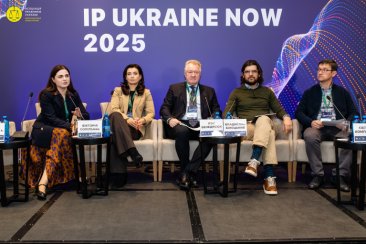
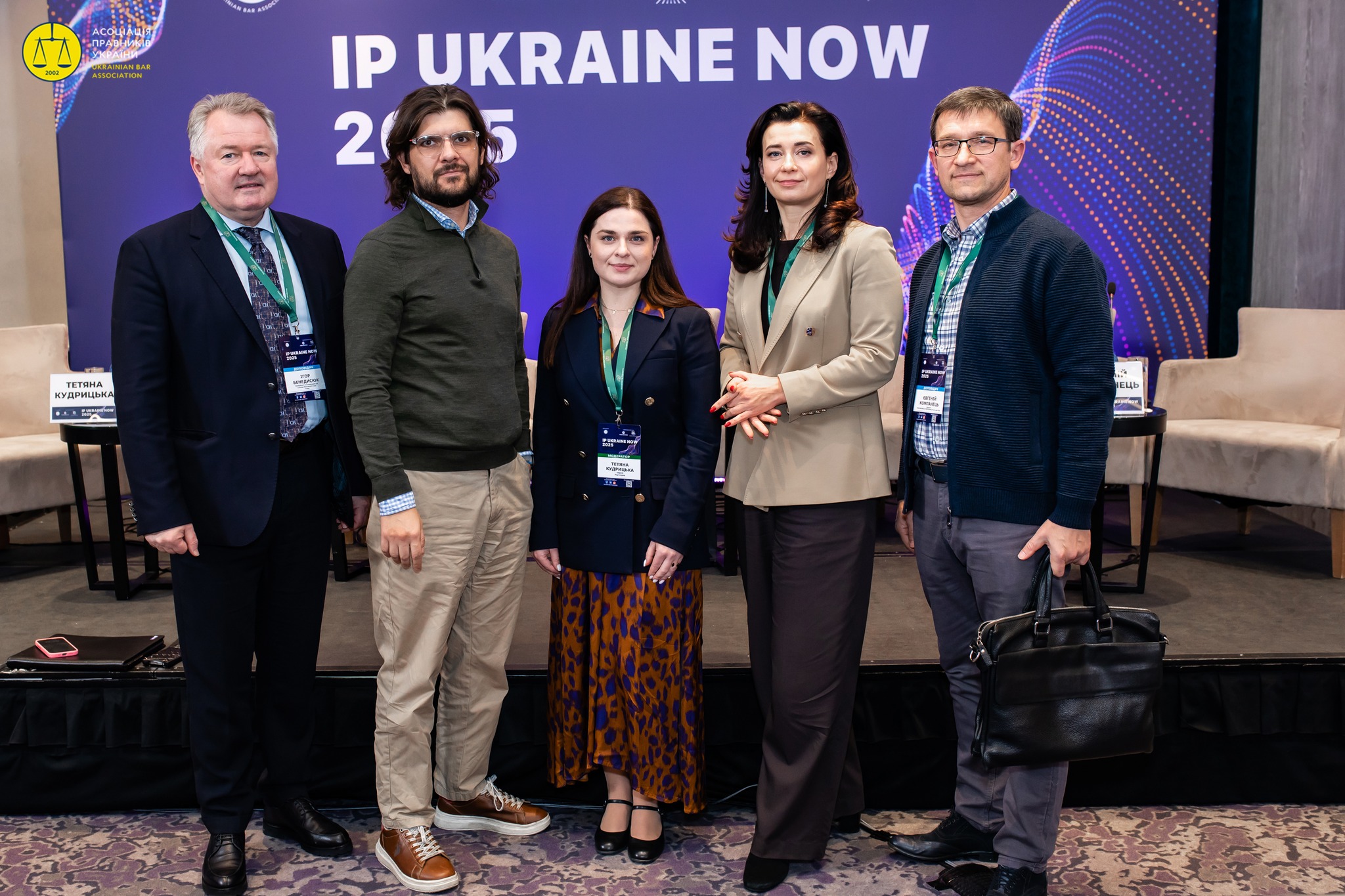
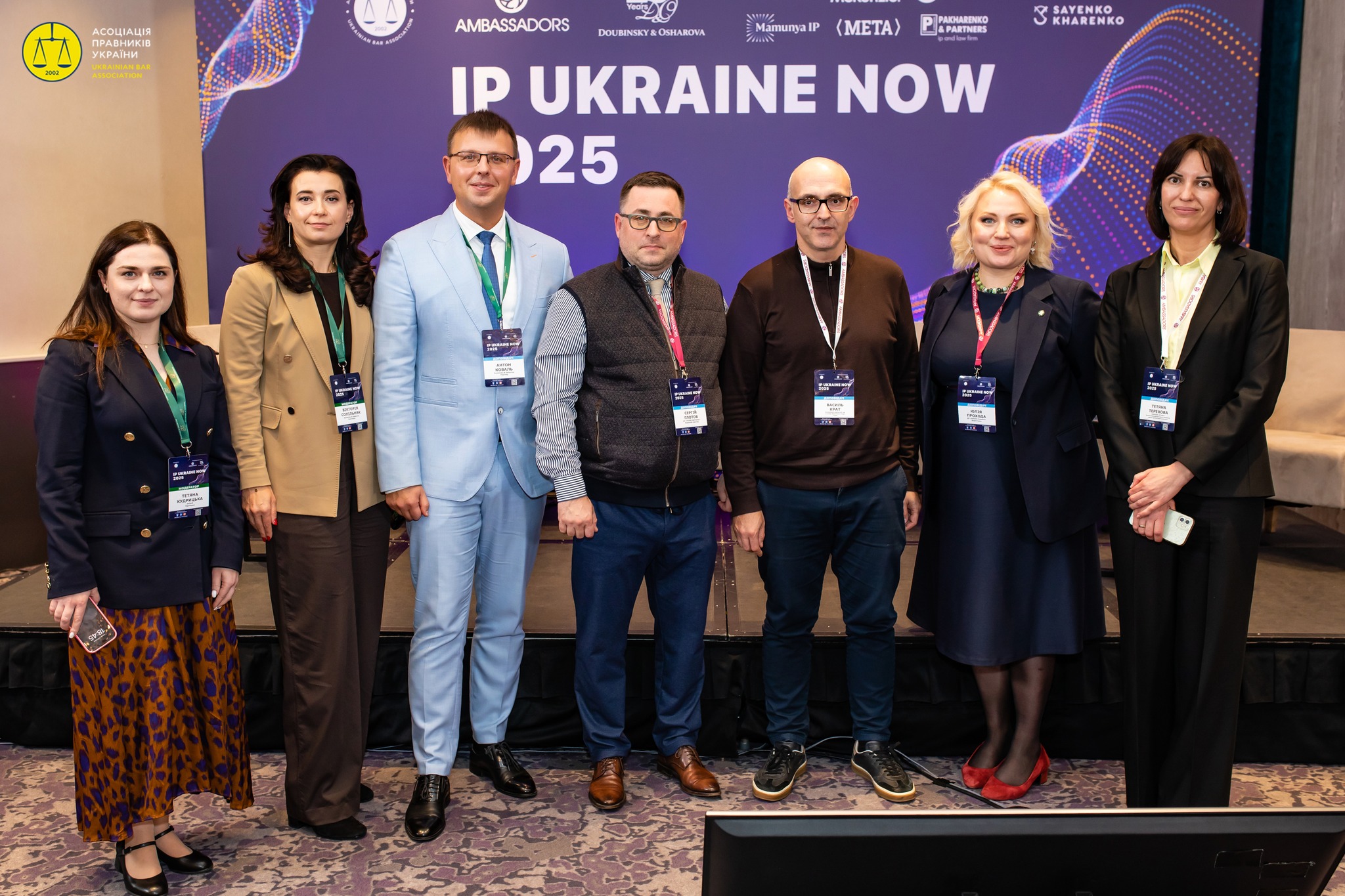
Ihor Benedysiuk, Secretary of the Judicial Chamber for Cases on the Protection of Intellectual Property Rights, as well as cases related to antitrust and competition legislation of the Commercial Cassation Court within the Supreme Court, and Vasyl Krat, Judge of the Supreme Court in the Civil Cassation Court, took part in the leading conference IP Ukraine Now 2025, dedicated to the transformation of Ukraine’s intellectual property sector in the context of European integration.
The event traditionally brought together representatives of state authorities, judges, leading experts in the field of intellectual property, as well as heads of law firms, attorneys, patent attorneys, forensic experts, and scholars to discuss the key changes taking place in connection with the adaptation of Ukrainian legislation to EU norms, the updating of copyright regulation, the protection of trademarks, inventions, and digital assets. The focus was on challenges for business, new opportunities for innovation, legal aspects of the use of artificial intelligence, and real cases of Ukrainian companies entering European markets.
During the fourth session “IP Protection in Action: Judicial and Administrative Instruments”, Ihor Benedysiuk delivered a presentation titled “Supplementary Protection of Patents: Case Law of the Supreme Court”. The judge presented a practical analysis of Supreme Court decisions that examined the application of Supplementary Protection Certificates (SPC) for inventions in the pharmaceutical sector.
In his speech, the Secretary of the relevant Judicial Chamber of the Commercial Cassation Court of the Supreme Court recalled that the supplementary protection certificate exists to compensate for the time lost due to regulatory procedures for the registration of medicinal products. The amendments to the legislation in 2020, which introduced Article 27-1 of the Law of Ukraine “On the Protection of Rights to Inventions and Utility Models”, established clear deadlines for submitting an application for supplementary protection - six months or one year. At the same time, according to the judge, the legislator did not provide for transitional provisions, which led to collisions when applying the new deadlines to rights that arose before these amendments were introduced.
“Legal norms cannot be applied retrospectively if this results in the restriction of rights that have already arisen. The principle of legal certainty requires the protection of the legitimate expectations of rights holders,” emphasized Ihor Benedysiuk.
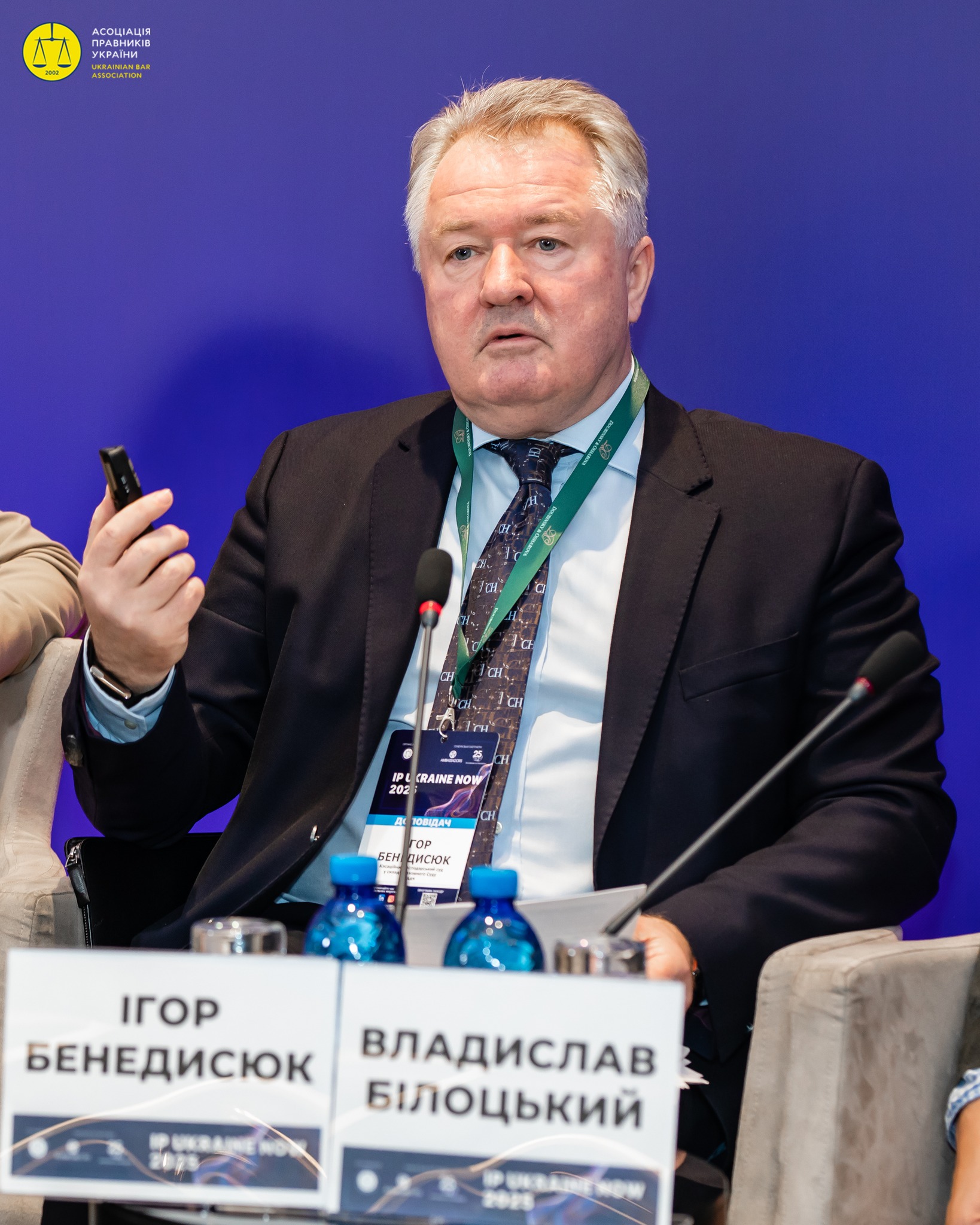
In his presentation, the judge analyzed two illustrative cases — No. 910/8295/21 (Chugai Seiyaku Kabushiki Kaisha (Japan) / Ukrainian National Office of Intellectual Property and Innovations (UKRNOIVI), (medicinal product Alecensa®)) and No. 910/12688/24 (GENMAB A/S (Denmark) / UKRNOIVI, (“Antibody to CD38”, Darzalex®)), in which the Supreme Court formulated fundamental approaches regarding the non-retroactivity of the law in time.
In the first case, the Supreme Court concluded that the right to supplementary protection had arisen for the right holder before the amendments entered into force, and therefore the new time limits could not be applied. The Court held that depriving a person of a right merely because a new version of the law had come into effect constitutes a violation of the principle of legal certainty.
“A person cannot be deprived of a right that they acquired in accordance with the legislation in force before its amendment, solely on the ground that a new law had already entered into force on the date of the application,” the judge emphasized.
In the second case, the Supreme Court examined the application of the one-year time limit for submitting an application, calculated from the date of the first registration of the medicinal product in the world. The Court quashed the decisions of the lower instances and remanded the case for a new hearing, stressing that the one-year time limit cannot retrospectively restrict a right that arose before the introduction of this provision.
Ihor Benedysiuk noted that in this case the key issue was not only compliance with the time limits, but also the very emergence of the right to supplementary protection, since the law in its new wording effectively changed the moment when such a right arises. The judge pointed out that such a change in concept can create situations in which a person loses the right through no fault of their own – merely because the time limit began to run even before the adoption of the new rules.
“It is practically impossible to restrict a right that existed and continues to exist by means of a time limit applied retrospectively. This contradicts not only Article 58 of the Constitution of Ukraine, but also the very logic of justice. The Supreme Court consistently adheres to the position that acquired rights cannot be narrowed retroactively,” summarized Ihor Benedysiuk.
The judge also shared practical considerations regarding the consequences of these decisions. He stressed that for right holders, the key is to fix the date of Ukrainian registration as the moment when the right arises, while for the state authority, it is essential to take into account the temporal principle of the operation of the law and to avoid refusals to issue a supplementary protection certificate (SPC) based on the retrospective application of new time limits. In the speaker’s opinion, the Supreme Court’s case law in this area will contribute to harmonization with the EU SPC Regulation, thereby enhancing legal certainty and Ukraine’s investment attractiveness.
Ihor Benedysiuk’s presentation is available at the following link: https://court.gov.ua/storage/portal/supreme/prezentacii_2025/Prezent_Dodat_ohorona_patentiv.pdf.
In the concluding part of the conference, during the battle on the regime of well-known trademarks, Vasyl Krat acted as the arbitrator. The discussion was held in the format of a professional competition between IP law specialists on the question of whether the recognition of a trademark as well-known can constitute an independent claim. The side arguing in favor of such a possibility contended that well-known status is not merely a legal fact, but a separate legal regime that grants enhanced rights. The opposing side, which was supported by the judge, argued that the recognition of a trademark as well-known is merely the establishment of a fact that does not create a right as such, but rather extends the scope of an existing right.
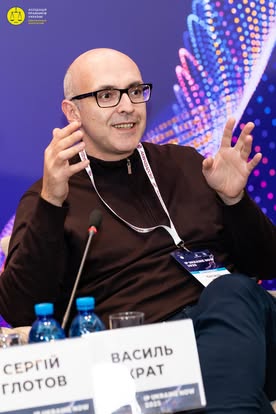
Vasyl Krat pointed out that the legal protection of a well-known trademark is an exception to the general rule of the registration system for the acquisition of rights to a trademark. Article 194 of the Association Agreement between Ukraine, on the one hand, and the European Union, the European Atomic Energy Community and their Member States, on the other hand – signed on 21 March 2014 and 27 June 2014 – states that the Parties shall cooperate effectively to ensure effective protection of well-known trademarks as provided for in Article 6bis of the Paris Convention for the Protection of Industrial Property and in Articles 16(2) and 16(3) of the Agreement on Trade-Related Aspects of Intellectual Property Rights (TRIPS). Unlike registered trademarks, whose term of validity is fixed (by law or international treaty), exclusive rights to well-known trademarks are valid indefinitely. At the same time, it cannot be asserted that there are no grounds whatsoever for terminating such rights. Among them, in particular, are: the transformation of a trademark into a generic designation for a certain type of goods or services (Part 1 of Article 497 of the Civil Code of Ukraine) – in which case the trademark “ceases” to perform its distinguishing function, i.e. to differentiate one product (service) from others; non-use of the trademark in Ukraine, in whole or in part, for five years. The judge noted that perhaps the battle should have been devoted not to issues of well-known trademarks as such, but to the very reason this question arises – the unresolved legal regime of “Soviet-era” trademarks.
In the context of the battle, Vasyl Krat posed the question of whether, in civil law, there exist claims for recognition through which a right is acquired. He drew attention to Article 344 of the Civil Code of Ukraine concerning the acquisition of ownership by acquisitive prescription. Such a right, taking into account Article 11 of the Code, is established by a court decision. A similar situation exists under Article 376 of the Civil Code of Ukraine regarding unauthorized construction.
According to the judge, we are accustomed to the fact that usually a court protects a violated, unrecognized or disputed civil right or interest (Article 15 of the Civil Code of Ukraine). At the same time, he pointed to Article 392 of the Code, which states that the owner of property may bring a claim for recognition of his right of ownership if that right is disputed or not recognized by another person, as well as in the event of loss of a document certifying his right of ownership. This article does not speak of a violated right. However, Article 392 of the Civil Code of Ukraine concerns precisely the protection of the right of ownership – that is, when the right already exists.
Taking into account the norms cited above, it is necessary to clarify what the legislator intended when constructing Article 494 of the Civil Code of Ukraine, which provides that “the acquisition of intellectual property rights to a trademark that has an international registration or has been recognized as well-known in the manner prescribed by law does not require certification by a certificate”.
This raises the question of whether such cases should be handled in contentious (claim-based) proceedings or in separate (special) proceedings in the relevant category of cases. Intellectual property cases are considered by commercial courts. However, this jurisdiction does not provide for a separate type of proceeding (for establishing the fact of well-known status of a trademark). Therefore, such cases may fall under the jurisdiction of civil courts, which have comprehensive (“all-encompassing”) jurisdiction.
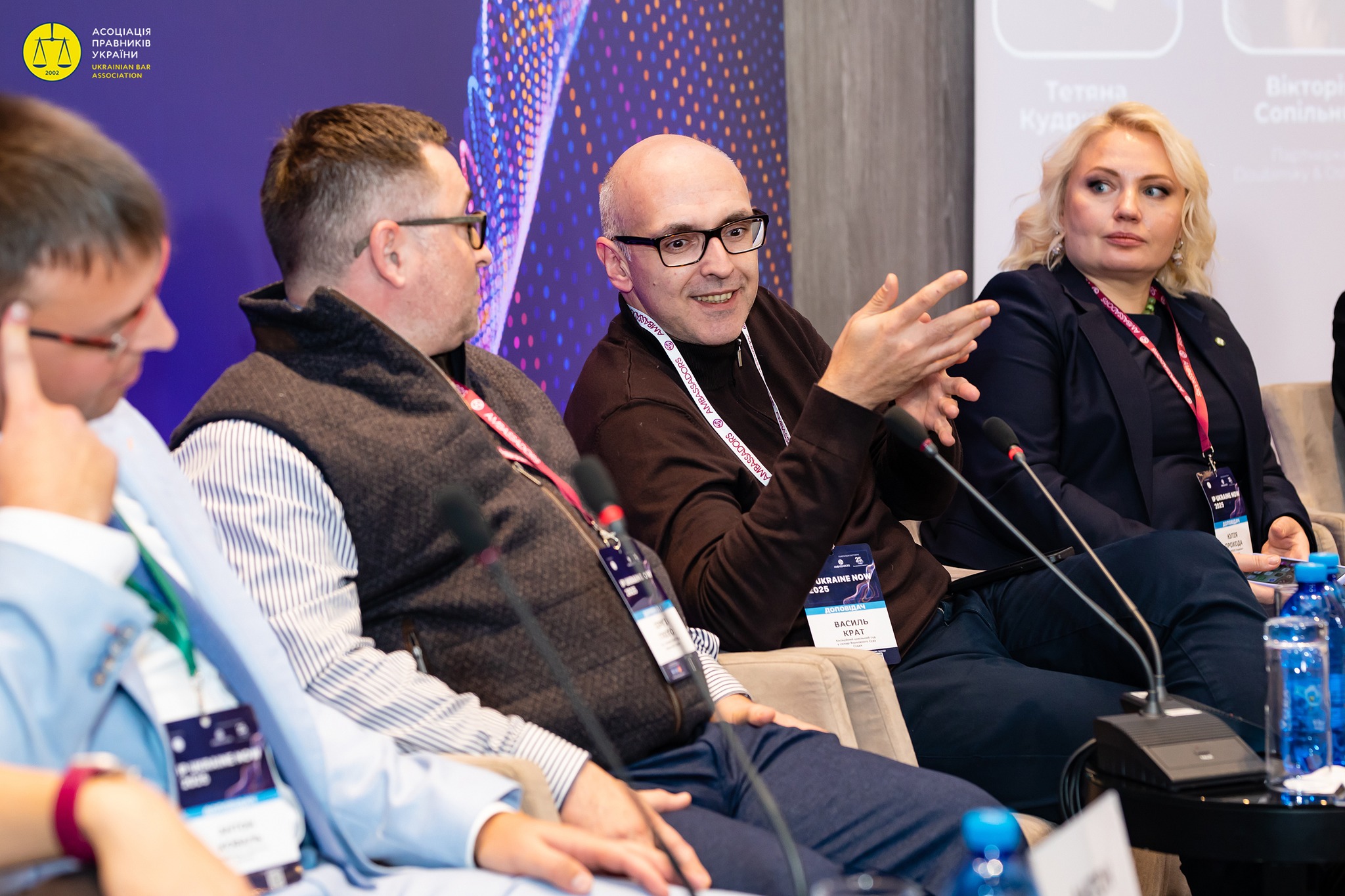
Vasyl Krat noted that procedural codes may provide for remedies in the same way as the Civil Code of Ukraine contains procedural norms. However, Article 20 of the Commercial Procedure Code of Ukraine, which defines the jurisdiction of commercial courts, does not include a separate remedy such as recognition of a trademark as well-known.
In addition, the question arises whether such a remedy can be applied against everyone or only against the parties involved, and who in this case would be the defendant. This problem has arisen before courts in cases concerning documents lost in temporarily occupied territories. Therefore, it is necessary to determine whether such cases should be treated as proceedings to establish a fact, or whether some “artificial” defendant should be introduced. Vasyl Krat pointed out that in two resolutions of the Civil Cassation Court of the Supreme Court in cases concerning the termination of mortgages – where no defendant was available due to the liquidation of the mortgagee bank – the Court concluded that, by analogy of law, paragraph 3 of part 4 of Article 277 of the Civil Code of Ukraine could be applied to establish the fact of termination of the mortgage.
The effectiveness of the discussion is evidenced by the fact that at the beginning of the battle and at its end, the audience was asked to support the position of one side or the other. At the start, 64% of the participants supported the first position and 21% supported the second. After the discussion, the votes were redistributed as follows: 43% and 57%.
The event was organised by the Ukrainian Bar Association.
Photo courtesy of the organisers.
_03_03.png)