Contact center of the Ukrainian Judiciary 044 207-35-46

It is evident that a democratic society cannot develop effectively when there is no mutual understanding between those who shape judicial practice and those who shape public opinion. At the same time, populism, as a phenomenon that has become widespread, can very quickly destroy trust in an institution that has been built over years. Overcoming such consequences requires significant efforts, maximum transparency of the institution’s work, as well as honesty and professionalism on the part of its representatives.
This was emphasized by President of the Supreme Court Stanislav Kravchenko during the opening of the international conference “The Rule of Law in the Age of Populism: Freedom of Expression and the Right to a Fair Trial”.
According to Stanislav Kravchenko, the Supreme Court devotes considerable attention to this aspect of its work; however, the purpose of this event is not only to discuss achievements but, most importantly, to view the situation from different perspectives and identify problematic issues in communication between the judiciary and society.
For this reason, the conference brought together representatives of the judiciary and the legislature, the bar, the academic, journalistic, and student communities — all those who work to uphold the rule of law, freedom of expression, and public trust in justice.
The President of the Supreme Court expressed gratitude to the Ukrainian Catholic University, the Council of Europe projects “Support to Ukraine in implementation of the Council of Europe standards on the judiciary” and “Safeguarding freedom of expression and freedom of the media in Ukraine – Phase II” (SFEM-UA – Phase II), as well as the OSCE Support Programme for Ukraine within the projects “Assisting the Supreme Court and higher courts in implementing judicial reform and ensuring access to justice in times of war” and “Strengthening ability of media stakeholders to apply media standards and promote media literacy” for their support in organizing the event.
Concluding his welcoming remarks, Stanislav Kravchenko wished the conference participants fruitful discussions, new ideas, and practical conclusions that would contribute to strengthening trust in the judiciary, upholding freedom of expression, and helping build a state in which law and justice prevail over populism.
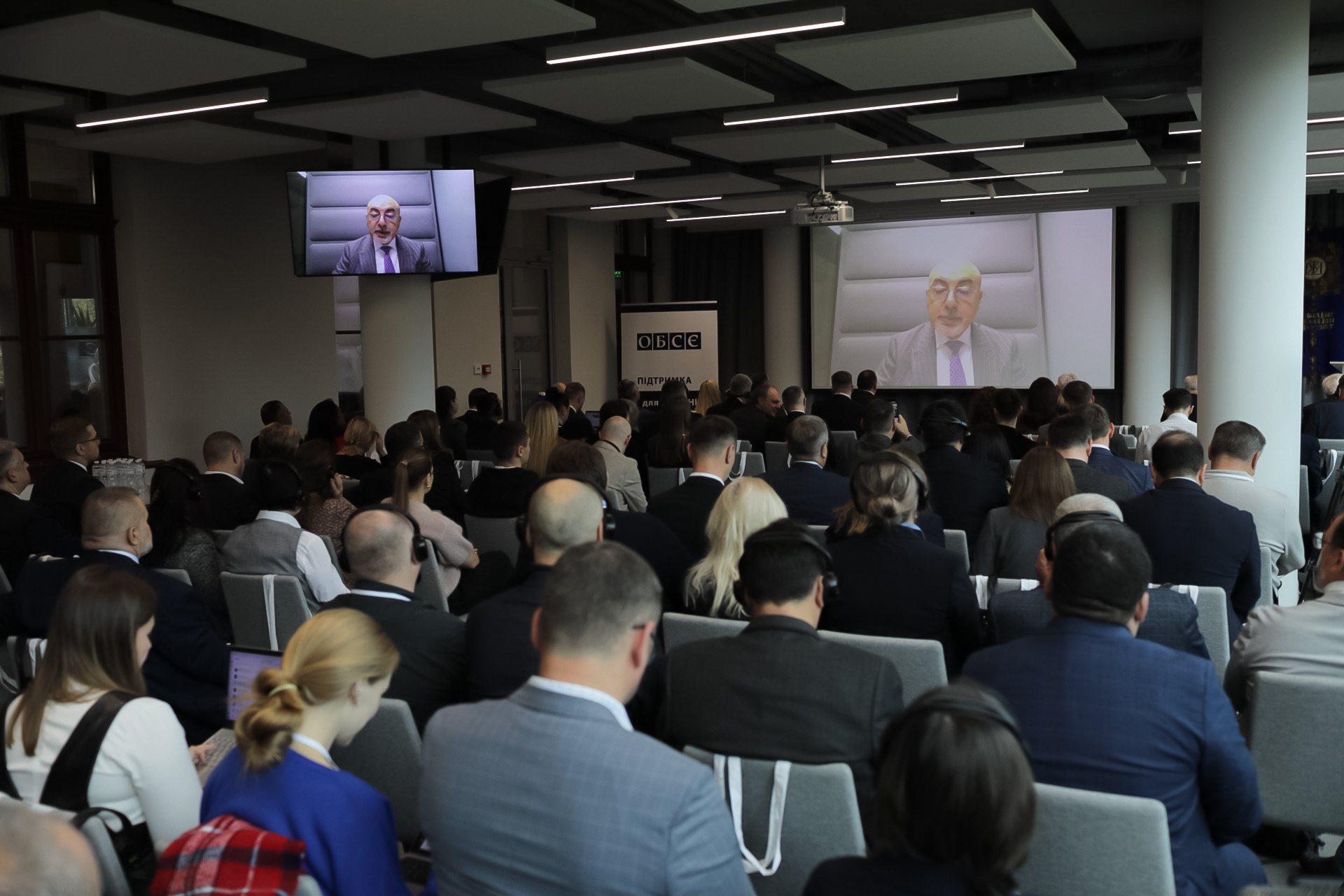
Giovanni Battista Celiento, Head of the Cooperation Programmes Division of the Council of Europe’s Directorate General of Human Rights and Rule of Law, emphasized that this conference reflects the shared aspiration of the civilized world toward justice, democracy, and the rule of law, particularly in light of the unprecedented challenges posed by the armed aggression of the Russian Federation against Ukraine.
According to him, the relationship between freedom of expression and the right to a fair trial is one of the most complex issues in modern justice. The European Court of Human Rights consistently stresses that freedom of expression is a powerful societal tool for conveying opinions. At the same time, it is important to remember that in order to ensure the right to a fair trial, courts must remain balanced and impartial. It is precisely for these purposes that the Convention for the Protection of Human Rights and Fundamental Freedoms allows for restrictions on freedom of expression in certain cases. It is crucial to find the line between a fair trial and freedom of expression so as not to undermine either of these values.
Giovanni Battista Celiento spoke positively about Ukraine’s progress in this field, particularly the introduction of the position of judge-speaker, the implementation of programmes aimed at improving communication skills of judges and court staff, and the adoption of new methods for informing the public about judicial practice. He also assured that Ukraine can continue to rely on the Council of Europe’s support: “Our joint efforts will ensure that justice remains the foundation of our work”.
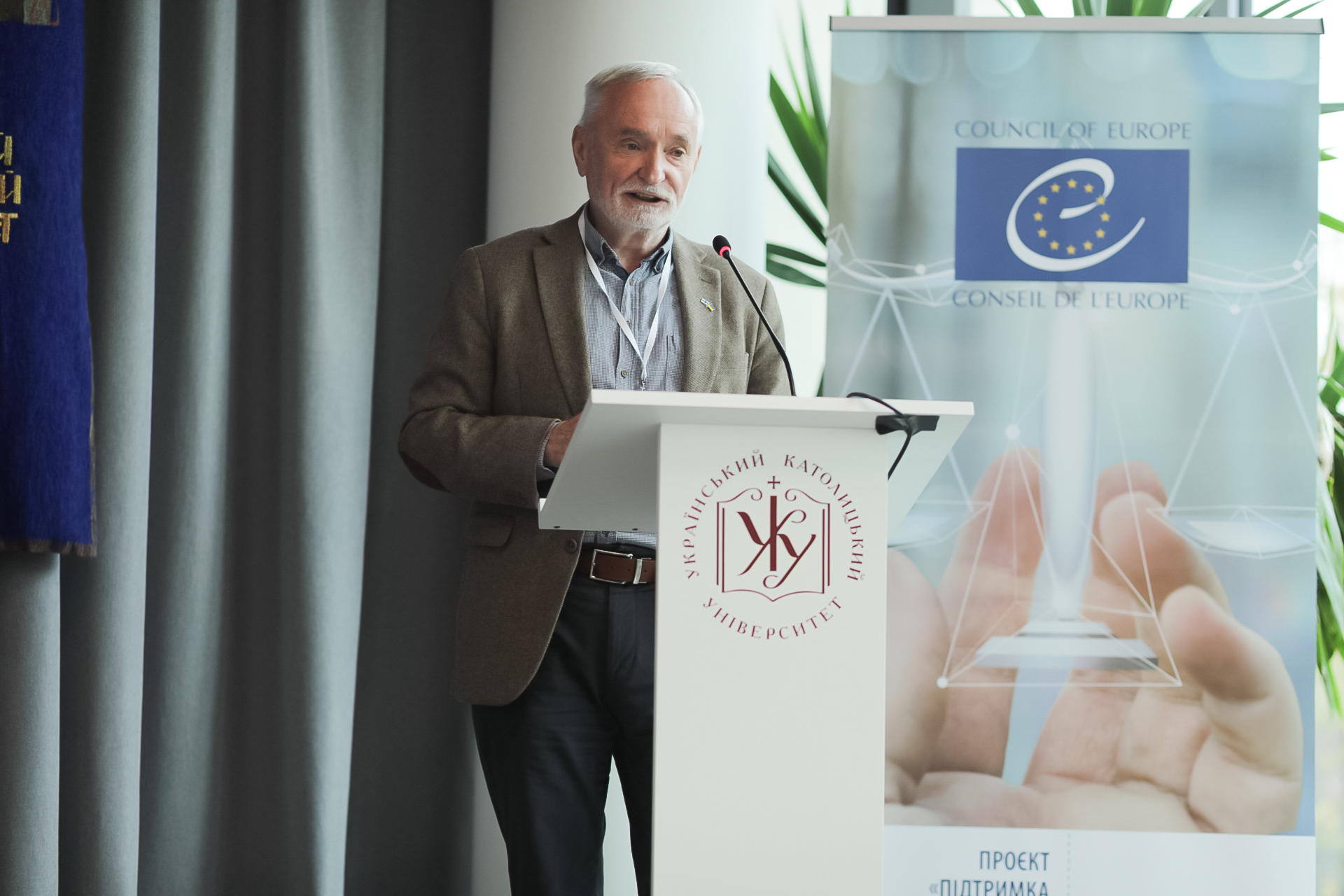
Special Representative of the OSCE Chairperson-in-Office and OSCE Project Co-ordinator in Ukraine, Petr Mareš, also addressed the participants with welcoming remarks. Considering the historical context, he noted that humanity is now facing entirely new phenomena, such as populism, which poses a threat to democracy. Therefore, bringing together representatives of the judiciary and the media at a joint event is a significant step to prevent our historical period from fully turning into an age of populism, as well as to identify the boundaries of judicial independence and freedom of expression. This will be particularly important in the post-war period, when Ukraine will face the challenge of sustaining and protecting democracy.
As the speaker noted, the reform of the judicial system in Ukraine – which has achieved substantial progress – in no way contradicts media freedom or freedom of expression, since without adherence to these values any changes in the field of justice risk proving unsuccessful.
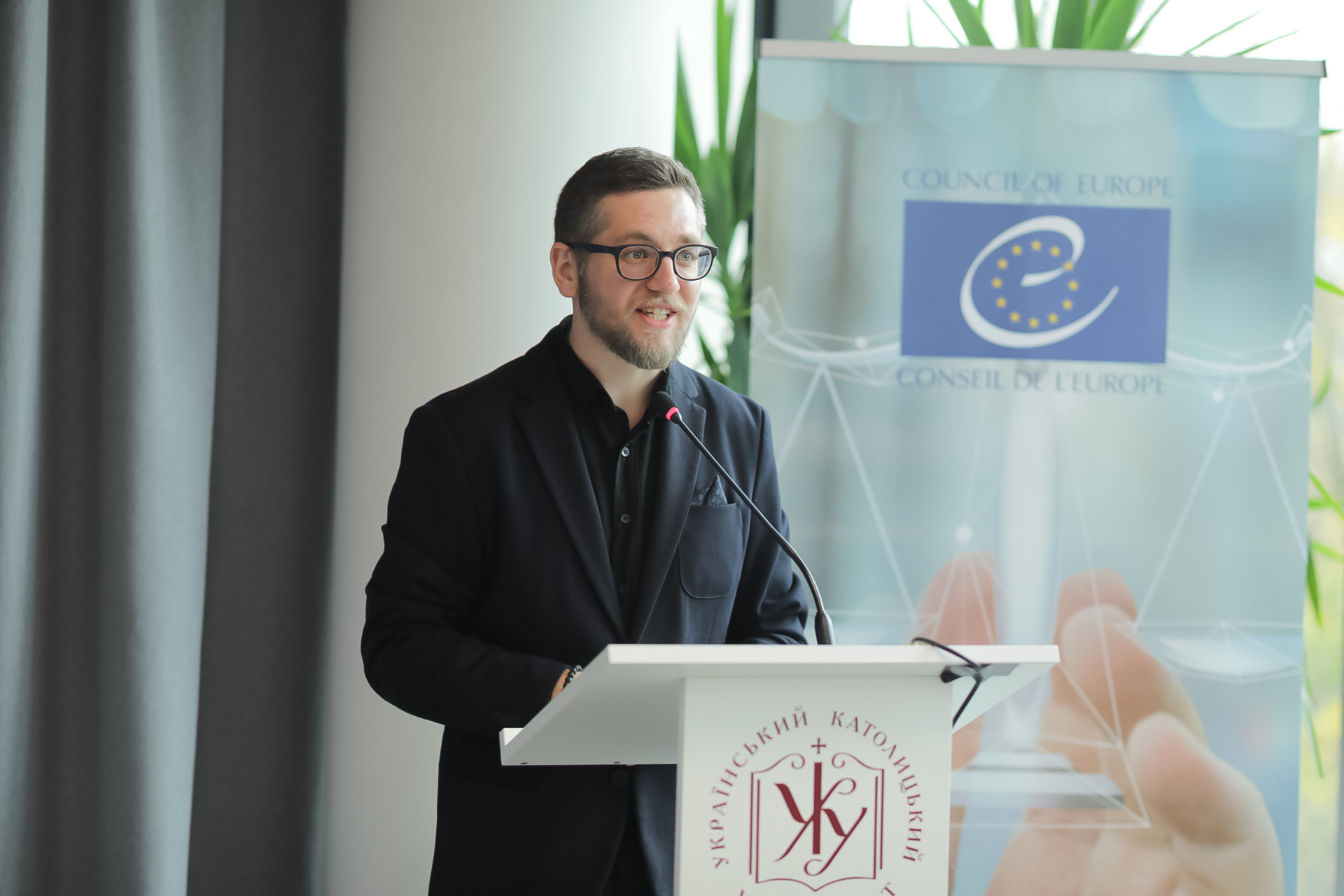
In his welcoming remarks, Vice-Rector of the Ukrainian Catholic University Dmytro Sherenhovskyi expressed his conviction that the rule of law is a mechanism all of us must refine and defend every day. In his view, law should be discussed not only as a norm or a foundation for the functioning of society. It should also be understood as a system of trust, as the “social glue” that holds society together. This is critically important in times of populism, when emotions replace evidence. As a result, trust becomes fragile.
“In any populist ideology, there is a dictatorship of the majority. Yet the moral foundation of democracy is quite the opposite: there are things that no majority may demand and no government may declare without betraying its own legitimacy. In times of populism, the rule of law is not the power of the loudest voice, but of the most just mind. And today it is important for Ukraine to hear precisely this quiet voice of reason,” the UCU Vice-Rector urged.
A reminder that the livestream of the conference, held on 24–25 October, is available on the YouTube channel of the Supreme Court: https://www.youtube.com/live/WL3HkM68K3w.
Coverage of all speakers’ presentations will be published later on the Supreme Court’s information resources.
_03_03.png)