Contact center of the Ukrainian Judiciary 044 207-35-46

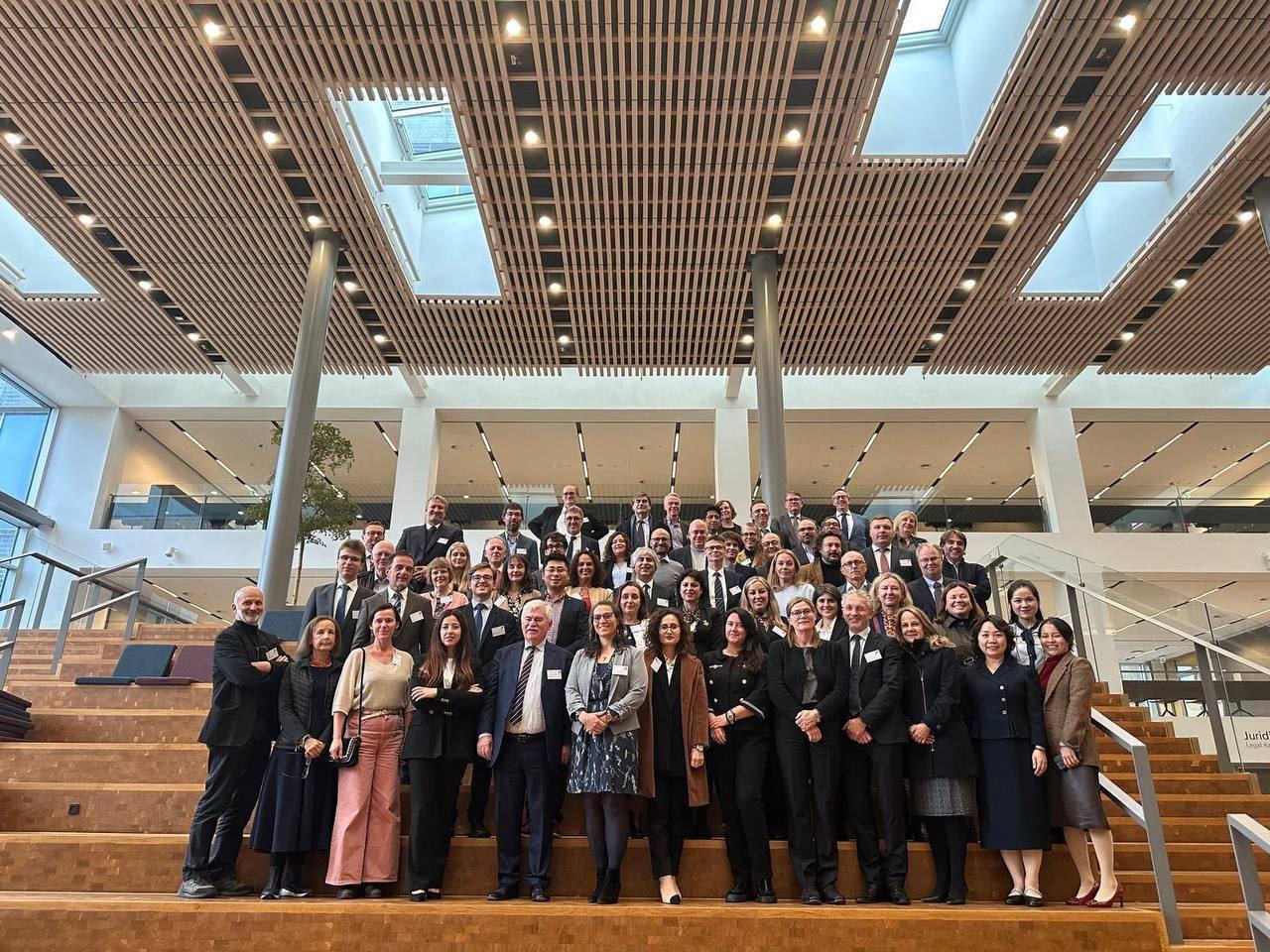
The protection and restoration of nature was the central theme of the annual conference of the EU Forum of Judges for the Environment (EUFJE), recently held in Copenhagen (Denmark) at the University of Copenhagen. During the conference, experts from across Europe discussed recent developments in EU environmental policy and law, EU case law on the conservation of natural habitats and biodiversity, the practice of the European Court of Human Rights in the field of nature protection, European legislation on nature restoration, and tools for compensating environmental damage (including BIOVAL).
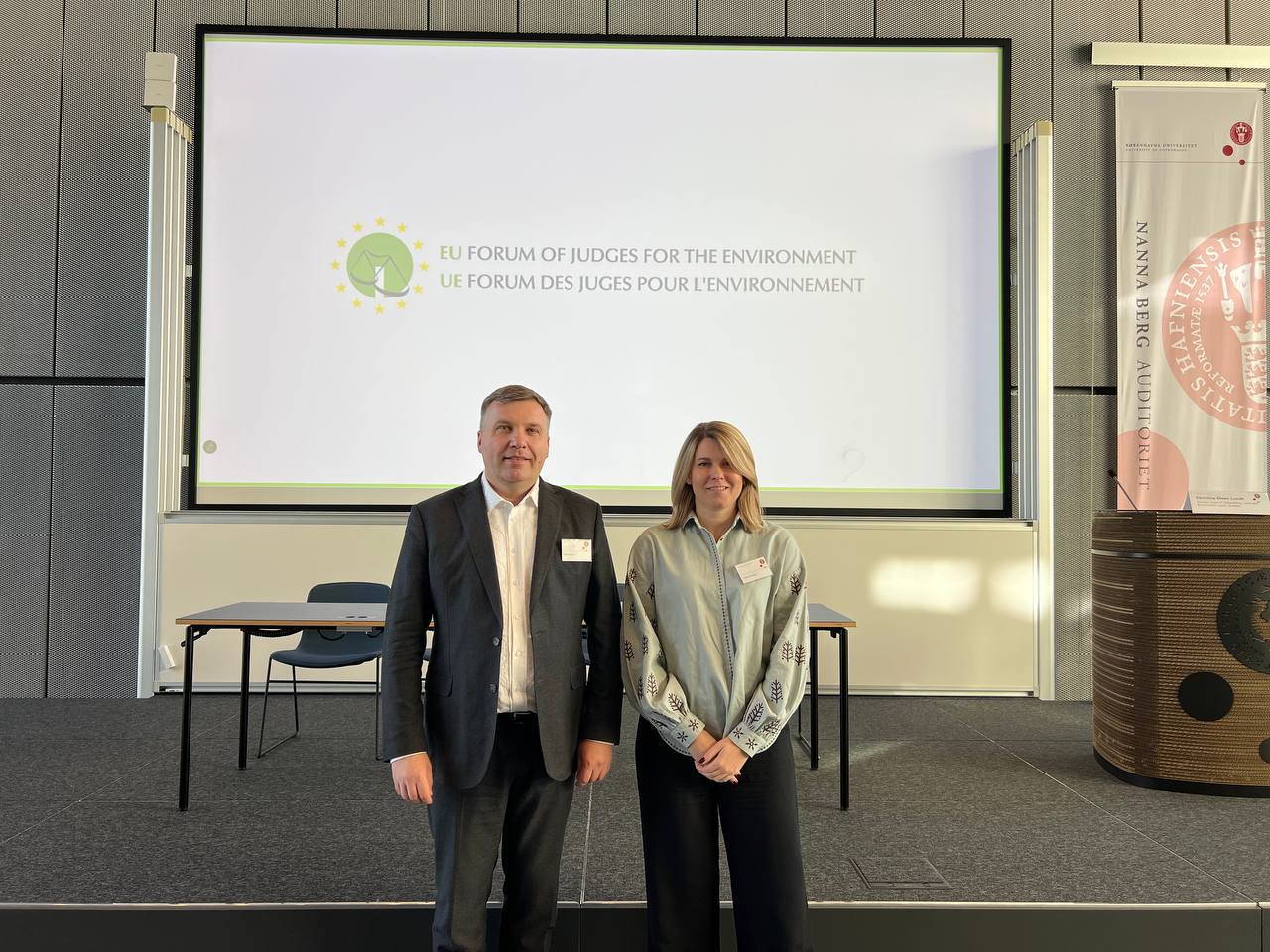
In addition, representatives of European states presented environmental cases from Spain, France, the Netherlands, Sweden, Denmark, Latvia, and Greece. Ukraine’s experience in protecting and restoring nature during the full-scale war launched by the Russian Federation against Ukraine was presented by the Secretary of the Grand Chamber of the Supreme Court, Vitalii Urkevych, and Supreme Court judge of the Commercial Cassation Court, Hanna Vronska.
Within the framework of the Forum, Hanna Vronska delivered a presentation entitled “War and the Environment: How Ukraine Shapes Its Response to Ecocide”. She discussed the concept of ecocide and the international legal foundations for its qualification. The speaker noted that ecocide is the large-scale destruction of the natural environment that causes severe and long-term damage to ecosystems, undermines the foundations of human life, and threatens future generations. She recalled that the term emerged in the 1970s in connection with environmental crimes committed during the Vietnam War, and in 2021 the Stop Ecocide Foundation’s expert panel proposed its modern legal definition.
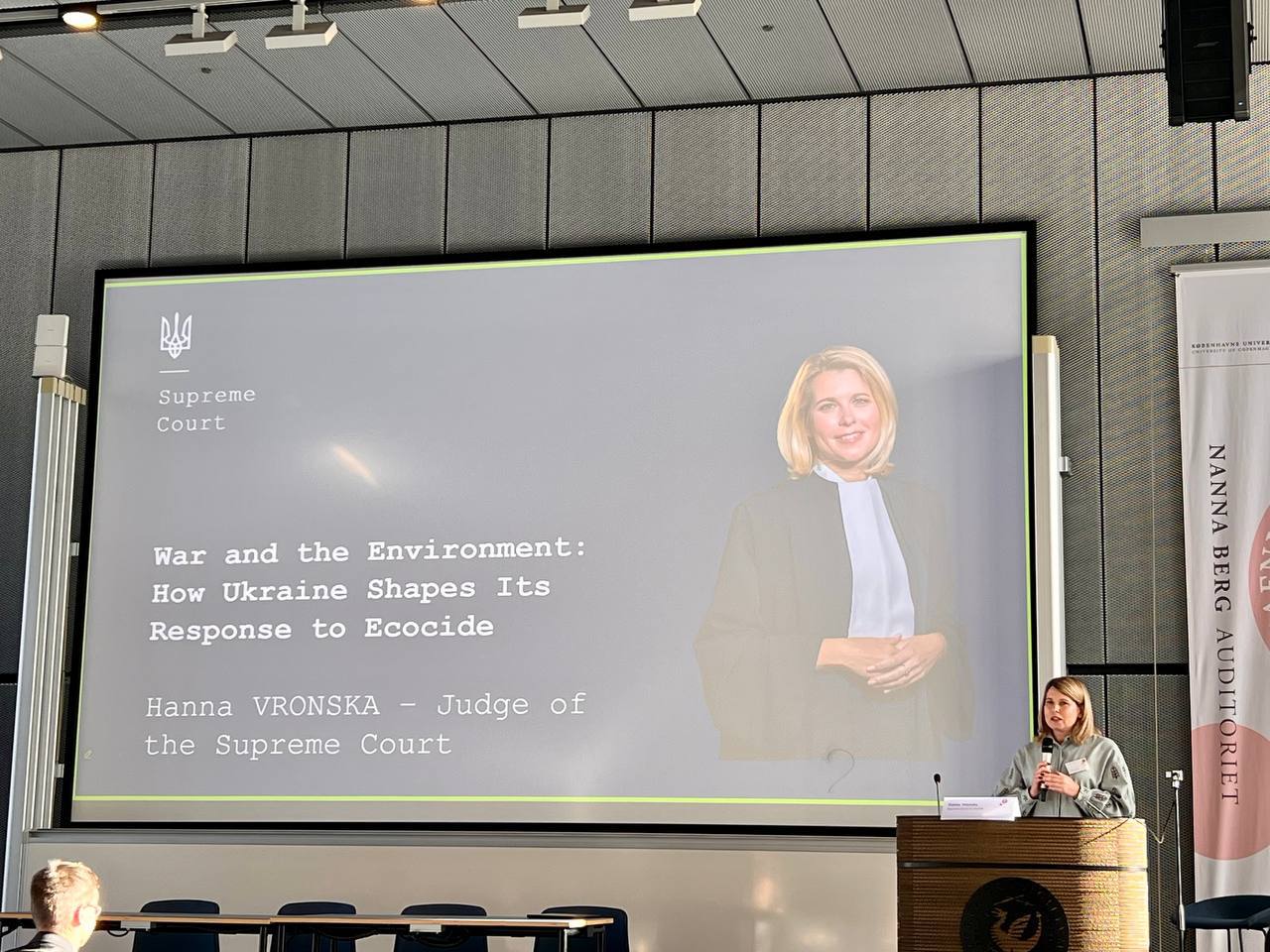
Hanna Vronska outlined the norms of international humanitarian and criminal law that prohibit actions causing widespread, long-term, or severe environmental damage. In particular, she drew attention to the provisions of Articles 35 and 55 of the Protocol Additional to the Geneva Conventions of 12 August 1949, and relating to the Protection of Victims of International Armed Conflicts (Protocol I), Article 8(2)(b)(iv) of the Rome Statute of the International Criminal Court, and Article 441 of the Criminal Code of Ukraine, which establishes liability for ecocide. The judge also focused on by-laws, methodologies, and procedures that define the process of documenting, assessing, and calculating environmental harm, thereby creating an evidentiary basis for future claims in national and international jurisdictions.
The report also highlighted the classification of types of damage inflicted during war: direct, indirect and cumulative, as well as short-, medium- and long-term, and local, regional or transboundary. The judge outlined the key principles of environmental damage compensation: the “polluter pays” principle, prevention, restoration, intergenerational equity and scientific soundness.
At the end of her presentation, Hanna Vronska drew the attention of her European colleagues to the destruction of the Kakhovka Hydroelectric Power Station on 6 June 2023 as one of the symbols of the environmental catastrophe caused by Russia’s war against Ukraine. The judge stressed that compensating for damage caused by ecocide is not only a legal mechanism but also a moral imperative that requires a systemic and long-term response from the state, society and the legal community.
Hanna Vronska’s presentation (in English) is available at the link: https://court.gov.ua/storage/portal/supreme/prezentacii_2025/GannaVronskaPresentation.pdf.
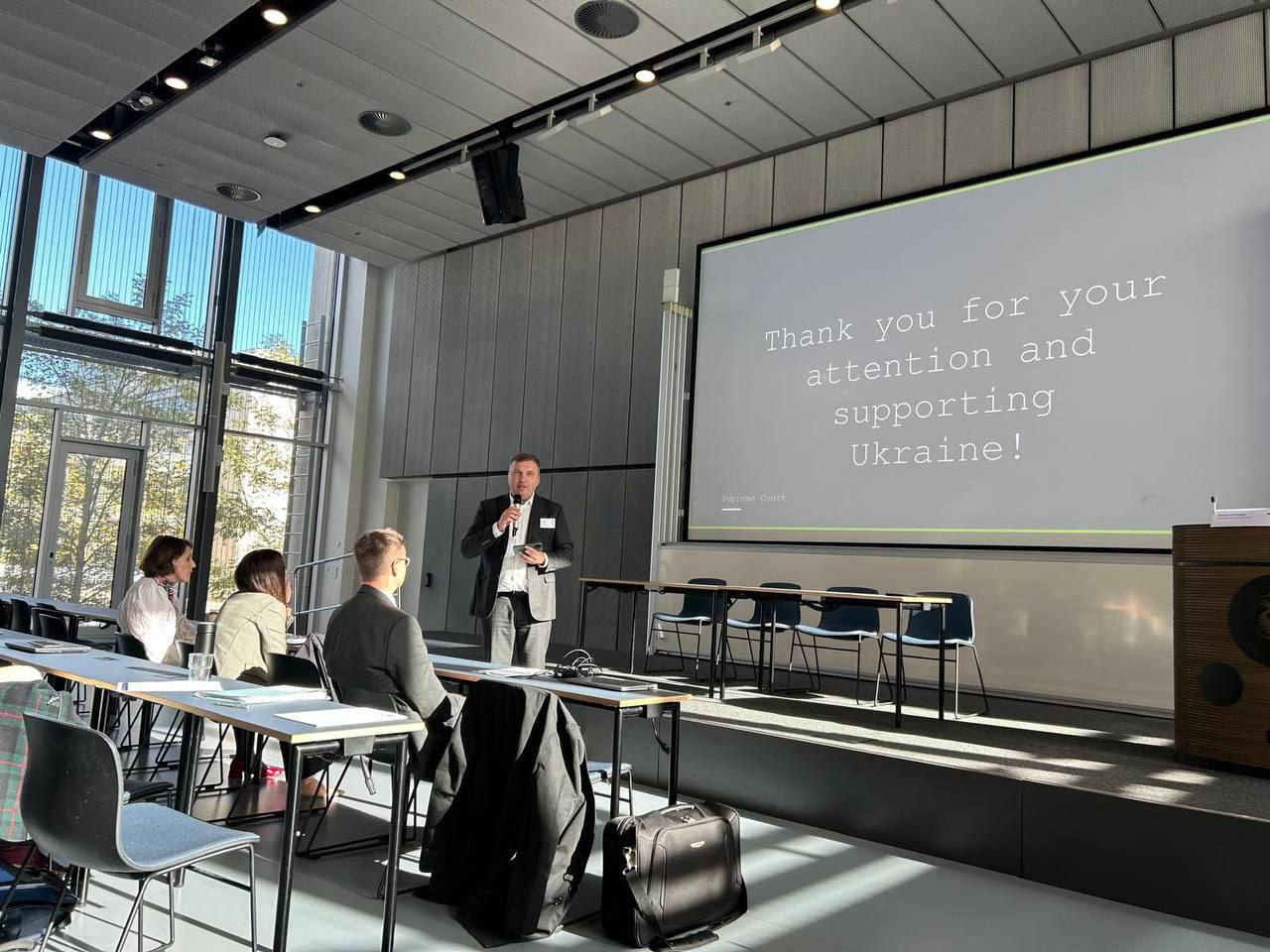
Vitalii Urkevych provided examples of large-scale environmental damage caused by Russian aggression against Ukraine, which has resulted in catastrophic harm to the environment.
For instance, a Russian missile strike on the V. Ya. Yuriev Institute of Plant Production of the National Academy of Agrarian Sciences of Ukraine in Kharkiv destroyed one of the largest seed gene banks in Europe. Most of the collection, including unique plant samples, was lost and cannot be restored. Likewise, numerous Russian missile attacks on the grounds of the Kharkiv Institute of Physics and Technology, which houses the “Neutron Source” nuclear facility, damaged institute buildings and destroyed unique equipment. According to experts, this could have led to damage or destruction of key elements of the facility, the release of radioactive particles into the air and, consequently, an environmental disaster.
In addition, ongoing hostilities and the mining of territories by Russian forces, including in the area of the Chornobyl Radiation and Ecological Biosphere Reserve, have caused forest fires and a decline in species diversity. Another example of an environmental crime is the mass death of dolphins in the Black Sea as a result of Russia’s armed aggression against Ukraine. The likely cause of their deaths is the use of sonar on submarines and surface vessels of the aggressor state, which emits intense sounds that harm the animals’ health.
The most tragic example of a crime with signs of ecocide, Urkevych emphasized, is the blowing up of the Kakhovka Hydroelectric Power Station by the Russian occupying forces, which caused significant human casualties, the destruction of flora and fauna, and the contamination of water resources and soil. According to preliminary estimates, it will take at least 30 years to restore the region’s ecosystem.
_03_03.png)