Contact center of the Ukrainian Judiciary 044 207-35-46
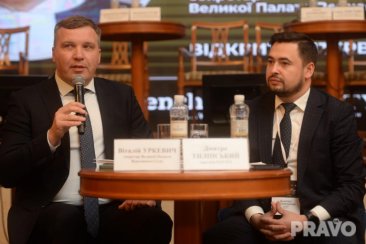
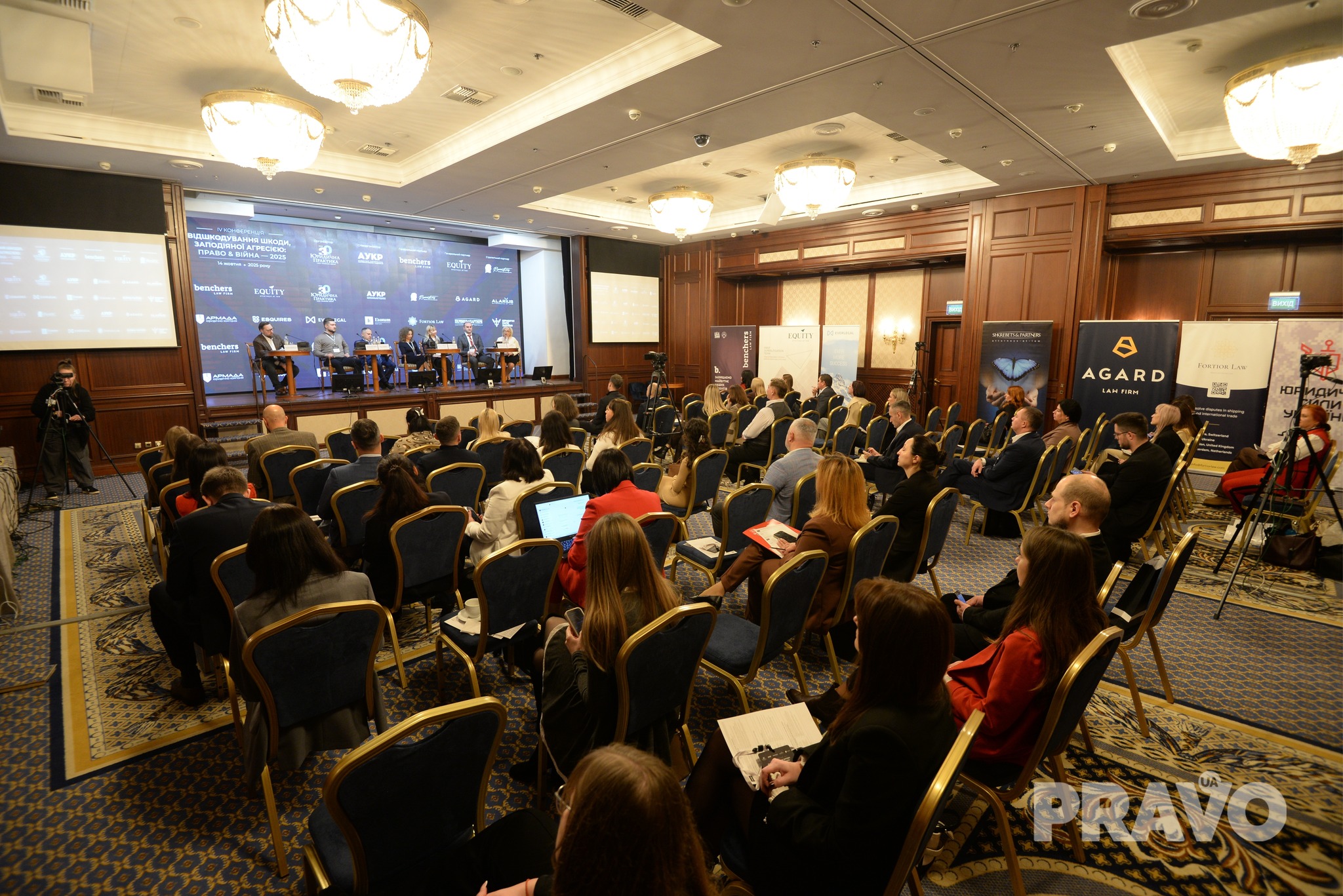
International legal mechanisms for compensation for damage caused by war, strategies for protecting the rights of victims of armed aggression, and war crimes proceedings were the topics of discussion during the IV Conference "Compensation for Damage Caused by Aggression: Law & War" - 2025, organised by Yurydychna Praktyka. The event was attended by Vitalii Urkevych, Secretary of the Grand Chamber of the Supreme Court, and Mykola Kovtunovych, Supreme Court Judge of the Criminal Cassation Court.
An open interview with Vitalii Urkevych, the Secretary of the Grand Chamber of the Supreme Court, was devoted to the topic "Human rights in time of war - a test for Ukrainian justice". The conversation was moderated by Dmytro Tylipskyi, partner at EQUITY Law Firm.
First of all, the moderator asked about the access of Ukrainians to justice in the context of full-scale armed Russian aggression, when some court buildings were destroyed or damaged.
According to Vitalii Urkevych, Ukraine's judicial system has adapted to functioning during the war quite quickly. Thanks to legislative changes adopted in March 2022, a mechanism for changing the territorial jurisdiction of court cases became possible in case of impossibility of administering justice by a court for objective reasons, in particular during martial law.
During the period of Russia's full-scale invasion of Ukraine, the territorial jurisdiction of more than 170 courts was changed and the cases pending in them were transferred to other courts. These processes, of course, require solving many problems, but the judicial system has coped with them. "This is evidenced by the figures: over the previous year, Ukrainian courts considered more than 5 million proceedings. This means that citizens trust the courts and understand that this is where they can get their rights protected," said the Secretary of the Grand Chamber of the Supreme Court.
As for ensuring the unity of case law, including in cases related to the war, Vitalii Urkevych said that in 2024, the Supreme Court received about 90,000 cassation appeals. This is a rather large number. As the interviewee explained, the main task of the Supreme Court is to ensure the unity of case law. And the permanent interjurisdictional body, the Grand Chamber of the Supreme Court, plays a significant role in this regard.
To learn more about the functioning of the Grand Chamber of the Supreme Court from the inside, Vitalii Urkevych advised to watch the fourth episode of the Supreme Court podcast "Behind the Scenes of the Grand Chamber - How Key Decisions are Made": https://www.youtube.com/watch?v=NTc6IkTyoHc.
In addition, there are a number of opinions of the Grand Chamber of the Supreme Court in cases concerning legal relations during martial law. These include, for example, legal opinions on the subject of the crime under Article 437 of the Criminal Code of Ukraine, establishing the facts of living in the same family as a deceased serviceman or sole parenting of a child by a father, the conditions for the return of mobilised and requisitioned property, etc.
"As we develop our practice under martial law, we realise how important it is to guide the courts of first instance and appellate courts in such complex legal issues that have arisen for the first time for the entire legal community, so that the court decision is fair and lawful and guarantees human rights," said Vitalii Urkevych.
He also noted that the Supreme Court promotes its practice, in particular through the preparation and publication of digests and reviews of judicial practice on the Court's communication resources. For example, a relevant summary is a digest of the Supreme Court's case law in war-related cases (https://supreme.court.gov.ua/userfiles/media/new_folder_for_uploads/supreme/ogliady/Daigest_sud_prakt_VS_spravi_vijna.pdf). In addition, a commented review of the case law on civil cases on establishing facts of legal significance during martial law has recently been published (https://court.gov.ua/storage/portal/supreme/ogliady/Oglyad_KCS_fakt_voen_stan.pdf).
Dmytro Tylipskyi also asked about the issue of determining the limits of judicial activism and court intervention in law enforcement in the presence of gaps in legislation.
Answering this question, Vitalii Urkevych referred to the judgment of the European Court of Human Rights of 6 February 2025 in the case of UKRKAVA, TOV v. Ukraine. In it, the ECHR stressed that when changing the practice of law enforcement, the court must do so in a balanced and reasonable manner, without exceeding its powers.
In this context, the speaker gave one of the most recent examples from the practice of the Grand Chamber of the Supreme Court. In September 2025, the Grand Chamber of the Supreme Court resolved a legal issue regarding enforcement proceedings, finding that in the event of a dispute over the right, the executor has the right to file a lawsuit in the interests of the recoverer (Resolution of 10 September 2025 in case No. 367/252/24; https://supreme.court.gov.ua/supreme/pres-centr/news/1891123/).
Discussing the mechanisms of compensation for damage caused by the armed aggression of the Russian Federation, Vitalii Urkevych reminded that in April 2022, the Supreme Court formulated a legal opinion on the possibility of national courts ignoring the judicial immunity of the aggressor state. This means that national courts have the opportunity to consider the merits of claims against the aggressor state. At the same time, the problems of notifying the defendant in such cases remain relevant.
In the context of the European dimension, Vitalii Urkevych mentioned the historically important judgment of the ECHR of 9 July 2025 in the case of Ukraine and the Netherlands v. Russia. In particular, it states that the aggressor state has systematically violated a number of provisions of the Convention for the Protection of Human Rights and Fundamental Freedoms.
In conclusion, the Secretary of the Grand Chamber of the Supreme Court noted that Russia's war against Ukraine has put many complex legal issues on the agenda. However, even under martial law, the functioning of the national judicial system ensures proper access to justice for citizens.
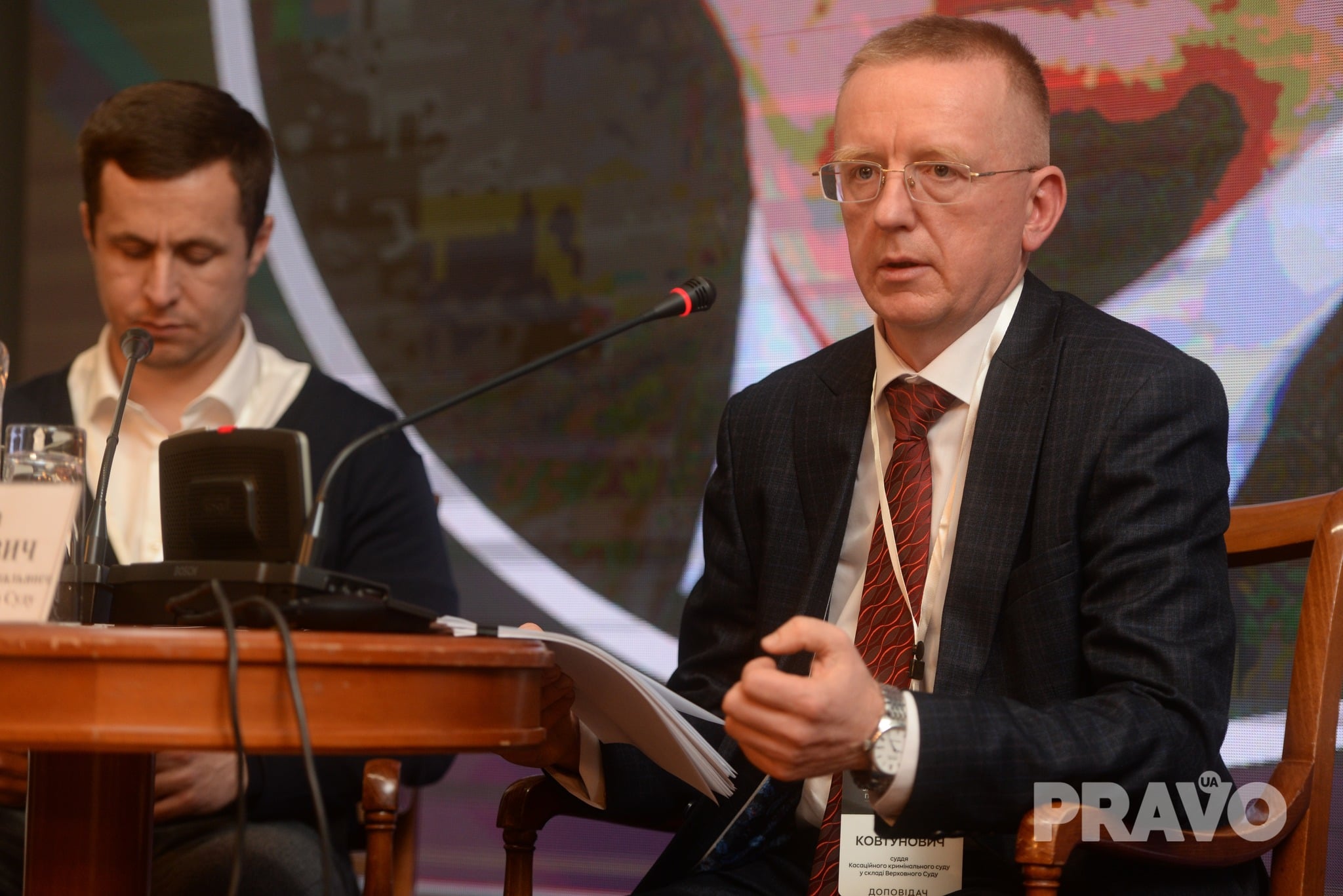
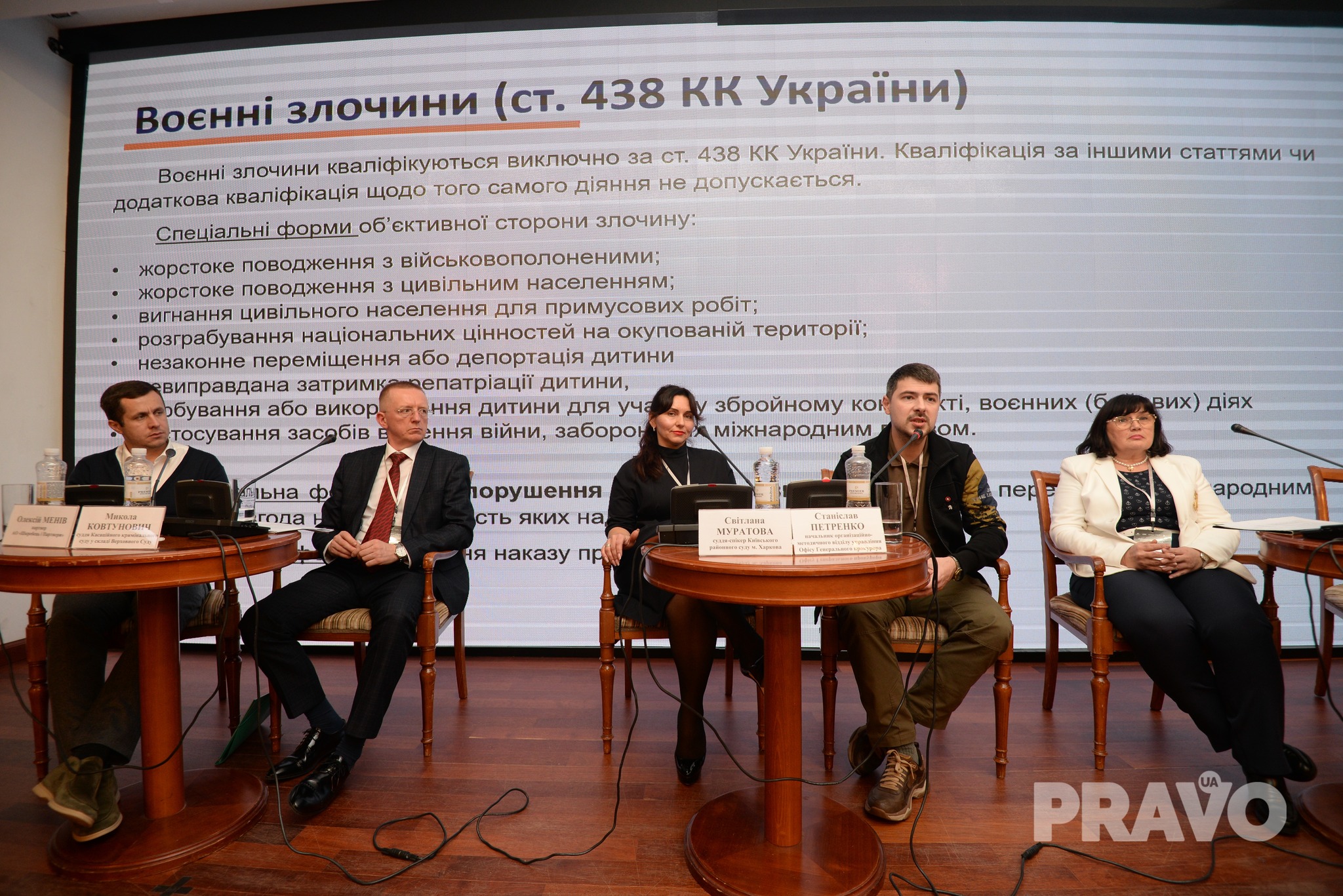
Mykola Kovtunovych outlined the state of consideration of criminal proceedings on war crimes. He summarised the key legal positions of the Supreme Court in this category of cases.
The speaker drew special attention to the resolution of the Grand Chamber of the Supreme Court of 28 February 2024, which formulated an exceptional legal issue regarding the definition of the circle of subjects of the crime of aggression (Article 437 of the Criminal Code of Ukraine). The court concluded that the subjects of this crime can only be persons who have a real opportunity to exercise effective control or leadership over political or military actions, to influence the strategic processes of the state: political, military, economic, financial or informational. This circle may include not only officials, but also those who, without formal status, actually influence military and political decisions.
In the same decision, the Grand Chamber of the Supreme Court considered an episode that concerned the coercion of the civilian population of the occupied territories to perform work in favour of the occupation forces, the construction of fortifications, trenches, and dugouts. The court found a violation of the Geneva Convention relative to the Protection of Civilian Persons in Time of War, in particular Article 147, which prohibits violence, intimidation and forced labour. Thus, it was noted that there is a difference between Articles 437 and 438 of the Criminal Code of Ukraine: while the former provides for liability for the act of aggression itself, the latter provides for violation of the laws and customs of war during an ongoing armed conflict.
The judge also focused on the issue of in absentia proceedings in war crimes cases. Initially, there were reservations about the lack of a mechanism for re-examining the verdicts in the event of the defendant's appearance. At the same time, the Grand Chamber of the Supreme Court acknowledged that such a possibility is provided for in Part 3 of Article 400 of the Criminal Procedure Code of Ukraine, which allows for the renewal of the term for appeal for good cause. This ensures that the national process complies with the standards of the Convention for the Protection of Human Rights and Fundamental Freedoms.
Among other important decisions of the Supreme Court, the judge mentioned a number of cases in which the Court confirmed its consistent position on the qualification of actions constituting war crimes. One of the cases concerned a so-called military commissar from the occupied Crimea who carried out forced conscription of civilians. The Supreme Court recognised such actions as a violation of Articles 147 and 51 of the Geneva Convention.
The video of the conference can be viewed at https://www.youtube.com/watch?v=NW6ilpZ3AyY.
Photo courtesy of the organisers.
_03_03.png)