Contact center of the Ukrainian Judiciary 044 207-35-46
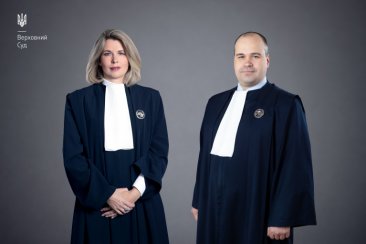
Supreme Court Judge at the Commercial Cassation Court Hanna Vronska and Head of the Analytical and Legal Work Division of the Criminal Cassation Court of the Supreme Court’s Analytical and Legal Work Department Olha Brynzanska participated in the training “Ecocide Crimes”, held as part of the professional development programme for judges of local general courts.
The event aimed to provide judges with a comprehensive understanding of the crime of ecocide, outline the common and distinctive features of ecocide and war crimes, examine the current state of legal regulation at the international and national levels, identify subjects of liability, and analyse types of environmental harm and methods for assessing environmental damage.
In her presentation, Hanna Vronska focused on the types of environmental harm caused by war, the principles of compensation, and the methods used to assess environmental damage.
The judge highlighted the various forms of environmental damage resulting from armed aggression, including direct, indirect, and cumulative harm, noting that the latter arises from the combination of multiple factors that create an “environmental funnel” effect. Damage may be short-, medium-, or long-term and may affect local, regional, or transboundary areas, posing a serious threat to international environmental security.
The speaker outlined the key principles that must be applied when compensating for environmental harm: the “polluter pays” principle, the principles of prevention, restoration, intergenerational equity, as well as scientific accuracy and justification. She emphasised that the aggressor state must bear full responsibility for the harm inflicted and must ensure not only financial compensation but also environmental rehabilitation of affected territories.
The lecturer explained the content of the officially approved methodologies that regulate the assessment of harm caused to land, water, air, protected areas, and other environmental components. Among them, particular attention should be paid to the Methodology for Assessing Harm and Losses Caused to Territories and Objects of the Nature Reserve Fund as a Result of the Armed Aggression of the Russian Federation. This Methodology stipulates that compensation must cover not only recoverable losses of protected areas but also irreversible (non-recoverable) losses.
The Methodology also provides that determining the amount of harm is carried out, among other purposes, to support the filing of relevant compensation claims before judicial bodies, including international courts.
In conclusion, the judge emphasized that establishing an effective mechanism for compensating environmental damage is not only a legal task but also a moral imperative at the intersection of environmental, international, financial, and administrative law. She underscored the need for a systematic, long-term, and principled approach to compensation in order to preserve the natural environment for future generations.
A separate part of the event focused on drafting judicial sentences in criminal proceedings concerning ecocide. Olha Brynzanska delivered a presentation prepared in cooperation with Judge of the Grand Chamber of the Supreme Court Mykola Mazur. In their presentation, they outlined the key aspects of qualifying the crime of ecocide as defined in Article 441 of the Criminal Code of Ukraine.
During the training, the lecturer stressed that this article defines ecocide as the mass destruction of flora or fauna, poisoning of the atmosphere or water resources, as well as other actions that may cause an environmental catastrophe. She noted that a judge’s position should be based not only on national legislation but also on doctrinal and politico-legal approaches, taking into account the provisions of the EU Directive (PE-CONS 82/23) of 27 February 2024 and the Council of Europe Convention on the Protection of the Environment through Criminal Law, adopted by the Committee of Ministers of the Council of Europe on 13-14 May 2025.
Special attention was given to forming the court’s internal conviction regarding a person’s guilt or innocence in committing ecocide. Key issues included whether the conduct described in Article 441 of the Criminal Code of Ukraine had occurred, whether its consequences met the criteria of an “environmental catastrophe”, whether a causal link existed between the actions and the damage, and whether the person acted intentionally, understanding the scale and dangerous nature of the consequences.
An important topic addressed was the issue of evidence. Ecocide, as the destruction of an ecosystem, requires the use of specialized knowledge, including environmental engineering, mining and technical expertise, forensic veterinary examinations, and comprehensive expert assessments. Such studies make it possible to determine the scope and nature of the damage and the potential for ecosystem restoration.
In closing, Olha Brynzanska noted that properly formulating the charges is crucial for the court’s judgment. The indictment must include a description of the act, the method of its commission, its consequences, the form of guilt, and the motives. Ecocide is a crime against the security of humanity, and its distinction from environmental offences lies in the scale and nature of the harm, the lecturer emphasized. For this reason, she noted, the consideration of criminal proceedings involving ecocide requires a comprehensive approach to the application of law.
The judges' presentations are available by the following links:
Presentation by Hanna Vronska: https://court.gov.ua/storage/portal/supreme/prezentacii_2025/Prezent_Skoda_dovkil.pdf;
Presentation by Mykola Mazur and Olha Brynzanska - https://court.gov.ua/storage/portal/supreme/prezentacii_2025/Prezent_Napus_vuroky_ekotcud.pdf.
The event was organised by the National School of Judges of Ukraine with the support of the Ukrainian Bar Association and the International Bar Association.
_03_03.png)